

 Forhåndsvisning
 Send
Send Del
Del
 Vis detaljer
 Utskriftsvennlig guide

 Last ned bilde
 Liknende objekter
 Røntgenundersøkelse
 Lysbildefremvisning
 Spørsmål og svar
 Statistikk
Bowl

- 45.0 x 45.0 cm


 Vis hele teksten
Giclée / Kunsttrykk
Giclée- eller lerretsprint av museumskvalitet med rask produksjon og fleksible valgmuligheter for etterbehandling. ( Kjøp håndmalt maleri Bytt til digitalt bilde)




P118B Nkr10

P118H Nkr10

P118W Nkr10

P438Z Nkr10

P508JH Nkr12

P508YH Nkr12

P805H Nkr10

P805Z Nkr10

P919BZ Nkr10

P919G Nkr10

P919XJ Nkr10

P959ZH Nkr10

P968JZ Nkr12

W106C Nkr8

W218G Nkr10

W218JH Nkr8

W218Y Nkr10

W307PJ Nkr10

W316G Nkr10

W316PJ Nkr8

W316Y Nkr10

W398PJ Nkr8

W4111J Nkr10

W500HY Nkr15

W500JH Nkr15

W692G Nkr12

W849H Nkr8

W940BG Nkr15

W953PJ Nkr8




Velg mellom våre forhåndsdefinerte størrelser som bevarer kunstverkets opprinnelige proporsjoner.

Skriv inn ønsket bredde og høyde for å tilpasse trykket til din ramme eller vegg. Et trykk kan kun beskjæres, aldri skaleres opp utover motivets opprinnelige størrelse, noe som betyr at et format med andre proporsjoner vil føre til tap av deler av bildet. Vi sender deg en digital mockup for godkjenning før vi starter trykkeprosessen. Bildet som vises på denne siden viser ikke den faktiske beskjæringen — det er kun mockuppen som viser dette.
Verdensomspennende levering () på 2 uker i stedet for standard 4/5 uker. (4 November)

Gratis ekspressfrakt over hele verden

Lerretsduk av lin av høy kvalitet

Full transportforsikring

Garanti for refusjon av toll og importavgifter

Garantert fargegjengivelse

100 dagers returrett ved fabrikasjonsfeil

100% pengene tilbake-garanti

Rabatt ved flere kjøp
 Glassalternativet er kun tilgjengelig i størrelser under 110 cm

Bowl
Giclée / Kunsttrykk
Størrelse på reproduksjon
-


Totalpris for valgte alternativer
Nkr 602
A Silvered Echo of Domesticity: Gerloff Brouwer’s “Bowl”
The Rijksmuseum in Amsterdam holds within its walls a treasure of the Dutch Golden Age – Gerloff Brouwer's "Bowl," painted in 1661. More than just a vessel for sustenance, this piece is a meticulously crafted meditation on wealth, status, and the quiet beauty of everyday life. It’s a window into a world where silver was not merely metal but a symbol of prosperity and refined taste, reflecting the burgeoning mercantile power of the Dutch Republic.
Brouwer's work belongs to a flourishing tradition of still-life painting that emerged during this period. Unlike earlier depictions of fruit or flowers, these scenes often centered on domestic objects – tableware, linens, and personal adornments – arranged with an almost theatrical precision. “Bowl” exemplifies this trend, presenting a carefully composed arrangement designed not just for visual appeal but also to convey a sense of order and refinement. The composition is remarkably balanced, drawing the eye through swirling patterns and subtle contrasts in light and shadow.
The Language of Silver and Form
Crafted from highly polished silver – a material prized for its luster and durability – the bowl itself is a testament to Brouwer’s technical skill. The surface gleams with an almost ethereal quality, reflecting the ambient light and creating a sense of depth and dimension. Notice the intricate detailing: the delicate curves of the rim, the subtle variations in texture that suggest the material's inherent irregularities, and the precise rendering of the swirling motifs adorning its surface.
These patterns aren’t merely decorative; they likely represent a stylized interpretation of floral or organic forms – a common motif during this era. The choice of silver itself speaks volumes about the owner’s status. During the Dutch Golden Age, owning such an object signified considerable wealth and social standing. It was a deliberate statement of prosperity and a reflection of the family's position within the burgeoning merchant class.
Symbolism in Stillness
Beyond its material value, “Bowl” is rich with symbolic meaning. The bowl itself represents containment – holding not just food or drink but also ideas of abundance and hospitality. It’s a stage for domestic rituals, a focal point within the home where family members gathered to share meals and converse. The arrangement of objects around it—a subtle suggestion of fruit and perhaps even a partially consumed beverage—hints at the pleasures of daily life, the simple joys of nourishment and companionship.
Furthermore, the bowl’s polished surface reflects an idealised vision of domesticity – a carefully curated space where beauty, order, and refinement reigned supreme. It's a snapshot of a world striving for balance between material wealth and spiritual contentment, a theme prevalent in Dutch art of the period.
A Legacy Preserved
Today, “Bowl” resides within the Rijksmuseum’s permanent collection, meticulously conserved to ensure its survival for future generations. Its presence offers a tangible connection to the artistic and cultural landscape of 17th-century Holland. Reproductions, like those offered by ArtsDot.com, allow us to experience this remarkable work of art in our own homes, bringing a touch of Dutch Golden Age elegance into contemporary spaces.
Consider how its refined lines and shimmering surface can complement a variety of interior design styles – from classic and traditional to modern and minimalist. “Bowl” is more than just a painting; it’s an invitation to appreciate the beauty of craftsmanship, the power of symbolism, and the enduring legacy of Dutch artistic achievement.
Spørsmål og svar
Hvilket rom passer best til fargene i "Bowl" av Gerloff Brouwer?
Med sin Neutrals palett anbefales "Bowl" av Gerloff Brouwer for et Living Room. Fargene er en av grunnene til denne anbefalingen.
Hvilken palett og hvilken dominerende farge definerer "Bowl"?
"Bowl" av Gerloff Brouwer bruker en Neutrals-palett, med Rosy Brown (#b6aca9) som den dominerende fargen.
Hva er målene på det originale verket "Bowl" av Gerloff Brouwer?
De registrerte målene for "Bowl" av Gerloff Brouwer er 45 x 45 cm. Reproduksjoner kan bestilles i andre størrelser med de samme proporsjonene.
Lignende kunstverk


Om kunstneren
The Quiet Brilliance of Gerloff Brouwer
In the heart of the Dutch Golden Age, a period defined by unparalleled prosperity and artistic explosion, the name Gerloff Brouwer resonates with the delicate precision of a master craftsman. Born in 1627 in the maritime city of Sneek, Friesland, Brouwer emerged from a landscape of burgeoning trade and cultural refinement to become a pivotal figure in the evolution of still life painting. While much of his early life remains veiled by the mists of history, his artistic legacy is vividly preserved through canvases that breathe with a sense of domestic tranquility and profound technical mastery. His work does not merely depict objects; it captures a fleeting moment of perfection, frozen in time through the meticulous application of light and shadow.
The foundation of Brouwer’s extraordinary skill can be traced back to his formative years under the tutelage of Willem van Hoegaarden. As a prominent painter from Haarlem, Van Hoegaerbden provided Brouwer with a rigorous education in the essential pillars of Dutch realism: perspective and chiaroscuro. This apprenticeship was transformative, instilling in the young artist a reverence for the interplay between light and darkness—a technique that would allow him to sculpt forms out of the shadows and imbue his subjects with a palpable, three-dimensional presence. Through this training, Brouwer learned to manipulate illumination to guide the viewer's eye, creating a sense of depth that makes his compositions feel as though they could be reached out and touched.
A Symphony of Texture and Symbolism
Brouwer’s true genius flourished in his ability to transform mundane household items into extraordinary subjects of contemplation. He achieved international renown for his sophisticated arrangements of bowls, tableware, and fine silverwork. These were not simple displays of wealth, but carefully orchestrated narratives designed to evoke a sense of abundance and harmony. In works such as his celebrated 'Bowl' (1661), one can observe the breathtaking complexity of his technique. He possessed an uncanny ability to recreate the reflective surfaces of polished pewter and the intricate, swirling patterns of silver, making the cold metal appear fluid and alive under a soft, directional light.
Beyond the sheer technical virtuosity, Brouwer’s paintings are deeply layered with the cultural values of the 17th-century Dutch Republic. His compositions often featured:
- Meticulously rendered fruits and flowers that served as symbols of life's fleeting beauty and the bounty of nature.
- Exquisite fabrics and linens, draped with a naturalistic weight that showcased his mastery of texture.
- Reflective surfaces that acted as mirrors to the world around them, adding layers of visual complexity and light.
Every element within his still lifes was chosen to contribute to a larger theme of domestic stability and the quiet dignity of everyday life. By focusing on the beauty found in the small, well-crafted objects of a household, Brouwer elevated the concept of the "still life" from mere decoration to a profound meditation on existence and the ephemeral nature of material wealth.
Legacy of a Dutch Master
Though his life ended in 1676, leaving behind a body of work that continues to captivate historians and art lovers alike, Gerloff Brouwer’s impact on the trajectory of European art remains undeniable. He helped define a specific genre of Dutch painting that prioritized observation over imagination, paving the way for future generations of still life specialists. His ability to marry the scientific precision of light with an emotional resonance of peace and plenty ensured his place among the most celebrated painters of his era. Today, his works serve as luminous windows into the soul of the Dutch Golden Age, reminding us of a time when even the simplest bowl could hold the weight of the world's beauty.

Gerloff Brouwer
1627 - 1676 , Netherlands
Kort om kunstneren
- Full Name: Gerloff Brouwer
- Nationality: Dutch
- Date Of Birth: 1627
- Date Of Death: 1676
- Place Of Birth: Sneek, Netherlands
- Notable Artworks: ['Bowl with Fruit and Flowers']
- Artistic Movement Or Style: Dutch Golden Age
- Artists Who Influenced This Artist: ['Jan Steen']
- Artists Or Movements Influenced By This Artist: ['Baroque']
Relaterte artikler

Golden Age Reflections: Dutch Baroque Painting & Cultural Innovation
Explore the Dutch Golden Age of painting! Discover key artists like Vermeer & ter Borch, their innovative techniques, and the rich cultural context behind these Baroque masterpieces. Learn about collecting & appreciating this iconic art period.

De 10 Mesterverkene som Definerte den Nederlandsk Gyldne Tidsalder – Kunst & Interiør
Oppdag de 10 ikoniske mesterverkene fra den nederlandske gullalderen! Lær om Rembrandt, Vermeer og andre store kunstnere. Finn inspirasjon til klassisk interiørdekorasjon og kjøp museumskvalitets reproduksjoner på ArtsDot.com.

Illuminating Innovation: Exploring the Dutch Golden Age of Painting
Explore the Dutch Golden Age of painting with ArtsDot. Discover Rembrandt, Vermeer & other Masters. Learn about key characteristics, iconic artworks, and lasting influence. Expert insights for collectors & enthusiasts.
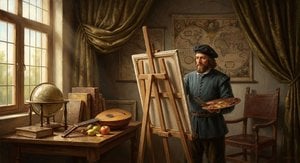
Illuminating Realism: Exploring the Dutch Golden Age of Painting (1600-1700)
Explore the Dutch Golden Age of painting (1600-1700) with ArtsDot. Discover Rembrandt, Vermeer & other masters. Learn about techniques, history & find museum-quality reproductions.

Charles Leickert: Capturing the Dutch Golden Age Light – A Comprehensive Study of Technique, Context, and Legacy
Explore the captivating winter landscapes of Charles Leickert, a master of Dutch Golden Age light & atmosphere. Discover his techniques, symbolism, and lasting legacy – a comprehensive study for art enthusiasts and collectors.