

- 81.0 x 65.0 cm


Bildet følger dine valg: , .
Beskrivelse av objektet
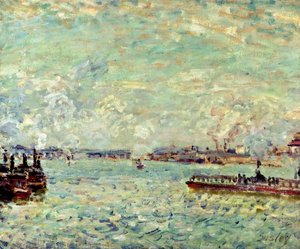
This stunning oil painting depicts a bustling river landscape from 1890, skillfully executed by Ferdinand Guillaumin. Impasto technique creates textural depth, reflecting shimmering sunlight on the water's surface and conveying a tranquil mood amidst industrial activity.
 Vis hele teksten
Om kunstneren
"NorwegianMetaDescription": "Ferdinand Guillaumin var en fransk impresjonist kjent for drømmende landskap og levende farger. Utforsk hans symbolske stil og arv sammen med Monet – et bildekunstner fra 1800-tallet."
Håndlaget oljereproduksjon
Håndmalt olje på lerret i din valgte størrelse og ramme, laget på bestilling av våre kunstnere. ( Bytt til trykk Bytt til digitalt bilde)
Les mer om dette maleriet
 Forhåndsvisning
 Send
Send Del
Del
 Vis detaljer
 Utskriftsvennlig guide

 Last ned bilde
 Liknende objekter
 Røntgenundersøkelse
 Lysbildefremvisning
 Spørsmål og svar
 Statistikk
Bestill maleriet ditt i fire enkle trinn
Ta deg god tid. Du kan endre alle svar; prisen i handlekurven din oppdateres etter hvert valg.
1 Trinn én av fire
Hvilken størrelse ønsker du?
Disse størrelsene bevarer de originale proporsjonene til maleriet. Tegningen viser ditt valg på en vegg, over en to meter lang sofa.
Eller oppgi egne mål
Velg mellom våre forhåndsdefinerte størrelser som bevarer kunstverkets opprinnelige proporsjoner.

Skriv inn ønsket bredde og høyde for å tilpasse bildet til din ramme eller vegg. Siden dette er håndmalt, kan kunstneren male litt mer rundt motivet eller beskjære det noe dersom du velger et annet format — valget er ditt. Vi sender deg en digital mockup til godkjenning før maleriet påbegynnes. Bildet som vises på denne siden representerer ikke det faktiske resultatet — kun mockuppen viser det endelige uttrykket.
2 Trinn to av fire
Hvordan skal det klargjøres: rullet, strukket eller innrammet?
Prisene nedenfor gjelder for størrelsen du valgte i trinn én.
Velg kantutførelse på lerretet
Velg din ramme

Hvit kant Nkr1

Uskarp kantfinish Nkr1

Fortsatt motiv Nkr1

P118B Nkr10

P118H Nkr10

P118W Nkr10

P438Z Nkr10

P508JH Nkr12

P508YH Nkr12

P805H Nkr10

P805Z Nkr10

P919BZ Nkr10

P919G Nkr10

P919XJ Nkr10

P959ZH Nkr10

P968JZ Nkr12

W106C Nkr8

W218G Nkr10

W218JH Nkr8

W218Y Nkr10

W307PJ Nkr10

W316G Nkr10

W316PJ Nkr8

W316Y Nkr10

W398PJ Nkr8

W4111J Nkr10

W500HY Nkr15

W500JH Nkr15

W692G Nkr12

W849H Nkr8

W940BG Nkr15

W953PJ Nkr8

H24-GOLD Nkr30

H24-SILVER Nkr30

H36-GOLD Nkr45

H36-SILVER Nkr45
Innrammet
Profil: . Total størrelse med ramme: .
3 Trinn tre av fire
Ønsker du at noe skal endres i maleriet?
De fleste svarer nei. Siden hvert maleri er håndlaget, kan kunstneren vår også tilpasse det for deg.
Etter bestilling vil ArtsDot.com-teamet sende e-post til kunden for instruksjoner og sende et utkast som forhåndsvisning
4 Trinn fire av fire
Noen valgmuligheter for finish
Alle er valgfrie. Svarene som allerede er valgt, medfører ingen ekstra kostnad.
Hvem har malt det?
Verdensomspennende levering () på 3–4 uker i stedet for standard 5 uker. (7 November). Ingen kompromisser med kvaliteten.
En navneplate, som på et museum?
Detaljer om gravert bronseplate
This elegant plaque features the artist's name and the title of the artwork, finely engraved for a timeless presentation.
It is made from bronze with a refined, elegant finish. The text is precisely laser-engraved for a sharp and permanent result. Measuring 9x2 cm, the plaque is compact yet easy to read. It's built to be durable and scratch-resistant, offering a professional, museum-quality look. Mounting is simple thanks to the included adhesive backing.
Detaljer om gjennomsiktig akrylplate
The plaque includes essential engraved details such as the artist's name, the title of the artwork, the date it was created, the type of media used-like oil on canvas or watercolor-a brief description of the piece, and a QR code that links to the complete artwork information.
It is crafted from clear acrylic, offering a sleek, modern appearance. The text is UV-engraved in black to ensure strong visual contrast. With a size of 10x15 cm, it ensures optimal readability. It comes equipped with two metal hooks for secure wall mounting. The plaque is designed to be weather-resistant, making it suitable for various environments, and it includes interactive features that work seamlessly with smartphone scanning.
Detaljer om plakett i svart akryl
This elegant plaque includes engraved information such as the artist's name, the title of the artwork, the date it was created, the type of media used (like oil on canvas or watercolor), a short description of the artwork, and a QR code for quick access to more information.
The plaque itself is made from refined black acrylic with a premium finish. The text is laser-engraved in white for high contrast and readability. Its size is 10x15 cm, designed to be easy to read. It comes with two metal hooks for professional mounting. The design is sleek and fits any interior style. It is also weather-resistant and durable, with built-in digital integration for mobile compatibility.
En beskyttende lakk?
Når trenger du det?
✓ Kontroller og bestill
Ditt maleri, slik du bestilte det

River Scene
Trykkmetode
Størrelse på reproduksjon
-

Utvalgte mesterkunstnere
Mer detaljrikdom, finesse og ekstra produksjonstid
-

Innramming av reproduksjon
-
-
For kunstverk eller reproduksjoner som er større enn 105 cm (ca. 41 tommer) på noen side, vil rammen bli sendt som et sett som må monteres. Denne metoden sikrer trygg levering og forhindrer skader under transport.
Krever profesjonell montering – dette er ikke et DIY-produkt.
Settet må monteres og lerretet strammes av en erfaren profesjonell rammelegger, ved bruk av trelim (følger ikke med), en lerretstang og klemmer for å holde rammelisten vinkelrett mens limet tørker. Feilaktig montering eller ujevn stramming av lerretet kan påføre kunstverket permanente skader og er
 For kunstverk eller reproduksjoner som er større enn 105 cm (ca. 41 tommer) på noen side, vil rammen bli sendt som et sett som må monteres. Denne metoden sikrer trygg levering og forhindrer skader under transport.
Alle massive trelister er inkludert, presist tilpasset i størrelse.
Monteres med de medfølgende skruene, samt trelim til hjørnene, som ikke er inkludert og må anskaffes av din rammehandler.
Profesjonelt verktøy er nødvendig og er ikke inkludert: en lerretstang (strammer) og klemmer for å holde rammene vinkelrette mens limet tørker.
Viktig:
Hjørnene krever trelim, listene må holdes på plass med tvinger til limet er helt tørt, og stramming av lerretet på den ferdige rammen krever en lerretstang. Ingen av disse produktene er inkludert i settet. Vennligst sørg for tilgang til en erfaren profesjonell rammehandler før du bestiller denne størrelsen.

Navneskilt
-
-

Beskyttende ferniss
Blank lakk (forsterker farger, beskytter mot lys og fuktighet)
-

Tilpass mitt kunstverk
Eksempler på hva som kan endres: Erstatt ansikt med bilde av kunden; Legg til kjæledyr (f.eks. bytt ut katt med hund); Inkluder en skjult melding i bakgrunnen; Endre bakgrunnslandskap eller elementer.
-

Ekspresslevering
Verdensomspennende levering () på 3–4 uker i stedet for standard 5 uker. (7 November). Ingen kompromisser med kvaliteten.
-
Ekspresslevering
Verdensomspennende levering til innen 5 uker. (14 November).
Inkludert frakt
Totalpris for valgte alternativer
Nkr 3711
Glassalternativet er kun tilgjengelig i størrelser under 110 cm
Inkludert med hver bestilling
- Gratis ekspressfrakt over hele verden
- Lerretsduk av lin av høy kvalitet
- Full transportforsikring
- Garanti for refusjon av toll og importavgifter
- Garantert fargegjengivelse
- 100 dagers returrett ved fabrikasjonsfeil
- 100% pengene tilbake-garanti
- Rabatt ved flere kjøp


River Scene – A Window Into Impressionistic Vision
“River Scene,” painted by Ferdinand Guillaumin in 1890, stands as a quintessential example of Impressionism’s fascination with capturing fleeting moments and sensory impressions. More than just a depiction of a riverside landscape, it's an invitation to experience the atmosphere of a bygone era—a testament to Guillaumin’s ability to distill the essence of light and color into a single canvas.
Subject Matter & Composition
The artwork portrays a bustling waterway dominated by several boats – barges laden with cargo, smaller vessels navigating calmer stretches – reflecting the industrial growth occurring in France during the late 19th century. Guillaumin skillfully employs horizontal lines to emphasize the expansive space of the river and horizon, creating a visual rhythm that draws the viewer’s eye across the composition. The arrangement of boats contributes to this sense of movement and dynamism.
Style & Technique – Impasto and Atmospheric Light
Guillaumin's distinctive style is characterized by “impasto,” where thick layers of paint are applied directly onto the canvas, creating a palpable textural surface that captures the shimmering effect of sunlight on the water’s surface. Short, broken brushstrokes dominate the technique, mirroring the fragmented nature of perception itself—a hallmark of Impressionism’s rejection of academic realism.
Color Palette & Symbolism
The color palette leans heavily towards blues and greens – reflecting the dominant hues of the river environment – punctuated by yellows and browns that add warmth and depth. Guillaumin utilizes a muted tonal range, prioritizing atmospheric light over precise representation. The boats themselves could symbolize progress, trade, or perhaps even the passage of time, subtly enriching the artwork’s narrative.
Historical Context & Artistic Legacy
Painted during the height of Impressionism's influence, “River Scene” aligns perfectly with the movement’s core principles—a deliberate departure from traditional artistic conventions. Its inclusion in exhibitions alongside Claude Monet solidified Guillaumin’s place within the canon of Impressionist art. Today, reproductions of this evocative piece continue to inspire collectors and interior designers seeking a connection to the beauty and immediacy of nature.
Additional Research
Further exploration into Ferdinand Guillaumin's artistic career reveals his membership in the Société Nautique de Marne, where he championed the depiction of maritime subjects. His work at the Musée d’Art Moderne de Paris alongside Monet exemplifies the collaborative spirit that propelled Impressionism forward.
Spørsmål og svar
Hvilken periode i Armand Guillaumin sin karriere tilhører "River Scene"?
"River Scene" representerer Armand Guillaumin sin Mature Period.
Hvilken følelse formidler "River Scene" av Armand Guillaumin?
I "River Scene" ledsages en Serene stemning av en Tranquil følelse.
Hvilket medium er "River Scene" av Armand Guillaumin utført i?
Armand Guillaumin brukte Oil On Canvas-teknikken i "River Scene". Teknikken definerer det materielle uttrykket til det originale verket.
Lignende kunstverk


Armand Guillaumin
1841 - 1927, Frankrike
Om kunstneren
Early Life and Artistic Beginnings
Jean-Baptiste Armand Guillaumin, a name synonymous with the dreamy landscapes and vibrant hues of French Impressionism, was born in Paris on February 16th, 1841. His early life, steeped in the bustling energy of the city, provided a fertile ground for his burgeoning artistic sensibilities. Unlike many artists of his time who hailed from established families, Guillaumin’s background was rooted in the working class; his grandfather, Jean Joseph Guillaumin, was a notary, and Armand spent his formative years assisting with his uncle's lingerie shop. This practical experience, however, didn’t stifle his passion for art. He found solace and inspiration in the surrounding world, particularly the captivating beauty of central France – the region where his family had strong ties. The rolling hills, the dramatic light, and the quiet charm of Moulins, where he spent a significant portion of his childhood, became recurring motifs in his paintings, imbued with a nostalgic longing for simpler times. He began his formal artistic training at the Académie Suisse, immersing himself in the study of drawing from live models – a crucial foundation for mastering observation and capturing fleeting moments.The Rise of Impressionism and Early Collaborations
As the mid-19th century progressed, Impressionism was steadily gaining momentum within the Parisian art scene. Guillaumin, drawn to this revolutionary movement’s emphasis on capturing the ephemeral qualities of light and color, eagerly embraced its principles. He became an active participant in the first Salon des Refusés in 1863 and subsequently joined the group's inaugural Impressionist Exhibitions in 1874, held at Nadar’s studio on Boulevard des Capucines. These exhibitions marked a pivotal moment in his career, providing him with a platform to showcase his unique style – characterized by dreamy, soft landscapes and an evocative use of color. His work resonated deeply with the spirit of Impressionism, capturing the transient beauty of nature with remarkable sensitivity. He forged close relationships with fellow artists like Camille Pissarro, Claude Monet, and Francisco Oller, exchanging ideas and influencing each other’s artistic development. The circle around Émile Zola further enriched his life, offering a connection to literary circles that mirrored the artistic explorations of the time.Symbolic Influences and Distinctive Style
While firmly rooted in Impressionism, Guillaumin's work also reveals subtle influences from Symbolism – a movement that sought to explore the realm of dreams, emotions, and the subconscious. This is particularly evident in his use of bold colors, often imbued with emotional intensity, and his depiction of evocative subjects. His paintings aren’t merely representations of landscapes; they are windows into a world of feeling and memory. Guillaumin's distinctive style can be described as a harmonious blend of observation and imagination. He meticulously studied the effects of light and color, yet he wasn’t afraid to infuse his work with a sense of mystery and personal interpretation. This combination resulted in paintings that possess both a remarkable realism and an undeniable emotional depth.Notable Works and Legacy
Guillaumin's artistic output is remarkably prolific, encompassing a diverse range of subjects – from idyllic rural scenes to intimate portraits. Some of his most celebrated works include "Garden in Janville in June" (1886), which captures the serene beauty of a summer afternoon; “River Scene” and “View of Puy de Dôme,” both showcasing his masterful command of light and color. His paintings are held in prestigious collections worldwide, including the Musée d’Orsay in Paris and the Tiroler Landesmuseum Ferdinandeum in Innsbruck. The Mount Holyoke College Art Museum in Massachusetts also houses a significant collection of his works, ensuring that his legacy continues to inspire and captivate audiences today. Guillaumin's contribution to Impressionism is undeniable, and he remains an important figure in the history of French art – a painter who skillfully captured the fleeting beauty of the world around him with both precision and passion.Concluding Thoughts
Ferdinand Guillaumin passed away on June 26th, 1927, leaving behind a rich body of work that continues to resonate with viewers today. His paintings offer a glimpse into a bygone era – a time when art was driven by observation, emotion, and a deep appreciation for the beauty of the natural world. His legacy is one of innovation, sensitivity, and an unwavering commitment to capturing the essence of Impressionism.Relaterte artikler

Paul Cézannes 25 Mesterverk: En Kunstnerisk Reise for Ditt Hjem
Utforsk Paul Cézannes 25 mest ikoniske malerier! Oppdag historien bak impresjonismens mesterverk, fra stilleben til landskap. Finn kunsttrykk av høy kvalitet og interiørinspirasjon på ArtsDot.com.

Evocations of Place: A Historical Journey Through Landscape Art
Explore the rich history of landscape art with ArtsDot. Discover renowned artists, movements like Impressionism & tonalism, and expert guidance for collecting timeless pieces. Find your perfect serene escape today!

Evoking Nature's Sublime: A Comprehensive Exploration of 19th-Century Landscape Painting
Explore the captivating world of 19th-century landscape painting! Discover renowned artists like Friedrich & Monet, key movements, and find the perfect artwork to bring nature's serenity into your home. Expert insights at ArtsDot.