


 Se i rommet
 Del som digitalt kort
 Del
Del
 Detaljer
 Studentguide

 Last ned
 Liknende objekter
 Røntgen
 Lysbildefremvisning
 Besøksstatistikk
The Arab Falconer
 Romanticism
 1864
1864 109.0 x 72.0 cm
 Les mer
Håndlaget oljereproduksjon
Håndmalt olje på lerret i din valgte størrelse og ramme, laget på bestilling av våre kunstnere. ( Bytt til trykkversjon Gå til digitalt bilde)




P118B Nkr10

P118H Nkr10

P118W Nkr10

P438Z Nkr10

P508JH Nkr12

P508YH Nkr12

P805H Nkr10

P805Z Nkr10

P919BZ Nkr10

P919G Nkr10

P919XJ Nkr10

P959ZH Nkr10

P968JZ Nkr12

W106C Nkr8

W218G Nkr10

W218JH Nkr8

W218Y Nkr10

W307PJ Nkr10

W316G Nkr10

W316PJ Nkr8

W316Y Nkr10

W398PJ Nkr8

W4111J Nkr10

W500HY Nkr15

W500JH Nkr15

W692G Nkr12

W849H Nkr8

W940BG Nkr15

W953PJ Nkr8




Velg mellom våre forhåndsdefinerte størrelser som bevarer kunstverkets opprinnelige proporsjoner.

Skriv inn bredden og høyden du trenger, slik at den passer til din ramme eller vegg. Dette er håndmalt, så for en størrelse med en annen form kan kunstneren male litt mer rundt bildet, eller beskjære det noe — du velger selv. Vi sender deg en digital mockup for godkjenning før maleriet påbegynnes. Bildet som vises på denne siden viser ikke det faktiske resultatet — kun mockuppen gjør det.
Etter bestilling vil ArtsDot.com-teamet sende e-post til kunden for instruksjoner og sende et utkast (mockup) som forhåndsvisning.
Verdensomspennende levering () på 3–4 uker i stedet for standard 5 uker. (27 October). Ingen kompromisser med kvaliteten.

Gratis ekspressfrakt over hele verden

Lerretsduk av høykvalitets lin

Full transportforsikring

Garanti for refusjon av toll og importavgifter

Garantert fargeekthet

100 dagers returrett ved fabrikasjonsfeil

100% pengene tilbake-garanti

Mengderabatt
 Glassalternativet er kun tilgjengelig i størrelser under 110 cm

The Arab Falconer
Reproduksjonsmetode
Format på reproduksjon
-


Totalpris
Nkr 2502
Spørsmål og svar
Er det mulig å laste ned "The Arab Falconer"?
Nedlasting er tilgjengelig for "The Arab Falconer": kunstverkets Last ned-side tilbyr nedlasting av et digitalt bilde i høy oppløsning.
Hvilken farge dominerer komposisjonen i "The Arab Falconer" av Eugène Fromentin?
Fargen som skiller seg mest ut i "The Arab Falconer" er Gray (#9a8e6e). Den dominerende fargen er nyttig når man skal matche et kunstverk med et interiør.
Hva forklarer opphavsrettssituasjonen til "The Arab Falconer" av Eugène Fromentin?
"The Arab Falconer" av Eugène Fromentin er i det frie domene – opphavsretten har utløpt. Opphavsretten beregnes fra kunstnerens dødsår, og Eugène Fromentin døde i 1876.
Relaterte kunstverk


Kunstnerbiografi
Eugène Fromentin (1820–1876): French Painter & Writer Celebrated for His Evocative Orientalist Scenes of Algeria, Masterful Use of Color, and Insightful Art Criticism in ‘The Old Masters’
Eugène Fromentin, born in the port city of La Rochelle, France, in 1820, was a figure uniquely positioned at the intersection of painting and prose. His life wasn’t one of dramatic upheaval, but rather a steady immersion into observation—a meticulous study of both the physical world and the human spirit. Initially destined for a legal career, Fromentin abandoned law to pursue his artistic inclinations, a decision that would lead him down a path defined by vibrant color, evocative landscapes, and a profound fascination with North Africa. His early training under Louis Cabat provided a foundation in landscape painting, but it was the burgeoning Romanticism of Eugène Delacroix that truly ignited his artistic vision, influencing his bold use of color and dynamic compositions. However, Fromentin wasn’t merely an imitator; he sought to forge his own path, one guided by direct experience and a desire to capture the essence of life as he witnessed it.A Life Immersed in Light & Landscape
Fromentin’s artistic journey began with a formal education under Louis Cabat, where he honed his skills in capturing the grandeur of nature—a cornerstone of Romantic painting. Yet, it was Delacroix's dramatic flair and masterful manipulation of color that profoundly shaped Fromentin’s aesthetic sensibilities. Unlike many artists of his time who merely reproduced picturesque vistas, Fromentin aimed to convey something deeper: the “unconscious grandeur of barbarian and animal attitudes and gestures,” as he himself eloquently expressed it—a perspective that distinguished him from his contemporaries and cemented his place within the Romantic movement. This dedication to observation would become a defining characteristic of his entire artistic career.The Allure of Algeria: An Orientalist Vision
A transformative experience arrived in 1845 when Fromentin embarked on his first expedition to Algeria. Far surpassing mere sightseeing, this journey represented an immersion into a culture radically different from his own—a world brimming with exoticism and untamed beauty. He returned repeatedly to North Africa, each visit deepening his understanding of the land and its people. These travels weren’t undertaken as a detached academic exercise; rather, Fromentin approached Algeria with genuine curiosity and empathy. His ambition wasn't to document the region for European audiences but to communicate its intrinsic magnificence—a task he accomplished brilliantly through his paintings. Works like Les Gorges de la Chiffa (1847) immediately garnered acclaim at the Salon, demonstrating Fromentin’s ability to capture both the dramatic landscapes and the subtle nuances of Algerian life. He skillfully depicted movement, light, and atmosphere—elements that would become hallmarks of his oeuvre.Beyond the Canvas: Literary Exploration
Fromentin's creative spirit extended beyond painting into prose. He became a prolific writer, producing travelogues, fiction, and art criticism that revealed an intellect as discerning as his artistic eye. His literary works weren’t merely supplementary to his paintings; they were independent explorations of similar themes—the fascination with distant lands, the appreciation for natural beauty, and the complexities of human emotion. Notably, Un Été dans le Sahara (1857) and Une Année dans le Sahel (1858) transported readers to the desert landscapes of Algeria, capturing not only their physical appearance but also the daily rhythms and cultural traditions of Berber communities. However, his magnum opus—Les Maîtres d'autrefois (The Old Masters)—published in 1876, stands apart as a testament to Fromentin’s erudition and artistic insight. In this groundbreaking study, he analyzed the works of Rubens, Rembrandt, and other masters of the Northern Renaissance and Baroque periods with remarkable sensitivity—approaching these artists not merely as historical figures but as fellow creators grappling with comparable artistic challenges.A Legacy Illuminated
Eugène Fromentin’s death in Paris in 1876 marked the end of a remarkable life dedicated to both art and literature. He solidified his reputation as a pioneer of Orientalist painting, popularizing images of North Africa within European artistic circles while simultaneously offering a more nuanced and respectful portrayal than many of his contemporaries. Fromentin’s enduring legacy resides not only in his stunning landscapes but also in his profound understanding of art history—a contribution that continues to inspire artists today. His paintings—particularly Les Gorges de la Chiffa, Arabs Resting, and Moroccan Horsemen at the Foot of the Chiffra Cliff—remain captivating examples of Romantic idealism infused with meticulous observation and masterful technique.
Eugène Fromentin
1820 - 1876 , Frankrike
Kort om kunstneren
- Artistic Movement Or Style: Orientalism
- Artists Or Movements Influenced By This Artist: ['Subsequent Orientalists']
- Artists Who Influenced This Artist: ['Eugène Delacroix']
- Date Of Birth: August 27, 1820
- Date Of Death: December 28, 1876
- Full Name: Eugène Fromentin
- Nationality: Fransk
- Notable Artworks:
- Les Gorges de la Chiffa
- Arabs Resting
- Moroccan Horsemen
- Place Of Birth: La Rochelle, France
Relaterte artikler

Eugen von Blaas: Capturing Alpine Life & Sentiment in 19th-Century Austrian Painting
Discover the captivating world of Eugen von Blaas! Explore his exquisite 19th-century paintings capturing Venetian life & Alpine beauty. Learn about his Academic Classicism style and find museum-quality reproductions at ArtsDot.

The Allure of Romantic Vibe in Artwork: A Historical & Psychological Exploration
Explore the captivating world of Romantic art! Discover its history, psychological depth, key artists like Friedrich & Goya, and find timeless pieces for your collection at ArtsDot.com.

Romantiske landskap: Topp 10 mesterverk for hjemmet – Kunst fra ArtsDot.com
Oppdag de 10 mest ikoniske romantiske landskapsmaleriene! Fra Caspar David Friedrich til Turner – utforsk kunsthistorien, stemningen og fargepalettene. Finn museumskvalitets reproduksjoner på ArtsDot.com.

Romantic Realism's Finest: 10 Masterpieces for Your Home | ArtsDot
Explore 10 defining masterpieces of Romantic Realism! Discover Courbet, Millet & Daumier's powerful paintings—capturing emotion and social realities. Find museum-quality reproductions for your home at ArtsDot.com.
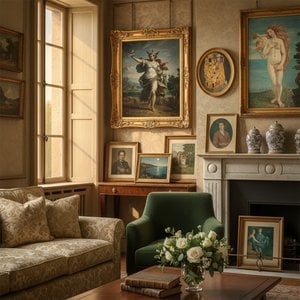
Romantikk i kunsten: Topp 10 malerier for hjemmet – ArtsDot.no
Oppdag de 10 mest romantiske maleriene gjennom tidene! Fra Monet til Klimt – utforsk kjærlighet, stemning og lidenskap i klassisk kunst. Finn din favoritt og skap et unikt hjem med ArtsDot.com. Utforsk samlingen online!