
- Forsiden

- Reproduksjon av oljemaleri
- étienne maurice falconet
- Pygmalion and Galatea

 Bestill trykk Kjøp digitalt bilde
 Send
Send
 Del med andre
 Details
 Legg til i favoritter

 Last ned bildet
 Liknende objekter
 X-Ray
X-Ray
 Lysbildefremvisning
Pygmalion and Galatea


Håndlaget oljereproduksjon
Håndmalt olje på lerret i din valgte størrelse og ramme, laget på bestilling av våre kunstnere.




P118B $10

P118H $10

P118W $10

P438Z $10

P508JH $12

P508YH $12

P805H $10

P805Z $10

P919BZ $10

P919G $10

P919XJ $10

P959ZH $10

P968JZ $12

W106C $8

W218G $10

W218JH $8

W218Y $10

W307PJ $10

W316G $10

W316PJ $8

W316Y $10

W398PJ $8

W4111J $10

W500HY $15

W500JH $15

W692G $12

W849H $8

W940BG $15

W953PJ $8




 Les mer om dette
Velg mellom våre forhåndsdefinerte størrelser som bevarer kunstverkets opprinnelige proporsjoner.

Du kan angi egne mål for å tilpasse en spesifikk ramme eller plass. Dersom den valgte størrelsen ikke samsvarer med originalbildets proporsjoner, vil vi enten beskjære kunstverket eller utvide maleriet med ytterligere håndmalte elementer. En digital mockup vil bli sendt til din godkjenning før produksjonen starter.
Vennligst merk at forhåndsvisningen på skjermen ikke gjenspeiler den faktiske beskjæringen eller utvidelsen. Kun mockuppen vil vise den endelige komposisjonen nøyaktig.
Selv om tilpassede størrelser er tilgjengelige, anbefaler vi å velge et mål fra den forhåndsdefinerte listen for å bevare de originale proporsjonene.
Etter bestilling vil ArtsDot.com-teamet sende e-post til kunden for instruksjoner og sende et utkast (mockup) som forhåndsvisning.
Verdensomspennende levering () på 3–4 uker i stedet for standard 5 uker. (1 July). Ingen kompromisser med kvaliteten.

Gratis ekspressfrakt over hele verden

Lerretsduk av høykvalitets lin

Full forsikring under transport

Garanti for refusjon av toll og importavgifter

Garantert korrekt fargegjengivelse

60 dagers returrett (kun ved feil)

100% pengene tilbake-garanti

Rabatt ved flere kjøp
 Glassalternativet er kun tilgjengelig i størrelser under 110 cm

Pygmalion and Galatea
Teknikk for reproduksjon
Størrelse på reproduksjon
-


Endelig pris
-
Beskrivelse av kunstverket
The Sculptor’s Dream: Pygmalion and Galatea
Étienne Maurice Falconet's "Pygmalion and Galatea," completed in 1763, isn’t merely a depiction of a classical myth; it’s a poignant exploration of creation, longing, and the transformative power of love. This marble sculpture, now housed at The Walters Art Museum, captures a pivotal moment – the instant when Pygmalion, captivated by his own meticulously crafted statue, witnesses Galatea awaken to life under the benevolent gaze of Venus. More than just a narrative scene, Falconet masterfully conveys an intense emotional current, inviting viewers into the sculptor’s very soul.
The sculpture's composition is remarkably dynamic, eschewing the static formality often associated with Neoclassical art. Pygmalion, kneeling in adoration, is rendered with a palpable sense of vulnerability and astonishment. His posture – slightly bowed, hand outstretched – speaks volumes about his sudden realization. Galatea stands tall and graceful, her pose radiating an ethereal beauty that contrasts subtly with the more grounded physicality of her creator. The inclusion of Cupid, positioned on the left, adds a layer of divine intervention, reinforcing the theme of creation by a higher power. Falconet’s skill lies not just in anatomical accuracy but in his ability to imbue these figures with a sense of movement and life – as if we are witnessing a secret, deeply personal moment unfold.
A Masterclass in Marble: Technique and Detail
Falconet's technical prowess is immediately evident in the sculpture’s exquisite detail. The marble itself has been treated with remarkable precision; the smooth curves of Galatea’s body contrast sharply with the textured folds of Pygmalion’s clothing, creating a compelling interplay of surface qualities. Notice particularly the delicate rendering of her drapery – each fold and pleat meticulously carved to suggest both weight and movement. The artist's use of light and shadow further enhances this sense of realism, highlighting the contours of the figures and adding depth to the composition. The overall effect is one of breathtaking craftsmanship, a testament to Falconet’s mastery of his medium.
Beyond mere technical skill, Falconet demonstrates an understanding of how marble itself can convey emotion. The cool, pale tones of the stone contribute to the sculpture's serene atmosphere, while subtle variations in shade suggest the play of light and shadow on the figures’ skin. This attention to detail elevates the work beyond a simple representation of a mythological scene; it becomes a meditation on beauty, love, and the very nature of creation.
Myth, Symbolism, and Emotional Resonance
The story of Pygmalion and Galatea is rich in symbolism, exploring themes that have resonated with artists and audiences for centuries. The sculpture represents not only the power of artistic creation but also the potential for human longing and the yearning for unattainable beauty. Pygmalion’s initial detachment from women, his subsequent fall in love with a statue, speaks to the transformative nature of passion – how it can elevate our perception of the world and even breathe life into inanimate objects.
Venus, as the goddess of love, acts as a catalyst for this transformation. Her presence underscores the divine element at play, suggesting that true beauty is not merely a product of human skill but also a gift from the gods. The sculpture’s emotional impact lies in its ability to evoke feelings of tenderness, wonder, and perhaps even a touch of melancholy – a recognition of the bittersweet nature of love and creation.
A Legacy of Beauty: Falconet's Enduring Influence
Étienne Maurice Falconet’s “Pygmalion and Galatea” stands as a cornerstone of Neoclassical sculpture, influencing generations of artists with its elegant composition, technical brilliance, and profound emotional depth. His work on the colossal bronze statue of Peter the Great in St. Petersburg cemented his reputation as one of the most important sculptors of his time, while his contributions to Sèvres porcelain demonstrated his versatility and artistic vision. Today, this remarkable sculpture continues to captivate viewers with its timeless beauty and enduring message – a testament to the power of art to transform not only our understanding of the world but also ourselves.
Lignende kunstverk


Om kunstneren
Étienne Maurice Falconet: Sculptor of Grandeur and Delicate Beauty
Étienne Maurice Falconet (1 December 1716 – 24 January 1791) stands as a pivotal figure in the late Baroque, Rococo, and early Neoclassical periods of French sculpture. Born into modest circumstances in Paris, his journey from a humble apprenticeship to becoming one of the most celebrated artists of his time is a testament to talent, ambition, and an extraordinary ability to capture both power and grace. Falconet’s legacy rests primarily on two monumental achievements: the colossal bronze statue of Peter the Great, “The Bronze Horseman,” in St. Petersburg, Russia, and his prolific contributions to the Royal Sèvres porcelain manufactory, where he elevated small-scale sculpture to an art form in its own right. Falconet's early life was marked by a practical apprenticeship—he began as a marble cutter’s assistant—a far cry from the artistic circles he would soon enter. However, his innate talent for sculpting quickly shone through, producing clay and wood figures during his leisure hours that attracted the attention of Jean-Baptiste Lemoyne the Younger, a leading sculptor of the time. Lemoyne recognized Falconet's potential and took him as his pupil, providing invaluable training and guidance. This mentorship proved crucial, laying the foundation for Falconet’s subsequent success. Early works like “Milo of Croton” (1754), a remarkably lifelike depiction of the Greek hero, secured his admission to the Académie des Beaux-Arts, marking a significant step in his career and establishing him as a rising star within the Parisian art world. The sculpture’s realism and emotional depth were particularly striking for their time, demonstrating Falconet's keen observational skills and ability to imbue stone with human feeling. Falconet’s rise to prominence was further fueled by his participation in the lavish salons of 1755 and 1757, where he unveiled his celebrated marble sculptures, “L’Amour” (Love) and “The Bather” (also known as "Nymphe descendant au bain"). These works, characterized by their sensual themes, elegant poses, and exquisite detailing, captivated audiences and cemented Falconet's reputation for capturing the beauty of the human form with remarkable sensitivity. The “Bather,” in particular, is considered a masterpiece of Rococo sculpture, showcasing Falconet’s mastery of drapery, light, and shadow—elements that he would later skillfully employ in his monumental bronze statue. These early successes were not merely artistic achievements; they also reflected the prevailing tastes of the French court, where elegance, sensuality, and mythological subjects were highly valued. A pivotal moment in Falconet’s career arrived in 1766 when he was invited to St. Petersburg by Catherine the Great, then Empress of Russia. This invitation marked a dramatic shift in his artistic trajectory, leading him to undertake one of the most ambitious projects of his career: the creation of “The Bronze Horseman,” a colossal equestrian statue commemorating Peter the Great’s victory over Sweden. Working alongside his pupil and stepdaughter, Marie-Anne Collot, Falconet spent years meticulously crafting this monumental work, which stands as a symbol of Russian power and imperial grandeur. The sheer scale and technical complexity of the sculpture—requiring an enormous amount of bronze—testified to Falconet’s skill and determination. The statue's imposing presence and dynamic composition continue to inspire awe today. Beyond his monumental works, Falconet’s contributions to the Royal Sèvres porcelain manufactory were equally significant. Appointed director of the sculpture atelier in 1757, he revolutionized the production of small-scale porcelain figurines, transforming them from simple decorative objects into miniature works of art. He introduced new techniques and designs, creating a series of exquisite “enfants” (children) depicting various figures from Greek mythology and classical literature—a set that became immensely popular throughout Europe. Falconet’s influence extended far beyond Sèvres; his innovative approach to porcelain sculpture inspired other manufactories to emulate his style, establishing a distinct aesthetic tradition. His work at Sèvres demonstrated an understanding of both technical mastery and artistic expression, showcasing the potential for delicate detail and narrative storytelling within the constraints of a small-scale medium. Falconet’s artistic vision was deeply influenced by several sources. The painter François Boucher, known for his opulent and sensual Rococo style, undoubtedly played a role in shaping Falconet's aesthetic sensibilities. Furthermore, he drew inspiration from contemporary theater and ballet, evident in the graceful poses and dynamic compositions of many of his sculptures. His work often possesses a subtle eroticism—a delicate balance between beauty, sensuality, and coy charm—reflecting the prevailing artistic trends of the 18th century. Despite facing challenges during the French Revolution, which resulted in the destruction of many of his religious works, Falconet’s legacy endures through “The Bronze Horseman” and his exquisite porcelain sculptures, solidifying his place as one of France's most celebrated sculptors. His ability to seamlessly blend technical skill with artistic vision continues to resonate with viewers today.
étienne maurice falconet
1716 - 1791 , France
Kort om kunstneren
- Artistic Movement Or Style: Baroque, Rococo, Neoclassical
- Artists Or Movements Influenced By This Artist: ['Boucher']
- Artists Who Influenced This Artist: ['Jean-Baptiste Lemoyne']
- Date Of Birth: December 1, 1716
- Date Of Death: January 24, 1791
- Full Name: Étienne Maurice Falconet
- Nationality: French
- Notable Artworks:
- Bronze Horseman Statue
- Flora
- Milo of Croton
- Place Of Birth: Paris, France
Relaterte artikler

The Revival of Antiquity: Exploring the Neoclassical Movement & its Enduring Legacy
Explore the revival of classical art with our deep dive into Neoclassicism! Discover key artists like Jacques-Louis David, Enlightenment influences & lasting impact on art history. High-quality reproductions at ArtsDot.


The Revival of Antiquity: Exploring Neoclassical Art's Ideals & Enduring Legacy
Explore the revival of classical ideals in Neoclassical art! Discover Jacques-Louis David & the movement's impact on painting, sculpture & architecture. Expert insights & high-quality reproductions at ArtsDot.
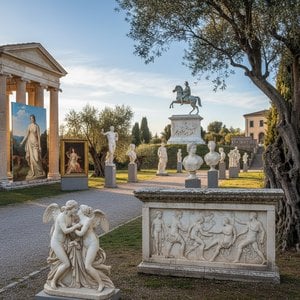
Neoklassismens 10 Mesterverk: Kunsthistorie og Inspirasjon til Hjemmet
Utforsk neoklassismens 10 mest ikoniske malerier! Oppdag historiene bak David, Ingres og Canova – mestere av klassisk kunst. Finn inspirasjon til interiørdesign & kjøp reproduksjoner på ArtsDot.com.

Antonio Canova: Neoclassical Sculpture & the Pursuit of Emotional Perfection
Explore the life & art of Antonio Canova, the greatest Neoclassical sculptor. Discover his masterpieces, innovative techniques, and lasting influence on fine art collecting. Expert insights for discerning investors.

The Enduring Legacy of Marble: A Comprehensive Exploration of Technique, Symbolism & Artistic Expression
Explore the rich history of marble sculpture from antiquity to the Renaissance! Discover key techniques, influential artists & enduring themes in classical art. Expert insights for collectors and enthusiasts at ArtsDot.

