

 Send
Send Del
Del
 Vis detaljer
 Utskriftsvennlig guide

 Last ned bilde
 Liknende objekter
 Lysbildefremvisning
 Spørsmål og svar
 Statistikk
Prophet with Scroll (detail)


 Vis hele teksten
Giclée / Kunsttrykk
Giclée- eller lerretsprint av museumskvalitet med rask produksjon og fleksible valgmuligheter for etterbehandling. ( Kjøp håndmalt maleri Bytt til digitalt bilde)




































Velg mellom våre forhåndsdefinerte størrelser som bevarer kunstverkets opprinnelige proporsjoner.

Skriv inn ønsket bredde og høyde for å tilpasse trykket til din ramme eller vegg. Et trykk kan kun beskjæres, aldri skaleres opp utover motivets opprinnelige størrelse, noe som betyr at et format med andre proporsjoner vil føre til tap av deler av bildet. Vi sender deg en digital mockup for godkjenning før vi starter trykkeprosessen. Bildet som vises på denne siden viser ikke den faktiske beskjæringen — det er kun mockuppen som viser dette.
Verdensomspennende levering () på 2 uker i stedet for standard 4/5 uker. (4 November)

Gratis ekspressfrakt over hele verden

Lerretsduk av lin av høy kvalitet

Full transportforsikring

Garanti for refusjon av toll og importavgifter

Garantert fargegjengivelse

100 dagers returrett ved fabrikasjonsfeil

100% pengene tilbake-garanti

Rabatt ved flere kjøp
 Glassalternativet er kun tilgjengelig i størrelser under 110 cm

Prophet with Scroll (detail)
Giclée / Kunsttrykk
Størrelse på reproduksjon
-


Totalpris for valgte alternativer
Nkr 602
The Contemplative Gaze of Renaissance Marble
To stand before this detail of a prophet is to encounter a moment suspended in time—a profound echo from the heart of the Italian Renaissance. The marble itself, aged and bearing the patina of centuries, seems less like inert stone and more like solidified thought. We are drawn immediately into the intimate space framed by the sculptor’s hand, focusing solely on the eloquent curve of the brow, the solemn set of the mouth, and the cascade of meticulously carved hair. This is not merely a portrait; it is an embodiment of deep introspection, capturing that universal human experience of profound contemplation.
Mastery in Marble: Technique and Form
The technical brilliance displayed here speaks volumes about the skill of its creator, Donatello. The handling of the marble suggests a mastery that bridged classical ideals with burgeoning Renaissance naturalism. Observe how the artist has treated the drapery; the folds are not simply carved lines but possess a palpable weight, suggesting the heavy fall of rich fabric over the shoulders. This illusion of texture contrasts beautifully with the relative smoothness achieved on the skin, allowing the viewer's eye to trace the subtle variations in tone—the soft shadows defining the cheekbone, the slight discoloration that only time can bestow upon such noble material. The very act of carving this piece required an almost scientific understanding of anatomy married to poetic vision.
Symbolism and the Weight of Prophecy
The subject matter itself—a prophet holding a scroll—immediately situates the work within a rich tapestry of religious and scholarly tradition. Yet, Donatello elevates this archetype beyond mere iconography. The expression is key: the downturned mouth and the seemingly closed eyes suggest not resignation, but rather an internal dialogue too vast for outward utterance. This quietude speaks to the burden of knowledge, the weight of divine revelation, or perhaps a moment of poignant sorrow. For the modern admirer, this piece offers a powerful symbolic anchor—a reminder that the greatest insights often arrive in moments of profound stillness.
A Touch of Florentine Genius for Your Space
For those seeking to infuse a space with the gravitas and artistry of the early Renaissance, this reproduction offers an unparalleled connection to Donatello’s revolutionary spirit. Whether placed in a library corner, a formal study, or a gallery setting, its muted palette of grays, creams, and browns ensures it harmonizes with sophisticated interior design schemes while commanding attention through sheer artistic merit. Owning such a piece is not just acquiring sculpture; it is curating an atmosphere steeped in history, intellect, and enduring beauty.
Spørsmål og svar
Hvilken atmosfære formidler "Prophet with Scroll (detail)"?
Den overordnede stemningen i "Prophet with Scroll (detail)" av Donatello er Calm. Stemningen beskriver verkets generelle atmosfære.
Finnes det et faktablad om "Prophet with Scroll (detail)" av Donatello for studenter?
Guiden til "Prophet with Scroll (detail)" er kunstverkets Faktablad for studenter-side – et utskrivbart faktablad som viser kunstverket med bildetekst, kreditering og informasjonstabell (kunstner, datoer, medium, original størrelse, samling).
Tillater opphavsretten til "Prophet with Scroll (detail)" av Donatello reproduksjoner?
Opphavsretten til "Prophet with Scroll (detail)" av Donatello er klar: verket er fritt tilgjengelig – opphavsretten har utløpt. At det befinner seg hos Museo dell'Opera del Duomo, endrer ikke denne statusen.
Lignende kunstverk


Om kunstneren
Early Life and Artistic Beginnings
Donato di Niccolò di Betto Bardi, universally known as Donatello, was born in Florence around 1386 – a time of burgeoning artistic innovation within the city. His early life remains somewhat shrouded in mystery, but we know he received his initial training not in a formal academy, but through apprenticeships with skilled artisans. He began his career under Maestro Lorenzo Ghiberti, a master goldsmith and sculptor whose workshop was at the heart of Florentine art production during this period. This experience exposed Donatello to the techniques of bronze casting and relief carving, laying the foundation for his future achievements. Crucially, he also studied the classical sculptures that were beginning to be rediscovered and admired in Florence – a rediscovery that profoundly shaped his artistic vision. The influence of these ancient forms, combined with the evolving spirit of the Renaissance, would propel Donatello to become one of the most significant sculptors of his time.Key Works and Revolutionary Techniques
Donatello’s legacy rests upon a remarkable body of work, each piece demonstrating a unique evolution in his style and technique. Perhaps his most celebrated achievement is undoubtedly *David*, created around 1440 for the Medici family. This sculpture was groundbreaking not only for its monumental scale but also for its unprecedented realism – it was the first freestanding nude male statue to be produced since antiquity. Unlike earlier depictions of David, which often emphasized his heroic status and divine favor, Donatello presented a young, vulnerable figure, imbued with a palpable sense of human emotion. The contrapposto stance—a subtle shift in weight that creates an asymmetrical balance—added to the sculpture’s dynamism and lifelike quality. Other notable works include *St. Louis of Toulouse*, a magnificent bronze depicting Saint Louis, and his powerful relief carving *The Sacrifice of Isaac*. Donatello's innovative use of perspective and his ability to capture human expression were revolutionary for his time, setting new standards for sculptural realism.Artistic Style and Influences
Donatello’s artistic style underwent several distinct phases throughout his career. Initially, he drew heavily from the conventions of Gothic sculpture, characterized by stylized forms and a focus on symbolic representation. However, as he matured, he increasingly embraced classical ideals, incorporating elements of ancient Greek and Roman art into his work. This shift is particularly evident in *David*, which demonstrates a sophisticated understanding of anatomy and proportion—a hallmark of classical sculpture. Furthermore, Donatello’s style was deeply influenced by the humanist philosophy that dominated Renaissance thought. He sought to represent the human form with accuracy and emotional depth, reflecting the belief that humans were capable of great beauty and virtue. His work served as a powerful affirmation of human potential, aligning perfectly with the core tenets of the Renaissance spirit.Personal Life and Working Methods
Donatello was known for his passionate temperament and sometimes abrasive personality – traits that often complicated his professional life. While he enjoyed considerable acclaim during his lifetime, he struggled with the business aspects of being an artist, frequently accepting more commissions than he could realistically fulfill. This led to delays in completing projects and occasionally resulted in him handing them over to other sculptors for finishing. Despite these challenges, Donatello remained a prolific and influential figure, constantly pushing the boundaries of artistic expression. He was deeply committed to his craft, spending countless hours meticulously shaping stone and bronze, striving to capture the essence of human form and emotion. His dedication to his art is evident in every detail of his sculptures—a testament to his genius and unwavering passion.Legacy and Historical Significance
Donatello’s impact on the course of Western art is immeasurable. He revitalized interest in classical sculpture, demonstrating its enduring relevance and inspiring generations of artists to emulate his techniques. His innovations in realism, anatomy, and perspective profoundly influenced subsequent sculptors, including Michelangelo Buonarroti. Donatello's work served as a bridge between the medieval and Renaissance worlds, embodying the spirit of humanism and artistic innovation that defined this transformative era. He remains one of the most celebrated figures in art history—a true pioneer who forever changed the way we perceive and appreciate sculpture.
Donatello
1386 - 1466 , Italia
Kort om kunstneren
- Artistic Movement Or Style: Renaissance tidlig
- Artists Or Movements Influenced By This Artist: ['Italiensk Renaissance']
- Artists Who Influenced This Artist: ['Skulpturklassikere']
- Date Of Birth: c. 1386
- Date Of Death: 1466
- Full Name: Donatello di Niccolò
- Nationality: Italiensk
- Notable Artworks:
- David
- St. Louis
- Sacrificio di Isacco
- Place Of Birth: Firenze, Italia
Relaterte artikler

Bronzens Mesterverk: 10 Skulpturer Som Forandret Kunsthistorien | ArtsDot
Oppdag 10 legendariske bronse skulpturer som revolusjonerte kunsthistorien! Fra Michelangelo til Rodin – lær om teknikker, historier og tidløs skjønnhet. Finn museumskvalitets reproduksjoner & interiørinspirasjon på ArtsDot.com.
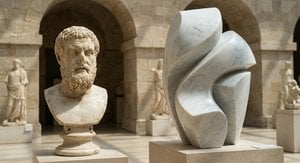
The Enduring Allure of Marble in Art History: From Classical Sculpture to Modern Abstraction
Explore the captivating history of marble sculpture from ancient Greece to modern art. Discover renowned artists like Canova & Michelangelo, carving techniques, and investment insights at ArtsDot.

The Enduring Form: Sculpture Across History, Technique & Emotional Resonance
Explore the rich history of sculpture with ArtsDot. Discover key techniques, influential artists & investment potential for discerning collectors. Expert insights into valuing and collecting timeless masterpieces.

The Enduring Form: Exploring Themes & Techniques in Sculpture Across Historical Periods
Explore the rich history of sculpture from ancient masterpieces to contemporary innovations. Discover key techniques, influential artists & investment potential for discerning art collectors.

Bronseklassikere: 10 skulpturer som revolusjonerte kunsten | ArtsDot
Utforsk 10 legendariske bronseskulpturer som formet kunsthistorien! Fra Rodin til Michelangelo – oppdag historiene, teknikkene og skjønnheten bak tidløse mesterverk. Finn din perfekte veggkunst eller interiørdekor på ArtsDot.com.
