


 Del som digitalt kort
 Del
Del
 Detaljer
 Studentguide

 Last ned
 Liknende objekter
 Lysbildefremvisning
 Besøksstatistikk
David (detail)


 Les mer
Giclée / Kunsttrykk
Giclée- eller lerretsprint av museumskvalitet med rask produksjon og fleksible valgmuligheter for etterbehandling. ( Bestill håndmalt reproduksjon Gå til digitalt bilde)




































Velg mellom våre forhåndsdefinerte størrelser som bevarer kunstverkets opprinnelige proporsjoner.

Skriv inn bredden og høyden du trenger, slik at den passer til din ramme eller vegg. Et trykk kan kun beskjæres, aldri gjøres større enn bildet, så et format med en annen form vil miste en del av motivet. Vi sender deg en digital mockup for godkjenning før vi trykker noe som helst. Bildet som vises på denne siden viser ikke den faktiske beskjæringen — det er kun mockuppen som gjør det.
Verdensomspennende levering () på 2 uker i stedet for standard 4/5 uker. (24 October)

Gratis ekspressfrakt over hele verden

Lerretsduk av høykvalitets lin

Full transportforsikring

Garanti for refusjon av toll og importavgifter

Garantert fargeekthet

100 dagers returrett ved fabrikasjonsfeil

100% pengene tilbake-garanti

Mengderabatt
 Glassalternativet er kun tilgjengelig i størrelser under 110 cm

David (detail)
Giclée / Kunsttrykk
Format på reproduksjon
-


Totalpris
Nkr 589
The Contemplative Gaze of David
To stand before this detail of Donatello's David is to encounter not merely a sculpture, but a profound meditation on nascent heroism. The marble seems to breathe with the weight of history and the quiet intensity of introspection. This close-up view focuses intimately on the head and upper torso, drawing the viewer into the very essence of the biblical figure. The artist has captured a moment suspended between action and reflection; David is not depicted in the triumphant aftermath of battle, but rather in a state of deep contemplation. His gaze, directed forward yet seemingly inward, invites us to ponder the burdens carried by even the mightiest souls.
Mastery in Marble: Technique and Form
The technical brilliance evident here speaks volumes about Donatello's unparalleled skill as a sculptor. The material itself—the luminous white of the marble—is handled with breathtaking finesse. Observe how the soft, diffused lighting plays across the polished surface, defining every subtle curve of the neck and shoulder. The contrast between the smooth, idealized planes of the skin and the more textured suggestion of hair is masterful. Donatello’s technique, rooted in classical tradition yet pushing toward a startlingly modern realism, allows the viewer to appreciate the sheer physicality of the form. It is a testament to the subtractive process—the patient removal of stone until only perfect human potential remained.
Echoes of Renaissance Idealism
Historically, this work anchors us firmly in the burgeoning spirit of the Italian Renaissance. Donatello was instrumental in reviving the freestanding nude male figure since antiquity, a bold statement that marked a pivotal shift in Western art. While the piece embodies classical ideals of beauty and anatomical perfection, it resists mere imitation. Instead, it imbues those perfect forms with palpable human vulnerability. For the collector or designer, owning a reproduction of this work is to bring home a tangible link to the intellectual fervor and artistic rebirth that defined Florence during Donatello's lifetime.
Symbolism and Emotional Resonance
The symbolism woven into David’s posture is rich and multifaceted. He represents more than just a warrior; he embodies the quiet strength required for moral conviction. The slight turn of the head, the gentle drape of the cloth—these elements guide our emotional response toward empathy rather than awe. It suggests that true power often resides not in overt display, but in the steadfast resolve found within moments of solitude. This piece offers a powerful counterpoint to overly dramatic art; it whispers of enduring character.
Bringing Antiquity Home
For those seeking an object that elevates any space—be it a grand hall or a private study—this reproduction serves as more than mere decoration. It is a conversation starter, a piece imbued with narrative depth and artistic pedigree. The soft palette of white, grey, and beige ensures that the sculpture harmonizes beautifully with diverse interior schemes, allowing its timeless form to remain the undisputed focal point. It offers an enduring sense of cultured gravitas.
Spørsmål og svar
Fremstår fargene i "David (detail)" som sterke eller duse?
"David (detail)" av Donatello viser en Monochromatic fargeintensitet.
Hva forklarer opphavsrettssituasjonen til "David (detail)" av Donatello?
"David (detail)" av Donatello er i det frie domene – opphavsretten har utløpt. Opphavsretten løper fra kunstnerens dødsår, som var i 1466.
Hvilket medium er "David (detail)" av Donatello utført i?
Donatello brukte Marble-teknikken i "David (detail)". Teknikken definerer det materielle uttrykket til det originale verket.
Relaterte kunstverk


Kunstnerbiografi
Early Life and Artistic Beginnings
Donato di Niccolò di Betto Bardi, universally known as Donatello, was born in Florence around 1386 – a time of burgeoning artistic innovation within the city. His early life remains somewhat shrouded in mystery, but we know he received his initial training not in a formal academy, but through apprenticeships with skilled artisans. He began his career under Maestro Lorenzo Ghiberti, a master goldsmith and sculptor whose workshop was at the heart of Florentine art production during this period. This experience exposed Donatello to the techniques of bronze casting and relief carving, laying the foundation for his future achievements. Crucially, he also studied the classical sculptures that were beginning to be rediscovered and admired in Florence – a rediscovery that profoundly shaped his artistic vision. The influence of these ancient forms, combined with the evolving spirit of the Renaissance, would propel Donatello to become one of the most significant sculptors of his time.Key Works and Revolutionary Techniques
Donatello’s legacy rests upon a remarkable body of work, each piece demonstrating a unique evolution in his style and technique. Perhaps his most celebrated achievement is undoubtedly *David*, created around 1440 for the Medici family. This sculpture was groundbreaking not only for its monumental scale but also for its unprecedented realism – it was the first freestanding nude male statue to be produced since antiquity. Unlike earlier depictions of David, which often emphasized his heroic status and divine favor, Donatello presented a young, vulnerable figure, imbued with a palpable sense of human emotion. The contrapposto stance—a subtle shift in weight that creates an asymmetrical balance—added to the sculpture’s dynamism and lifelike quality. Other notable works include *St. Louis of Toulouse*, a magnificent bronze depicting Saint Louis, and his powerful relief carving *The Sacrifice of Isaac*. Donatello's innovative use of perspective and his ability to capture human expression were revolutionary for his time, setting new standards for sculptural realism.Artistic Style and Influences
Donatello’s artistic style underwent several distinct phases throughout his career. Initially, he drew heavily from the conventions of Gothic sculpture, characterized by stylized forms and a focus on symbolic representation. However, as he matured, he increasingly embraced classical ideals, incorporating elements of ancient Greek and Roman art into his work. This shift is particularly evident in *David*, which demonstrates a sophisticated understanding of anatomy and proportion—a hallmark of classical sculpture. Furthermore, Donatello’s style was deeply influenced by the humanist philosophy that dominated Renaissance thought. He sought to represent the human form with accuracy and emotional depth, reflecting the belief that humans were capable of great beauty and virtue. His work served as a powerful affirmation of human potential, aligning perfectly with the core tenets of the Renaissance spirit.Personal Life and Working Methods
Donatello was known for his passionate temperament and sometimes abrasive personality – traits that often complicated his professional life. While he enjoyed considerable acclaim during his lifetime, he struggled with the business aspects of being an artist, frequently accepting more commissions than he could realistically fulfill. This led to delays in completing projects and occasionally resulted in him handing them over to other sculptors for finishing. Despite these challenges, Donatello remained a prolific and influential figure, constantly pushing the boundaries of artistic expression. He was deeply committed to his craft, spending countless hours meticulously shaping stone and bronze, striving to capture the essence of human form and emotion. His dedication to his art is evident in every detail of his sculptures—a testament to his genius and unwavering passion.Legacy and Historical Significance
Donatello’s impact on the course of Western art is immeasurable. He revitalized interest in classical sculpture, demonstrating its enduring relevance and inspiring generations of artists to emulate his techniques. His innovations in realism, anatomy, and perspective profoundly influenced subsequent sculptors, including Michelangelo Buonarroti. Donatello's work served as a bridge between the medieval and Renaissance worlds, embodying the spirit of humanism and artistic innovation that defined this transformative era. He remains one of the most celebrated figures in art history—a true pioneer who forever changed the way we perceive and appreciate sculpture.
Donatello
1386 - 1466 , Italia
Kort om kunstneren
- Artistic Movement Or Style: Renaissance tidlig
- Artists Or Movements Influenced By This Artist: ['Italiensk Renaissance']
- Artists Who Influenced This Artist: ['Skulpturklassikere']
- Date Of Birth: c. 1386
- Date Of Death: 1466
- Full Name: Donatello di Niccolò
- Nationality: Italiensk
- Notable Artworks:
- David
- St. Louis
- Sacrificio di Isacco
- Place Of Birth: Firenze, Italia
Relaterte artikler

The Enduring Legacy of Bronze: A Historical & Artistic Exploration for the Collector
Explore the rich history & enduring appeal of bronze sculpture with expert insights for collectors at ArtsDot. Learn about casting techniques, iconic artists, collecting tips & contemporary interpretations.

The Enduring Legacy of Bronze: History, Technique & Artistic Expression for the Collector
Explore the rich history & enduring appeal of bronze sculpture with expert insights for collectors at ArtsDot. Learn about casting techniques, iconic artists, and collecting tips.

Bronseklassikere: 10 skulpturer som revolusjonerte kunsten | ArtsDot
Utforsk 10 legendariske bronseskulpturer som formet kunsthistorien! Fra Rodin til Michelangelo – oppdag historiene, teknikkene og skjønnheten bak tidløse mesterverk. Finn din perfekte veggkunst eller interiørdekor på ArtsDot.com.
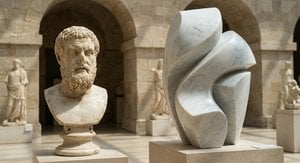
The Enduring Allure of Marble in Art History: From Classical Sculpture to Modern Abstraction
Explore the captivating history of marble sculpture from ancient Greece to modern art. Discover renowned artists like Canova & Michelangelo, carving techniques, and investment insights at ArtsDot.

Bronzens Mesterverk: 10 Skulpturer Som Forandret Kunsthistorien | ArtsDot
Oppdag 10 legendariske bronse skulpturer som revolusjonerte kunsthistorien! Fra Michelangelo til Rodin – lær om teknikker, historier og tidløs skjønnhet. Finn museumskvalitets reproduksjoner & interiørinspirasjon på ArtsDot.com.
