


 Forhåndsvisning
 Send
Send Del med andre
 Vis detaljer

 Last ned bildet
 Liknende objekter
 Røntgenundersøkelse
 Lysbildefremvisning
Cantoria (detail)


 Vis hele teksten
Giclée / Kunsttrykk
Giclée- eller lerretsprint av museumskvalitet med rask produksjon og fleksible valgmuligheter for etterbehandling. ( Kjøp håndlaget maleri Kjøp bilde)




P118B $10

P118H $10

P118W $10

P438Z $10

P508JH $12

P508YH $12

P805H $10

P805Z $10

P919BZ $10

P919G $10

P919XJ $10

P959ZH $10

P968JZ $12

W106C $8

W218G $10

W218JH $8

W218Y $10

W307PJ $10

W316G $10

W316PJ $8

W316Y $10

W398PJ $8

W4111J $10

W500HY $15

W500JH $15

W692G $12

W849H $8

W940BG $15

W953PJ $8




Velg mellom våre forhåndsdefinerte størrelser som bevarer kunstverkets opprinnelige proporsjoner.

Du kan oppgi egne mål for å tilpasse en spesifikk ramme eller et bestemt område. Dersom den valgte størrelsen ikke samsvarer med det originale bildets proporsjoner, vil vi enten beskjære kunstverket eller utvide bildet med en speilet eller ensfarget kant. En digital mockup vil bli sendt til din godkjenning før produksjonen starter.
Vennligst merk at forhåndsvisningen på skjermen ikke gjenspeiler den faktiske beskjæringen eller utvidelsen. Kun mockuppen vil vise den endelige komposisjonen nøyaktig.
Selv om tilpassede størrelser er tilgjengelige, anbefaler vi å velge et mål fra den forhåndsdefinerte listen for å bevare de originale proporsjonene.
Verdensomspennende levering () på 2 uker i stedet for standard 4/5 uker. (28 August)

Gratis ekspressfrakt over hele verden

Lerretsduk av høykvalitets lin

Full forsikring under transport

Garanti for refusjon av toll og importavgifter

Garantert korrekt fargegjengivelse

60 dagers returrett (kun ved feil)

100% pengene tilbake-garanti

Rabatt ved flere kjøp
 Glassalternativet er kun tilgjengelig i størrelser under 110 cm

Cantoria (detail)
Giclée / Kunsttrykk
Størrelse på reproduksjon
-


Endelig pris
$ 62
Cantoria by Donatello: A Symphony of Marble and Spirit
Donatello’s “Cantoria,” housed in Florence’s Museo dell’Opera del Duomo, stands as an emblem of the Early Renaissance—a testament to humanist ideals fused with classical grandeur. Completed between 1433 and 1439, this monumental marble relief sculpture transcends mere decoration; it embodies a profound meditation on faith, beauty, and divine harmony. Commissioned by Lorenzo Medici for the cathedral’s south sacristy walls, it represents one of Donatello's most ambitious projects and arguably his masterpiece.- Subject Matter: The Cantoria depicts a group of angelic figures engaged in an exuberant dance—a celebration of creation and praise to God. These celestial beings are not merely static representations; they pulsate with movement, conveying a palpable sense of joy and dynamism.
- Style & Technique: Donatello’s masterful execution exemplifies the stylistic innovations of his time. He employed *contrapposto*, a technique borrowed from classical sculpture where the torso twists slightly off-center to create balance and visual interest—a deliberate echo of Greek statues. The sculptor meticulously carved intricate details into the marble, utilizing polished surfaces to illuminate the figures' forms and highlighting their drapery folds with subtle shading.
- Historical Context: Constructed during Lorenzo Medici’s reign, “Cantoria” reflects the burgeoning humanist spirit of Florence—a renewed interest in classical art and philosophy that sought to elevate human experience. The sculpture served as a powerful visual affirmation of Florentine civic pride and religious devotion.
- Material: White marble was chosen for its purity and luminosity—symbolic of divine grace.
- Color Palette: Although the sculpture is monochromatic in color (primarily white), Donatello skillfully utilized subtle shading techniques to create depth and volume, enhancing the visual impact of the figures’ forms.
- Lighting Effects: The mosaic background contributes to the sculpture's ethereal atmosphere—illuminating the angelic dancers with a radiant glow that evokes feelings of serenity and contemplation.
Lignende kunstverk


Om kunstneren
Early Life and Artistic Beginnings
Donato di Niccolò di Betto Bardi, universally known as Donatello, was born in Florence around 1386 – a time of burgeoning artistic innovation within the city. His early life remains somewhat shrouded in mystery, but we know he received his initial training not in a formal academy, but through apprenticeships with skilled artisans. He began his career under Maestro Lorenzo Ghiberti, a master goldsmith and sculptor whose workshop was at the heart of Florentine art production during this period. This experience exposed Donatello to the techniques of bronze casting and relief carving, laying the foundation for his future achievements. Crucially, he also studied the classical sculptures that were beginning to be rediscovered and admired in Florence – a rediscovery that profoundly shaped his artistic vision. The influence of these ancient forms, combined with the evolving spirit of the Renaissance, would propel Donatello to become one of the most significant sculptors of his time.Key Works and Revolutionary Techniques
Donatello’s legacy rests upon a remarkable body of work, each piece demonstrating a unique evolution in his style and technique. Perhaps his most celebrated achievement is undoubtedly *David*, created around 1440 for the Medici family. This sculpture was groundbreaking not only for its monumental scale but also for its unprecedented realism – it was the first freestanding nude male statue to be produced since antiquity. Unlike earlier depictions of David, which often emphasized his heroic status and divine favor, Donatello presented a young, vulnerable figure, imbued with a palpable sense of human emotion. The contrapposto stance—a subtle shift in weight that creates an asymmetrical balance—added to the sculpture’s dynamism and lifelike quality. Other notable works include *St. Louis of Toulouse*, a magnificent bronze depicting Saint Louis, and his powerful relief carving *The Sacrifice of Isaac*. Donatello's innovative use of perspective and his ability to capture human expression were revolutionary for his time, setting new standards for sculptural realism.Artistic Style and Influences
Donatello’s artistic style underwent several distinct phases throughout his career. Initially, he drew heavily from the conventions of Gothic sculpture, characterized by stylized forms and a focus on symbolic representation. However, as he matured, he increasingly embraced classical ideals, incorporating elements of ancient Greek and Roman art into his work. This shift is particularly evident in *David*, which demonstrates a sophisticated understanding of anatomy and proportion—a hallmark of classical sculpture. Furthermore, Donatello’s style was deeply influenced by the humanist philosophy that dominated Renaissance thought. He sought to represent the human form with accuracy and emotional depth, reflecting the belief that humans were capable of great beauty and virtue. His work served as a powerful affirmation of human potential, aligning perfectly with the core tenets of the Renaissance spirit.Personal Life and Working Methods
Donatello was known for his passionate temperament and sometimes abrasive personality – traits that often complicated his professional life. While he enjoyed considerable acclaim during his lifetime, he struggled with the business aspects of being an artist, frequently accepting more commissions than he could realistically fulfill. This led to delays in completing projects and occasionally resulted in him handing them over to other sculptors for finishing. Despite these challenges, Donatello remained a prolific and influential figure, constantly pushing the boundaries of artistic expression. He was deeply committed to his craft, spending countless hours meticulously shaping stone and bronze, striving to capture the essence of human form and emotion. His dedication to his art is evident in every detail of his sculptures—a testament to his genius and unwavering passion.Legacy and Historical Significance
Donatello’s impact on the course of Western art is immeasurable. He revitalized interest in classical sculpture, demonstrating its enduring relevance and inspiring generations of artists to emulate his techniques. His innovations in realism, anatomy, and perspective profoundly influenced subsequent sculptors, including Michelangelo Buonarroti. Donatello's work served as a bridge between the medieval and Renaissance worlds, embodying the spirit of humanism and artistic innovation that defined this transformative era. He remains one of the most celebrated figures in art history—a true pioneer who forever changed the way we perceive and appreciate sculpture.
Donatello
1386 - 1466 , Italia
Kort om kunstneren
- Artistic Movement Or Style: Renaissance tidlig
- Artists Or Movements Influenced By This Artist: ['Italiensk Renaissance']
- Artists Who Influenced This Artist: ['Skulpturklassikere']
- Date Of Birth: c. 1386
- Date Of Death: 1466
- Full Name: Donatello di Niccolò
- Nationality: Italiensk
- Notable Artworks:
- David
- St. Louis
- Sacrificio di Isacco
- Place Of Birth: Firenze, Italia
Relaterte artikler

Bronseklassikere: 10 skulpturer som revolusjonerte kunsten | ArtsDot
Utforsk 10 legendariske bronseskulpturer som formet kunsthistorien! Fra Rodin til Michelangelo – oppdag historiene, teknikkene og skjønnheten bak tidløse mesterverk. Finn din perfekte veggkunst eller interiørdekor på ArtsDot.com.
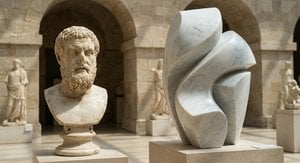
The Enduring Allure of Marble in Art History: From Classical Sculpture to Modern Abstraction
Explore the captivating history of marble sculpture from ancient Greece to modern art. Discover renowned artists like Canova & Michelangelo, carving techniques, and investment insights at ArtsDot.

The Enduring Form: Exploring Themes & Techniques in Sculpture Across Historical Periods
Explore the rich history of sculpture from ancient masterpieces to contemporary innovations. Discover key techniques, influential artists & investment potential for discerning art collectors.

Bronzens Mesterverk: 10 Skulpturer Som Forandret Kunsthistorien | ArtsDot
Oppdag 10 legendariske bronse skulpturer som revolusjonerte kunsthistorien! Fra Michelangelo til Rodin – lær om teknikker, historier og tidløs skjønnhet. Finn museumskvalitets reproduksjoner & interiørinspirasjon på ArtsDot.com.

The Enduring Form: Sculpture Across History, Technique & Emotional Resonance
Explore the rich history of sculpture with ArtsDot. Discover key techniques, influential artists & investment potential for discerning collectors. Expert insights into valuing and collecting timeless masterpieces.


