


 Forhåndsvisning
 Send
Send Del med andre
 Vis detaljer
 Veiledning

 Last ned bildet
 Liknende objekter
 Røntgenundersøkelse
 Lysbildefremvisning
 Statistikk
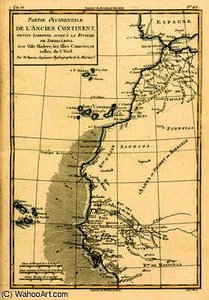
Tabula II Affricae


 Vis hele teksten
Håndlaget oljereproduksjon
Håndmalt olje på lerret i din valgte størrelse og ramme, laget på bestilling av våre kunstnere. ( Bytt til trykk Bytt til digitalt bilde)




































Velg mellom våre forhåndsdefinerte størrelser som bevarer kunstverkets opprinnelige proporsjoner.

Du kan angi egne mål for å tilpasse en spesifikk ramme eller plass. Dersom den valgte størrelsen ikke samsvarer med originalbildets proporsjoner, vil vi enten beskjære kunstverket eller utvide maleriet med ytterligere håndmalte elementer. En digital mockup vil bli sendt til din godkjenning før produksjonen starter.
Vennligst merk at forhåndsvisningen på skjermen ikke gjenspeiler den faktiske beskjæringen eller utvidelsen. Kun mockuppen vil vise den endelige komposisjonen nøyaktig.
Selv om tilpassede størrelser er tilgjengelige, anbefaler vi å velge et mål fra den forhåndsdefinerte listen for å bevare de originale proporsjonene.
Etter bestilling vil ArtsDot.com-teamet sende e-post til kunden for instruksjoner og sende et utkast (mockup) som forhåndsvisning.
Verdensomspennende levering () på 3–4 uker i stedet for standard 5 uker. (23 September). Ingen kompromisser med kvaliteten.

Gratis ekspressfrakt over hele verden

Lerretsduk av høykvalitets lin

Full forsikring under transport

Garanti for refusjon av toll og importavgifter

Garantert korrekt fargegjengivelse

100 dagers returrett (kun ved mangler)

100% pengene tilbake-garanti

Rabatt ved flere kjøp
 Glassalternativet er kun tilgjengelig i størrelser under 110 cm

Tabula II Affricae
Teknikk for reproduksjon
Størrelse på reproduksjon
-


Endelig pris
$ 263
Lignende kunstverk


Om kunstneren
A Titan of Antiquity: Claudio Ptolemy and the Shaping of Western Thought
Born around AD 100 in the ancient, lore-steeped environs of Canopus, Egypt, Claudio Ptolemy was far more than a mere mathematician; he was a monumental figure whose intellectual reach defined the scientific landscape of his era. Living during the twilight years of the Roman Empire, Ptolemy functioned as a bridge between the classical wisdom of antiquity and the burgeoning curiosity that would eventually ignite the Renaissance. His life’s work was not merely an academic pursuit but a profound attempt to decode the very language of the universe, creating a legacy that resonates through the centuries in both scientific treatises and the evocative beauty of historical cartography.
The brilliance of Ptolemy is most vividly captured in his role as the architect of celestial observation. Through his magnum opus, Almagest, he meticulously charted the movements of the planets using sophisticated geometric principles. By developing a geocentric model—a concept that placed Earth at the heart of the cosmos—he provided a framework for astronomical prediction that remained the undisputed authority for over 1,500 years. This was not a simple philosophical assertion but a complex mathematical achievement, utilizing intricate epicycles and deferents to account for the mysterious retrograde motion of planets. To gaze upon the celestial charts inspired by his work is to witness a moment in human history where mathematics and art danced in inseparable harmony, seeking to capture the divine order of the heavens.
Mapping the Known World: The Art of Geography
Beyond the reaches of the stars, Ptolemy revolutionized our understanding of the terrestrial realm through his monumental atlas, Geographia. In an age where maps often drifted into the territory of myth and legend, Ptolemy introduced a rigorous, mathematical approach to cartography. He consolidated vast amounts of knowledge from Greek, Egyptian, Roman, and Persian sources, utilizing mathematical projections to represent the contours of the Earth with unprecedented precision. His work transformed geography from a collection of narratives into a disciplined science of coordinates and projections.
The enduring impact of his cartographic vision can be seen in the exquisite reproductions of his maps that continue to captivate collectors today. These works, such as the Map of Asia or the detailed Tabula II Affricae, serve as breathtaking windows into a time when the boundaries of the known world were still being etched by scholars and dreamers. Each line and coastline in these historical pieces reflects a meticulous attention to detail, where the ruggedness of distant lands meets the delicate artistry of hand-colored parchment. For the modern observer, these maps are more than mere navigational tools; they are profound explorations of human curiosity and the eternal desire to chart the unknown.
A Lasting Legacy in Art and Science
The historical significance of Claudio Ptolemy extends far beyond the dusty pages of ancient textbooks. His influence acted as a foundational pillar for the scientific revolution, providing the very principles that later astronomers would eventually challenge and refine. Yet, his impact is equally felt in the realm of visual aesthetics. The precision of his mathematical models and the structured beauty of his maps deeply influenced Renaissance artists who sought to depict the natural world with both accuracy and grace.
Today, the works attributed to his legacy continue to inspire a sense of wonder. Whether through the sweeping curves of mysterious oceans in a World Map or the intricate settlements detailed in his African charts, Ptolemy’s spirit lives on. He remains a symbol of the human intellect's ability to impose order upon chaos, turning the vast, terrifying expanse of the cosmos and the earth into a structured, beautiful, and ultimately understandable masterpiece.

claudio ptolomeo
Egypt
Kort om kunstneren
- Artistic Movement Or Style: Renaissance Art
- Artists Or Movements Influenced By This Artist: ['Euclid']
- Artists Who Influenced This Artist: ['Aristotle']
- Date Of Birth: c. AD 100
- Date Of Death: 160s/170s
- Full Name: Claudius Ptolemy
- Nationality: Greek
- Notable Artworks:
- Map of Asia
- Tabula II Affricae
- Place Of Birth: Canopus, Egypt
Relaterte artikler

Mohamed Amin: Capturing Postcolonial Africa's Spirit Through the Lens
Explore the life & work of Mohamed Amin, Kenya's pioneering photojournalist who captured Africa’s defining moments. Discover his impact on documentary and wildlife photography, from independence to the Ethiopian famine.
Marianne Norths 25 Mesterverk: Botanisk Kunst og Eventyrlige Reiser | ArtsDot
Oppdag Marianne Norths 25 mest ikoniske verk! Fordyp deg i hennes fargerike botaniske malerier fra eksotiske reiser. Eksklusivt utvalg av kunsttrykk og lerretstrykk på ArtsDot.com – forvandle hjemmet ditt med tidløs skjønnhet. Utforsk samlingen online!
Digital kunst som håndmalte oljemalerier – høy fortjeneste, museekvalitet og enkel markedsføring
Opplev håndmalte oljemalerier av museumskvalitet hos ArtsDot – ekspertise i kunstreproduksjon, full tillit med 100% tilfredshetsgaranti og konkurransedyktige priser. Skap en tidløs arv for hjemmet ditt.

Mapping Beauty: Transform Your Space with Stunning Topographical Artworks
Elevate your interiors with breathtaking topographical art. From vintage cartography to textured 3D reliefs, discover how hand-painted maps and historical landscapes can transform any room into a sophisticated sanctuary of discovery and timeless beauty.

El Grecos 25 Mesterverk: Kunst, Historie og Inspirasjon for Ditt Hjem
Utforsk El Grecos 25 mest ikoniske malerier! Oppdag historien bak spansk renessanses mesterverk, fra 'Gravleggelsen av grev Orgaz' til dramatiske portretter. Finn kunsttrykk og reproduksjoner for ditt hjem på ArtsDot.com.