


 Se i rommet
 Del som digitalt kort
 Del
Del
 Detaljer
 Studentguide

 Last ned
 Liknende objekter
 Røntgen
 Lysbildefremvisning
 Besøksstatistikk
Self-Portrait 1


 Les mer
Håndlaget oljereproduksjon
Håndmalt olje på lerret i din valgte størrelse og ramme, laget på bestilling av våre kunstnere. ( Bytt til trykkversjon Gå til digitalt bilde)




P118B Nkr10

P118H Nkr10

P118W Nkr10

P438Z Nkr10

P508JH Nkr12

P508YH Nkr12

P805H Nkr10

P805Z Nkr10

P919BZ Nkr10

P919G Nkr10

P919XJ Nkr10

P959ZH Nkr10

P968JZ Nkr12

W106C Nkr8

W218G Nkr10

W218JH Nkr8

W218Y Nkr10

W307PJ Nkr10

W316G Nkr10

W316PJ Nkr8

W316Y Nkr10

W398PJ Nkr8

W4111J Nkr10

W500HY Nkr15

W500JH Nkr15

W692G Nkr12

W849H Nkr8

W940BG Nkr15

W953PJ Nkr8




Velg mellom våre forhåndsdefinerte størrelser som bevarer kunstverkets opprinnelige proporsjoner.

Skriv inn bredden og høyden du trenger, slik at den passer til din ramme eller vegg. Dette er håndmalt, så for en størrelse med en annen form kan kunstneren male litt mer rundt bildet, eller beskjære det noe — du velger selv. Vi sender deg en digital mockup for godkjenning før maleriet påbegynnes. Bildet som vises på denne siden viser ikke det faktiske resultatet — kun mockuppen gjør det.
Etter bestilling vil ArtsDot.com-teamet sende e-post til kunden for instruksjoner og sende et utkast (mockup) som forhåndsvisning.
Verdensomspennende levering () på 3–4 uker i stedet for standard 5 uker. (24 October). Ingen kompromisser med kvaliteten.

Gratis ekspressfrakt over hele verden

Lerretsduk av høykvalitets lin

Full transportforsikring

Garanti for refusjon av toll og importavgifter

Garantert fargeekthet

100 dagers returrett ved fabrikasjonsfeil

100% pengene tilbake-garanti

Mengderabatt
 Glassalternativet er kun tilgjengelig i størrelser under 110 cm

Self-Portrait 1
Reproduksjonsmetode
Format på reproduksjon
-


Totalpris
Nkr 2499
An Introspective Encounter with Cecilia Beaux
In the quiet realm of late 19th-century American Impressionism, few works capture the delicate tension between public presence and private thought as poignantly as Cecilia Beaux’s Self-Portrait 1. This evocative oil painting serves as a window into the soul of an artist who navigated the complexities of the Gilded Age with profound grace. The portrait presents a young woman in profile, her features rendered with a masterful touch that balances physical likeness with deep psychological resonance. As the viewer meets her distant gaze, there is an immediate sense of being invited into a moment of profound contemplation. Beaux does not merely present her face to the world; she invites us to witness the very act of introspection, making the canvas feel less like a static image and and more like a living, breathing encounter with a brilliant mind.
The technical execution of the piece is a testament to Beaux’s command over the Impressionistic style. Eschewing the rigid, hyper-detailed precision of academic realism, she employs loose, rhythmic brushstrokes that imbue the work with a sense of movement and light. The texture of her white shirt and the soft contours of her hair are built through layers of thin, luminous washes, creating a surface that seems to glow from within. This technique, reminiscent of the legendary John Singer Sargent, allows light to dance across the fabric and skin, capturing the fleeting, ephemeral quality of natural light filtering through an indoor setting. The dark, understated background serves a vital compositional purpose: it pushes the subject forward, ensuring that every subtle shift in shadow and every flicker of light on her features commands the viewer's undivided attention.
A Legacy of Light and Emotion
Beyond its aesthetic brilliance, Self-Portrait 1 carries a weight of historical and emotional significance that makes it a timeless treasure for collectors and enthusiasts alike. Created during an era when women were beginning to carve out professional spaces in the fine arts, the painting stands as a symbol of self-reliance and artistic identity. The presence of smaller, secondary figures within the composition adds a layer of narrative depth, suggesting that while the artist is lost in her own thoughts, she remains inextricably connected to the larger community around her. This subtle interplay between solitude and connection provides a rich subtext for those who appreciate art that explores the human condition.
For the discerning interior designer or art lover, this reproduction offers more than just a beautiful image; it brings an atmosphere of tranquility and intellectual depth to any space. The warm, yellowish hues and soft, diffused lighting create a sense of comfort and quietude, making it an ideal centerpiece for a study, a library, or a sophisticated living area. Whether viewed as a masterclass in Impressionistic technique or as a deeply personal window into the life of Cecilia Beaux, this artwork remains a captivating testament to the power of portraiture to capture the eternal essence of the human spirit.
Spørsmål og svar
Hvordan beskrives stemningen i "Self-Portrait 1" av Cecilia Beaux?
"Self-Portrait 1" har en Classic atmosfære.
Hvilket motiv og hvilken atmosfære forener "Self-Portrait 1" av Cecilia Beaux?
"Self-Portrait 1" av Cecilia Beaux kombinerer portrait, self-reflection, introspection, 19th century, american art, warm colors, female figure med en Classic atmosfære.
Er det mulig å laste ned "Self-Portrait 1"?
"Self-Portrait 1" av Cecilia Beaux kan lastes ned fra verkets Last ned-side, som nedlasting av et digitalt bilde i høy oppløsning.
Relaterte kunstverk


Kunstnerbiografi
A Life Illuminated: The World of Cecilia Beaux
Cecilia Beaux, born Eliza Cecilia Beaux on May 1st, 1855, in Philadelphia, emerged as a pivotal figure in American portraiture during the Gilded Age. Her story is one woven with threads of personal tragedy, determined self-reliance, and an unwavering commitment to artistic excellence. The shadow of early loss fell upon her life when her mother succumbed to puerperal fever just twelve days after Beaux’s birth, leaving a void that would subtly shape her perspective. Raised by her maternal grandmother and aunts in Philadelphia, she experienced a childhood marked by both stability and the quiet absence of parental guidance. Her father, unable to cope with his grief, returned to France for extended periods, creating a somewhat detached familial dynamic. Yet, within this framework, Beaux’s artistic inclinations were nurtured, initially through lessons with her relative Catherine Ann Drinker, an accomplished artist who served as an early role model and mentor. These formative years instilled in her not only technical skills but also a profound understanding of the dedication required to pursue a life devoted to art.Forging a Path: Education and Early Influences
Beaux’s artistic education continued under Francis Adolf van der Wielen, where she honed her skills in perspective and drawing from casts. However, the societal constraints of the Victorian era presented significant obstacles for aspiring female artists; direct study of anatomy was largely denied to women until much later in her career. Undeterred, Beaux persevered, securing a place at the prestigious Pennsylvania Academy of the Fine Arts in 1876. While she maintained a degree of independence from the fervent followers of Thomas Eakins, his progressive teaching philosophy undeniably influenced her approach to art. It was during this period that Beaux began to establish herself as a skilled portraitist, winning several Mary Smith Prizes at the Pennsylvania Academy exhibitions between 1885 and 1892 – accolades that signaled her rising talent and recognition within the artistic community. A crucial turning point came with her decision to study in Paris in 1888, immersing herself in the European art scene and absorbing influences from academic masters like Tony Robert-Fleury and William-Adolphe Bouguereau, as well as the burgeoning Impressionist movement exemplified by artists such as Édouard Manet and Edgar Degas. This exposure broadened her artistic horizons and refined her technique, laying the foundation for her distinctive style. Beaux’s early works often reflected a delicate realism combined with an emerging interest in capturing fleeting moments of light and color – hallmarks of the Impressionist aesthetic.A Master of Society Portraiture
Upon returning to Philadelphia, Cecilia Beaux quickly ascended to prominence as a sought-after portraitist, capturing the essence of America’s social and intellectual elite with remarkable sensitivity and skill. Her portraits weren't merely likenesses; they were insightful studies of character, imbued with psychological depth and an elegant aesthetic sensibility. She possessed an extraordinary ability to convey not only the physical appearance but also the inner lives of her subjects. Her most celebrated works – such as *Harriet Sears Amory* (1892) and portraits of prominent figures like Admiral Sir David Beatty and Georges Clemenceau – exemplify this mastery. Beaux’s brushwork was characterized by a loose, expressive quality, often employing rapid strokes and vibrant colors to create a sense of movement and immediacy. She skillfully utilized light and shadow to sculpt her subjects' features, lending them a three-dimensional presence that captivated viewers. Her ability to capture the subtle nuances of personality – a fleeting smile, a thoughtful gaze – transformed each portrait into a compelling narrative. Beaux’s portraits became highly sought after by wealthy industrialists, politicians, and socialites eager to immortalize their status and achievements on canvas.Breaking Barriers and Lasting Influence
Cecilia Beaux's career was particularly significant for its time, as she navigated the challenges faced by women artists in a male-dominated field. She was the first woman to teach at the Pennsylvania Academy of the Fine Arts, opening doors for future generations of female artists. Her appointment represented a crucial step towards greater inclusivity within the art world and demonstrated her commitment to fostering artistic talent regardless of gender. Beaux’s influence extended beyond her own work; she mentored numerous aspiring artists and became a respected figure in Philadelphia's vibrant art community. In 1895, she was elected an associate of the National Academy of Design (she was elevated to full academician in 1902), solidifying her position as one of America’s leading portrait painters. Her work continued to evolve throughout her career, reflecting both her technical skill and her evolving artistic sensibilities. She maintained a prolific output until well into her eighties, producing countless portraits that remain treasured examples of American art.Legacy and Enduring Influence
Cecilia Beaux’s contributions extended beyond her captivating portraits; she also broke barriers for women in the art world. She was the first woman to teach at the Pennsylvania Academy of the Fine Arts, paving the way for future generations of female artists. Her dedication to her craft earned her numerous accolades, including a gold medal from the National Institute of Arts and Letters and recognition from Eleanor Roosevelt as “the American woman who had made the greatest contribution to the culture of the world.” Her works are now held in esteemed collections such as The Westmoreland Museum of American Art and the Pennsylvania Academy of the Fine Arts, ensuring her legacy endures for generations to come. Beaux’s art continues to resonate with viewers today, offering a glimpse into a bygone era while simultaneously celebrating the enduring power of human connection and artistic expression. Landscape with Farm Building, painted in 1888, demonstrates her skill beyond portraiture, showcasing an evocative Impressionistic style applied to rural American life. Her ability to seamlessly blend technical mastery with emotional depth cemented her place as a significant figure in the history of American art, and continues to inspire artists and art lovers alike.
Cecilia Beaux
1855 - 1942 , USA
Kort om kunstneren
- Artistic Movement Or Style: Impressionisme, Portretter
- Artists Or Movements Influenced By This Artist: ['William Merritt Chase']
- Artists Who Influenced This Artist:
- Thomas Eakins
- John Singer Sargent
- Date Of Birth: 1855-05-01
- Date Of Death: 1942-09-17
- Full Name: Cecilia Beaux
- Nationality: Amerikansk
- Notable Artworks:
- Harriet Sears Amory
- Georges Clemenceau
- Place Of Birth: Philadelphia, USA
Relaterte artikler

The Enduring Legacy of Oil on Canvas: Technique, History & Aesthetic Impact
Explore the rich history & techniques of oil painting – from Renaissance masters to Impressionism. Discover pigments, layering methods, and why this timeless medium endures. Expert insights for artists & art enthusiasts.

Reflecting the Self: A History of Portraiture & Psychological Insight
Explore the fascinating history of self-portraiture from Renaissance masters like Dürer & Rembrandt to modern interpretations. Discover the psychological insights and artistic techniques behind these iconic works. Expert analysis for art enthusiasts.
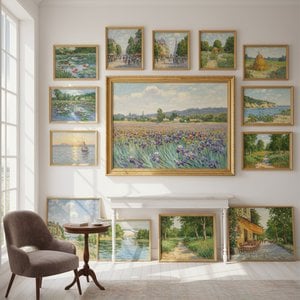
Impresjonistiske landskap: 10 mesterverk som definerte en kunstbevegelse | ArtsDot.no
Opplev impresjonismens magi! Utforsk 10 ikoniske landskapsmalerier av Monet, Renoir og Degas. Lær historien bak mesterverkene & finn din perfekte kunsttrykk på ArtsDot.com.

1800-tallets Mesterverk: 10 Kunstverk som Definerer Epoken – ArtsDot.no
Opplev 1800-tallets kunst gjennom 10 ikoniske mesterverk! Fra romantikk til impresjonisme – lær om Munch, Van Gogh og Monet. Finn museumskvalitets reproduksjoner & interiørinspirasjon på ArtsDot.com. Utforsk samlingen online!

The Enduring Power of Painting: A Historical & Contemporary Exploration of Form and Emotion
Explore the rich history & enduring techniques of oil painting with ArtsDot. Discover masterpieces, learn about art collecting, and find authentic handmade reproductions crafted by skilled artists.
