

 Forhåndsvisning
 Send
Send Del
Del
 Vis detaljer
 Utskriftsvennlig guide

 Last ned bilde
 Liknende objekter
 Røntgenundersøkelse
 Lysbildefremvisning
 Q&A
Q&A Statistikk
Maternity


 Vis hele teksten
Kunstverket som vises på denne siden er beskyttet av opphavsretten, noe som betyr at vi ikke har juridisk tillatelse til å lage eller selge identiske reproduksjoner. Denne beskyttelsen håndheves i henhold til internasjonale avtaler som for eksempel Bernerkonvensjonen og av nasjonale lover, inkludert de som er fastsatt i Amerikansk lov om opphavsrett – Tittel 17.
Denne metoden er i fullt samsvar med opphavsrettslige regler, da den ikke innebærer kopiering eller duplisering av det beskyttede kunstverket. I stedet er det snakk om en kreativ nytolkning – et nytt maleri som er inspirert av originalen, men ikke identisk med den.
Giclée / Kunsttrykk
Giclée- eller lerretsprint av museumskvalitet med rask produksjon og fleksible valgmuligheter for etterbehandling. ( Kjøp håndmalt maleri Bytt til digitalt bilde)




































Velg mellom våre forhåndsdefinerte størrelser som bevarer kunstverkets opprinnelige proporsjoner.

Skriv inn ønsket bredde og høyde for å tilpasse trykket til din ramme eller vegg. Et trykk kan kun beskjæres, aldri skaleres opp utover motivets opprinnelige størrelse, noe som betyr at et format med andre proporsjoner vil føre til tap av deler av bildet. Vi sender deg en digital mockup for godkjenning før vi starter trykkeprosessen. Bildet som vises på denne siden viser ikke den faktiske beskjæringen — det er kun mockuppen som viser dette.
Verdensomspennende levering () på 2 uker i stedet for standard 4/5 uker. (2 November)

Gratis ekspressfrakt over hele verden

Lerretsduk av lin av høy kvalitet

Full transportforsikring

Garanti for refusjon av toll og importavgifter

Garantert fargegjengivelse

100 dagers returrett ved fabrikasjonsfeil

100% pengene tilbake-garanti

Rabatt ved flere kjøp
 Glassalternativet er kun tilgjengelig i størrelser under 110 cm

Maternity
Giclée / Kunsttrykk
Størrelse på reproduksjon
-


Totalpris for valgte alternativer
Nkr 596
Spørsmål og svar
Ble "Maternity" værende i kunstnerens hjemland?
Nei – kunstverket oppbevares i utlandet. "Maternity" befinner seg i Italia, mens Baule People ble født i Ivory Coast.
Hvordan er fargekomposisjonen i "Maternity" av Baule People bygget opp?
Fargekomposisjonen i "Maternity" av Baule People forener en Gentle kontrast med en Balanced Harmony harmoni.
Når ble "Maternity" av Baule People laget, og hvilken stilart tilhører den?
"Maternity" ble laget i 1900, innenfor Tribal Art-retningen.
Lignende kunstverk


Om kunstneren
A Legacy of Masks and Spiritual Symbolism
The Baule people, hailing from the heart of central Ivory Coast in West Africa, possess one of the most prolific and sophisticated sculptural traditions on the continent. Their artistic heritage is not merely a collection of objects but a profound visual language deeply intertwined with religious beliefs, primarily centered around ancestor worship and a complex cosmology that governs every facet of daily life. This creative lineage stretches back centuries, shaped by the historic migrations from Ghana and enduring interactions with various external powers. The resulting art reflects a resilient culture that has successfully preserved its distinct identity through periods of significant social change.
< p>According to oral tradition, the Baule people originated in Ghana before embarking on a monumental westward migration around 1730. Led by the legendary Queen Abla Pokou, this journey was driven by necessity as they sought to cross the Komoe River, a perilous trek that ultimately cemented their identity as a unified and determined people. This movement profoundly influenced Baule social organization, fostering a decentralized governance system that prioritizes communal harmony. As they settled in the fertile region between the Bandama and N'Zi rivers—a territory often described as the Baoule “V”—their unique cultural practices and artistic styles began to flourish, creating a distinct aesthetic footprint in West Africa.The Soul in the Wood: Forms and Symbolism
Baule sculpture is celebrated for its remarkable diversity and technical mastery, ranging from monumental statues that honor ancestors to exquisitely detailed masks used in sacred ceremonial rituals. Most of these works are meticulously carved from hardwood, often adorned with intricate geometric patterns and stylized representations of both human and animal forms. Every motif carries a profound symbolic weight, acting as a bridge between the physical world and the spirit realm. The artistry is characterized by a delicate balance of realism and abstraction, where the beauty of the carving serves to honor the spiritual essence within.
A fascinating aspect of Baule sculpture lies in its representation of the unseen. Statuettes often depict asie usu, or spirits of the forest, alongside blolo bian and blolo bla, known as the “spouses of the afterlife.” While these forest spirits are sometimes described as fearsome, artists frequently render them with beautiful, serene features in an attempt to appease their potential wrath. Similarly, the figures representing spirit spouses are sculpted with great care; because the Baule believe that individuals abandon their otherworldly partners at birth, these figurines are crafted exactly as the spouse wishes to be seen. This practice is intended to prevent spiritual grievances that might manifest as illness or misfortune, making the art a vital tool for maintaining cosmic balance.
Ritual Performance and Cultural Significance
The true vitality of Baule art is perhaps most visible during the Goli festival, a centerpiece of ritual performance and communal expression. During these celebrations, masks become living entities, embodying spiritual power and conveying ancestral narratives through dance and movement. The Kple Kple zoomorphic masks and other iconic facial carvings are not merely static museum pieces but active participants in the social fabric, used to communicate with the divine and reinforce the lineage of the community. Through these performances, the Bauet people ensure that their history and spiritual values remain vibrant and accessible to each new generation.
The historical significance of Baule art extends far beyond its original ritual context. The meticulous attention to detail, such as the elongated breasts in maternity figures symbolizing the importance of breastfeeding, and the use of stools to denote high social status, provides a window into the values of a society that prizes fertility, lineage, and hierarchy. Today, this enduring legacy continues to inspire scholars and contemporary artists worldwide, standing as a testament to the power of art to preserve the soul of a people.

Baule People
Ivory Coast
Kort om kunstneren
- Full Name: Baule People
- Nationality: African
- Place Of Birth: Ivory Coast
- Notable Artworks:
- Masks
- Sculptures
- Artistic Movement Or Style: Traditional African Art
Relaterte artikler

The Enduring Form: Sculpture Across History, Technique & Emotional Resonance
Explore the rich history of sculpture with ArtsDot. Discover key techniques, influential artists & investment potential for discerning collectors. Expert insights into valuing and collecting timeless masterpieces.
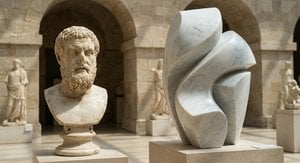
The Enduring Allure of Marble in Art History: From Classical Sculpture to Modern Abstraction
Explore the captivating history of marble sculpture from ancient Greece to modern art. Discover renowned artists like Canova & Michelangelo, carving techniques, and investment insights at ArtsDot.

Bronseklassikere: 10 skulpturer som revolusjonerte kunsten | ArtsDot
Utforsk 10 legendariske bronseskulpturer som formet kunsthistorien! Fra Rodin til Michelangelo – oppdag historiene, teknikkene og skjønnheten bak tidløse mesterverk. Finn din perfekte veggkunst eller interiørdekor på ArtsDot.com.

Bronzens Mesterverk: 10 Skulpturer Som Forandret Kunsthistorien | ArtsDot
Oppdag 10 legendariske bronse skulpturer som revolusjonerte kunsthistorien! Fra Michelangelo til Rodin – lær om teknikker, historier og tidløs skjønnhet. Finn museumskvalitets reproduksjoner & interiørinspirasjon på ArtsDot.com.

The Enduring Form: Exploring Themes & Techniques in Sculpture Across Historical Periods
Explore the rich history of sculpture from ancient masterpieces to contemporary innovations. Discover key techniques, influential artists & investment potential for discerning art collectors.