

 Forhåndsvisning
 Send
Send Del
Del
 Vis detaljer
 Utskriftsvennlig guide

 Last ned bilde
 Liknende objekter
 Røntgenundersøkelse
 Lysbildefremvisning
 Spørsmål og svar
 Statistikk
Plaza, Twilight

- 19.0 x 18.0 cm

 Vis hele teksten
Kunstverket som vises på denne siden er beskyttet av opphavsretten, noe som betyr at vi ikke har juridisk tillatelse til å lage eller selge identiske reproduksjoner. Denne beskyttelsen håndheves i henhold til internasjonale avtaler som for eksempel Bernerkonvensjonen og av nasjonale lover, inkludert de som er fastsatt i Amerikansk lov om opphavsrett – Tittel 17.
Denne metoden er i fullt samsvar med opphavsrettslige regler, da den ikke innebærer kopiering eller duplisering av det beskyttede kunstverket. I stedet er det snakk om en kreativ nytolkning – et nytt maleri som er inspirert av originalen, men ikke identisk med den.
Giclée / Kunsttrykk
Giclée- eller lerretsprint av museumskvalitet med rask produksjon og fleksible valgmuligheter for etterbehandling. ( Kjøp håndmalt maleri Bytt til digitalt bilde)




P118B Nkr10

P118H Nkr10

P118W Nkr10

P438Z Nkr10

P508JH Nkr12

P508YH Nkr12

P805H Nkr10

P805Z Nkr10

P919BZ Nkr10

P919G Nkr10

P919XJ Nkr10

P959ZH Nkr10

P968JZ Nkr12

W106C Nkr8

W218G Nkr10

W218JH Nkr8

W218Y Nkr10

W307PJ Nkr10

W316G Nkr10

W316PJ Nkr8

W316Y Nkr10

W398PJ Nkr8

W4111J Nkr10

W500HY Nkr15

W500JH Nkr15

W692G Nkr12

W849H Nkr8

W940BG Nkr15

W953PJ Nkr8




Velg mellom våre forhåndsdefinerte størrelser som bevarer kunstverkets opprinnelige proporsjoner.

Skriv inn ønsket bredde og høyde for å tilpasse trykket til din ramme eller vegg. Et trykk kan kun beskjæres, aldri skaleres opp utover motivets opprinnelige størrelse, noe som betyr at et format med andre proporsjoner vil føre til tap av deler av bildet. Vi sender deg en digital mockup for godkjenning før vi starter trykkeprosessen. Bildet som vises på denne siden viser ikke den faktiske beskjæringen — det er kun mockuppen som viser dette.
Verdensomspennende levering () på 2 uker i stedet for standard 4/5 uker. (4 November)

Gratis ekspressfrakt over hele verden

Lerretsduk av lin av høy kvalitet

Full transportforsikring

Garanti for refusjon av toll og importavgifter

Garantert fargegjengivelse

100 dagers returrett ved fabrikasjonsfeil

100% pengene tilbake-garanti

Rabatt ved flere kjøp
 Glassalternativet er kun tilgjengelig i størrelser under 110 cm

Plaza, Twilight
Giclée / Kunsttrykk
Størrelse på reproduksjon
-


Totalpris for valgte alternativer
Nkr 604
Lignende kunstverk


Om kunstneren
A Life Bridging Worlds: The Artistic Journey of Arthur Millier
Arthur Millier, born in the coastal town of Weston-super-Mare, Somerset, England in 1893, embarked on a remarkable artistic path that spanned continents and disciplines. His story is one of adaptation, resilience, and a deep commitment to capturing the beauty of the American landscape through both his art and his insightful writing. Immigrating with his family to Los Angeles in 1908, Millier initially pursued commercial art, a pragmatic choice for a young newcomer navigating a new world. However, this early foray into applied design would soon give way to a more profound exploration of artistic expression, fueled by experiences that shaped both his aesthetic vision and his critical voice. The shadow of the First World War loomed large over his formative years; sources differ on whether he served in the Canadian or American Army in France, but it’s clear this period profoundly impacted him, leading to a renewed focus on art upon his return to California in 1919 and enrollment at the prestigious California School of Fine Arts in San Francisco.From Etchings to Eloquent Criticism
Millier quickly distinguished himself as a gifted printmaker, particularly excelling in etching and drypoint. His early work focused on the bustling urban scenes of San Francisco, capturing the energy and dynamism of city life with a keen eye for detail. However, it was his growing fascination with the California landscape that would become the defining characteristic of his artistic output. He wasn’t merely documenting scenery; he sought to evoke its atmosphere, its light, and its inherent tranquility. This sensitivity earned him recognition from the California Society of Etchers in both 1922 and 1928, establishing him as a rising talent within the regional art community. But Millier possessed a unique gift that extended beyond his technical skill with a burin or brush – he was an exceptional writer. In 1926, he transitioned into a career as an art critic for the *Los Angeles Times*, a position he held for an impressive thirty-five years. This role allowed him to not only share his own artistic sensibilities but also to shape public discourse around art in Southern California and beyond. He became known as “the Dean of American Art Critics,” receiving the first Frank Jewett Mather Citation from the College Art Association for outstanding newspaper criticism, a testament to his insightful analyses and eloquent prose.Capturing Twilight and Rural Beauty
Millier’s paintings are characterized by their evocative depictions of twilight plazas, serene willows, and quiet rural scenes. He masterfully captured the subtle nuances of light and shadow, creating an atmosphere of timeless beauty and peaceful contemplation. His work often features a sense of solitude, inviting viewers to immerse themselves in the tranquility of the natural world. While he worked in watercolor primarily during his later years in San Luis Obispo, California, the influence of his earlier printmaking training is evident in the precision of his lines and the careful attention to detail. He wasn’t interested in grand, sweeping vistas; instead, he focused on intimate moments—a quiet street corner bathed in golden light, a lone tree silhouetted against a darkening sky. These scenes resonate with a sense of nostalgia and longing, evoking a simpler time and a deeper connection to the land.Legacy and Lasting Influence
Arthur Millier’s contributions extend beyond his own artistic creations. As an educator at institutions like Chouinard Art Institute, Otis Art Institute, the University of Southern California, and the Pasadena Art Institute from 1922 to 1926, he mentored a generation of artists, fostering their creativity and encouraging them to explore their own unique voices. His work is now held in the permanent collections of numerous museums across the United States, including the Dallas Museum of Art, the Los Angeles County Museum of Art, the Philadelphia Museum of Art, and the Art Institute of Chicago—a testament to his enduring legacy as a significant figure in American art history. He was an active member of several prestigious art societies, including the Chicago Society of Etchers, The California Society of Etchers, and the California Art Club, further solidifying his position within the artistic community. Millier’s life, which concluded in Hackensack, New Jersey, in 1975 at the age of 81, represents a fascinating intersection of artistic practice, critical analysis, and educational leadership—a bridge between worlds that continues to inspire artists and art lovers today.Themes and Techniques
- Landscape as Emotional Space: Millier’s landscapes are not simply representations of places; they are imbued with emotion, reflecting a sense of peace, solitude, and nostalgia.
- Mastery of Light and Shadow: His paintings demonstrate a remarkable sensitivity to the subtle nuances of light and shadow, creating an atmosphere of depth and tranquility.
- Printmaking Influence: The precision of his lines and attention to detail in his watercolors are directly influenced by his earlier training as an etcher and drypoint artist.
- The Power of Eloquent Criticism: Millier’s career as an art critic for the *Los Angeles Times* shaped public discourse around art and established him as a leading voice in American art commentary.
- Rural vs. Urban Dichotomy: His artistic journey reflects a shift from capturing the energy of city life to finding solace and beauty in the quietude of the California countryside.

Arthur Millier
1893 - 1975
Kort om kunstneren
- Full Name: Arthur Henry Thomas Millier
- Nationality: British
- Date Of Birth: 1893
- Date Of Death: 1975
- Place Of Birth: Weston-super-Mare, England
- Notable Artworks:
- Plaza, Twilight
- North Main Street
- Tarquitz Wall
- Artistic Movement Or Style: American Landscape
- Artists Who Influenced This Artist:
- Hugo Friedhofer
- Edward Weston
- Millard Sheets
Relaterte artikler

The Eloquent Line: Exploring the Artistic Significance of Sketches Across Movements and Media
Explore the profound artistic significance of sketches throughout history. From Renaissance masters to modern innovators like Van Gogh & Guston, discover how these foundational works reveal technique, emotion, and vision. Learn more at ArtsDot.

Mesterverk i sort og hvitt: Topp 10 malerier dominert av elfenbenfarge og skygger | ArtsDot.no
Oppdag 10 ikoniske malerier dominert av sort, hvitt og elfenbenfarge! Fra Caravaggio til Munch – utforsk historien bak mesterverkene og finn inspirasjon for ditt hjem. Museumskvalitet kunsttrykk på ArtsDot.com

Svart Kunst: Topp 10 Maler som Definerer Skyggenes Skjønnhet | ArtsDot.no
Utforsk 10 ikoniske malerier dominert av svart – fra Rembrandts skygger til Munchs ekspresjonisme. Oppdag historiene bak mesterverkene og finn kunsttrykk for ditt hjem på ArtsDot.no. Utforsk hele samlingen online!
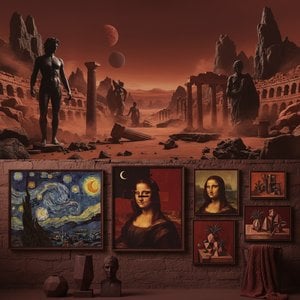
Mørkets Mesterverk: Topp 10 Maler Dominert av Mars Svart – Kunst og Interiør
Utforsk 10 ikoniske malerier dominert av mars svart – fra Rembrandts skygger til Munchs angst. Oppdag historien bak mesterverkene og finn kunsttrykk for ditt hjem på ArtsDot.com. Interiørkunst & reproduksjoner.

Mørkets Mesterverk: 10 Ikoniske Maler Dominert av Lamp Black – ArtsDot.no
Utforsk 10 ikoniske malerier dominert av lamp black – fra Rembrandts dramatiske lysspill til Caravaggios mørke stemning. Oppdag kunsthistorien og finn inspirasjon for interiøret ditt med museumskvalitets reproduksjoner på ArtsDot.com.