Vroege Leven en Artistieke Vorming
Vittore Carpaccio werd rond 1465 geboren in Venetië, een stad die werd gedefinieerd door haar maritieme handel en haar unieke, atmosferische licht. Als jonge kunstenaar binnen de Venetiaanse school zocht hij de begeleiding van Gentile Bellini. Dit meesterschap vormde een cruciale periode in zijn leven; het legde de basis voor zijn technische benadering en bood het noodzakelijke fundament voor zijn toekomstige succes als schilder.
De opleiding die Carpaccio onder Bellini genoot, stelde hem in staat om een vaste hand te ontwikkelen en een scherp oog te krijgen voor de specifieke details van het Venetiaanse leven. Hij leerde navigeren door de complexiteit van compositie en kleur, elementen die essentieel waren voor de artistieke stromingen van die tijd. Deze vroege vorming hielp hem om een vaste voet aan de grond te krijgen in het competitieve artistieke landschap van de Republiek, waarmee hij het toneel bereidde voor een carrière gewijd aan het vastleggen van zowel heilige verhalen als de dagelijkse realiteit van zijn geboortestad.
Artistieke Stijl en Invloeden
De benadering van Vittore Carpaccio ten aanzien van de schilderkunst bleef opvallend conservatief, zelfs terwijl de wereld om hem heen voortdurend in beweging was. Terwijl veel van zijn tijdgenoten de meeslepende humanistische trends omarmden die de Italiaanse renaissancekunst herdefinieerden, keek hij vaak in een geheel andere richting. Zijn werk ademt een gevoel van fantasie uit en grijpt regelmatig terug naar de geest van de middeleeuwse romantiek, in plaats van de pastorale idealen die door de volgende generatie schilders werden geprefereerd. Deze voorkeur verleende zijn scènes een unieke atmosfeer, een sfeer die zich duidelijk onderscheidde van de evoluerende smaken op het Venetiaanse vasteland.
Zijn visuele taal werd gevormd door een specifieke versmelting van invloeden. Hij putte zwaar uit de stijl van Antonello da Messina en de minutieuze tradities van de vroeg-Nederlandse kunst. Deze combinatie stelde hem in staat om een meesterschap over het perspectief te ontwikkelen en een precisie in architecturale details te bereiken die hem onderscheidde van andere kunstenaars uit zijn tijd. Hij had de gave om zijn onderwerpen te plaatsen in zeer specifieke, gestructureerde omgevingen, waarbij hij licht en schaduw gebruikte om een gevoel van diepte te creëren dat zowel tastbaar als buitenaards aanvoelde.
Deze aandacht voor detail is bijzonder evident in zijn grootschalige narratieve werken, waarin hij complexe verhalen verweefde in het weefsel van de setting zelf. Zijn vermogen om de texturen van kleding en de exacte geometrie van een gebouw weer te geven, hielp bij het creëren van een realisme dat zijn meer verbeeldingsrijke verhalen ondersteunde. Door zich te concentreren op deze nauwkeurige elementen, bouwde hij een wereld op die geleefd aanvoelde, zelfs wanneer de thematiek neigde naar het legendarische of het heilige.
Meesterwerken en Narratieve Cycli
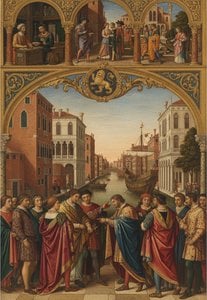
Vittore Carpaccio vond zijn meest krachtige expressie in het grootschalige vertellen van verhalen. Zijn meest ambitieuze onderneming was de cyclus van negen schilderijen die bekendstaat als De Legende van Sint-Ursula, een project dat hij in 1490 tot leven wekte. Deze werken boden hem de mogelijkheid om complexe werelden te creëren, waarbij de toeschouwer diep wordt meegezogen in de fijnmazige details van het leven van de heilige. Daarnaast bezat hij het zeldzame talent om de ware ziel van zijn geboortestad te vangen. In Het Wonder van het Relikwie van het Kruis bij de Ponte di Rialto portretteerde hij Venetië op het toppunt van haar macht, waarbij hij het stedelijke landschap gebruikte om zijn religieuze verhalen te verankeren in een herkenbare, tastbare realiteit.
Zijn veelzijdigheid als kunstenaar blijkt uit de diversiteit van zijn opdrachten. Hij schilderde het Portret van Doge Leonardo Loredan, een werk dat zijn prominente status binnen de Venetiaanse Renaissance onderstreept. Ook zijn vermogen om drama te vatten is meesterlijk in werken zoals Sint-Joris en de Draak, een tempera op houten paneel die momenteel wordt bewaard in de Scuola di San Giorgio degli Schiavoni in Venetië. Dit schilderij vangt een intense spanning door de compositie en de dynamische interactie tussen de figuren.
Enkele van zijn meest iconische werken zijn:
- De Legende van Sint-Ursula (begonnen in 1490)
- Het Wonder van het Relikwie van het Kruis bij de Ponte di Rialto
- Sint-Joris en de Draak
- Portret van Doge Leonardo Loredan
Loopbaan en Belangrijke Opdrachten
De meest productieve jaren van Vittore Carpaccio vonden plaats tussen 1490 en 1519. Gedurende deze periode werd hij een constante aanwezigheid in het religieuze leven van Venetië, waarbij hij diverse kerkelijke opdrachten ontving die hem de ruimte boden om complexe narratieven te verkennen. Zijn werk leek vaak door de straten van de stad te dwalen, waarbij hij de geest van de Republiek vastlegde in grootschalige, stedelijke scènes. Een treffend voorbeeld hiervan is Het Wonder van het Relikwie van het Kruis bij de Ponte di Rialto, een meesterwerk dat Venetië toont op het hoogtepunt van haar burgerlijke trots.
Naarmate zijn carrière vorderde, begon de aard van zijn mecenaat te veranderen. Waar zijn vroege jaren werden gekenmerkt door grootschalige religieuze cycli en publieke werken, verschoof zijn oeuvre na 1510 naar de private sfeer. Hij begon voornamelijk te werken voor individuele Venetiaanse opdrachtgevers, waarbij hij stukken creëerde die de persoonlijke smaak van de groeiende klasse van kooplieden in de stad weerspiegelden. Deze transitie markeerde een beweging van het monumentale, publieke verhalen vertellen uit zijn jeugd naar meer intieme ontmoetingen met zijn verzamelaars.
Zijn religieuze productie bleef gedurende het eerste decennium van de zestiende eeuw constant. Enkele opmerkelijke opdrachten uit deze periode zijn:
- Sint-Thomas Aquinustroning (1507)
- De Presentatie van Christus in de Tempel (1510)
Nalatenschap en Historische Betekenis
Vittore Carpaccio neemt een bijzondere plaats in onder de vroege meesters van de Venetiaanse Renaissance, een tijdperk dat de Italiaanse kunst fundamenteel zou transformeren. Terwijl zijn tijdgenoten zich steeds meer richting nieuwe humanistische stromingen bewogen, bleef Carpaccio vaak verankerd in een meer traditionele manier van kijken. Tegen 1510 begonnen degenen die naast hem leefden en werkten zijn stijl als te conservatief te beschouwen. Hij volgde de wankele stromingen van zijn tijd niet, maar gaf de voorkeur aan een methode die met een bewonderende blik terugkeek naar de gedetailleerde, narratieve tradities uit het verleden.
Deze standvastigheid betekende dat zijn naam soms in de schaduw is komen te staan van iconische figuren zoals Giovanni Bellini of Giorgione. Waar anderen kozen voor een geheel nieuwe visuele taal, bleef Carpaccio zijn werelden opbouwen door middel van uiterst precieze architecturale details en een onmiskenbare fascinatie voor het exotische. Zijn oeuvre fungeert nog steeds als een venster op een specifiek moment in Venetië; hij legde de burgerlijke trots van de stad en de verbinding met het Levant vast door een lens die voor zijn tijdgenoten steeds ouderwetsiger leek te worden. Bij zijn dood in 1526 liet hij een oeuvre na dat getuigt van een unieke, zij het enigszins koppige, toewijding aan zijn ambacht.
Onder zijn meest betekenisvolle werken behoren:
- De Legende van Sint Ursula
- Het Wonder van het Reliek van het Ware Kruis bij de Ponte di Rialto
- Sint Joris en de Draak
Vraag en antwoord
Welke kunstwerken van Vittore Carpaccio worden het meest bekeken?
Er is een Statistieken-pagina voor Vittore Carpaccio, met statistieken over de kunstwerken van de kunstenaar op deze website.
Welke stemmingen drukken de kunstwerken van Vittore Carpaccio uit?
De werken van Vittore Carpaccio kunnen per stemming worden bekeken op de Sfeercollectie pagina van de kunstenaar, waar de kunstwerken zijn gerangschikt op basis van hun vastgelegde stemmingen.
In welke historische periode werkte Vittore Carpaccio?
Vittore Carpaccio werkte in de Renaissance-periode. Deze periode plaatst het oeuvre van de kunstenaar in een historisch kader.