A Life Between Madrid and Rome
Born in Madrid around 1597, Pedro Núñez del Valle spent much of his life navigating the artistic currents of the Spanish Baroque. His early years were shaped by the streets of his birthplace, but his vision expanded significantly when he traveled to Italy. During the years 1613 and 1614, he was active at the Accademia di San Luca in Rome, a period that would leave a permanent mark on his technique. This time in Italy allowed him to absorb the elegance of classical forms and the dramatic use of light and shadow that characterized the era.
Upon returning to Spain in 1624, he settled back into the life of a Madrid painter. He married Ángela de Seseña, and together they raised at least three children: María, Ángela, and Claudio. His professional life was deeply intertwined with the religious and royal institutions of the city. He worked on the decoration of the convent of la Merced and contributed to the grand settings of the royal palaces, including the Buen Retiro and the Alcázar.
The Language of Light and Devotion
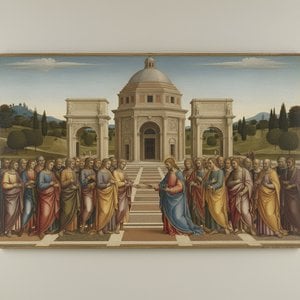
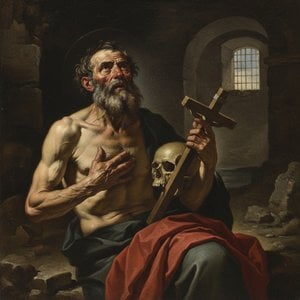
The work of Núñez del Valle is defined by a specific way of handling light. His time in Rome provided him with a command of tenebrism, a style that uses intense contrasts to create depth and emotion. This influence is visible in his religious paintings, where he sought to capture the spiritual weight of his subjects through careful lighting and formal grace. His brushwork often reflected the lessons of the Italian masters, blending a sense of order with the dramatic intensity required by the Baroque period.
His repertoire was diverse, spanning several genres that met the needs of his patrons:
- Religious compositions, such as his depictions of Saint Cecilia.
- Portraits of royalty and noble figures.
- Mythological scenes that explored human drama.
- Decorative works for large-scale architectural spaces.
A Legacy in the Royal Halls
Though he did not secure an official appointment as a painter to the king in 1627, his presence in the royal circles of Spain was undeniable. He was frequently called upon to decorate the most important spaces in the monarchy. Between 1637 and 1638, he worked on series of views of royal country houses for the Torre de la Parada and the Buen Retiro. Later, in 1639, he contributed to the series of portraits of the kings of Castile for the Salón Dorado or de Comedias of the Alcázar.
In his final years, he continued to work alongside other significant figures of the time, such as Francisco Rizi, contributing to the theatrical decorations for the Salón Dorado in honor of Queen Mariana of Austria. When he passed away in 1649, he left behind a body of work that helped define the visual atmosphere of the Spanish court, bridging the gap between the classical traditions of Rome and the specific demands of the Madrid Baroque.
Vraag en antwoord
Kan ik de werken van Pedro Núñez del Valle bekijken op basis van stemming?
Op de Sfeercollectie van Pedro Núñez del Valle zijn de kunstwerken van de kunstenaar gerangschikt op stemming.
Waar komt Pedro Núñez del Valle vandaan?
Pedro Núñez del Valle werd geboren in Spain.
Is er een overzicht van alle onderwerpen die Pedro Núñez del Valle heeft geschilderd?
De Onderwerpsindex-pagina brengt de kunstwerken van Pedro Núñez del Valle in kaart op basis van onderwerp.