The Legacy of Adolf Pirsch
In the annals of late nineteenth and early twentieth-century naturalism, few names evoke the raw, untamed spirit of the wild as poignantly as Adolf Pirsch. Born in 1858, Pirsch emerged during an era when the boundaries between scientific observation and artistic expression were often beautifully blurred. His life and work serve as a window into a period of profound fascination with the natural world, capturing the essence of fauna with a precision that transcends mere documentation to reach the realm of high art. To look upon his compositions is to step into a silent, breathing landscape where every muscle tension and every watchful eye tells a story of survival and instinct.
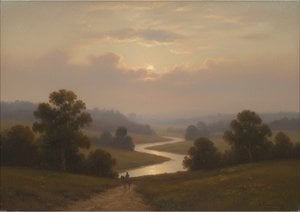
< p>The development of Pirsch’s style was deeply rooted in an intimate connection with the environments he depicted. His mastery lay not only in the anatomical accuracy of his subjects but in his ability to imbue them with a palpable sense of presence. Through a meticulous application of technique, he captured the textures of fur, the sheen of a predator's coat, and the subtle play of light across a forest floor. This dedication to realism was balanced by an emotive quality; he did not merely paint animals, he painted the very atmosphere of their existence. His work reflects a deep-seated respect for the majesty of nature, portraying his subjects with a dignity that commands the viewer's reverence.Artistic Mastery and Naturalism
The technical prowess of Adolf Pirsch is most evident in his command over light and shadow, a skill that allowed him to create depth and volume within his compositions. His approach was characterized by a profound understanding of biological form, likely informed by the rigorous observational standards of his time. This scientific rigor did not stifle his creativity; rather, it provided the foundation upon which he built much of his atmospheric brilliance. When observing his larger works, one can sense the tension of a hunt or the quiet repose of a woodland clearing, achieved through subtle shifts in tonal values and a masterful use of chiaroscuro.
His influence can be traced through the lineage of naturalistic painters who sought to bridge the gap between the biological and the beautiful. While his work is often categorized within the tradition of wildlife art, it possesses a timeless quality that escapes simple classification. The historical significance of Pirsch lies in his ability to document a world that was rapidly changing due to industrialization, preserving the grandeur of the wilderness through the permanence of paint. His achievements remain a testament to the power of observation and the enduring allure of the natural kingdom.
- Period: Late 19th to Early 20th Century
- Style: Naturalism and Wildlife Realism
- Key Themes: Animal Anatomy, Wilderness Landscapes, Biological Precision
- Legacy: A foundational figure in the tradition of classical wildlife portraiture
Vraag en antwoord
Waar kan ik de kunstwerken van Adolf Pirsch bekijken in een 3D-galerie?
Een virtueel bezoek is mogelijk: op de 3D-galerie pagina van Adolf Pirsch worden de werken van de kunstenaar gepresenteerd in een driedimensionale galerie.
Kan ik de werken van Adolf Pirsch bekijken per medium?
Om alle werken van Adolf Pirsch in een bepaald medium te vinden, kunt u de Alle technieken pagina van de kunstenaar gebruiken.
Waar kan ik statistieken vinden over de werken van Adolf Pirsch?
Er is een Statistieken-pagina voor Adolf Pirsch, met statistieken over de kunstwerken van de kunstenaar op deze website.
Waar kan ik het kleurprofiel van het oeuvre van Adolf Pirsch bekijken?
Het kleurprofiel van het werk van Adolf Pirsch is te zien op de Kleurenpalet van de kunstenaar pagina van de kunstenaar.