


 Bekijk op ware grootte
 Verstuur
 Delen
Delen
 Details bekijken

 Download
 Vergelijkbare werken
 Röntgenonderzoek
 Diavoorstelling
Jesus Commanding Matthew

 Lees meer
Giclée / Kunstafdrukken
Giclée- of canvasafdruk van museumkwaliteit met een snelle productie en flexibele afwerkingsmogelijkheden. ( Bestel een handgeschilderde reproductie van dit verzamelobject Naar afbeelding wisselen)




































Kies uit onze vooraf ingestelde maten die overeenkomen met de originele verhoudingen van het kunstwerk.

U kunt uw eigen afmetingen opgeven om in een specifieke lijst of ruimte te passen. Als de door u gekozen maat niet overeenkomt met de proporties van het originele kunstwerk, zullen wij de afbeelding bijsnijden of uitbreiden met een gespiegelde of effen rand. Een digitaal mockup wordt ter goedkeuring naar u verzonden voordat de productie begint.
Houd er rekening mee dat de preview op het scherm de werkelijke bijsneding of uitbreiding niet weergeeft. Alleen de mockup toont de uiteindelijke compositie nauwkeurig.
Hoewel aangepaste maten beschikbaar zijn, raden wij aan een afmeting uit de vooraf bepaalde lijst te kiezen om de originele proporties te behouden.
Wereldwijde levering () binnen 2 weken in plaats van de standaard 4/5 weken. (11 augustus)

Gratis wereldwijde expressverzending

Hoogwaardig linnen canvas

Volledige verzendverzekering

Garantie op terugbetaling van invoerrechten

Garantie op exacte kleurweergave

60 dagen retourbeleid (alleen bij defecten)

100% Geld-terug-garantie

Korting bij meerdere afnames
 De optie voor glas is alleen beschikbaar bij een formaat kleiner dan 110 cm.

Jesus Commanding Matthew
Giclée / Kunstafdrukken
Formaat reproductie
-


Totaalprijs
$ 63
Gerelateerde kunstwerken


Biografie van de kunstenaar
William Brassey Hole: Life & Art
William Brassey Hole’s life was a testament to artistic passion and unwavering dedication to capturing the spirit of Scotland. Born in Salisbury, Wiltshire, on November 7th, 1846, he experienced profound loss early on when his father, Richard Hole—a respected physician—passed away from cholera just three years later. This tragedy spurred his family’s relocation to Edinburgh, where he received a robust education at Edinburgh Academy and subsequently undertook a challenging apprenticeship as a civil engineer – an endeavor that ultimately proved less fulfilling than his burgeoning artistic aspirations.Early Travels & Artistic Awakening
Determined to pursue painting seriously, Hole embarked on a transformative six-month sketching tour of Italy in 1869, beginning in Genoa. This journey ignited his creative spirit and solidified his conviction that art was his true vocation. Crucially, he encountered Keeley Halswelle in Rome, whose astute guidance and critical feedback fueled his ambition to establish himself as a professional painter. Halswelle’s encouragement proved invaluable in shaping Hole's artistic trajectory. Upon returning to Edinburgh, he enrolled at the School of Design and subsequently gained admission to the life school of the Royal Scottish Academy (RSA) in 1873 – marking a pivotal moment in his formal artistic training.Academic Recognition & Artistic Style
His talent quickly garnered recognition within the RSA, earning him associate membership in 1878 and full membership in 1885. Alongside his academic pursuits, Hole joined the Royal Society of Painters-Etchers (RE) in 1885 and the Royal Scottish Watercolour Society (RSW) in 1884 – broadening his artistic horizons and fostering collaborations with fellow artists. Hole’s distinctive style was characterized by a meticulous attention to detail and an ability to convey emotion through carefully considered compositions. He excelled particularly in etching, mastering this technique to translate color and textural nuances into striking prints that captured the essence of Scottish landscapes and historical narratives.Scottish Focus & Notable Works
Despite his English birth, Hole devoted considerable energy to depicting Scotland’s national identity and heritage. His oeuvre encompassed a diverse range of subjects—industrial scenes reflecting the burgeoning Victorian era, monumental historical events commemorating pivotal moments in Scottish history, and evocative biblical narratives exploring themes of faith and morality. Among his most celebrated paintings are “End of the ‘45” (1879), portraying the aftermath of Bonnie Prince Charlie’s failed rebellion; "Prince Charlie's Parliament" (1882), capturing a significant political gathering; “If thou hadst known” (1885); and “The Canterbury Pilgrims” (1889)—each demonstrating Hole’s masterful storytelling abilities. Furthermore, he created a monumental frieze for Edinburgh City Chambers—a testament to his artistic vision and technical prowess—and produced stunning watercolors illustrating Robert Louis Stevenson's "Treasure Island" and J.M. Barrie’s “Peter Pan.” His enduring legacy resides in the profound beauty and emotional resonance of his artworks, which continue to inspire admiration and scholarly study.A Master Etcher & Artistic Legacy
William Brassey Hole’s contribution to Scottish art is undeniable. He elevated etching as a medium for artistic expression, achieving unparalleled technical skill and capturing the spirit of Scotland with remarkable sensitivity. His prints—particularly those depicting the rugged coastline of Argyll—remain treasured examples of Victorian landscape artistry. Through his unwavering dedication to his craft and his profound engagement with both history and faith, Hole established himself as one of Scotland’s most distinguished artists – a figure whose work continues to resonate with audiences today.
William Brassey Hole
1846 - 1917 , Verenigd Koninkrijk
Snelle feiten
- Artistic Movement Or Style:
- Industriële kunst
- Historische schilderkunst
- Artists Or Movements Influenced By This Artist: ['Sir William Rothenstein']
- Artists Who Influenced This Artist: ['Keeley Halswelle']
- Date Of Birth: 7 november 1846
- Date Of Death: 22 oktober 1917
- Full Name: William Brassey Hole
- Nationality: Engels
- Notable Artworks:
- Het einde van '45
- De Prinselijke Parlement
- Place Of Birth: Salisbury, Verenigd Koninkrijk
Gerelateerde artikelen

William Brassey Hole: A Victorian Master of Narrative Watercolour & Scottish Life
Explore the captivating paintings of William Brassey Hole, a Victorian master renowned for his dramatic biblical scenes, Scottish landscapes & industrial life. Discover his technique and lasting legacy.

From Imagination to Canvas: Commissioning Bespoke Fantasy Art with Traditional Oil Painting Techniques
Commission breathtaking bespoke fantasy art with skilled oil painters. Explore techniques, artist selection & preservation tips. Invest in a unique masterpiece today!

John Frederick Lewis: Orientalism, Detail & Genre Painting in 19th-Century British Art
Explore the captivating Orientalist paintings of John Frederick Lewis! Discover his mastery of detail, genre scenes & influence on 19th-century British art. Learn about his life, techniques & legacy at ArtsDot.
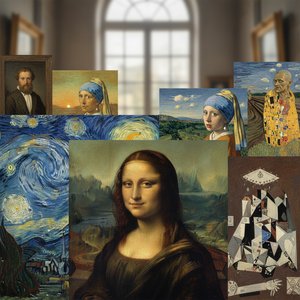
Top 10 Legendarische Olieverfschilderijen die de Kunst voor Altijd Veranderden | ArtsDot.nl
Ontdek de 10 legendarische olieverfschilderijen die kunstgeschiedenis schreven! Van Rembrandt tot Monet, leer over meesterwerken & technieken. Vind museumkwaliteit reproducties en woondecoratie inspiratie op ArtsDot.com.

Echoes of Revolution & Romanticism: Navigating 19th-Century Art Styles
Explore the diverse world of 19th-century art! From Realism's rebellion to Impressionism’s light and beyond, discover key movements, artists & collecting tips. Expert insights for classic enthusiasts.

