

 Bekijk op ware grootte
 Verstuur
 Delen
Delen
 Details bekijken

 Download
 Vergelijkbare werken
 Röntgenonderzoek
 Diavoorstelling
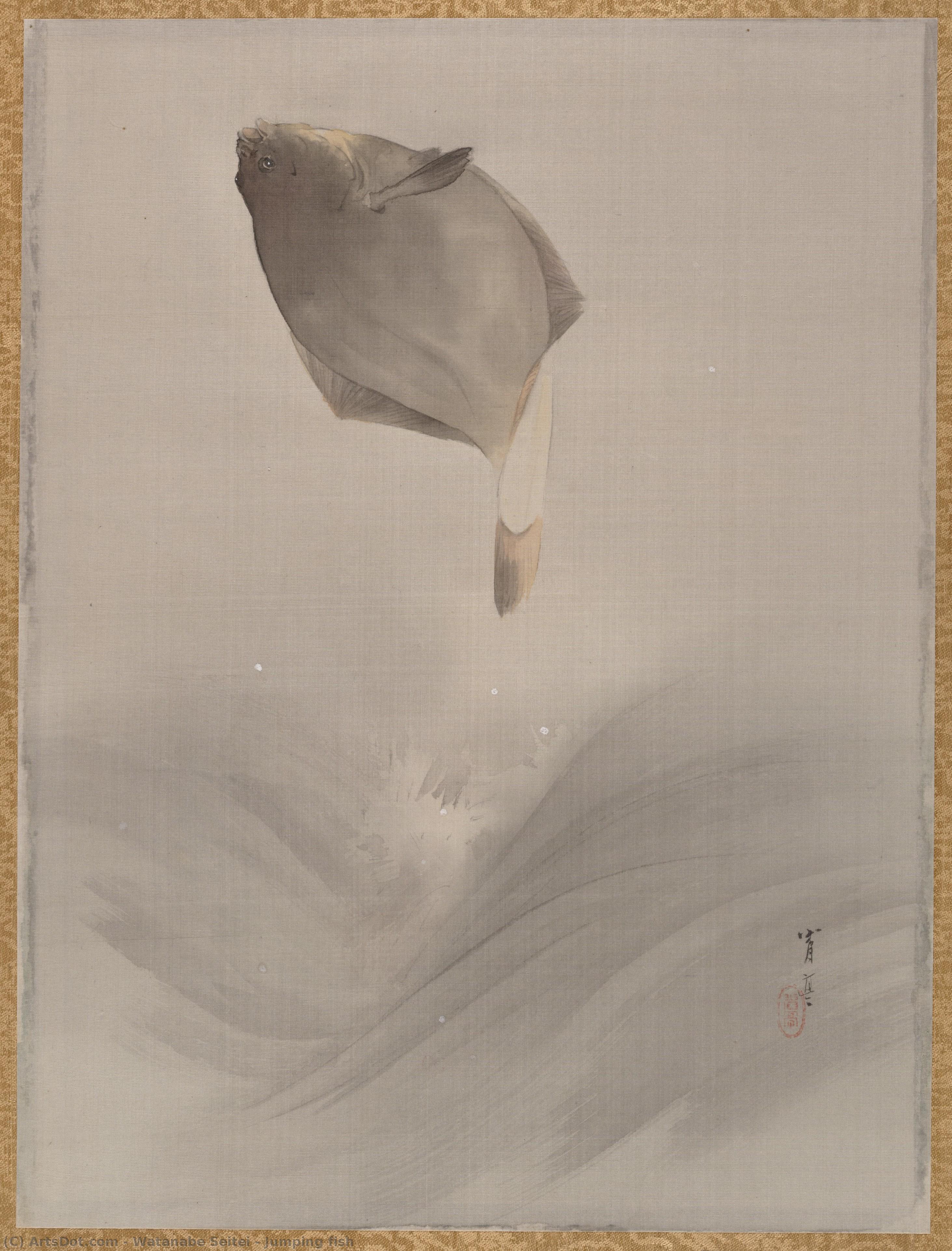
Jumping fish


 Lees meer
Koop een digitale afbeelding in hoge resolutie met verbeterde kwaliteit, die veel superieur is aan de online voorvertoning.
Elk bestand wordt met uiterste precisie voorbereid door onze interne specialisten, met behulp van geavanceerde tools en deskundige handmatige retouche. Wij garanderen dat elke afbeelding een uitzonderlijke helderheid, nauwkeurige kleurweergave en verfijnde details bezit.
Het uiteindelijke bestand wordt binnen 72 uur per e-mail geleverd, geoptimaliseerd voor direct gebruik in professionele, redactionele en printomgevingen. Dit is dezelfde kwaliteit waarop topontwerpstudio's, uitgevers en galerieën vertrouwen.
Digitale afbeeldingen
Download een bestand met hoge resolutie voor persoonlijke weergave, afdrukken en creatieve projecten. ( Bestel een print Bestel een handgeschilderde reproductie van dit verzamelobject)
Inbegrepen bij elke bestelling van een digitale afbeelding
Professionele digitale levering, gegarandeerd
Wanneer u kiest voor ArtsDot.com, ontvangt u niet alleen een afbeelding – u krijgt een professioneel verbeterd digitaal kunstwerk, met precisie vervaardigd en voorzien van een tevredenheidsgarantie. Dit is alles wat automatisch bij uw bestelling is inbegrepen:

Direct per e-mail ontvangen
Uw hoogwaardige digitale afbeeldingsbestand wordt binnen 72 uur na bestelling naar u gemaild – klaar voor direct gebruik.

Met AI verbeterd digitaal bestand
Uw kunstwerk wordt professioneel geoptimaliseerd met behulp van geavanceerde AI-tools en handmatige bewerkingen, waardoor maximale details, helderheid en kleurnauwkeurigheid worden gegarandeerd.

Gratis levenslange herlevering
Je bestand per ongeluk verwijderd of kwijtgeraakt? Geen zorgen – we sturen het u op elk gewenst moment gratis opnieuw toe.

Geen invoerkosten – nooit
Geniet direct van uw kunstwerk zonder invoerrechten, belastingen of verzendkosten – digitale downloads zijn altijd belastingvrij.

Garantie op kleurgetrouwheid
Met behulp van professionele hulpmiddelen en kleurbeheer zorgen wij ervoor dat uw digitale afbeelding de originele kleuren zo nauwkeurig mogelijk weergeeft.

60 dagen tevredenheidsgarantie
Als u niet tevreden bent met uw digitale afbeelding, passen wij deze aan of storten wij 100% terug binnen 60 dagen – zonder vragen gesteld.

100% Geld-terug-garantie
Niet tevreden? Ontvang binnen 60 dagen na ontvangst van uw digitale bestand uw volledige aankoopbedrag terug – zonder vragen te stellen.

Korting bij grote bestellingen
Koop 3 afbeeldingen, bespaar 10% - Koop 5, bespaar 15% - Koop 10+, bespaar 20%. Ideaal voor creatieve projecten, galerieën en bureaus.
Gerelateerde kunstwerken


Biografie van de kunstenaar
Watanabe Seitei: A Harmonious Bridge Between East and West
The world of early 20th-century Japanese art is rich with figures who navigated the complex currents of modernization, seeking to reconcile tradition with the allure of the West. Among these pioneers stands Watanabe Seitei (1852–1918), a master of *kachōga* – bird and flower paintings – whose work represents a remarkable synthesis of Chinese landscape aesthetics, Western realism, and deeply rooted Japanese sensibilities. Seitei’s journey, marked by travel, experimentation, and a quiet dedication to his craft, offers a fascinating glimpse into the artistic ferment of a nation undergoing rapid transformation.
Born Yoshikawa Yoshimata in Edo (modern-day Tokyo), Seitei's early life was shaped by exposure to traditional Japanese arts. He began his training at the age of sixteen under Kikuchi Yōsai, a prominent figure known for his innovative approach to *Nihonga* – Japanese-style painting, which emphasized brushwork and subject matter distinct from Western techniques. This foundational experience instilled in him a deep appreciation for the subtle nuances of ink wash painting and the evocative power of nature imagery. Following his brief apprenticeship with Shibata Zeshin, he embarked on a pivotal chapter of his life: a journey to Europe in 1878.
The Parisian Encounter and Artistic Evolution
Seitei’s arrival in Paris marked a turning point, not just for him personally but also for the trajectory of Japanese art. He participated in the International Exposition of 1878, an event that served as a crucial gateway for Japanese artists to engage with Western culture and artistic trends. This exposure ignited within him a desire to incorporate elements of Western realism into his own style – a daring move at a time when *Nihonga* was largely defined by its adherence to established conventions. He spent the next three years in Paris, immersing himself in the art world and forging connections with influential figures like Tadamasa Hayashi, an American art dealer who championed Japanese artists.
During his Parisian sojourn, Seitei’s style began to evolve dramatically. He absorbed Western techniques of perspective, composition, and color rendering while retaining the core principles of *Nihonga*, such as the emphasis on brushwork and the depiction of nature's essence. This fusion resulted in a unique artistic voice – one that blended the serene beauty of Chinese landscape painting with the meticulous detail and realistic portrayal characteristic of Western art. His paintings began to feature more defined forms, brighter colors, and a greater sense of spatial depth, all while maintaining a profound connection to the natural world.
The Kacho-ga Style: A Delicate Balance
Seitei’s mastery lay particularly in his *kachōga* – bird and flower paintings. These works are not merely decorative; they are imbued with symbolic meaning and philosophical depth, reflecting a core tenet of Japanese aesthetics known as *wabi-sabi*, which celebrates the beauty of imperfection, transience, and simplicity. He meticulously rendered delicate blossoms like peonies, cherry blossoms, and chrysanthemons alongside graceful birds – often cranes, symbolizing longevity and good fortune – creating scenes that evoke a sense of quiet contemplation and harmony with nature.
His technique was characterized by a remarkable control of ink washes, layering subtle shades to create atmospheric effects and capture the ephemeral beauty of his subjects. He skillfully employed *sumi* (inkstick) and *mizusashi* (water container) to achieve varying tones and textures, demonstrating an intimate understanding of the medium. Furthermore, Seitei’s compositions often incorporated elements of Chinese landscape painting – distant mountains, flowing rivers, and sparse foliage – creating a sense of depth and perspective that was both visually engaging and spiritually resonant.
Legacy and Rediscovery
Upon his return to Japan in 1903, Seitei continued to produce paintings and designs for ceramics and cloisonné, collaborating with the renowned artisan Namikawa Sosuke. Despite his considerable talent and growing recognition, he largely withdrew from public life towards the end of his career, a decision that contributed to his relative obscurity for many years. However, in recent decades, there has been a renewed appreciation for Seitei’s work, fueled by scholarly research and exhibitions showcasing his unique artistic vision.
Today, Watanabe Seitei is recognized as one of the most important figures in the development of *Nihonga* during the Meiji era. His paintings stand as a testament to his ability to bridge Eastern and Western traditions, creating a harmonious synthesis that continues to captivate viewers with its beauty, serenity, and profound sense of connection to nature. His legacy serves as an inspiration for contemporary artists seeking to explore new ways of expressing themselves within the rich tapestry of Japanese art history.

watanabe seitei
1851 - 1918
Kerngegevens
- Artistic Movement Or Style: Nihonga, bird-and-flower painting
- Artists Or Movements Influenced By This Artist:
- Mizuno Toshikata
- Kaburagi Kiyokata
- Artists Who Influenced This Artist:
- Kikuchi Yōsai
- Shibata Zeshin
- Date Of Birth: January 18, 1852
- Date Of Death: April 2, 1918
- Full Name: Watanabe Seitei
- Nationality: Japanese
- Notable Artworks:
- Gold Fishes
- Ducks in the Rushes
- Roses, Young Bird & Butterfly
- Place Of Birth: Edo (Tokyo), Japan

