

 Voorvertoning
 Verstuur
 Delen
Delen
 Details bekijken
 Gids
Gids

 Download
 Vergelijkbare items
 Röntgenonderzoek
 Diavoorstelling
 Vraag & antwoord
 Statistieken
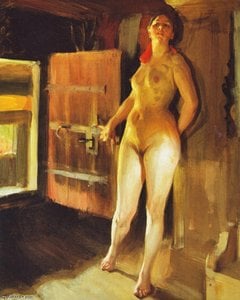
Nude

- 43.0 x 80.0 cm

 Lees meer
Ontvang een bestand dat klaar is voor drukwerk en de kwaliteit van het online voorbeeld ver overstijgt. Elke digitale afbeelding die wij verkopen, is afkomstig van een high-resolution master uit onze database — meestal tussen de 5.000 en 15.000 pixels breed — zodat u met vertrouwen groot kunt afdrukken, nauwkeurig kunt bijsnijden of fijne details kunt reproduceren.
Geen enkel bestand verlaat ons atelier onbewerkt. Een digitaal expert controleert de kleuren aan de hand van het originele schilderij en corrigeert deze indien nodig, om vervolgens de helderheid en details te verbeteren met professionele retoucheertechnieken — waarbij de penseelstreek en stijl van de kunstenaar altijd strikt worden gerespecteerd. Het resultaat is een afbeelding die oogt als het schilderij zelf, en niet als een gescande foto met een filter.
U keurt de afbeelding goed voordat de bestelling wordt afgerond: onze expert stuurt u binnen 72 uur een e-mail ter beoordeling. Niet tevreden? Vraag om aanpassingen of correcties, of vraag een terugbetaling aan als de kwaliteit niet aan de verwachtingen voldoet.
Dit is de kwaliteit waarop uitgevers, designstudio's, galeries en drukkerijen vertrouwen.
Digitale afbeeldingen
Download een bestand met hoge resolutie voor persoonlijke weergave, afdrukken en creatieve projecten. ( Schakel over naar print Bestel handgeschilderde reproductie)
Inbegrepen bij elke bestelling van een digitale afbeelding
Professionele digitale levering, gegarandeerd
Wanneer u kiest voor ArtsDot.com, ontvangt u niet alleen een afbeelding – u krijgt een professioneel verbeterd digitaal kunstwerk, met precisie vervaardigd en voorzien van een tevredenheidsgarantie. Dit is alles wat automatisch bij uw bestelling is inbegrepen:

Snelle levering per e-mail
Uw hoogwaardige digitale afbeeldingsbestand wordt binnen 72 uur na bestelling naar u gemaild – klaar voor direct gebruik.

AI-verbeterd digitaal bestand
Uw kunstwerk wordt professioneel geoptimaliseerd met behulp van geavanceerde AI-tools en handmatige bewerkingen, waardoor maximale details, helderheid en kleurnauwkeurigheid worden gegarandeerd.

Gratis levenslange herlevering van digitale bestanden
Je bestand per ongeluk verwijderd of kwijtgeraakt? Geen zorgen – we sturen het u op elk gewenst moment gratis opnieuw toe.

Geen invoerkosten – nooit
Geniet direct van uw kunstwerk zonder invoerrechten, belastingen of verzendkosten – digitale downloads zijn altijd belastingvrij.

Garantie op kleurgetrouwheid
Met behulp van professionele hulpmiddelen en kleurbeheer zorgen wij ervoor dat uw digitale afbeelding de originele kleuren zo nauwkeurig mogelijk weergeeft.

100 dagen tevredenheidsgarantie
Mocht u niet tevreden zijn met uw digitale afbeelding, dan passen wij deze aan of storten wij 100% terug binnen 100 dagen – zonder vragen te stellen.

100% Geld-terug-garantie
Niet tevreden? Ontvang een volledige terugbetaling binnen 100 dagen na ontvangst van uw digitale bestand – zonder vragen te stellen.

Korting bij grote bestellingen
Koop 3 afbeeldingen, bespaar 10% - Koop 5, bespaar 15% - Koop 10+, bespaar 20%. Ideaal voor creatieve projecten, galerieën en bureaus.
Veelgestelde vragen
Wat zijn de afmetingen van het originele "Nude"?
De afmetingen van "Nude" door Viscount Kuroda Seiki zijn 43 x 80 cm. Reproducties kunnen in andere formaten worden besteld met behoud van dezelfde verhoudingen.
Wat is de dominante kleur in "Nude" door Viscount Kuroda Seiki?
De dominante kleur van "Nude" door Viscount Kuroda Seiki is Golden Yellow Range. Deze kleur vormt de onderliggende toon van het palet.
Is "Nude" door Viscount Kuroda Seiki een portret, landschap of vierkante compositie?
Het formaat van "Nude" is Tall. Dit is handig bij het plannen van de plek waar een reproductie zal worden geplaatst.
Vergelijkbare kunstwerken



Kunstenaarsbiografie
A Pioneer Bridging East and West: The Life and Art of Viscount Kuroda Seiki
Born Kuroda Shintarō in 1866, amidst the transformative currents of Japan’s Meiji era, Viscount Kuroda Seiki emerged as a pivotal figure in the nation's artistic evolution. His journey from samurai lineage to becoming celebrated as “the father of Western-style painting” in Japan is a compelling narrative of cultural exchange and artistic innovation. Adopted by his uncle, Kuroda Kiyotsuna, a high-ranking official in the imperial government, young Seiki was immersed in an environment that valued modernization and engagement with the wider world. This upbringing instilled in him not only a sense of duty but also a curiosity that would lead him far beyond the shores of Japan. Initially preparing for university studies with a focus on English, Kuroda’s path took an unexpected turn under the influence of Yamamoto Hosui, igniting within him a passion for painting and setting the stage for his artistic destiny.From Parisian Studios to a Distinctly Japanese Vision
Kuroda's pursuit of artistic mastery led him to Paris in 1884, where he initially studied law but soon gravitated towards the vibrant art scene. He enrolled in the studio of Louis-Joseph-Raphaël Collin, a French artist who skillfully blended academic rigor with the emerging principles of *plein air* painting—a technique emphasizing direct observation and capturing the fleeting effects of light and atmosphere. This mentorship proved crucial, providing Kuroda with a solid foundation in Western artistic traditions while simultaneously encouraging him to explore new approaches to representation. He absorbed influences from masters like Jean-François Millet and Jules Bastien-Lepage, drawn to their depictions of rural life and naturalism, as well as the burgeoning Impressionist movement led by Claude Monet. These diverse inspirations coalesced within Kuroda, shaping his artistic sensibility and preparing him for a unique mission upon his return to Japan in 1893: to establish a distinctly Japanese form of Western-style painting—*yōga*.Forging a New Path: The Hakubakai and Artistic Leadership
Back in Japan, Kuroda didn’t simply replicate European styles; he sought to synthesize them with the aesthetic sensibilities of his homeland. He became instrumental in forming the *Hakubakai*, an art society dedicated to promoting Western-influenced painting through exhibitions and fostering a new generation of artists. This period marked a turning point in Japanese art history, as Kuroda and his contemporaries challenged traditional conventions and paved the way for modern artistic expression. His paintings from this era, such as the celebrated Lakeside, exemplify this fusion—vibrant colors, elegant figures (often women), and an atmospheric quality reminiscent of Impressionism are all grounded in a distinctly Japanese aesthetic sensibility. Other notable works like *Portrait of Kitao Jirō* and the tragically lost *Talk on Ancient Romance*, demonstrate his versatility and commitment to exploring both portraiture and narrative painting within this evolving style.A Legacy Etched in Paint and Pedagogy
Kuroda’s influence extended beyond his own artistic creations; he profoundly impacted Japanese art education as the director of the Western Painting Faculty at the Tokyo School of Fine Arts. He introduced rigorous training methods based on Western academic principles, while also encouraging students to develop their individual voices and explore new forms of expression. His dedication to fostering a vibrant artistic community ensured that his legacy would endure through generations of artists he mentored. His contributions were formally recognized with the title of Viscount, solidifying his position as a leading figure in Japanese society. Kuroda Seiki’s work continues to resonate today, displayed prominently in institutions like the Tokyo National Museum and the Artizon Museum, serving as a testament to his pioneering spirit and enduring artistic vision. He remains a symbol of Japan's successful integration of Western influences while maintaining its unique cultural identity—a bridge between two worlds, beautifully rendered on canvas.
Viscount Kuroda Seiki
1866 - 1924 , Japan
Belangrijkste feiten
- Full Name: Viscount Kuroda Seiki
- Nationality: Japanese
- Date Of Birth: 1866
- Date Of Death: 1924
- Place Of Birth: None, Japan
- Notable Artworks:
- Lakeside
- Portrait of Kitao Jirô
- Wisdom, Impression, Sentiment
- Artistic Movement Or Style: Yōga, Impressionism
- Artists Who Influenced This Artist:
- Raphaël Collin
- Jean-François Millet
- Claude Monet
- Artists Or Movements Influenced By This Artist: ['Modern Japanese painting']