

- 118.0 x 185.0 cm


The picture follows your choices: , .
Beschrijving verzamelobject
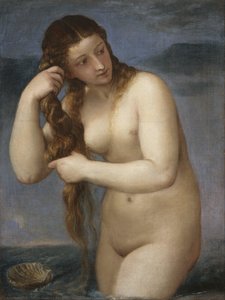
Experience the captivating 'Venus Blindfolding Cupid' by Titian! This iconic Renaissance masterpiece, housed in Rome, showcases vibrant colors and mythological drama. Explore its history & artistic brilliance.
 Lees meer
Biografie kunstenaar
Tiziano Vecellio (1490-1576): De grootste Venetiaanse schilder, beroemd om zijn kleurgebruik, portretten en invloedrijke werken uit de Renaissance.
Handgemaakte olieverfreproductie
Met de hand geschilderd in olieverf op canvas in uw gewenste maat en lijst, op bestelling gemaakt door onze kunstenaars. ( Schakel over naar print Schakel over naar digitale afbeeldingen)
More about this painting
 Voorvertoning
 Verstuur
 Delen
Delen
 Details bekijken
 Gids
Gids

 Download
 Vergelijkbare items
 Röntgenonderzoek
 Diavoorstelling
 Q&A
Q&A Statistieken
Order your painting in four simple steps
Take your time. You can change any answer; the price in your order card follows each choice.
1 Step one of four
Which size would you like?
These sizes keep the proportions of the original painting. The drawing shows your choice on a wall, above a two-metre sofa.
Or give your own measurements
Kies uit onze vooraf ingestelde maten die overeenkomen met de originele verhoudingen van het kunstwerk.

Voer de breedte en hoogte in die u nodig heeft, passend bij uw lijst of uw muur. Omdat dit handgeschilderd is, kan de kunstenaar bij een afmeting met een andere beeldverhouding iets meer rondom het schilderij schilderen of juist iets meer weglaten — u kiest zelf. Wij sturen u een digitaal mockup ter goedkeuring voordat het schilderwerk begint. De afbeelding die op deze pagina wordt getoond, is niet het uiteindelijke resultaat — alleen de mockup geeft dit weer.
2 Step two of four
How should it be prepared: rolled, stretched or framed?
The prices below are for the size you chose in step one.
Choose the edges of the stretched canvas
Choose your frame

White €1

Blurside €1

Extended €1

P118B €10

P118H €10

P118W €10

P438Z €10

P508JH €12

P508YH €12

P805H €10

P805Z €10

P919BZ €10

P919G €10

P919XJ €10

P959ZH €10

P968JZ €12

W106C €8

W218G €10

W218JH €8

W218Y €10

W307PJ €10

W316G €10

W316PJ €8

W316Y €10

W398PJ €8

W4111J €10

W500HY €15

W500JH €15

W692G €12

W849H €8

W940BG €15

W953PJ €8

H24-GOLD €30

H24-SILVER €30

H36-GOLD €45

H36-SILVER €45
Ingelijst
Moulding: . Overall size with the frame: .
3 Step three of four
Would you like anything changed in the painting?
Most people answer no. Because each painting is made by hand, our artist can also adapt it for you.
After order, ArtsDot.com team will email client for instructions and provide a mockup preview
4 Step four of four
A few finishing options
All of them are optional. The answers already selected cost nothing extra.
Who paints it?
Wereldwijde levering () binnen 3 tot 4 weken in plaats van de standaard 5 weken. (2 november). Zonder concessies aan de kwaliteit.
A nameplate, as in a museum?
Details van de gegraveerde bronzen plaat
This elegant plaque features the artist's name and the title of the artwork, finely engraved for a timeless presentation.
It is made from bronze with a refined, elegant finish. The text is precisely laser-engraved for a sharp and permanent result. Measuring 9x2 cm, the plaque is compact yet easy to read. It's built to be durable and scratch-resistant, offering a professional, museum-quality look. Mounting is simple thanks to the included adhesive backing.
Details transparante acrylplaat
The plaque includes essential engraved details such as the artist's name, the title of the artwork, the date it was created, the type of media used-like oil on canvas or watercolor-a brief description of the piece, and a QR code that links to the complete artwork information.
It is crafted from clear acrylic, offering a sleek, modern appearance. The text is UV-engraved in black to ensure strong visual contrast. With a size of 10x15 cm, it ensures optimal readability. It comes equipped with two metal hooks for secure wall mounting. The plaque is designed to be weather-resistant, making it suitable for various environments, and it includes interactive features that work seamlessly with smartphone scanning.
Details zwarte acrylplaat
This elegant plaque includes engraved information such as the artist's name, the title of the artwork, the date it was created, the type of media used (like oil on canvas or watercolor), a short description of the artwork, and a QR code for quick access to more information.
The plaque itself is made from refined black acrylic with a premium finish. The text is laser-engraved in white for high contrast and readability. Its size is 10x15 cm, designed to be easy to read. It comes with two metal hooks for professional mounting. The design is sleek and fits any interior style. It is also weather-resistant and durable, with built-in digital integration for mobile compatibility.
A protective varnish?
When do you need it?
✓ Check and order
Your painting, as you ordered it

Venus Blindfolding Cupid
Druktechniek
Afmetingen reproductie
-

Geselecteerde topkunstenaars
Meer detail, verfijning en extra productietijd
-

Lijst voor reproductie
-
-
Voor kunstwerken of reproducties die aan één zijde groter zijn dan 105 cm (ongeveer 41 inch), wordt de lijst als een losse set verzonden. Deze methode garandeert een veilige levering en voorkomt schade tijdens het transport.
Professionele montage vereist - dit is geen doe-het-zelfproduct.
De set moet worden gemonteerd en het canvas moet worden gespannen door een ervaren professionele lijstenmaker, met gebruik van houtlijm (niet inbegrepen), een doekspanter en klemmen om de sponningen recht te houden terwijl de lijm droogt. Onjuiste montage of een ongelijkmatige spanning op het canvas kan het kunstwerk permanent beschadigen en wordt niet gedekt door onze garantie.
 Voor kunstwerken of reproducties die aan één zijde groter zijn dan 105 cm (ongeveer 41 inch), wordt de lijst als een losse set verzonden. Deze methode garandeert een veilige levering en voorkomt schade tijdens het transport.
Alle massief houten onderdelen zijn inbegrepen, nauwkeurig op maat gesneden voor montage.
Te monteren met de meegeleverde schroeven, plus houtlijm voor de hoekverbindingen, die niet wordt meegeleverd en door uw lijstenmaker moet worden aangeschaft.
Professioneel gereedschap is vereist en niet inbegrepen: een spanner voor canvas en klemmen om de latten recht te houden terwijl de lijm droogt.
Belangrijk:
De hoekverbindingen vereisen houtlijm, de latten moeten met lijmklemmen worden vastgehouden tot de lijm volledig is opgedroogd, en het spannen van het canvas op het samengestelde frame vereist een doekspanter. Geen van deze artikelen is inbegrepen in de set. Wij adviseren u om een ervaren professionele lijstenmaker te raadplegen voordat u deze maat bestelt.

Naamplaatje
-
-

Beschermende vernislaag
Glanzende vernis (versterkt de kleuren en biedt bescherming tegen licht en vocht)
-

Mijn kunstwerk aanpassen
Voorbeelden van aanpassingen: vervang het gezicht door een eigen foto; voeg een huisdier toe (bijv. vervang de kat door een hond); verwerk een verborgen boodschap in de achtergrond; wijzig het landschap of andere elementen op de achtergrond.
-

Spoedlevering
Wereldwijde levering () binnen 3 tot 4 weken in plaats van de standaard 5 weken. (2 november). Geen concessies aan de kwaliteit.
-
Spoedlevering
Wereldwijde levering naar binnen 5 weken. (9 november).
Inbegrepen
Eindtotaal
€ 234
De optie voor glas is alleen beschikbaar bij een formaat kleiner dan 110 cm.
Included with every order
- Gratis wereldwijde expressverzending
- Hoogwaardig linnen canvas
- Volledige verzendverzekering
- Garantie op terugbetaling van invoerrechten
- Garantie op exacte kleurweergave
- Retourbeleid van 100 dagen (alleen bij defecten)
- 100% Geld-terug-garantie
- Korting bij meerdere afnames


A Moment of Dramatic Intensity: Exploring Titian’s “Venus Blindfolding Cupid”
Titian’s “Venus Blindfolding Cupid,” painted around 1565, isn't merely a depiction of a mythological scene; it’s an exquisitely rendered exploration of desire, power, and the delicate balance between love and its darker impulses. Housed within the hallowed halls of the Galleria Borghese in Rome, this oil on canvas masterpiece immediately captivates with its rich palette and masterful handling of light and shadow. The painting pulsates with a palpable energy, drawing the viewer into a scene brimming with both sensual allure and underlying tension – a testament to Titian’s profound understanding of human psychology.
The composition itself is a carefully orchestrated dance of figures. Venus, portrayed as a woman of formidable beauty and regal bearing, gently but firmly binds Cupid's eyes with a silk scarf. Her expression isn’t one of cruel intent, but rather a serene acceptance of the inevitable consequences of her actions. Cupid, initially depicted in mid-struggle, is now rendered almost passive, his youthful energy subdued by the force of Venus’s influence. The supporting figures – attendants and onlookers – are subtly integrated into the scene, adding to the sense of drama and amplifying the emotional weight of the moment. Titian's skill lies not just in capturing individual likenesses but in creating a cohesive narrative through gesture, expression, and spatial arrangement.
The Renaissance Master’s Palette: Technique and Style
Titian was renowned throughout his career for his revolutionary approach to color – a characteristic that is vividly displayed in “Venus Blindfolding Cupid.” He employed a technique known as *sfumato*, blurring the lines between forms and creating an atmospheric haze, particularly around the figures’ skin. This contributes significantly to the painting's dreamlike quality and enhances the sense of intimacy. The use of warm, golden hues dominates the scene – reflecting off Venus’s luxurious garments and illuminating Cupid’s youthful flesh. Yet, Titian masterfully juxtaposes these vibrant tones with cooler shades in the background, creating a dynamic interplay of light and shadow that adds depth and complexity to the composition.
- Oil on Canvas: The choice of oil paint allowed Titian to achieve unparalleled luminosity and richness of color – qualities that were revolutionary for his time.
- Sfumato Technique: This blurring effect softens edges, creating a sense of depth and atmosphere.
- Color Harmony: Titian’s masterful use of complementary colors generates visual excitement and draws the eye to key elements within the painting.
A Mythological Tapestry: Symbolism and Context
The scene itself is rooted in classical mythology, drawing upon the story of Venus and Cupid's attempt to seduce Mars. However, Titian transcends a simple retelling of the myth; he delves into its underlying themes of love’s power, the vulnerability of desire, and the inevitable consequences of unchecked passion. The act of blindfolding Cupid symbolizes the overwhelming force of love – a force that can both create and destroy. It also speaks to the loss of innocence and the surrender of control that often accompanies romantic entanglement.
Painted during the High Renaissance, “Venus Blindfolding Cupid” reflects the era’s fascination with classical antiquity and its emphasis on humanism. Titian's work aligns with the broader artistic trends of the time – a move towards greater realism, emotional depth, and a celebration of beauty. The painting’s placement within the Galleria Borghese, alongside other masterpieces of the period, underscores its significance as a pivotal work in the development of Venetian art.
A Timeless Vision: Legacy and Interpretation
“Venus Blindfolding Cupid” has resonated with viewers for centuries, inspiring countless interpretations and reproductions. Its enduring appeal lies not only in its technical brilliance but also in its profound exploration of universal human emotions. The painting’s dramatic intensity, coupled with Titian's masterful use of color and light, creates a truly unforgettable experience. Whether viewed as a celebration of love or a cautionary tale about the dangers of passion, this masterpiece continues to captivate and provoke thought – a testament to the enduring power of art.
Veelgestelde vragen
Wat is de techniek en de afmeting van "Venus Blindfolding Cupid"?
"Venus Blindfolding Cupid" door Tiziano Vecellio is uitgevoerd in Oil On Canvas en heeft de afmetingen 118 x 185 cm.
Welke emotie straalt "Venus Blindfolding Cupid" door Tiziano Vecellio uit?
"Venus Blindfolding Cupid" roept een Melancholic gevoel op. De emotionele toon beschrijft de indruk die het werk achterlaat.
Hoe harmonieren de kleuren van "Venus Blindfolding Cupid" met elkaar?
De kleurharmonie van "Venus Blindfolding Cupid" wordt beschreven als Strong Color Unity.
Vergelijkbare kunstwerken




Tiziano Vecellio
1490 - 1576, Italië
Biografie kunstenaar
The Venetian Titan: A Life in Color and Canvas
Tiziano Vecellio, even more famously known as Titian, stands as a monumental figure of the Italian Renaissance—perhaps its most celebrated colorist and a master who fundamentally reshaped the possibilities of oil painting. Born around 1490 in Pieve di Cadore, nestled amidst the dramatic landscapes of the Venetian Alps, his journey from humble beginnings to international acclaim is a testament to prodigious talent and an unwavering dedication to artistic innovation. The details surrounding Titian’s early life remain somewhat shrouded in mystery, but we know he was one of several children born to Gregorio Vecellio, a military man, and Lucia. Recognizing their sons' potential, the family arranged for young Tiziano and his brother Francesco to apprentice with an artist in Venice—a decision that would irrevocably alter the course of art history.
Venice at the turn of the 16th century was a vibrant hub of commerce, culture, and artistic ferment. Titian’s initial training took place within the workshop of Sebastiano Zuccato, a mosaicist, followed by brief periods under the tutelage of Gentile Bellini and, crucially, his brother Giovanni. However, it was his association with Giorgione—a fellow Venetian painter whose work possessed an ethereal poetic quality—that proved most formative. The two artists collaborated on several projects, including the exterior frescoes for the Fondaco dei Tedeschi, a bustling trading post for German merchants. Even in these early works, Titian’s exceptional skill was evident, earning him recognition among his contemporaries and foreshadowing the brilliance that would soon blossom.
A Master's Evolving Style
Titian’s artistic development can be characterized by a remarkable versatility and an ongoing exploration of painterly techniques. His early works, heavily influenced by Giorgione, exhibit a delicate lyricism and a masterful use of color to create atmospheric effects. Paintings like *A Man with a Quilted Sleeve* (circa 1509) demonstrate his emerging talent for portraiture, capturing not only the physical likeness of his subjects but also their inner character. He favored soft, diffused light and subtle gradations of tone, mirroring Giorgione’s approach. As he matured, Titian began to move away from Giorgione’s delicate subtlety and embrace a bolder, more dramatic approach to color. *The Visitation of Mary and Elizabeth* (now in the Accademia, Venice) exemplifies this shift, showcasing his growing confidence in handling complex compositions and vibrant hues. He experimented with layering colors—often applying thin glazes over dried underpaintings—to achieve luminous effects and intense saturation.
Throughout his long career, Titian consistently pushed the boundaries of artistic expression. He explored a vast range of subjects – mythological scenes, religious narratives, portraits of nobility, and even genre paintings depicting everyday life. He wasn’t afraid to break with convention, often employing unconventional compositions and dramatic lighting. His portraits became renowned for their psychological depth and realistic portrayal of textures and fabrics; he meticulously rendered the sheen of silk, the weight of velvet, and the warmth of skin tones. Simultaneously, he excelled in mythological and religious subjects, imbuing them with a sensuality and dramatic intensity that captivated audiences. A prime example is *Venus of Urbino*, a masterpiece that redefined the depiction of the female nude and established Titian as a leading figure in Venetian painting.
Patronage, Prestige, and Lasting Influence
Titian’s talent attracted the attention of powerful patrons from across Europe. He served as court painter to Emperor Charles V, King Philip II of Spain, and Pope Paul III, among others. This patronage not only provided him with financial security but also allowed him to create monumental works that showcased his artistic prowess on a grand scale. His ability to adapt his style to the tastes of different courts while maintaining his own distinctive voice is a testament to his exceptional skill and diplomatic finesse. He was known for his lavish use of gold leaf, particularly in portraits commissioned by royalty, further enhancing their prestige.
Titian’s influence on subsequent generations of artists was profound. From Peter Paul Rubens and Rembrandt to Eugène Delacroix and Édouard Manet, countless painters drew inspiration from his masterpieces. His innovative use of color, his loose brushwork, and his emphasis on capturing the emotional essence of his subjects profoundly influenced their artistic approaches. He is considered a pivotal figure in the transition from the High Renaissance to the Baroque period, paving the way for new artistic styles and techniques.
A Legacy Enduring Through Centuries
Titian passed away in Venice in 1576, leaving behind an extraordinary body of work that continues to inspire awe and admiration. His paintings can be found in museums around the world, including the Galleria Palatina in Florence, the Prado Museum in Madrid, and the National Gallery in London. To experience a Titian is to encounter a master craftsman at the peak of his powers—a painter who possessed an unparalleled ability to capture the beauty, drama, and complexity of the human condition.
Exploring Further
- Museums & Collections: Discover Titian’s works at the Scuola del Santo in Padua and San Salvador in Venice, both showcasing his breathtaking frescoes.
- Related Artists: Explore the influence of Giorgione on Titian's early style and the later impact of Titian on artists like Rubens and Delacroix.
- Historical Context: Immerse yourself in the world of the Italian Renaissance and Venetian painting to fully appreciate Titian’s artistic achievements.


Gerelateerde artikelen

Top 10 Kunstwerken voor Diepe Romantiek: Collectie & Inspiratie | ArtsDot.nl
Ontdek de 10 meest romantische kunstwerken aller tijden! Van impressionisme tot pre-rafaëliten, beleef liefde & passie via meesterwerken. Vind uw perfecte kunstreproductie op ArtsDot.com en creëer een sfeervol interieur.

Titian Ramsay Peale II: A Legacy of Botanical Precision & Artistic Innovation
Explore the life & art of Titian Ramsay Peale II, a master of botanical precision and wildlife painting. Discover his legacy bridging art & natural history at ArtsDot.

Titian: Innovation, Technique & the Venetian Renaissance Portrait Tradition
Explore the revolutionary techniques & enduring legacy of Titian, the master of Venetian Renaissance portraiture. Discover insights for collectors & appreciate his impact on art history.