


 Bekijk op ware grootte
 Verstuur
 Delen
Delen
 Details bekijken
 Gids voor studentenkunstwerken

 Download
 Vergelijkbare items
 Röntgenonderzoek
 Diavoorstelling
 Statistieken
Pentecost
 Oil On Canvas
- WallArt
- Early Renaissance
 1335
1335 35.0 x 27.0 cm
 Staatliche Museen zu Berlin
 Lees meer
Giclée / Kunstafdrukken
Giclée- of canvasafdruk van museumkwaliteit met een snelle productie en flexibele afwerkingsmogelijkheden. ( Koop handgeschilderd kunstwerk Schakel over naar digitale afbeeldingen)




P118B €10

P118H €10

P118W €10

P438Z €10

P508JH €12

P508YH €12

P805H €10

P805Z €10

P919BZ €10

P919G €10

P919XJ €10

P959ZH €10

P968JZ €12

W106C €8

W218G €10

W218JH €8

W218Y €10

W307PJ €10

W316G €10

W316PJ €8

W316Y €10

W398PJ €8

W4111J €10

W500HY €15

W500JH €15

W692G €12

W849H €8

W940BG €15

W953PJ €8




Kies uit onze vooraf ingestelde maten die overeenkomen met de originele verhoudingen van het kunstwerk.

Voer de breedte en de hoogte in die u nodig heeft, passend bij uw lijst of uw muur. Een afdruk kan alleen worden ingekort, nooit groter worden gemaakt dan het origineel, waardoor een formaat met een andere verhouding een deel van de afbeelding verliest. Wij sturen u een digitaal mockup ter goedkeuring voordat we iets drukken. De afbeelding op deze pagina toont niet de werkelijke uitsnede — dit is alleen te zien op het mockup.
Wereldwijde levering () binnen 2 weken in plaats van de standaard 4/5 weken. (24 oktober)

Gratis wereldwijde expressverzending

Hoogwaardig linnen canvas

Volledige verzendverzekering

Garantie op terugbetaling van invoerrechten

Garantie op exacte kleurweergave

Retourbeleid van 100 dagen (alleen bij defecten)

100% Geld-terug-garantie

Korting bij meerdere afnames
 De optie voor glas is alleen beschikbaar bij een formaat kleiner dan 110 cm.

Pentecost
Giclée / Kunstafdrukken
Formaat reproductie
-


Totaalprijs
€ 55
The Tempestuous Descent: Taddeo Gaddi’s Pentecost
Taddeo Gaddi’s “Pentecost,” painted circa 1335-1340 in Florence, isn't merely a depiction of a pivotal biblical event; it’s a vibrant distillation of the burgeoning Renaissance spirit captured within the confines of early Gothic artistry. This walnut panel, measuring a modest 35 x 27 centimeters and now residing within the Staatliche Museen zu Berlin, pulsates with an energy that belies its diminutive size – a testament to Gaddi's mastery of conveying profound spiritual experience through carefully orchestrated form and color. The painting immediately draws the eye into a scene brimming with movement and divine presence, a microcosm of the transformative power unleashed upon the nascent Christian community.A Master’s Apprenticeship: Gaddi and Giotto
To fully appreciate “Pentecost,” one must understand its context within the workshop of Giotto di Bondone. Taddeo Gaddi, Giotto's most esteemed pupil, inherited not just technical skills but also a revolutionary approach to representation – a move away from the stylized, flattened forms of Byzantine art and towards a more naturalistic, emotionally resonant style. Gaddi’s work is characterized by a remarkable sensitivity to volume and space, achieved through subtle gradations of color and carefully rendered drapery. This influence is powerfully evident in “Pentecost,” where the figures are imbued with a palpable sense of weight and movement, far exceeding the static quality typical of earlier religious paintings. The composition itself echoes Giotto’s innovations, particularly his use of overlapping forms to create depth and a dynamic narrative flow – a technique that would profoundly shape the course of Italian painting for generations to come.The Drama of Divine Descent
The scene unfolds within what appears to be a simple, yet elegantly rendered room, its architecture suggesting a Florentine palazzo. At the heart of the composition, the Holy Spirit descends upon the assembled apostles as a torrent of fiery tongues – not depicted as literal flames, but rather as luminous, swirling forms that radiate outwards, enveloping the figures in an aura of ecstatic joy and divine inspiration. The central focus is undeniably Jesus Christ, positioned centrally within the group, radiating authority and benevolence. His gestures are welcoming and inclusive, directing attention towards the apostles who are caught mid-speech, their faces alight with astonishment and fervent proclamation. Note the careful detail given to each apostle’s expression – a range of emotions from bewildered wonder to joyful conviction. The inclusion of Mary, subtly positioned in the background, reinforces the narrative's sacredness and highlights her role as the embodiment of grace and faith.Symbolism and Spiritual Resonance
Beyond its immediate depiction of the Pentecost event, “Pentecost” is rich with symbolic meaning. The doves, traditionally associated with the Holy Spirit, are subtly integrated into the composition, adding to the sense of peace and divine blessing. The architectural setting itself—a refined, yet intimate space—represents the Church as a vessel for spiritual transformation. Gaddi’s masterful use of color – predominantly rich reds, blues, and golds – further enhances the painting's emotional impact, evoking feelings of reverence, joy, and the transformative power of faith. The overall effect is one of profound spiritual intensity, capturing not just a historical event but also the very essence of Pentecost—the birth of the Christian community and the promise of divine grace for all believers. It’s a painting that invites contemplation, reminding us of the enduring significance of this foundational moment in Christian history.A Legacy of Innovation
“Pentecost” by Taddeo Gaddi stands as a pivotal work in the transition from Gothic to Renaissance art. It showcases his remarkable skill and his profound understanding of Giotto’s revolutionary approach to representation, while simultaneously establishing his own distinctive artistic voice. The painting's enduring appeal lies not only in its technical brilliance but also in its ability to convey a powerful sense of spiritual experience – a testament to the transformative power of faith and the genius of one of Florence’s most influential artists. Reproductions of this piece offer a beautiful window into a pivotal moment in art history, capturing both the drama of the event and the quiet beauty of Gaddi's masterful technique.Vragen & Antwoorden
Hoeveel licht lijken de kleuren van "Pentecost" te reflecteren?
"Pentecost" door Taddeo Gaddi heeft een luminantie van Soft Shadow. Luminantie beschrijft hoeveel licht de kleuren lijken te reflecteren.
Hoeveel mensen bekijken "Pentecost"?
Er bestaat een Statistieken-pagina voor "Pentecost". Deze brengt de maandelijkse bezoeken aan het kunstwerk en andere werken van de kunstenaar in kaart, met uitsplitsingen naar land en taal.
Wat zijn de techniek en de afmetingen van het originele werk "Pentecost" door Taddeo Gaddi?
Het originele werk "Pentecost" door Taddeo Gaddi is een Oil On Canvas met de afmetingen 35 x 27 cm. Techniek en afmetingen beschrijven het originele object.
Gerelateerde kunstwerken


Biografie van de kunstenaar
De Florentijnse Visionair: Het Leven en de Nalatenschap van Taddeo Gaddi
In de levendige, ontluikende sfeer van het 14e-eeuwse Florence, een periode die werd gekenmerkt door de overgang van de middeleeuwen naar de vroege Renaissance, kwam Taddeo Gaddi naar voren als een meester van licht, narratief en architecturale grandeur. Als een van de meest vooraanstaande leerlingen van de legendarische Giotto di Bondone, erfde Gaddi niet louter een stijl; hij breidde het visuele vocabulaire van zijn tijd uit. Zijn werk dient als een vitale brug, die het monumentale gewicht van het Giottesque naturalisme meeneemt naar een nieuw rijk van decoratieve complexiteit en lumineus vertellen. Het bestuderen van Gaddi is getuige zijn van de evolutie van de Florentijnse schilderkunst, waarbij de rigide hiërarchieën van de Byzantijnse traditie begonnen te verzachten onder de invloed van menselijke emotie en ruimtelijke diepte.
De fundamenten van Gaddi's kunstenaarschap waren diep geworteld in het atelier van Giotto, waar hij het diepe belang van chiaroscuro leerde en het vermogen om figuren weer te geven met een gevoel van fysieke aanwezigheid. Gaddi bezat echter een aangeboren neiging tot een meer ornamentale en gedetailleerde aanpak dan zijn meester. Terwijl Giotto zich concentreerde op de rauwe, sculpturale essentie van de menselijkheid, introduceerde Gaddi een delicate elegantie en een verfijnd gebruik van licht dat een plat oppervlak kon transformeren tot een venster van goddelijke stralingskracht. Deze unieke synthese stelde hem in staat uit te blinken in grootschalige fresco-cycli, waarin hij een ongeëvenaard vermogen toonde om complexe theologische verhalen te organiseren binnen architecturale decors die zowel heilig als tastbaar aanvoelden.
Meesterschap in Narratief en het Heilige Licht
De meest blijvende bijdragen van Gaddi aan de kunstgeschiedenis zijn te vinden in zijn prachtige fresco-cycli, met name in de Baroncelli-kapel in Santa Croce, Florence. In deze werken bereikte hij een adembenemend niveau van narratieve continuïteit, waarbij hij de kijker met een ritmische gratie door de levens van heiligen leidde. Zijn techniek omvatte een minutieuze gelaagdheid van kleur en licht, waarbij hij vaak gouden accenten en rijke pigmenten gebruikte om de hemelse sfeer van het goddelijke op te roepen. Men kan zijn meesterschap waarnemen in werken zoals de Scène uit het leven van Sint Franciscus, waar de kunstenaar momenten van diepe spirituele intimiteit vastlegt. Door deze afbeeldingen vertelt Gaddi niet alleen een verhaal; hij creëert een meeslepende omgeving waarin vogels, landschappen en menselijke figuren samenkomen in een staat van heilige evenwicht.
Naast zijn religieuze toewijding wordt het werk van Gaddi gekenmerkt door verschillende bepalende artistieke elementen:
- Architecturale Integratie: Hij bezat een zeldzaam talent voor het schilderen van architecturale kaders die de werkelijke fysieke ruimte van de kapel of kerk leken te vergroten.
- Lumineuze Kleurenpaletten: Zijn gebruik van levendige blauwen, dieproden en glinsterend goud hielp de esthetische pracht van de Florentijnse school te definiëren.
- Narratieve Details: In tegenstelling tot de meer sobere composities van zijn voorgangers, verrijkte Gaddi zijn scènes met ingewikkelde details—van de textuur van een monnikspij tot de delicate beweging van de natuur.
- Evolutie van het Licht: Hij verlegde de grenzen van hoe licht met oppervlakken interageert, waardoor een gevoel van atmosfeer ontstond die het atmosferisch perspectief van latere Renaissance-meesters voorspelde.
Historisch Belang en Artistiek Erfgoed
Het historische belang van Taddeo Gaddi ligt in zijn rol als bewaker en innovator. Hij behield de monumentale waardigheid van de Giottesque traditie, terwijl hij deze tegelijkertijd verrijkte met de decoratieve rijkdom die de late gotiek zou kenmerken. Zijn invloed reikte veel verder dan de muren van Florentijnse kapellen en beïnvloedde de manier waarop latere generaties schilders het concept van ruimte en licht benaderden. Door de structurele degelijkheid van zijn opleiding te vermengen met een nieuwe, meer lyrische gevoeligheid, hielp Gaddi het artistieke landschap voor te bereiden op de volledige bloei van de Renaissance.
Wanneer we terugkijken op zijn oeuvre, zien we een kunstenaar die diep verbonden was met de spirituele en burgerlijke hartslag van zijn tijd. Zijn vermogen om het heilige weer te geven door de lens van een groeiend naturalisme zorgde ervoor dat zijn werken niet alleen objecten van verering bleven, maar ook meesterwerken van technische prestatie. Taddeo Gaddi blijft een hoeksteen van de Italiaanse kunstgeschiedenis, een schilder wiens penseelstreken het exacte moment vastlegden waarop de middeleeuwse wereld begon te kijken naar het licht van een nieuw, mensgericht tijdperk.
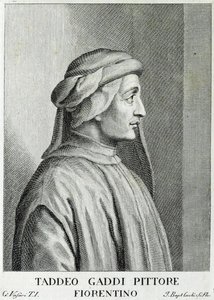
Taddeo Gaddi
1290 - 1366 , Italië
Snelle feiten
- Artistic Movement Or Style: Vroege Renaissance
- Artists Or Movements Influenced By This Artist:
- Giotto
- Proto-Renaissance
- Artists Who Influenced This Artist:
- Simone Martini
- Italo-Byzantijnse kunst
- Date Of Birth: ca. 1290
- Date Of Death: 1348
- Full Name: Ambrogio Lorenzetti
- Nationality: Italiaans
- Notable Artworks:
- Allegorie van het Goede Bestuur
- Allegorie van het Slechte Bestuur
- Place Of Birth: Siena, Italië
Gerelateerde artikelen
De Fresco als Familielegatie: Schilder Je Erfgoed op de Muren
Ontdek de fascinerende wereld van fresco schilderkunst! Leer over technieken, geschiedenis en restauratie. Expertise & hoogwaardige reproducties bij .

The Enduring Legacy of Fresco: Technique, History & Artistic Expression Across Cultures
Explore the rich history & enduring legacy of fresco painting! Discover ancient techniques, Giotto's masterpieces, and modern applications. Expert insights for art lovers & professionals.

Giotto di Bondone's 25 Meesterwerken: Renaissance Kunst voor uw Interieur | ArtsDot
Ontdek de 25 meesterwerken van Giotto di Bondone, pionier van de Renaissance. Verlies u in zijn fresco's & religieuze kunst. Museumkwaliteit reproducties voor uw interieur op ArtsDot.com.

The Enduring Legacy of Fresco Painting: Techniques, History & Contemporary Relevance
Explore the rich history & enduring artistry of fresco painting – from Giotto to Michelangelo! Discover techniques, conservation efforts, & modern applications. Learn how ArtsDot brings this timeless art form to your home.

Giotto di Bondone: Revolutionizing Late Medieval Painting through Narrative Innovation
Explore the revolutionary art of Giotto di Bondone! Discover his groundbreaking techniques, iconic frescoes like those in the Arena Chapel, and lasting impact on Renaissance painting. A deep dive for art enthusiasts.