

 Voorvertoning
 Verstuur
 Delen
Delen
 Details bekijken
 Gids
Gids

 Download
 Vergelijkbare items
 Röntgenonderzoek
 Diavoorstelling
 Q&A
Q&A Statistieken
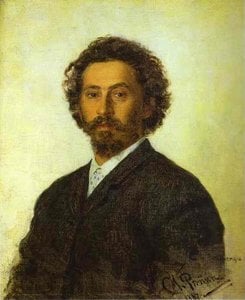
Self-portrait

- 12.0 x 10.0 cm


 Lees meer
Giclée / Kunstafdrukken
Giclée- of canvasafdruk van museumkwaliteit met een snelle productie en flexibele afwerkingsmogelijkheden. ( Bestel handgeschilderde reproductie Schakel over naar digitale afbeeldingen)




P118B €10

P118H €10

P118W €10

P438Z €10

P508JH €12

P508YH €12

P805H €10

P805Z €10

P919BZ €10

P919G €10

P919XJ €10

P959ZH €10

P968JZ €12

W106C €8

W218G €10

W218JH €8

W218Y €10

W307PJ €10

W316G €10

W316PJ €8

W316Y €10

W398PJ €8

W4111J €10

W500HY €15

W500JH €15

W692G €12

W849H €8

W940BG €15

W953PJ €8




Kies uit onze vooraf ingestelde maten die overeenkomen met de originele verhoudingen van het kunstwerk.

Voer de gewenste breedte en hoogte in, passend bij uw lijst of muur. Een afdruk kan alleen worden ingekort en nooit groter worden gemaakt dan het origineel; een formaat met andere verhoudingen zal daarom een deel van de afbeelding verliezen. Wij sturen u een digitaal mockup ter goedkeuring voordat we tot drukwerk overgaan. De afbeelding op deze pagina toont niet de werkelijke uitsnede — dit is alleen te zien op het mockup.
Wereldwijde levering () binnen 2 weken in plaats van de standaard 4/5 weken. (2 november)

Gratis wereldwijde expressverzending

Hoogwaardig linnen canvas

Volledige verzendverzekering

Garantie op terugbetaling van invoerrechten

Garantie op exacte kleurweergave

Retourbeleid van 100 dagen (alleen bij defecten)

100% Geld-terug-garantie

Korting bij meerdere afnames
 De optie voor glas is alleen beschikbaar bij een formaat kleiner dan 110 cm.

Self-portrait
Giclée / Kunstafdrukken
Afmetingen reproductie
-


Eindtotaal
€ 56
A Glimpse into the Artist's Soul
In the quiet intimacy of Silvestro Lega’s 1861 Self-Portrait, we are invited to witness more than just a likeness; we are granted access to a moment of profound introspection. This small yet powerful oil on panel serves as a window into the psyche of one of Italy's most significant realist painters. At first glance, the viewer meets a man of contemplative gravity, his gaze steady and thoughtful, capturing that universal human impulse to look inward. The composition is masterfully focused, stripping away the distractions of a complex background to ensure that every nuance of the subject’s expression—the subtle furrow of the brow and the quiet strength in the eyes—takes center stage. For the collector or lover of fine art, this piece offers an unparalleled sense of presence, as if the artist himself is still caught in the very act of reflection.
The painting stands as a quintessential exemplar of the Macchiaioli movement, a group of Italian rebels who sought to dismantle the rigid, idealized standards of academic art. Rather than pursuing the polished perfection of Neoclassicism, Lega embraced the beauty of the "macchia"—the patch or spot of color and light. In this self-portrait, we see the rejection of artifice in favor of a raw, honest naturalism. The palette is intentionally restrained, utilizing earthy browns, deep blacks, and creamy highlights that evoke a sense of timelessness and groundedness. This stylistic choice does not merely document a face; it captures the very atmosphere of mid-19th-century Florentine realism, where the truth of light and shadow was held far above the vanity of ornamentation.
Mastery of Light and Texture
Technically, the work is a triumph of oil on panel execution. Lega demonstrates a sophisticated command over texture, utilizing subtle layers of impasto to breathe life into the canvas. One can almost feel the tactile quality of the subject's dark suit and the crispness of his white shirt and black bow tie. The artist’s brushwork is particularly deliberate around the facial features, where he employs light and shadow to sculpt the anatomy of the face, creating a three-dimensional effect that pulls the viewer into his personal space. This interplay of luminosity and depth ensures that the portrait remains dynamic, catching the light differently from every angle—a quality that makes a high-quality reproduction an exquisite addition to any curated interior.
Beyond its technical brilliance, the painting carries a heavy historical resonance. Created during the Risorgimento, a period of intense political upheaval and the unification of Italy, the work reflects the era's broader intellectual shift toward authenticity and national identity. There is a quiet dignity in Lega’s presentation that mirrors the stoicism of his generation. For an interior designer, this piece provides a sophisticated focal point, offering a sense of historical depth and intellectual weight to a room. Whether placed in a sunlit study or a moody, classical gallery setting, the Self-Portrait acts as a silent storyteller, bringing the spirit of Italian Realism into the modern home.
Veelgestelde vragen
Wat stelt "Self-portrait" voor en welke sfeer straalt het uit?
"Self-portrait" door Silvestro Lega combineert portrait, self-reflection, italian painting, realism style, male figure, formal attire, renaissance influence met een Elegant atmosfeer.
Toont "Self-portrait" sterke licht-donkercontrasten?
Het contrastniveau van "Self-portrait" door Silvestro Lega is Gentle.
Wat is de algemene sfeer van "Self-portrait" door Silvestro Lega?
"Self-portrait" door Silvestro Lega wordt qua stemming beschreven als Elegant. Deze classificatie kan helpen om het werk te laten aansluiten bij een bepaalde omgeving.
Vergelijkbare kunstwerken




Biografie kunstenaar
Silvestro Lega (Modigliana/FO 1826 - Florence 1895). Biography
Silvestro Lega, geboren in Modigliana nabij Forlì op 8 december 1826 en overleden te Florence op 21 september 1895, was een Italiaanse kunstschilder die zich onderscheidde als een van de belangrijkste vertegenwoordigers van het Macchiaioli-beweging. Zijn werk staat bekend om zijn toegewijdheid aan realisme en observatie van het dagelijks leven, terwijl hij ook betrokken was bij de politieke stromingen van zijn tijd.Vroege Levensloop en Artistieke Opleiding
Lega werd geboren in een welvarende familie in Modigliana en begon zijn artistieke opleiding op 18 jaar leeftijd aan het Piarist Collège waar zijn tekenvaardigheden al snel zichtbaar werden. Vervolgens studeerde hij aan de Accademia di Belle Arti in Florence tussen 1843 en 1847, onder begeleiding van Benedetto Servolini en Tommaso Gazzarrini voor tekenen en kort daarna onder Giuseppe Bezzuoli voor schilderen. Een belangrijke invloed vormde Luigi Mussini, die Lega’s opleiding verder ontwikkelde door de principes van het Italiaanse renaissancestijl te benadrukken, wat zijn vroegste artistieke aanpak bepaalde. Hij diende ook een tijdlang militaire dienst bij het Garibaldian leger tijdens de Italiaanse vrijheidsstrijd (1848–49). Zijn verdere studie vond plaats onder Antonio Ciseri.De Macchiaioli Beweging en Artistieke Ontwikkeling
Lega begon zijn stijl aanvankelijk academisch, zoals werd waargenomen door contemporaine Diego Martelli die opmerkte dat hij zelden deelnam aan de levendige kunstdiscussies bij het Caffè Michelangelo, een centrum voor jonge schilders. Een belangrijke verschuiving vond plaats rond 1859 toen Lega’s werk zich begon te bewegen richting realisme en afstand nam van Mussini’s puristische benadering. Dit blijkt uit de lunettes die hij schilderde voor het Oratorio della Madonna del Cantone in Modigliana tussen 1858 en 1863. Hij sloot zich aan bij zijn Macchiaioli collega's – Odoardo Borrani, Giuseppe Abbati, Telemaco Signorini en Raffaello Sernesi – en omarmde de plein air techniek, waarbij hij directe observatie gebruikte om licht en kleur vast te leggen in landschappen. Een bijzonder belangrijke periode in Lega’s leven was zijn tijd bij het Batelli familiehuis nabij het Affrico Rivier waar hij vele schilderijen maakte van hun kinderen en vrouwen, wat een gevoel van huishoudelijke rust weergaf.Bekende Werken en Artistieke Stijl
Lega staat bekend om enkele van zijn meest beroemde werken, waaronder “Een Wandeling in de Tuin” (1870), "Il Pergolato" (ook bekend als "Il dopopranzo") (1864), “Het Huis van Don Giovanni Veritá” (1885), “In de Tuin” (1883) en “Tuin in Bellariva” (1884). Zijn stijl wordt gekenmerkt door een zorgvuldige balans tussen traditionele compositie en hedendaagse kleurgebruik, gebaseerd op directe observatie. Hij gebruikte duidelijk gedefinieerde vormen en gaf atmosfeer weer met transparantie van kleuren. Zijn latere werken laten een invloed zien van het Impressionisme. Een belangrijke persoonlijke tragedie was het verlies van Virginia Batelli (zijn levensgepartner), samen met drie broers, wat hem in die tijd een vierjarige pauze veroorzaakte vanaf schilderen (1874-1878). Ondanks zijn persoonlijke struggles bleef Lega betrokken bij de kunstwereld. Hij bewonderde het werk van Camille Pissarro en richtte een kunstgalerie op in Florence samen met Odoardo Borrani, die echter kortstondig was. Zijn laatste werken, zoals “De Gabbro”, laten een voortdurende betrokkenheid bij realisme zien ondanks zijn achteruitgangsziekte. Lega’s historische betekenis ligt in zijn vermogen om traditionele compositie te combineren met de opkomende realistische esthetiek van de Macchiaioli beweging. Hij ving het essentieel van Italiaans leven vast met gevoeligheid en bekwaamheid, waardoor zijn kunstwerk nog steeds aanspraak maakt bij het publiek vandaag de dag. Zijn aandacht voor alledaagse onderwerpen verhoogde hun artistieke waarde en draaide bij aan de bredere verschuiving naar realisme in 19e eeuwse Europese kunst.
Silvestro Lega
1826 - 1895 , Italië
Belangrijkste feiten
- Artistic Movement Or Style: Realisme, Macchiaioli
- Artists Who Influenced This Artist:
- Luigi Mussini
- Antonio Ciseri
- Date Of Birth: 8 december 1826
- Date Of Death: 21 september 1895
- Full Name: Silvestro Lega
- Nationality: Italiaans
- Notable Artworks:
- Doubting Thomas
- David speelt voor Saul
- Place Of Birth: Modigliana, Italië
Gerelateerde artikelen

Romantic Realism's Finest: 10 Masterpieces for Your Home | ArtsDot
Explore 10 defining masterpieces of Romantic Realism! Discover Courbet, Millet & Daumier's powerful paintings—capturing emotion and social realities. Find museum-quality reproductions for your home at ArtsDot.com.

Reflecting the Self: A History of Portraiture & Psychological Insight
Explore the fascinating history of self-portraiture from Renaissance masters like Dürer & Rembrandt to modern interpretations. Discover the psychological insights and artistic techniques behind these iconic works. Expert analysis for art enthusiasts.

Giovanni Fattori: Realism, Identity & the Tuscan Landscape – A Macchiaioli Master
Explore the life & art of Giovanni Fattori, a leading figure of the Macchiaioli movement. Discover his revolutionary realism, captivating Tuscan landscapes, and lasting impact on Italian painting. Learn more at ArtsDot.

Echoes of Society: Exploring Social Realism's Enduring Legacy in Art
Explore the powerful world of Social Realism art! Discover key artists, masterpieces & its profound social commentary. Expert insights into this influential movement's history and enduring legacy.

Top 10 Realistische Kunstwerken: Meesterwerken & Verhalen voor aan de Muur
Ontdek de 10 meest iconische realistische kunstwerken! Van Courbet tot Millet, leer over meesterlijke technieken & verhalen achter deze tijdloze schilderijen. Vind museumkwaliteit reproducties voor jouw interieur op ArtsDot.com.
