


 Bekijk op ware grootte
 Verstuur
 Delen
Delen
 Details bekijken
 Gids voor studentenkunstwerken

 Download
 Vergelijkbare items
 Röntgenonderzoek
 Diavoorstelling
 Statistieken
St Augustine


 Lees meer
Handgemaakte olieverfreproductie
Met de hand geschilderd in olieverf op canvas in uw gewenste maat en lijst, op bestelling gemaakt door onze kunstenaars. ( Schakel over naar print Schakel over naar digitale afbeeldingen)




P118B €10

P118H €10

P118W €10

P438Z €10

P508JH €12

P508YH €12

P805H €10

P805Z €10

P919BZ €10

P919G €10

P919XJ €10

P959ZH €10

P968JZ €12

W106C €8

W218G €10

W218JH €8

W218Y €10

W307PJ €10

W316G €10

W316PJ €8

W316Y €10

W398PJ €8

W4111J €10

W500HY €15

W500JH €15

W692G €12

W849H €8

W940BG €15

W953PJ €8




Kies uit onze vooraf ingestelde maten die overeenkomen met de originele verhoudingen van het kunstwerk.

Voer de breedte en de hoogte in die u nodig heeft, passend bij uw lijst of uw muur. Dit is handgeschilderd, dus bij een afmeting met een andere vormverhouding kan de kunstenaar iets meer rondom het schilderij schilderen of juist iets meer weglaten — u kiest zelf. Wij sturen u een digitaal mockup ter goedkeuring voordat het schilderwerk begint. De afbeelding die op deze pagina wordt getoond, is niet het uiteindelijke resultaat — alleen de mockup geeft dit weer.
Na de bestelling zal het team van ArtsDot.com per e-mail contact opnemen met de klant voor instructies en een mockup-voorbeeld sturen.
Wereldwijde levering () binnen 3 tot 4 weken in plaats van de standaard 5 weken. (22 oktober). Zonder concessies aan de kwaliteit.

Gratis wereldwijde expressverzending

Hoogwaardig linnen canvas

Volledige verzendverzekering

Garantie op terugbetaling van invoerrechten

Garantie op exacte kleurweergave

Retourbeleid van 100 dagen (alleen bij defecten)

100% Geld-terug-garantie

Korting bij meerdere afnames
 De optie voor glas is alleen beschikbaar bij een formaat kleiner dan 110 cm.

St Augustine
Reproductiemethode
Formaat reproductie
-


Totaalprijs
€ 231
A Scholar’s Devotion: Exploring Botticelli's *St. Augustine*
This captivating artwork presents a compelling portrait of St. Augustine, depicted not as a martyr or miracle worker, but as a deeply engaged scholar and man of faith. The composition centers on the seated figure – likely a cardinal or bishop given his vestments – immersed in study within an architecturally rich, classical setting. Botticelli masterfully conveys a sense of intellectual pursuit and spiritual contemplation that defines this Renaissance masterpiece.Renaissance Style & Artistic Technique
The painting exemplifies Botticelli’s signature style: a graceful linearity bridging the Late Gothic period with the burgeoning Early Renaissance. While realism is present in the depiction of the figure and objects, it's tempered by an elegant elongation of forms characteristic of Florentine art. Oil on panel was likely the technique employed, allowing for subtle blending of colors and nuanced gradations of tone – visible in the drapery and skin tones. The directional lighting, emanating from the upper left, sculpts the figure, highlighting his face and robes, drawing the viewer’s eye to his expression of focused thought. Notice the deliberate use of geometric lines defining architectural elements contrasted with the organic curves of fabric folds.Symbolism & Iconography
The artwork is laden with symbolic meaning. The books, central to the composition, represent Augustine’s profound intellectual contributions and his lifelong dedication to learning. A globe hints at a broader understanding of the world – both geographically and philosophically – aligning with Augustine's exploration of humanity’s place within creation. The rich red cloak signifies his ecclesiastical status, denoting spiritual authority and devotion. These elements collectively portray St. Augustine as not merely a religious figure but a humanist scholar whose intellectual pursuits were integral to his faith.Historical Context & Botticelli's Vision
Sandro Botticelli (1445-1510) was a leading artist of the Florentine Renaissance, renowned for works like *The Birth of Venus* and *Primavera*. While these mythological paintings are more widely celebrated, his religious works demonstrate his versatility and deep engagement with contemporary intellectual currents. St. Augustine, a pivotal figure in Christian theology, resonated deeply within Renaissance humanist circles. Botticelli’s depiction reflects this reverence, presenting Augustine as an exemplar of reasoned faith – a scholar whose intellect illuminated his spiritual path. The painting likely served as a devotional image intended to inspire contemplation and learning among its viewers.Emotional Impact & Interior Design
The artwork evokes a sense of stillness, introspection, and quiet dignity. It’s a piece that invites prolonged viewing, encouraging the observer to reflect on themes of knowledge, faith, and the pursuit of wisdom. In an interior design context, this painting would lend itself beautifully to a study, library, or any space intended for contemplation. Its warm color palette – dominated by earthy tones and rich reds – complements classic and contemporary furnishings alike. The artwork’s vertical orientation makes it suitable for hallways or above fireplaces, adding a touch of Renaissance elegance and intellectual gravitas to the room.Vragen & Antwoorden
Welke onderliggende kleur loopt er door "St Augustine" door Sandro Botticelli?
De dominante kleur van "St Augustine" door Sandro Botticelli is Amber to Saffron. Deze kleur vormt de onderliggende toon van het palet.
Kan de afbeelding van "St Augustine" door Sandro Botticelli vrij worden gereproduceerd?
"St Augustine" door Sandro Botticelli is bevindt zich in het publiek domein - de auteursrechten zijn verlopen. Deze status bepaalt hoe de afbeelding van het werk mag worden gereproduceerd.
Welke afmeting wordt aanbevolen voor "St Augustine" in een Living Room?
Voor een Living Room wordt voor "St Augustine" een afdruk van Large aanbevolen.
Gerelateerde kunstwerken


Biografie van de kunstenaar
Early Life and Florentine Beginnings
Sandro Botticelli, geboren Alessandro di Mariano di Vanni Filipepi rond 1445 in Florence, Italië, kwam op tijdens een periode van buitengewone culturele fermentatie – de vroege Renaissance. Zijn leven was diep geworteld in de artistieke en sociale stof van de stad; hij dwaalde nooit ver af van zijn wijk Ognissanti, een getuigenis van zowel familiale banden als het levendige creatieve ecosysteem dat hem voedde. Zijn vader, Mariano Filipepi, begon als goudsmid en later als leerlooier, bood een vroege blootstelling aan vakmanschap en nauwkeurigheid – kwaliteiten die Botticelli’s artistieke benadering diepgaand zouden beïnvloeden. Hoewel aanvankelijke rapporten suggereerden dat hij goudsmid was, vond hij al snel zijn roeping onder de begeleiding van Fra Filippo Lippi, een toonaangevende schilder van het tijdvak. Deze leerlingenperiode bleek cruciaal, waardoor hij werd ondergedompeld in de technieken en esthetiek van de Florentijnse school, terwijl hij ook verbinding maakte met invloedrijke patrons zoals de Medici-familie.A Style Defined by Grace and Myth
Botticelli’s artistieke stijl is onmiddellijk herkenbaar door zijn lyrische schoonheid, gekenmerkt door elegante lineariteit, vloeiende contouren en een delicate kleurgebruik. Hij beheerstte het overbruggen van de kloof tussen de late Gotische tradities en de opkomende Renaissance-esthetiek, waarbij hij invloeden opnam van meesters zoals Fra Angelico en Paolo Uccello, maar toch een unieke persoonlijke visie creëerde. Zijn figuren bezitten een etherische kwaliteit, vaak afgebeeld met verlengde proporties en gracieuze poses die zowel sereniteit als een subtiele melancholie uitdrukken. Een kenmerkend element van zijn werk is de frequente integratie van klassieke mythologie – een weerspiegeling van de humanistische interesses die door Florence’s Renaissance heen woedden. Hij illustreerde deze oude verhalen niet alleen; hij verlegde er nieuwe lagen betekenis aan, waarbij thema's als liefde, schoonheid en spirituele verlangens werden onderzocht. Botticelli’s techniek was innovatief voor zijn tijd. Hij gebruikte vaak een zilverpotlood-tekening onder de verf van zijn doeken, wat bijdroeg aan de luminositeit en delicate details die te zien zijn in zijn afgewerkte werken. Zijn gebruik van temperagewijze verf stelde hem in staat tot nauwkeurige weergave en levendige kleuren, terwijl zijn latere experimenten met olieverf zijn expressieve mogelijkheden uitbreidden.Iconic Masterpieces and Artistic Development
Botticelli’s nalatenschap rust op een aantal iconische schilderijen die het publiek eeuwen later nog steeds betoveren. *De Geboorte van Venus*, voltooid rond 1486, staat als misschien zijn meest beroemde werk – een allegorisch beeld dat de godin afbeeldt die uit een schelpkom ontstaat, en de Renaissance-idealen van schoonheid en harmonie vertegenwoordigt. Zijn elegante compositie, delicate kleurpalet en evocatieve symboliek hebben het tot een blijvende symbool van de tijd gemaakt. Even beroemd is *Primavera*, gecreëerd rond 1482, een complex en raadselachtig schilderij dat lente en liefde viert, bevolkt met symbolische figuren uit klassieke mythologie. Deze werken tonen Botticelli’s meesterschap in compositie, zijn vermogen om atmosferische diepte te creëren en zijn diepe begrip van menselijke emoties. Zijn vroege jaren 70 zagen hem focussen op religieuze onderwerpen, waarbij hij zijn technische vaardigheden verfijnde en een reputatie opbouwde voor bekwame uitvoering. De jaren 80 markeerden het hoogtepunt van zijn creatieve kracht, met de creatie van zijn meest beroemde mythologische schilderijen. Het laatste kwart eeuw toonde echter een verschuiving in zijn stijl, beïnvloed door de gepassioneerde prediking van Girolamo Savonarola – een Dominicanse priester die wat hij zag als de decadentie en morele corruptie van Florence veroordeelde. Dit periode resulteerde in meer sober en emotioneel geladen werken, die een groeiende spirituele intensiteit weerspiegelden.Major Works
- De Geboorte van Venus (c. 1486): Een iconisch schilderij dat de Renaissance-idealen van schoonheid vertegenwoordigt.
- Primavera (c. 1482): Een complex allegorisch schilderij dat lente en liefde viert.
- Adoration of the Magi (1475-1476): Demonstreert vroege meesterschap in compositie en perspectief.
- Mystic Nativity (1501): Weerspiegelt een verschuiving naar spirituele thema’s in zijn latere carrière.

Sandro Botticelli
1445 - 1510 , Italië
Snelle feiten
- Artistic Movement Or Style: Vroege Renaissance
- Artists Or Movements Influenced By This Artist: ['Pre-Raphaelieten']
- Artists Who Influenced This Artist:
- Lippi
- Uccello
- Date Of Birth: c. 1445
- Date Of Death: 1510
- Full Name: Alessandro di Mariano Filipepi
- Nationality: Italiaans
- Notable Artworks:
- Venus Ontstaan
- Primavera
- Wijzen Aanbidding
- Place Of Birth: Florence, Italië
Gerelateerde artikelen
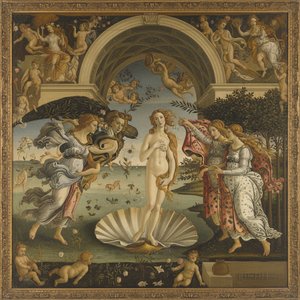
Sandro Botticelli's Top 25 Meesterwerken: Kunst voor uw Interieur | ArtsDot.nl
Ontdek de 25 mooiste meesterwerken van Sandro Botticelli! Duik in de Renaissance, bewonder 'De Geboorte van Venus' & 'Primavera'. Museumkwaliteit reproducties voor uw interieur. Bekijk de collectie op ArtsDot.com.

Top 10 Renaissance Meesterwerken: Kunstgeschiedenis voor uw Interieur | ArtsDot.nl
Ontdek de 10 grootste meesterwerken van de Vroege Renaissance! Lees over Leonardo da Vinci, Michelangelo & Botticelli. Laat u inspireren door Italiaanse kunst en koop museumkwaliteit reproducties voor uw interieur op ArtsDot.com.

Oil on Panel: A Historical Survey of Technique, Support & Aesthetic Evolution
Explore the rich history of oil on panel painting! Discover Renaissance techniques, support structures & aesthetic evolution. Expert insights for art collectors and enthusiasts.

Oil on Panel: A Historical Survey of Technique, Support, and Aesthetic Impact
Explore the rich history of oil on panel painting! Discover Renaissance techniques, support construction, & the enduring legacy of this masterful art form. Expert insights for collectors and enthusiasts.

Top 10 Meesterwerken op Paneel: Olieverf die de Kunstgeschiedenis Veranderde | ArtsDot.nl
Ontdek de 10 meest legendarische olieverfschilderijen op paneel die kunstgeschiedenis schreven! Van Jan van Eyck tot Pieter Bruegel, leer over meesterwerken uit de Renaissance & Vlaamse Primitieven. Vind museumkwaliteit reproducties en woondecoratie inspiratie op ArtsDot.com.


