


 Bekijk op ware grootte
 Verstuur
 Delen
Delen
 Details bekijken
 Gids voor studentenkunstwerken

 Download
 Vergelijkbare items
 Röntgenonderzoek
 Diavoorstelling
 Statistieken
rising

 Lees meer
Handgemaakte olieverfreproductie
Met de hand geschilderd in olieverf op canvas in uw gewenste maat en lijst, op bestelling gemaakt door onze kunstenaars. ( Schakel over naar print Schakel over naar digitale afbeeldingen)




P118B €10

P118H €10

P118W €10

P438Z €10

P508JH €12

P508YH €12

P805H €10

P805Z €10

P919BZ €10

P919G €10

P919XJ €10

P959ZH €10

P968JZ €12

W106C €8

W218G €10

W218JH €8

W218Y €10

W307PJ €10

W316G €10

W316PJ €8

W316Y €10

W398PJ €8

W4111J €10

W500HY €15

W500JH €15

W692G €12

W849H €8

W940BG €15

W953PJ €8




Kies uit onze vooraf ingestelde maten die overeenkomen met de originele verhoudingen van het kunstwerk.

Voer de breedte en de hoogte in die u nodig heeft, passend bij uw lijst of uw muur. Dit is handgeschilderd, dus bij een afmeting met een andere vormverhouding kan de kunstenaar iets meer rondom het schilderij schilderen of juist iets meer weglaten — u kiest zelf. Wij sturen u een digitaal mockup ter goedkeuring voordat het schilderwerk begint. De afbeelding die op deze pagina wordt getoond, is niet het uiteindelijke resultaat — alleen de mockup geeft dit weer.
Na de bestelling zal het team van ArtsDot.com per e-mail contact opnemen met de klant voor instructies en een mockup-voorbeeld sturen.
Wereldwijde levering () binnen 3 tot 4 weken in plaats van de standaard 5 weken. (23 oktober). Zonder concessies aan de kwaliteit.

Gratis wereldwijde expressverzending

Hoogwaardig linnen canvas

Volledige verzendverzekering

Garantie op terugbetaling van invoerrechten

Garantie op exacte kleurweergave

Retourbeleid van 100 dagen (alleen bij defecten)

100% Geld-terug-garantie

Korting bij meerdere afnames
 De optie voor glas is alleen beschikbaar bij een formaat kleiner dan 110 cm.

rising
Reproductiemethode
Formaat reproductie
-


Totaalprijs
€ 231
A Moment of Divine Ascent: Exploring Botticelli’s “Rising”
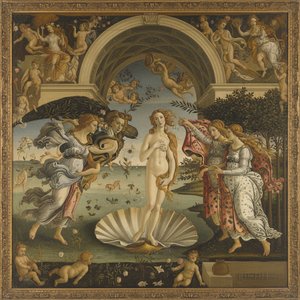
Sandro Botticelli's "Rising," a painting shrouded in the mystery of its original commission and subject, stands as a poignant testament to the complexities of faith, hope, and the human condition during the Florentine Renaissance. While details regarding the precise narrative remain debated – though often linked to the story of the Annunciation or even a symbolic representation of Christ’s resurrection – what is undeniable is the painting's profound emotional resonance and Botticelli’s masterful command of line, color, and classical form. The work, likely created around 1480-1482, exemplifies the artist’s signature style: an elegant blend of Byzantine influence, Neoplatonic philosophy, and a deep appreciation for the beauty of the human figure.
Botticelli's technique is immediately striking. He employs a delicate, almost ethereal quality, achieved through meticulous layering of thin glazes—a hallmark of his approach. The figures are rendered with an exquisite grace, their bodies elongated and flowing, reminiscent of Byzantine icons but imbued with a distinctly Renaissance sensibility. Note the subtle modeling of flesh, the careful attention to drapery, and the way light seems to caress the forms. The background is deliberately hazy, drawing focus entirely onto the central scene and contributing to the overall sense of otherworldly serenity. The use of tempera on panel—a traditional medium for Florentine artists at the time—allowed Botticelli to achieve a luminous quality rarely seen in other media.
Decoding Symbolism: Angels, Mourners, and the Promise of Resurrection
The composition itself is rich with symbolic meaning. At the heart of the scene are angels, depicted not as imposing figures of power but rather as gentle guides, carefully lifting Christ from the tomb. Their wings, rendered in delicate brushstrokes, suggest a sense of lightness and ascension. Surrounding the tomb are individuals – some weeping, others gazing upwards in awe or celebration—representing the diverse human responses to this momentous event. The presence of a figure holding a book is particularly intriguing; it’s often interpreted as referencing scripture, emphasizing the theological significance of Christ's resurrection. The arrangement of these figures creates a dynamic interplay between grief and joy, despair and hope, reflecting the multifaceted nature of faith.
Botticelli’s artistic choices also resonate with Neoplatonic philosophy, prevalent during the Renaissance. The painting can be viewed as an allegory for the soul's journey towards enlightenment—the descent into darkness (represented by death) followed by a triumphant ascent to divine light (symbolized by Christ’s resurrection). The figures themselves are not merely representations of biblical characters but embodiments of universal human experiences and aspirations.
A Renaissance Masterpiece: Context and Legacy
“Rising” is inextricably linked to the broader artistic and intellectual landscape of Florence during the High Renaissance. Botticelli’s work, alongside that of Leonardo da Vinci and Michelangelo, helped define the era's aesthetic ideals—a focus on humanism, classical inspiration, and a celebration of beauty. His paintings were commissioned by powerful families like the Medici, who recognized his talent and sought to adorn their palaces with works that reflected their wealth and status. “Rising” itself likely served as a devotional image for a private chapel or a grand hall, intended to inspire contemplation and reinforce religious beliefs.
Botticelli’s legacy endures through the profound impact of his art on subsequent generations of artists. His graceful figures, lyrical compositions, and masterful use of color continue to captivate viewers centuries later. ArtsDot's hand-painted reproductions offer a unique opportunity to experience the beauty and emotional depth of “Rising” in stunning detail, preserving Botticelli’s artistic vision for future appreciation.
Vragen & Antwoorden
Waar kan ik een voorproefje van "rising" bekijken?
Een voorproefje van "rising" door Sandro Botticelli is beschikbaar op de Voorvertoning-pagina van het kunstwerk.
Welke kleurverzadiging heeft "rising" door Sandro Botticelli?
"rising" door Sandro Botticelli is vastgelegd met een Balanced Soft verzadiging.
Waar gaat "rising" over, en welke sfeer straalt het uit?
"rising" door Sandro Botticelli combineert jesus, resurrection, angels, tomb, mourning, celebration, biblical scene, renaissance met een Romantic atmosfeer.
Gerelateerde kunstwerken


Biografie van de kunstenaar
Early Life and Florentine Beginnings
Sandro Botticelli, geboren Alessandro di Mariano di Vanni Filipepi rond 1445 in Florence, Italië, kwam op tijdens een periode van buitengewone culturele fermentatie – de vroege Renaissance. Zijn leven was diep geworteld in de artistieke en sociale stof van de stad; hij dwaalde nooit ver af van zijn wijk Ognissanti, een getuigenis van zowel familiale banden als het levendige creatieve ecosysteem dat hem voedde. Zijn vader, Mariano Filipepi, begon als goudsmid en later als leerlooier, bood een vroege blootstelling aan vakmanschap en nauwkeurigheid – kwaliteiten die Botticelli’s artistieke benadering diepgaand zouden beïnvloeden. Hoewel aanvankelijke rapporten suggereerden dat hij goudsmid was, vond hij al snel zijn roeping onder de begeleiding van Fra Filippo Lippi, een toonaangevende schilder van het tijdvak. Deze leerlingenperiode bleek cruciaal, waardoor hij werd ondergedompeld in de technieken en esthetiek van de Florentijnse school, terwijl hij ook verbinding maakte met invloedrijke patrons zoals de Medici-familie.A Style Defined by Grace and Myth
Botticelli’s artistieke stijl is onmiddellijk herkenbaar door zijn lyrische schoonheid, gekenmerkt door elegante lineariteit, vloeiende contouren en een delicate kleurgebruik. Hij beheerstte het overbruggen van de kloof tussen de late Gotische tradities en de opkomende Renaissance-esthetiek, waarbij hij invloeden opnam van meesters zoals Fra Angelico en Paolo Uccello, maar toch een unieke persoonlijke visie creëerde. Zijn figuren bezitten een etherische kwaliteit, vaak afgebeeld met verlengde proporties en gracieuze poses die zowel sereniteit als een subtiele melancholie uitdrukken. Een kenmerkend element van zijn werk is de frequente integratie van klassieke mythologie – een weerspiegeling van de humanistische interesses die door Florence’s Renaissance heen woedden. Hij illustreerde deze oude verhalen niet alleen; hij verlegde er nieuwe lagen betekenis aan, waarbij thema's als liefde, schoonheid en spirituele verlangens werden onderzocht. Botticelli’s techniek was innovatief voor zijn tijd. Hij gebruikte vaak een zilverpotlood-tekening onder de verf van zijn doeken, wat bijdroeg aan de luminositeit en delicate details die te zien zijn in zijn afgewerkte werken. Zijn gebruik van temperagewijze verf stelde hem in staat tot nauwkeurige weergave en levendige kleuren, terwijl zijn latere experimenten met olieverf zijn expressieve mogelijkheden uitbreidden.Iconic Masterpieces and Artistic Development
Botticelli’s nalatenschap rust op een aantal iconische schilderijen die het publiek eeuwen later nog steeds betoveren. *De Geboorte van Venus*, voltooid rond 1486, staat als misschien zijn meest beroemde werk – een allegorisch beeld dat de godin afbeeldt die uit een schelpkom ontstaat, en de Renaissance-idealen van schoonheid en harmonie vertegenwoordigt. Zijn elegante compositie, delicate kleurpalet en evocatieve symboliek hebben het tot een blijvende symbool van de tijd gemaakt. Even beroemd is *Primavera*, gecreëerd rond 1482, een complex en raadselachtig schilderij dat lente en liefde viert, bevolkt met symbolische figuren uit klassieke mythologie. Deze werken tonen Botticelli’s meesterschap in compositie, zijn vermogen om atmosferische diepte te creëren en zijn diepe begrip van menselijke emoties. Zijn vroege jaren 70 zagen hem focussen op religieuze onderwerpen, waarbij hij zijn technische vaardigheden verfijnde en een reputatie opbouwde voor bekwame uitvoering. De jaren 80 markeerden het hoogtepunt van zijn creatieve kracht, met de creatie van zijn meest beroemde mythologische schilderijen. Het laatste kwart eeuw toonde echter een verschuiving in zijn stijl, beïnvloed door de gepassioneerde prediking van Girolamo Savonarola – een Dominicanse priester die wat hij zag als de decadentie en morele corruptie van Florence veroordeelde. Dit periode resulteerde in meer sober en emotioneel geladen werken, die een groeiende spirituele intensiteit weerspiegelden.Major Works
- De Geboorte van Venus (c. 1486): Een iconisch schilderij dat de Renaissance-idealen van schoonheid vertegenwoordigt.
- Primavera (c. 1482): Een complex allegorisch schilderij dat lente en liefde viert.
- Adoration of the Magi (1475-1476): Demonstreert vroege meesterschap in compositie en perspectief.
- Mystic Nativity (1501): Weerspiegelt een verschuiving naar spirituele thema’s in zijn latere carrière.

Sandro Botticelli
1445 - 1510 , Italië
Snelle feiten
- Artistic Movement Or Style: Vroege Renaissance
- Artists Or Movements Influenced By This Artist: ['Pre-Raphaelieten']
- Artists Who Influenced This Artist:
- Lippi
- Uccello
- Date Of Birth: c. 1445
- Date Of Death: 1510
- Full Name: Alessandro di Mariano Filipepi
- Nationality: Italiaans
- Notable Artworks:
- Venus Ontstaan
- Primavera
- Wijzen Aanbidding
- Place Of Birth: Florence, Italië
Gerelateerde artikelen

Top 10 Renaissance Meesterwerken: Kunstgeschiedenis voor uw Interieur | ArtsDot.nl
Ontdek de 10 grootste meesterwerken van de Vroege Renaissance! Lees over Leonardo da Vinci, Michelangelo & Botticelli. Laat u inspireren door Italiaanse kunst en koop museumkwaliteit reproducties voor uw interieur op ArtsDot.com.

Celestial Messengers: Angels in Painting – A Historical & Artistic Exploration
Explore the captivating history of angels in painting! Discover symbolism, iconic Renaissance & Byzantine masterpieces, and renowned artists. Expert insights for art lovers & collectors at ArtsDot.
Sandro Botticelli's Top 25 Meesterwerken: Kunst voor uw Interieur | ArtsDot.nl
Ontdek de 25 mooiste meesterwerken van Sandro Botticelli! Duik in de Renaissance, bewonder 'De Geboorte van Venus' & 'Primavera'. Museumkwaliteit reproducties voor uw interieur. Bekijk de collectie op ArtsDot.com.

Top 25 Meesterwerken: Een Reis door de Galleria degli Uffizi, Florence | ArtsDot
Ontdek de top 25 meesterwerken van de Galleria degli Uffizi, Florence! Reis door de Renaissance met Botticelli, Leonardo da Vinci & Michelangelo. Kunst reproducties van museumkwaliteit voor uw interieur. Explore the full collection on ArtsDot.com.

Celestial Messengers: A Comprehensive Exploration of Angelic Representation in Art History
Explore the captivating history of angels in art! Discover symbolism, iconic Renaissance masterpieces & renowned artists. Expert insights for art lovers & collectors at ArtsDot.


