


 Bekijk op ware grootte
 Verstuur
 Delen
Delen
 Details bekijken

 Download
 Vergelijkbare werken
 Röntgenonderzoek
 Diavoorstelling
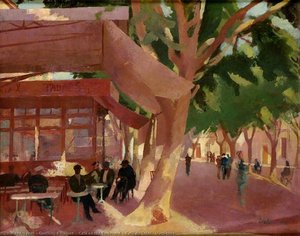
St. Peter St. and Royal St.


 Lees meer
Koop een digitale afbeelding in hoge resolutie met verbeterde kwaliteit, die veel superieur is aan de online voorvertoning.
Elk bestand wordt met uiterste precisie voorbereid door onze interne specialisten, met behulp van geavanceerde tools en deskundige handmatige retouche. Wij garanderen dat elke afbeelding een uitzonderlijke helderheid, nauwkeurige kleurweergave en verfijnde details bezit.
Het uiteindelijke bestand wordt binnen 72 uur per e-mail geleverd, geoptimaliseerd voor direct gebruik in professionele, redactionele en printomgevingen. Dit is dezelfde kwaliteit waarop topontwerpstudio's, uitgevers en galerieën vertrouwen.
Digitale afbeeldingen
Download een bestand met hoge resolutie voor persoonlijke weergave, afdrukken en creatieve projecten. ( Bestel een print Bestel een handgeschilderde reproductie van dit verzamelobject)
Inbegrepen bij elke bestelling van een digitale afbeelding
Professionele digitale levering, gegarandeerd
Wanneer u kiest voor ArtsDot.com, ontvangt u niet alleen een afbeelding – u krijgt een professioneel verbeterd digitaal kunstwerk, met precisie vervaardigd en voorzien van een tevredenheidsgarantie. Dit is alles wat automatisch bij uw bestelling is inbegrepen:

Direct per e-mail ontvangen
Uw hoogwaardige digitale afbeeldingsbestand wordt binnen 72 uur na bestelling naar u gemaild – klaar voor direct gebruik.

Met AI verbeterd digitaal bestand
Uw kunstwerk wordt professioneel geoptimaliseerd met behulp van geavanceerde AI-tools en handmatige bewerkingen, waardoor maximale details, helderheid en kleurnauwkeurigheid worden gegarandeerd.

Gratis levenslange herlevering
Je bestand per ongeluk verwijderd of kwijtgeraakt? Geen zorgen – we sturen het u op elk gewenst moment gratis opnieuw toe.

Geen invoerkosten – nooit
Geniet direct van uw kunstwerk zonder invoerrechten, belastingen of verzendkosten – digitale downloads zijn altijd belastingvrij.

Garantie op kleurgetrouwheid
Met behulp van professionele hulpmiddelen en kleurbeheer zorgen wij ervoor dat uw digitale afbeelding de originele kleuren zo nauwkeurig mogelijk weergeeft.

60 dagen tevredenheidsgarantie
Als u niet tevreden bent met uw digitale afbeelding, passen wij deze aan of storten wij 100% terug binnen 60 dagen – zonder vragen gesteld.

100% Geld-terug-garantie
Niet tevreden? Ontvang binnen 60 dagen na ontvangst van uw digitale bestand uw volledige aankoopbedrag terug – zonder vragen te stellen.

Korting bij grote bestellingen
Koop 3 afbeeldingen, bespaar 10% - Koop 5, bespaar 15% - Koop 10+, bespaar 20%. Ideaal voor creatieve projecten, galerieën en bureaus.
Beschrijving verzamelobject
A Vibrant Intersection of Life and Heritage
In the heart of New Orleans, where history breathes through the wrought iron and cobblestones, Robert Malcolm Rucker captures a fleeting moment of urban intimacy in his evocative work, St. Peter St. and Royal St. This painting serves as more than just a street scene; it is a rhythmic pulse of life, frozen in time from 1970. The viewer is immediately drawn into a narrative of connection, watching a man in a striking red shirt seated upon a bench, his back turned to us as if he is lost in the profound quietude of thought or perhaps simply absorbing the ambient energy of the French Quarter. Beside him, a woman stands engaged in conversation, her presence adding a layer of social texture that transforms the canvas from a mere landscape into a living, breathing stage of human interaction.
Rucker, a legendary figure in Louisiana art, utilizes an impressionistic approach to weave together the disparate elements of the street. The composition is masterfully balanced by the placement of greenery—potted plants that anchor the left and right foregrounds, framing the bustling activity within the center of the frame. As the eye wanders through the background, it encounters a tapestry of figures, some drifting through the scene and others lingering in small clusters, creating a sense of depth and perpetual motion. This technique allows the viewer to feel like an accidental participant in the city's daily ritual, experiencing the lively atmosphere that defines this iconic intersection.
The emotional resonance of the piece lies in its ability to evoke nostalgia and warmth. Through his use of color and light, Rucker celebrates the cultural heritage of New Orleans, turning a simple street corner into a symbol of community and continuity. For the discerning collector or interior designer, this artwork offers a sophisticated focal point that brings a sense of storied elegance to any space. It is a piece that invites contemplation, prompting one to wonder about the stories held within the shadows of the buildings and the whispered secrets of the passersby. To possess a reproduction of this work is to bring a fragment of New Orleans' soulful spirit into one's own home, offering an enduring window into a world of vibrant tradition and quiet, everyday beauty.
Gerelateerde kunstwerken




Biografie van de kunstenaar
Richard Kemble: A Quiet Master of Woodcuts
Richard Kemble, born in Erie, Pennsylvania in 1932 and passing away in 2007, wasn’t a name that frequently echoed through the halls of grand museums or dominated art headlines. Yet, within his deceptively simple woodcut prints and pastel landscapes lies a profound quietude and an understated mastery of line and texture – qualities that have earned him a devoted following among collectors and a deserved recognition as a significant figure in American printmaking. His life was one dedicated to teaching and creating, culminating in over 350 print editions, primarily woodcuts, crafted during the latter half of his career, largely at his residences in Key West, Florida, and Nantucket, Massachusetts. Kemble’s journey wasn't defined by dramatic pronouncements or radical departures; instead, it was a slow, deliberate cultivation of a unique visual language rooted in observation and a deep appreciation for the natural world.Early Life and Artistic Foundations
Kemble’s early life provided a grounding in both artistic principles and pedagogical practice. He began his formal training at the State University at Buffalo, where he taught for nearly two decades, shaping generations of students with a patient and insightful approach. Later, he found a new home as a professor at Pratt Institute in New York City, further expanding his influence within the art community. Crucially, it was during this period that Kemble received a prestigious fellowship from the National Endowment for the Arts – a pivotal moment that allowed him to dedicate himself fully to his artistic pursuits. This recognition underscored the value he placed on craftsmanship and the importance of sustained creative exploration. His early exposure to the works of realist painters like Edgar Degas, Edward Hopper, and Thomas Eakins profoundly influenced his approach to depicting the world around him, instilling a meticulous attention to detail and an ability to capture fleeting moments of beauty and stillness.The Development of a Distinctive Style
Kemble’s artistic style evolved gradually over time, reflecting both his technical skill and his evolving aesthetic sensibilities. Initially, he produced prints that were closely aligned with the traditions of wood engraving, characterized by sharp lines and precise rendering. However, as he gained experience and honed his technique, he began to experiment with looser, more expressive approaches. He developed a distinctive squeegee technique – using a tool to push and scrape paint across the canvas – which created a textured surface that added depth and richness to his prints. This method, combined with his careful selection of subjects—primarily landscapes and scenes of everyday life—resulted in works that possessed a remarkable sense of immediacy and intimacy. His later work shifted towards more abstract compositions, exploring the interplay of color and line in ways that were both subtle and evocative. The influence of Japanese *emakimono* (woodblock prints) is evident in his use of layered colors and simplified forms, demonstrating an appreciation for traditional techniques while forging a distinctly personal style.Themes and Influences
Kemble’s work is often characterized by its quiet contemplation and understated beauty. He rarely addressed overtly political or social themes, instead focusing on capturing the essence of his subjects—the changing seasons, the textures of nature, and the simple pleasures of everyday life. The influence of photography is palpable in his meticulous attention to detail and his ability to render light and shadow with remarkable accuracy. However, unlike photorealist painters who sought to replicate photographs exactly, Kemble used photography as a starting point for his own creative explorations, transforming images into works of art through the process of printmaking. The legacy of European landscape painting—particularly the work of Impressionists like Monet and Pissarro—is also evident in his use of color and his emphasis on capturing the fleeting effects of light.Legacy and Significance
Richard Kemble’s contribution to American printmaking may not be widely celebrated, but it is nonetheless significant. His quiet dedication to craft, his masterful technique, and his understated aesthetic have earned him a devoted following among collectors and art enthusiasts. His work stands as a testament to the power of observation, the beauty of simplicity, and the enduring appeal of traditional printmaking techniques. While he avoided the spotlight, Kemble’s prints—characterized by their quiet elegance and profound sense of stillness—continue to resonate with viewers today, offering a moment of respite from the complexities of modern life. His legacy lies not in grand pronouncements or revolutionary gestures, but in the subtle beauty and enduring quality of his woodcut prints – a testament to a lifetime spent quietly observing and translating the world onto paper.
robert malcolm rucker
1932 - 2001 , United States of America
Kerngegevens
- Artistic Movement Or Style: Photorealism
- Artists Or Movements Influenced By This Artist:
- Chuck Close
- Photorealism movement
- Artists Who Influenced This Artist:
- Edgar Degas
- Edward Hopper
- Thomas Eakins
- Date Of Birth: May 14, 1932
- Full Name: Richard Estes
- Nationality: American
- Notable Artworks:
- Telephone Booths
- Cityscapes
- Van Gogh portraits
- Place Of Birth: New York City, USA

