


 Voorvertoning
 Verstuur
 Delen
Delen
 Details bekijken

 Download
 Vergelijkbare items
 Röntgenonderzoek
 Diavoorstelling
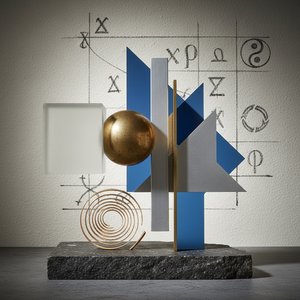
Drift III


 Lees meer
Giclée / Kunstafdrukken
Giclée- of canvasafdruk van museumkwaliteit met een snelle productie en flexibele afwerkingsmogelijkheden. ( Bestel handgeschilderde reproductie Koop afbeelding)




































Kies uit onze vooraf ingestelde maten die overeenkomen met de originele verhoudingen van het kunstwerk.

U kunt uw eigen afmetingen opgeven om in een specifieke lijst of ruimte te passen. Als de door u gekozen maat niet overeenkomt met de proporties van het originele kunstwerk, zullen wij de afbeelding bijsnijden of uitbreiden met een gespiegelde of effen rand. Een digitaal mockup wordt ter goedkeuring naar u verzonden voordat de productie begint.
Houd er rekening mee dat de preview op het scherm de werkelijke bijsneding of uitbreiding niet weergeeft. Alleen de mockup toont de uiteindelijke compositie nauwkeurig.
Hoewel aangepaste maten beschikbaar zijn, raden wij aan een afmeting uit de vooraf bepaalde lijst te kiezen om de originele proporties te behouden.
Wereldwijde levering () binnen 2 weken in plaats van de standaard 4/5 weken. (17 augustus)

Gratis wereldwijde expressverzending

Hoogwaardig linnen canvas

Volledige verzendverzekering

Garantie op terugbetaling van invoerrechten

Garantie op exacte kleurweergave

Retourbeleid van 60 dagen (alleen bij defecten)

100% Geld-terug-garantie

Korting bij meerdere afnames
 De optie voor glas is alleen beschikbaar bij een formaat kleiner dan 110 cm.

Drift III
Giclée / Kunstafdrukken
Afmetingen reproductie
-


Eindtotaal
$ 63
Vergelijkbare kunstwerken


Biografie van de kunstenaar
Richard Dean Tuttle: A Subtlety of Scale and Line
Richard Tuttle, born in Rahway, New Jersey, in 1941, is a pivotal figure in postminimalist art, renowned for his deeply intimate and often deceptively simple works. His career, spanning over six decades, has been characterized by a persistent exploration of scale, line, and perception—elements that coalesce to create sculptures, paintings, drawings, prints, and installations imbued with a quiet intensity. Tuttle’s approach defies easy categorization; he resists the rigid boundaries of traditional art movements while simultaneously influencing contemporary practices through his unique sensibility.
Tuttle's early life instilled in him a profound appreciation for materials and their inherent qualities. Raised in Roselle, New Jersey—a suburb of New York City—he benefited from exposure to both artistic and intellectual environments. His studies at Trinity College in Hartford, Connecticut, provided a foundation in philosophy and literature alongside his burgeoning interest in art. This interdisciplinary approach profoundly shaped his thinking, informing his understanding of how objects relate to space, language, and the viewer’s experience. Following graduation, he spent a semester at the Cooper Union before briefly serving in the U.S. Air Force, experiences that likely contributed to his later penchant for unconventional materials and spatial arrangements.
His career began with a fortuitous introduction to Betty Parsons Gallery in 1965, a pivotal moment that secured him recognition within the burgeoning New York art scene. Parsons, a champion of emerging artists, provided Tuttle with an early platform to showcase his groundbreaking work—small, monochrome reliefs, palm-size paper cubes, and shaped wood reliefs—that challenged conventional notions of sculpture. These initial pieces, characterized by their reductive forms and subtle manipulations of space, established him as a key voice in the minimalist movement, though Tuttle’s work quickly diverged from the purely geometric aesthetic championed by artists like Donald Judd and Sol LeWitt. Instead of stark minimalism, Tuttle embraced eccentricity, introducing vibrant colors, unexpected textures, and playful arrangements into his creations.
The Language of Line and Form
Tuttle's artistic language is defined by a deliberate restraint—a “less is less” philosophy that operates on a profoundly intimate scale. His works rarely exceed a few inches in size, demanding close attention from the viewer. This diminutive scale forces us to reconsider our relationship with art, shifting the focus from grand gestures and monumental forms to the subtle nuances of line, texture, and color. He frequently employs unconventional materials—paper, string, wood scraps, fabric, wire—transforming them into objects that possess a surprising elegance and emotional resonance.
His process is characterized by an intuitive approach, often described as “drawing” rather than sculpting. Tuttle meticulously considers the placement of each element within his compositions, manipulating light and shadow to create dynamic visual effects. He frequently incorporates elements of chance and improvisation, allowing materials to dictate their final form—a testament to his belief in the inherent beauty of imperfection. This emphasis on process over product is a defining characteristic of his work, reflecting a deep engagement with the materiality of art itself.
Controversy and Critical Reception
Tuttle’s career has not been without its challenges. His 1975 survey exhibition at the Whitney Museum of American Art was met with considerable controversy. Curator Marcia Tucker faced significant backlash, including job loss, following a scathing review by Hilton Kramer in *The New York Times*, who famously described Tuttle's work as “less is unmistakably less…one is tempted to say, where art is concerned, less has never been as less than this.” While Kramer’s critique initially dampened enthusiasm for Tuttle’s work in the United States, it ultimately contributed to his international recognition. European critics embraced his unique aesthetic, solidifying his position as a leading figure in postminimalist art.
A Lasting Influence
Despite initial resistance, Richard Tuttle's influence on contemporary art is undeniable. His subtle innovations—his use of unconventional materials, his exploration of scale and line, and his emphasis on process—have inspired generations of artists. He continues to work prolifically across a range of media, maintaining a consistent commitment to his core aesthetic principles. Tuttle’s legacy lies not in grand statements or monumental gestures but in the quiet power of his small, intimate works—objects that invite contemplation, challenge our perceptions, and reveal the beauty hidden within the ordinary.
His work can be found in major museums worldwide, including the Whitney Museum of American Art and the Tate Modern. His ongoing practice serves as a testament to the enduring relevance of minimalist principles when combined with an artist’s unique vision and profound sensitivity to materials and space.

Richard Tuttle
1941 - , United States of America
Belangrijkste feiten
- Artistic Movement Or Style: Postminimalism
- Artists Or Movements Influenced By This Artist:
- Dieter Roth
- Dan Graham
- Artists Who Influenced This Artist:
- Ludwig Mies van der Rohe
- Agnes Martin
- Richard Serra
- Date Of Birth: July 12, 1941
- Full Name: Richard Dean Tuttle
- Nationality: American
- Notable Artworks:
- Drift III
- Cloth octagonal, - (2)
- Place Of Birth: Rahway, New Jersey, USA
Gerelateerde artikelen

Top 10 Meesterwerken van de Geometrische Abstractie | ArtsDot.nl
Ontdek de 10 meest invloedrijke meesterwerken van de geometrische abstractie! Van Mondriaan tot Malevich, leer over kunstenaars, technieken & kleuren. Museumkwaliteit reproducties op ArtsDot.com – voor een unieke interieurstijl.

Beyond Form & Color: Geometric Abstraction's Evolution in 20th/21st Century Art
Explore the evolution of geometric abstraction from Cubism to contemporary art. Discover key artists like Malevich & Mondrian, investment insights, and expert collecting advice at ArtsDot.

Beyond Form & Color: Geometric Abstraction's Enduring Legacy in Art History
Explore the captivating world of geometric abstraction! Discover its origins, key artists like Malevich & Mondrian, and why this movement remains highly valued by art collectors today. Expert insights at ArtsDot.

Kandinsky's Meesterwerken: 25 Abstracte Kunstparels voor uw Interieur | ArtsDot
Ontdek de 25 meest iconische werken van Wassily Kandinsky! Duik in zijn abstracte wereld vol kleur, expressionisme & spirituele diepgang. Vind museumkwaliteit reproducties en interieurinspiratie op ArtsDot.com.
Beyond Form: Exploring the Philosophical Foundations of Geometric Abstraction
Explore the philosophical roots & artistic evolution of geometric abstraction with ArtsDot. Discover Mondrian, Malevich, De Stijl & more. Expert insights for collectors and art enthusiasts.

