


 Bekijk op ware grootte
 Verstuur
 Delen
Delen
 Details bekijken
 Gids voor studentenkunstwerken

 Download
 Vergelijkbare items
 Röntgenonderzoek
 Diavoorstelling
 Statistieken
The six elements
 Oil On Canvas
- WallArt
- Surrealist Expression
 1928
1928- Modern
 73.0 x 100.0 cm
 Lees meer
De kunstwerken die op deze pagina worden weergegeven, zijn beschermd door de auteursrechtwetgeving, wat betekent dat het ons wettelijk niet is toegestaan om identieke reproducties te maken of te verkopen. Deze bescherming wordt gehandhaafd onder internationale overeenkomsten zoals de Conventie van Bern en door nationale wetgeving, waaronder de bepalingen van de Amerikaanse auteurswet - Titel 17. Alle rechten voorbehouden. Reproduceren of distribueren van afbeeldingen is niet toegestaan zonder uitdrukkelijke schriftelijke toestemming van WahooArt.com en de rechthebbenden.
Deze methode voldoet volledig aan de auteursrechtwetgeving, omdat het niet gaat om het kopiëren of dupliceren van het beschermde kunstwerk. In plaats daarvan is er sprake van een creatieve herinterpretatie — een nieuw schilderij dat door het origineel wordt geïnspireerd, maar er niet identiek aan is.
Giclée / Kunstafdrukken
Giclée- of canvasafdruk van museumkwaliteit met een snelle productie en flexibele afwerkingsmogelijkheden. ( Koop handgeschilderd kunstwerk Schakel over naar digitale afbeeldingen)




P118B €10

P118H €10

P118W €10

P438Z €10

P508JH €12

P508YH €12

P805H €10

P805Z €10

P919BZ €10

P919G €10

P919XJ €10

P959ZH €10

P968JZ €12

W106C €8

W218G €10

W218JH €8

W218Y €10

W307PJ €10

W316G €10

W316PJ €8

W316Y €10

W398PJ €8

W4111J €10

W500HY €15

W500JH €15

W692G €12

W849H €8

W940BG €15

W953PJ €8




Kies uit onze vooraf ingestelde maten die overeenkomen met de originele verhoudingen van het kunstwerk.

Voer de breedte en de hoogte in die u nodig heeft, passend bij uw lijst of uw muur. Een afdruk kan alleen worden ingekort, nooit groter worden gemaakt dan het origineel, waardoor een formaat met een andere verhouding een deel van de afbeelding verliest. Wij sturen u een digitaal mockup ter goedkeuring voordat we iets drukken. De afbeelding op deze pagina toont niet de werkelijke uitsnede — dit is alleen te zien op het mockup.
Wereldwijde levering () binnen 2 weken in plaats van de standaard 4/5 weken. (21 oktober)

Gratis wereldwijde expressverzending

Hoogwaardig linnen canvas

Volledige verzendverzekering

Garantie op terugbetaling van invoerrechten

Garantie op exacte kleurweergave

Retourbeleid van 100 dagen (alleen bij defecten)

100% Geld-terug-garantie

Korting bij meerdere afnames
 De optie voor glas is alleen beschikbaar bij een formaat kleiner dan 110 cm.

The six elements
Giclée / Kunstafdrukken
Formaat reproductie
-


Totaalprijs
€ 55
A Labyrinth of Dreams: Unveiling Magritte’s The Six Elements
In the quiet, unsettling corridors of Surrealism, few works capture the tension between reality and the subconscious as poignantly as René Magritte’s 1928 masterpiece, The Six Elements. This painting is far more than a mere composition; it is an invitation to step into a labyrinthine world where the boundaries of the physical self dissolve into a dreamscape of symbolic fragments. At its heart lies a striking portrait of a woman, partially nude and exposed, serving as the anchor for a series of disconnected yet deeply resonant vignettes. Magritte does not merely present a scene; he constructs a paradox, challenging the viewer to find cohesion within a collection of disparate parts—fire, flora, and architecture—that seem to exist in a state of perpetual, quiet mystery.
The technical execution of the piece reveals Magritte’s profound mastery over the illusion of reality. Eschewing the dramatic, textured impasto often found in contemporary movements, Magritte utilized oil on canvas with a remarkably smooth, blended brushstroke technique. This meticulous approach creates a surface that feels almost photographic in its clarity, yet remains hauntingly ethereal. By employing a palette dominated by muted earth tones—deep browns, mossy greens, and somber shadows—he achieves a tonal harmony that suppresses outward spectacle in favor of an inward, psychological intensity. The precision with which he renders the textures of an apple tree or the distant silhouette of a building serves to ground his surrealist hallucinations in a convincing, albeit distorted, sense of tangible existence.
The Architecture of the Unconscious
To understand The Six Elements, one must look through the lens of the era’s burgeoning psychoanalytic revolution. Created during the height of André Breton’s Surrealist movement, the painting breathes the air of Freudian theory, where the repressed desires and hidden traumas of the mind are brought to the surface. There is a profound sense of biographical resonance woven into the canvas; many scholars point to the haunting imagery of Magritte’s youth—specifically the tragic loss of his mother—as the wellspring for his fascination with veiled identities and the obscured face. In this work, the elements act as a vocabulary for the soul: the fire represents primal energy or destruction, while the trees and buildings suggest the structured world we inhabit, all juxtaposed against the vulnerability of the human form.
For the discerning collector or interior designer, this painting offers an unparalleled emotional depth. It is a piece that demands contemplation, making it a sophisticated centerpiece for a space dedicated to intellectual inquiry or quiet reflection. A high-quality reproduction of The Six Elements does not merely decorate a wall; it introduces a conversation. The interplay of light and shadow, combined with the enigmatic subject matter, provides a focal point that shifts and evolves depending on the viewer's perspective. It is an exquisite acquisition for those who appreciate art that transcends the decorative to touch upon the profound, offering a timeless window into the beautiful, unsettling complexity of the human experience.
Vragen & Antwoorden
Hoe verbindt "The six elements" door René Magritte Surrealist Expression met het geboorteland van de kunstenaar?
"The six elements" werd gecreëerd door René Magritte, geboren in België, binnen de Surrealist Expression-stroming. De herkomst van de kunstenaar verbindt het werk met Surrealist Expression, zoals beoefend door kunstenaars uit België.
Welke stemming en emotie komen samen in "The six elements"?
De vastgelegde stemming van "The six elements" door René Magritte is Mystical, en de emotionele toon ervan is Mysterious.
Hoe intens zijn de kleuren in "The six elements" door René Magritte?
"The six elements" door René Magritte vertoont een Vivid kleurintensiteit.
Gerelateerde kunstwerken


Biografie van de kunstenaar
Early Life and the Seeds of Surrealism
René Magritte, geboren René François Ghislain Magritte op 21 november 1898 in Lessines, België, kwam in een wereld terecht die zijn enigmatische artistieke visie diepgaand zou vormen. Zijn vroege jaren werden gekenmerkt door een onheilspellend incident – de zelfmoord van zijn moeder toen hij slechts dertien jaar oud was. Het beeld van haar lichaam dat uit de Samber werd opgegraven, met haar jurk die haar gezicht bedekte, werd een spookachtig motief dat subtiel terugkeerde in zijn latere werk, zich manifesteerde in verduisterde figuren en een voortdurende zoektocht naar verborgen realiteiten. Deze vroege trauma’s zaaiden een fascinatie met mysterie, verlies en de verstikkende kracht van wat onthuld blijft. Hoewel details van zijn jeugd enigszins ongrijpbaar zijn, is duidelijk dat deze vormende ervaring de basis legde voor zijn levenslange vraaging naar perceptie en representatie. Hij begon op tienjarige leeftijd met tekenen, wat een innige neiging tot visuele expressie onthulde, maar experimenteerde aanvankelijk met Impressionisme voordat hij een pad insloeg dat hem zou leiden tot het worden van een van de meest significante figuren in de Surrealistische kunst.Artistic Development and Influences
Magritte’s artistieke reis was niet direct of rechtlijnig. Hij studeerde aan de Académie Royale des Beaux-Arts in Brussel, maar vond de traditionele methoden daar verstikkend. Zijn vroege werk experimenteerde met Futurisme en Cubisme, waardoor elementen van deze avantgardistische bewegingen werden opgenomen, maar uiteindelijk weigerde hun puur formele bezorgdheid. Het was pas in 1922, toen hij de schilderij *The Song of Love* van Giorgio de Chirico ontmoette, dat Magritte een resonatie ontdekte die zijn artistieke koers onherstelbaar zou veranderen. De Chirico’s dromerige landschappen en verontrustende juxtaposities openden voor Magritte een nieuwe manier van kijken – een wereld waar het bekende vreemd kon worden gemaakt, en het alledaagse met diepe mystiek werd ingezaaid. Dit ontmoeting leidde tot zijn toewijding aan Surrealisme, hoewel hij vaak een unieke afstand behield van de meer expliciet psychologische of automatische aspecten ervan. Hij prefereerde een nauwkeurige, bijna klinische precisie in zijn schilderkunst, waarbij hij realistische technieken gebruikte om illogische scenario’s weer te geven.The Heart of Surrealism: Challenging Reality
Vanaf 1926 had Magritte zich volledig ingezet voor de principes van Surrealisme, waarbij hij *Le Jockey Perdu (The Lost Jockey)* produceerde, die breed wordt beschouwd als zijn eerste echt surrealistische werk. Echter, zijn soort Surrealisme was uniek. Hij was niet geïnteresseerd in het verkennen van het onbewuste door vrije associatie of dromerige beelden zoals sommige van zijn tijdgenoten. In plaats daarvan zocht Magritte naar een manier om de perceptie van de werkelijkheid uit te dagen door alledaagse objecten in onverwachte contexten te presenteren, waardoor kijkers werden aangemoedigd hun aannames over de wereld om hen heen in twijfel te trekken. Iconische werken zoals *The Treachery of Images (This is not a pipe)* (1929) ontleden het relatie tussen beeld en object briljant, herinnerend ons dat een representatie nooit het ding zelf is. *Les Amants (The Lovers)* (1927-1928), met zijn verduisterde figuren, echoë de trauma’s van zijn moeder dood terwijl tegelijkertijd intimiteit en verborgenheid worden onderzocht. *Time Transfixed* (1938) presenteert een locomatief die door een bakstenen muur barst, waardoor onze perceptie van ruimte en tijd wordt verstoord. En *The Human Condition* (1933), een doek in een doek, vervaagt de grenzen tussen representatie en werkelijkheid, waardoor we worden aangemoedigd om te overwegen hoe we de wereld waarnemen en interpreteren.Later Life, Recognition, and Enduring Legacy
Ondanks initiële moeilijkheden met erkenning, kreeg Magritte’s werk geleidelijk aan meer bekendheid, vooral in de Verenigde Staten door tentoonstellingen in 1936 en latere retrospectieve tentoonstellingen op het Museum of Modern Art (1965) en het Metropolitan Museum of Art (1992). Hij bleef politiek actief gedurende zijn hele leven, waarbij hij artistieke autonomie verdedigde. Hij bleef zijn kenmerkende stijl verfijnen, thema’s van herhaling, illusie en de kracht van taal onderzoeken in schilderijen die zowel intellectueel stimulerend als visueel aantrekkelijk zijn. Magritte stierf op 15 augustus 1967, waardoor een oeuvre achterbleef dat nog steeds kijkers wereldwijd fascineert en uitdaagt. Zijn invloed strekt zich verder uit dan de schilderkunst, beïnvloedt pop art, minimalistische kunst, conceptuele kunst en zelfs reclame en film. Vandaag de dag worden zijn schilderijen in belangrijke museumcollecties over de hele wereld gehouden, waaronder de Musées royaux des beaux-arts de Belgique in Brussel, die het Magritte Museum herbergen – gewijd geheel aan zijn werk en dat de grootste collectie van zijn creaties bezit.- Museum Collecties: Musées royaux des beaux-arts de Belgique, Brussels; Magritte Museum.

René Magritte
1898 - 1967 , België
Snelle feiten
- Artistic Movement Or Style: Surrealisme
- Artists Or Movements Influenced By This Artist:
- Pop art
- Minimalisme
- Artists Who Influenced This Artist: ['Giorgio de Chirico']
- Date Of Birth: 21 november 1898
- Date Of Death: 15 augustus 1967
- Full Name: René François Ghislain Magritte
- Nationality: Belgisch
- Notable Artworks:
- De Lovers
- Treurkaart
- Tijd verstijfd
- Place Of Birth: Lessines, België
Gerelateerde artikelen

Top 10 Surrealistische Meesterwerken: Kunst voor uw Interieur | ArtsDot.nl
Ontdek de 10 meest iconische surrealistische meesterwerken van Dalí, Magritte & Miró. Duik in hun droomwereld en symboliek! Museumkwaliteit kunst reproducties voor uw interieur op ArtsDot.com.

The Eloquent Form: A Historical & Aesthetic Exploration of the Nude in Art
Explore the captivating history of the nude in art! From ancient Greece to modern masters, discover its evolving symbolism, techniques & enduring beauty. Expert insights for collectors and enthusiasts.
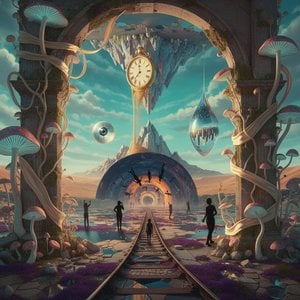
Dreamscapes & Disrupted Realities: Exploring Surrealism's Enduring Influence
Explore the fascinating world of Surrealism! Discover its origins, key artists like Dalí & Magritte, and enduring influence on art & culture. Expert insights & high-quality reproductions at ArtsDot.

The Enduring Allure of the Nude: A Historical & Artistic Exploration of the Human Form
Explore the captivating history of nude art! Discover iconic paintings & artists from classical to modern eras. Uncover symbolism, techniques & find museum-quality reproductions at ArtsDot.

De Opkomst van Vrouwelijke Kunstenaars: Een Nieuwe Golf van Erkenning en Impact
Ontdek de opkomst van vrouwelijke kunstenaars en hun impact op de kunstwereld. Expert analyse, investeringstips & een overzicht van invloedrijke meesters. Lees meer!


