

 Verstuur
 Delen
Delen
 Details bekijken
 Gids
Gids

 Download
 Vergelijkbare items
 Diavoorstelling
 Vraag & antwoord
 Statistieken
La disputa (detail)92

 Lees meer
Giclée / Kunstafdrukken
Giclée- of canvasafdruk van museumkwaliteit met een snelle productie en flexibele afwerkingsmogelijkheden. ( Bestel handgeschilderde reproductie Schakel over naar digitale afbeeldingen)




































Kies uit onze vooraf ingestelde maten die overeenkomen met de originele verhoudingen van het kunstwerk.

Voer de gewenste breedte en hoogte in, passend bij uw lijst of muur. Een afdruk kan alleen worden ingekort en nooit groter worden gemaakt dan het origineel; een formaat met andere verhoudingen zal daarom een deel van de afbeelding verliezen. Wij sturen u een digitaal mockup ter goedkeuring voordat we tot drukwerk overgaan. De afbeelding op deze pagina toont niet de werkelijke uitsnede — dit is alleen te zien op het mockup.
Wereldwijde levering () binnen 2 weken in plaats van de standaard 4/5 weken. (10 november)

Gratis wereldwijde expressverzending

Hoogwaardig linnen canvas

Volledige verzendverzekering

Garantie op terugbetaling van invoerrechten

Garantie op exacte kleurweergave

Retourbeleid van 100 dagen (alleen bij defecten)

100% Geld-terug-garantie

Korting bij meerdere afnames
 De optie voor glas is alleen beschikbaar bij een formaat kleiner dan 110 cm.

La disputa (detail)92
Giclée / Kunstafdrukken
Afmetingen reproductie
-


Eindtotaal
€ 56
La Disputa: A Symphony of Faith and Reason
The *Disputation of the Holy Sacrament*, painted between 1509 and 1510 by Raphael during his tenure decorating the Stanza della Segnatura in Vatican City, stands as a cornerstone of High Renaissance art—a testament to humanist ideals intertwined with profound theological contemplation. Commissioned by Pope Julius II for the papal library, this fresco transcends mere visual representation; it embodies an intellectual dialogue between divine grace and human understanding, meticulously crafted by Raphael’s unparalleled artistic vision.- Subject Matter: The scene depicts a formal debate concerning the Eucharist—the sacrament of Holy Communion—a central pillar of Christian faith. It's not simply a depiction of religious ritual but an exploration of its philosophical implications.
- Style & Composition: Raphael’s masterful use of perspective and balanced symmetry creates a harmonious visual experience, characteristic of Renaissance aesthetics. The fresco is divided into two semicircles—one above the altar representing the Church Triumphant, the other below symbolizing the Church Militant—establishing a dynamic interplay between earthly struggles and heavenly glory.
- Technique: Raphael employed the technique of *fresco*, applying pigment directly onto wet plaster, ensuring remarkable durability and preserving the artwork’s vibrant colors for centuries. The meticulous layering of glaze over underpainting contributes to the luminous quality of the painting, capturing the ethereal glow of divine light.
Historical Context: Renaissance Humanism Meets Papal Patronage
The *Disputation of the Holy Sacrament*, painted between 1509 and 1510 during Raphael’s tenure as papal architect in Rome, stands at the forefront of Michelangelo's artistic legacy. Commissioned by Pope Julius II for the Stanza della Segnatura—one of four opulent rooms decorating the Vatican Palace—the fresco embodies the spirit of Renaissance humanism, a movement that championed reason and observation alongside classical ideals. However, it’s equally rooted in papal patronage, reflecting the Church's ambition to assert its authority and prestige during a period marked by political upheaval and religious reform. Julius II himself was a fervent supporter of humanist scholarship and artistic innovation, recognizing Raphael’s genius as instrumental in elevating the Vatican’s visual splendor. The painting reflects this intellectual fervor through its careful arrangement of figures and symbols—a deliberate effort to communicate theological truths with clarity and grandeur.Subject Matter and Composition
At its core, the Disputation is a profound meditation on divine revelation and Christian theology. Raphael meticulously depicts a scene from scripture: Christ debating Saint Peter about the Eucharist – the sacrament of Holy Communion—before Mary and John the Baptist. This central tableau dominates the composition, framed by an aureole encircling Christ and illuminated by ethereal light, symbolizing God’s omnipresence and grace. The figures are arranged in two semicircles, mirroring the biblical narrative itself, creating a harmonious balance that underscores the importance of theological contemplation. Raphael skillfully employs perspective to convey depth and realism, grounding the celestial realm in earthly reality—a hallmark of Renaissance artistic ambition.Style and Technique
Raphael’s masterful technique exemplifies the ideals of High Renaissance art. Executed between 1509 and 1510 as part of his monumental commission to decorate the Stanza della Segnatura in Vatican City, the fresco demonstrates an unparalleled command of chiaroscuro—the dramatic interplay of light and shadow—creating a palpable sense of atmosphere and conveying emotional intensity. Raphael’s brushstrokes are smooth and delicate, achieving remarkable tonal gradation and capturing subtle nuances of expression. The artist's meticulous attention to detail is evident in every aspect of the painting, from the drapery folds to the facial features, reflecting the humanist fascination with anatomical accuracy and naturalism.Historical Context
The Disputation stands as a cornerstone of Renaissance artistic achievement, situated within the broader intellectual and spiritual currents of its time. Commissioned by Pope Julius II during his ambitious patronage of the arts—a period marked by papal ambition and rivalry—the fresco reflects the humanist conviction that art could illuminate moral truths and elevate the human spirit. Raphael’s work aligns seamlessly with Leonardo da Vinci's and Michelangelo's groundbreaking explorations of perspective, anatomy, and emotion, establishing a triumvirate of artistic geniuses who reshaped Western visual culture. The Stanza della Segnatura itself was conceived as a didactic space intended to inspire contemplation on divine mysteries—a testament to the papal desire to foster piety and intellectual enlightenment.Symbolism and Emotional Impact
Beyond its formal brilliance, the Disputation is laden with symbolic significance. The central tableau depicts the Holy Eucharist—the sacrament of communion—representing Christ’s sacrifice for humanity and embodying the divine Trinity. The figures surrounding Christ embody both earthly and heavenly realms, symbolizing the Church Militant (those actively battling evil) and the Church Triumphant (those victorious in eternal life). Raphael's masterful use of light and color contributes to an atmosphere of solemn grandeur, conveying a profound sense of spiritual reverence. The inclusion of portraits of prominent figures—Bramante, Francesco Maria Della Rovere, Dante—underscores the painting’s engagement with humanist ideals and its celebration of intellectual accomplishment. Ultimately, “La Disputa” transcends mere visual representation; it aspires to evoke contemplation on faith, reason, and the sublime beauty of God's revelation—leaving an indelible impression on viewers who appreciate the artistic legacy of Renaissance Italy.Veelgestelde vragen
Is "La disputa (detail)92" door Rafaël een licht of een donker kunstwerk?
"La disputa (detail)92" heeft een algehele helderheid van balanced en een luminantie van Gentle Luminance.
Welke kunstenaar en welke stijl staan achter "La disputa (detail)92"?
Rafaël creëerde "La disputa (detail)92" binnen de High Renaissance-stroming.
Waar komen de bezoekers van "La disputa (detail)92" door Rafaël vandaan?
De Statistieken-pagina van "La disputa (detail)92" door Rafaël toont statistieken over de publieksbezoeken: het aantal maandelijkse bezoeken aan dit kunstwerk, een vergelijking met de meest bekeken werken van de kunstenaar en de herkomst van de bezoekers.
Vergelijkbare kunstwerken


Biografie kunstenaar
Het Leven en de Identiteit van Rafaël
Rafaël, in de geschiedenis bekend onder verschillende namen waaronder Raffaello Sanzio, Raffaello Santi en Raffaello Sanzio da Urbino, was een centrale figuur van de Italiaanse Hoogrenaissance. Zijn leven werd gekenmerkt door een dubbele meesterschap in zowel de schilderkunst als de architectuur, een veelzijdigheid die hem in staat stelde om naadloos te bewegen tussen de intieme schaal van een portret en de monumentale eisen van pauselijke constructies. Hij werd geboren op 6 april 1483 in Urbino, Italië, te midden van een wereld vol intellectuele en artistieke bedrijvigheid.
Zijn carrière werd gekenmerkt door een immense productiviteit, die het beheer van een grote atelier vereiste om aan de behoeften van zijn opdrachtgevers te voldoen. Deze professionele capaciteit werd ondersteund door een sociale gratie waarmee hij zich moeiteloos bewoog in de hoogste kringen van het pauselijk hof. Hij trok door de belangrijkste artistieke centra van Italië en vestigde zich uiteindelijk in Rome, waar zijn invloed op het fysieke en visuele landschap van de stad diepgaand was. Hij was een man van aanzienlijke sociale status, die regelmatig in contact stond met de politieke en religieuze leiders van zijn tijd.
De boog van zijn leven werd voortijdig afgesneden in Rome, Vaticaanstaten, Italië. Hij stierf op 6 april 1520, op de leeftijd van 37 jaar. Zijn overlijden werd diep gevoeld binnen het pauselijk hof en markeerde het einde van een carrière die de standaarden van klassieke compositie en architectonisch ontwerp al had herschikt. Hij liet een enorm oeuvre na dat tot op de dag van vandaag een primair referentiepunt vormt voor het bestuderen van de idealen van de Renaissance.
Het Vroege Leven, Familie en Opleiding
De verstilde, intellectuele atmosfeer van Urbino vormde het fundament voor de jonge Raffaello Sanzio. Hij werd geboren in een wereld van hofelijke verfijning, als zoon van Giovanni Santi en Magia di Battista Ciarla. Zijn vader, een schilder in dienst van de hertog, zorgde ervoor dat de vroege jaren van de jongen doordrenkt waren van de humanistische tradities van de Italiaanse hoven. Deze omgeving bood meer dan alleen een thuis; het bood een venster op de vooruitstrevende artistieke ideeën die door het centrale Italië stroomden. Toen het noodlot toesloeg en zijn vader in 1494 overleed, was de jongen pas elf jaar oud. Dit verlies dwong hem tot een voortijdige volwassenheid, aangezien hij de verantwoordelijkheid kreeg om de familie-werkplaats te beheren.
Zijn formele artistieke vorming bracht hem naar de werkplaats van Pietro Perugino in Perugia. Onder deze meester absorbeerde hij de Umbrische stijl, een methode die werd gekenmerkt door zachte modellering en serene religieuze scènes. De opleiding was rigoureus en effectief. Tegen de tijd dat hij rond 1500 als zelfstandig meester werd erkend, vertoonde zijn hand al een zekere helderheid en gemak. Hij trok door de steden van Noord-Italië en verzamelde kennis als een reiziger die munten verzamelt, voordat de aantrekkingskracht van de grotere artistieke centra zijn visie definitief zou gaan hervormen.
De Florentijnse Periode en Artistieke Groei
Bij zijn aankomst in Florence in 1504 betrad de jonge schilder een stad die werd gedefinieerd door de aanwezigheid van reuzen. Hij bestond niet louter naast de werken van Leonardo da Vinci en Michelangelo; hij absorbeerde hen. Zijn ontwikkeling werd gevormd door een zorgvuldige studie van hun uiteenlopende benaderingen, samen met de invloeden van Fra Bartolommeo en Masaccio. Deze periode was minder een breuk met zijn Umbrische wortels en meer een verfijnde synthese van de Florentijnse stijl. Hij nam de anatomische precisie en het dramatische gewicht van zijn tijdgenoten aan en integreerde deze in een meer gebalanceerde, heldere visuele taal.
In dit tijdperk verfijnde hij zijn vermogen om de menselijke aanwezigheid te vangen door zowel religieuze als seculiere lenzen. Tussen 1504 en 1507 vervaardigde hij een reeks Madonnas die een groeiend meesterschap in compositie en emotionele helderheid demonstreerden. Tijdens deze jaren vestigde hij zich ook als een gerenommeerd portrettist, waarbij hij verder ging dan een eenvoudige gelijkenis om een gevoel van waardigheid in zijn onderwerpen te vangen. Zijn werk uit deze tijd weerspiegelt een overgang van de zachtere tradities van zijn leertijd naar de monumentale helderheid die later zijn carrière in Rome zou definiëren.
- Het Huwelijk van de Maagd (1504)
- Jonge Man met een Appel (1505)
- Sint-Joris en de Draak (1506)
- La Belle Jardinière (1507)
De Romeinse Jaren en Pauselijk Mecenaat
De oproep van paus Julius II in 1508 veranderde het levenspad van Rafaël ingrijpend, waarbij hij werd weggetrokken uit de competitieve sfeer van Florence naar de monumentale schaal van Rome. Hij arriveerde in de Eeuwige Stad niet louter als schilder, maar als een centrale figuur in de visuele taal van de pauselijke macht. Zijn aanwezigheid in het Vaticaan werd gekenmerkt door een immense productiviteit, waardoor hij de meest bevoorordeelde kunstenaar van Rome werd. Hij kreeg de taak om de pauselijke appartementen te decoreren, een verantwoordelijkheid die van hem vroeg om een subtiel evenwicht tussen intieme, devotionele onderwerpen en grootschalige, historische narratieven. In deze periode verschoof zijn focus van het ezel naar het architecturale domein, waarbij hij belangrijke architectonische verantwoordelijkheden op zich nam. Na het overlijden van Donato Bramante in 1514, werd hij benoemd tot architect in de zorg voor de Sint-Pieter, een positie die het enorme vertrouwen weerspiegelde dat werd gesteld in zijn vermogen om complexe, grootschalige projecten te organiseren en te realiseren.
Zijn invloed strekte zich uit over de regeringen van opeenvolgende pausen, waaronder Leo X, terwijl hij zich bewoog door de ingewikkelde sociale en politieke hiërarchieën van het pauselijk hof. De omvang van zijn opdrachten groeide in tandem met zijn reputatie, wat hem dwong tot het beheren van een ongewoon grote werkplaats om aan de eisen van zijn beschermheren te voldoen. Waar zijn vroege jaren werden gedefinieerd door het streven naar gratie, werden zijn Romeinse jaren gekenmerkt door het nastreven van orde en monumentale grandeur. Hij werd een onlosmakelijk onderdeel van het Vaticaan, waarbij zijn meesterschap zichtbaar bleef in het weefsel van de meest heilige ruimtes van de stad.
- De School van Athene (onbekend jaartal)
- De Transfiguratie (opdracht in 1517)
Techniek, Stijl en Artistieke Visie
Rafaël bezat het zeldzame vermogen om de uiteenlopende innovaties van zijn tijdgenoten te synthetiseren tot één enkele, coherente beeldtaal. Hij imiteerde de meesters die hij in Florence ontmoette niet louter; in plaats daarvan destilleerde hij hun grootste krachten. Van Leonardo da Vinci nam hij de subtiele gradaties van sfumato over, terwijl de anatomische precisie en de spierkracht van Michelangelo zijn begrip van de menselijke vorm diepgaand vormgaven. Deze synthese stelde hem in staat om voorbij eenvoudige imitatie te stijgen, waardoor hij een stijl creëerde die werd gekenmerkt door helderheid van vorm en een moeiteloze harmonie in de compositie. Zijn figuren bewonen hun ruimte met een natuurlijke gratie, waarbij hij de zware spanning die soms de werken van zijn tijdgenoten kenmerkte, vermeed.
Zijn esthetiek was geworteld in het Neoplatonische ideaal van menselijke grootsheid, waarbij hij streefde naar het weergeven van de waardigheid van het individu door middel van evenwichtige proporties en lumineuze kleuren. Hij maakte gebruik van chiaroscuro om diepte en volume te creëren, maar behield tegelijkertijd een gevoel van orde dat voorkwam dat zijn scènes chaotisch werden. Dit evenwicht tussen licht en schaduw, tussen het fysieke en het ideale, verleende zijn werk een gevoel van hemelse rust. Zelfs in zijn meest complexe historische of religieuze composities is er een waarneembaar gevoel van harmonie dat het oog door het narratief leidt.
Dit streven naar perfectie was overduidelijk in zijn uiteenlopende voorstellingen van de Madonna, waarin hij moederlijke warmte wist te balanceren met een gestructureerde, geometrische gratie. Zijn vermogen om de wetenschappelijke observatie van licht te verenigen met een geïdealiseerd schoonheidsideaal, zorgde ervoor dat zijn composities zowel geworteld in de realiteit als verheven door de geest aanvoelden. Hij bereikte een visuele stabiliteit die de standaard zou worden voor de Hoogrenaissance, waarbij hij zich concentreerde op de stille kracht van een goed geplaatste blik of de precieze plooi van een gewaad om diepe menselijke emotie over te brengen.
Grote Opdrachten en het Beheer van het Atelier
De omvang van de Romeinse carrière van Rafaël vereiste een organisatorisch vermogen dat het traditionele ateliermodel ver oversteeg. Om te kunnen voldoen aan de immense eisen van het pauselijk hof, leidde hij een ongewoon groot atelier; een bruisend centrum van productie dat functioneerde met de precisie van een klein onderneming. Hoewel zijn eigen hand de meest betekenisvolle composities leidde, viel een groot deel van de fysieke uitvoering van zijn visie toe aan zijn assistenten. Deze bekwame leerlingen vervaardigden vaak werken die rechtstreeks gebaseerd waren op zijn voorbereidende tekeningen, wat zorgde voor een ongekende consistentie in stijl over een breed scala aan projecten. Dit systeem stelde hem in staat om een enorme productie op te leveren, zelfs terwijl zijn verantwoordelijkheden zich steeds verder uitbreidden naar de domeinen van de architectuur en het stedelijk ontwerp.
Zijn invloed binnen het Vaticaan was zowel breed als diepgaand. Hij kreeg het vertrouwen voor een reeks belangrijke opdrachten om de pauselijke appartementen te decoreren, maar zijn gezag reikte veel verder dan het canvas. Rafaël werd belast met alle pauselijke projecten die architectuur, schilderkunst, decoratie en het behoud van antiquiteiten betroffen. Deze veelzijdige rol maakte hem tot een centrale figuur in de fysieke en esthetische vormgeving van de pauselijke residentie. Zijn ontwerpwerk beperkte zich niet tot muren en plafonds; hij leverde ook ontwerpen voor wandtapijten bestemd voor het pauselijk hof, waardoor hij zijn esthetiek verweefde in het weefsel van het hofleven zelf.
- De Transfiguratie (opdracht in 1517)
Beroemde Meesterwerken en Iconische Werken
De enorme omvang van zijn oeuvre is wellicht het best te begrijpen aan de hand van zijn vele Madonnas, werken die de visuele taal van moederlijke gratie hebben gedefinieerd. Deze schilderijen stralen vaak een menselijke warmte en een gevoel van serene evenwichtigheid uit die een handelsmerk van zijn stijl werden. In Florence bereikte zijn experimenteren met dit thema een belangrijk hoogtepunt met La belle jardinière, voltooid in 1507. Dit werk weerspiegelt de overgang van zijn eerdere Umbrische opleiding naar de meer verfijnde composities die later zijn Romeinse periode zouden kenmerken.
In Rome bereikten zijn opdrachten een monumentale schaal binnen het Vaticaan. Hij kreeg de taak om de Stanza della Segnatura te decoreren, waar hij expansieve fresco-cycli creëerde die klassieke filosofie integreerden met religieuze thema's. Onder deze werken blijft de School van Athene zijn beroemdste meesterwerk, een uitgestrekte compositie die de grote denkers uit de oudheid samenbracht in één enkele, harmonieuze ruimte. Deze prestatie getuigde van zijn vermogen om complexe, grootschalige narratieven te beheersen door middel van een precieze perspectief en orde.
Zijn laatste jaren werden gekenmerkt door een immense productiviteit, waaronder zijn grootste werk op canvas, De Transfiguratie, dat in 1517 in opdracht werd gegeven. Dit schilderij, waaraan hij werkte op het moment van zijn dood, vertegenwoordigt het hoogtepunt van zijn technische vaardigheid en zijn vermogen om dramatische, grootschalige onderwerpen te hanteren. Zijn talent om dergelijke intense menselijke emotie te balanceren met een klassieke structuur bleef een constante gedurende zijn gehele carrière.
- Kruisiging (1502)
- Huwelijk van de Maagd (1504)
- Portret van Julius II (1512)
- Madonna della Sedia (1514)
Leerlingen, Rivalen en Artistieke Afstamming
Rafaël nam een unieke positie in tijdens de Hoogrenaissance, waarbij hij samen met Leonardo da Vinci en Michelangelo een triumviraat van creatieve reuzen vormde. Terwijl zijn tijdgenoten vaak kozen voor uiteenlopende paden van wetenschappelijke observatie of musculaire spanning, cultiveerde Rafaël een stijl van helderheid en evenwicht die de standaard zou worden voor de academische traditie. Dit evenwicht was niet louter een persoonlijke prestatie, maar ook een pedagogische; zijn enorme productiviteit vereiste een uiterst goed georganiseerd atelier om te kunnen voldoen aan de veeleisende aard van zijn pauselijke opdrachten.
Het beheer van dit atelier vormde een essentieel onderdeel van zijn professionele leven. Zijn leerlingen waren niet slechts assistenten, maar werden specifiek opgeleid om de esthetiek van zijn school te handhaven. Onder hen kwam Giulio Romano naar voren als een toonaangevende figuur, die vaak de taak kreeg om werken uit te voeren op basis van de originele tekeningen van Rafaël. De eigen stijl van Romano zou de invloed van de meester uiteindelijk naar nieuwe richtingen leiden, waarbij hij regelmatig de composities en vormen herhaalde die in het Vaticaan waren vastgelegd. Deze artistieke afstamming zorgde ervoor dat de naam Rafaël nog lang na zijn dood synoniem bleef aan een specifieke vorm van gratie en orde.
Ondanks zijn immense succes werd zijn carrière overschaduwd door de aanwezigheid van zijn grote rivaal, Michelangelo. De spanning tussen hun uiteenlopende benaderingen — de een die de harmonieuze proportie nastreefde en de ander de dramatische anatomische kracht — definieerde een groot deel van het artistieke discours van die tijd. Hoewel de invloed van Rafaël diepgaand was, overtrof het gewicht van de stilistische impact van Michelangelo in de ogen van latere generaties vaak die van hemzelf, met name gedurende de 18e en 19e eeuw. Deze competitie tussen twee fundamenteel verschillende visies op menselijke grootsheid hielp de koers van de westerse schilderkunst gedurende vele eeuwen te bepalen.
Het Einde van een Vruchtbare Carrière
Het momentum van een carrière die de absolute hoogten van de pauselijke gunst had bereikt, werd met een verontrustende plotselingheid gestold. Op 6 april 1520, de dag van zijn zevenendertigste verjaardag, overleed Rafaël onverwacht in Rome. Zijn overlijden werd gevoeld als een diepgaand verlies binnen het pauselijk hof, waar zijn invloed zo diep verweven was met het weefsel van het religieuze en burgerlijke leven, dat de paus van plan was hem tot de rang van kardinaal te verheffen. In plaats daarvan was de man die de visuele stem van de pauselijke macht was geworden, reeds vertrokken voordat dergelijke eerbewijzen konden worden geschonken.
Op het moment van zijn dood was hij nog volop bezig met zijn meest monumentale onderneming, het grootschalige doek van De Transfiguratie. Dit werk bleef onvoltooid op het moment van zijn heengaan, een laatste, nagalmend fragment van een leven dat werd gekenmerkt door een immense productiviteit. Zijn plotselinge vertrek liet het Vaticaan en de artistieke gemeenschap van Rome in rouw achter, wat een stil einde markeerde aan een periode van intense creatieve bloei.
Zijn overblijfselen werden begraven in het Pantheon in Rome, Italië, een plek van enorme historische en architecturale betekenis. Deze laatste rustplaats weerspiegelde de waardigheid van zijn status en de hoge achting waarin hij werd gehouden door de autoriteiten van de Pauselijke Staten. Hij liet een enorm oeuvre na dat was uitgevoerd door een uiterst georganiseerde werkplaats, waardoor zijn aanwezigheid in de geschiedenis van de Hoogrenaissance stevig verankerd bleef.
Waar u zijn meesterwerken vandaag de dag kunt bewonderen
De tastbare overblijfselen van zijn vruchtbare carrière zijn verspreid over de belangrijkste kunstcentra van Europa. In Rome bevindt een groot deel van zijn meest betekenisvolle oeuvre zich nog steeds in het Vaticaanse Paleis, waar zijn fresco's nog steeds de visuele taal van de pauselijke appartementen bepalen. Deze werken, waaronder de gevierde School van Athene, nemen de ruimtes in die hij zelf hielp decoreren tijdens zijn meest productieve jaren in de Eeuwige Stad.
Buiten het Vaticaan is zijn aanwezigheid voelbaar in de grote galeries van het continent. Het Louvre in Parijs herbergt verschillende van zijn schilderijen, terwijl de National Gallery of Art in Washington zijn werken bewaart voor een modern publiek. In Florence huisvest de Galleria degli Uffizi vele van zijn portretten, die een glimp bieden van de gezichten van de Renaissance-adel die hij zo zorgvuldig heeft vastgelegd. De Uffizi Gallery bevat tevens verschillende andere belangrijke stukken, wat ervoor zorgt dat zijn invloed stevig verankerd blijft in de Italiaanse traditie.
- De Verheerlijking, Vaticaanse Musea, Vaticaanstad
- Madonna della Seggiola, Palazzo Pitti, Florence
- Portret van Julius II, Galleria degli Uffizi, Florence
- Zelfportret, Galleria degli Uffizi, Florence
- Het Huwelijk van de Maagd, Pinacoteca di Brera, Milaan

Rafaël
1483 - 1520 , Italië
Belangrijkste feiten
- Artistic Movement Or Style: Hoogrenaissance
- Artists Or Movements Influenced By This Artist:
- Giulio Romano
- Academische traditie
- Artists Who Influenced This Artist:
- Pietro Perugino
- Leonardo da Vinci
- Michelangelo
- Date Of Birth: 1483
- Date Of Death: 1520
- Full Name: Raffaello Sanzio
- Nationality: Italiaans
- Notable Artworks:
- School van Athene
- Sixtijnse Madonna
- De Transfiguratie
- De Alba Madonna
- Place Of Birth: Urbino, Italië
Gerelateerde artikelen
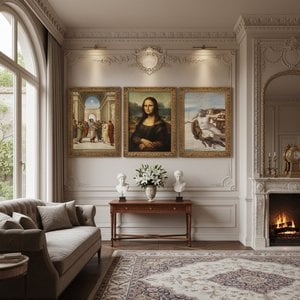
Top 10 Renaissance Meesterwerken: Kunstgeschiedenis voor uw Interieur | ArtsDot.com
Ontdek de 10 meest iconische Renaissance meesterwerken van Leonardo da Vinci, Michelangelo & Rafaël. Leer over hun techniek en betekenis. Museumkwaliteit kunst reproducties voor uw interieur op ArtsDot.com

Raphael's Meesterwerken: 25 Iconische Kunstwerken voor uw Interieur | ArtsDot
Ontdek de 25 meest iconische meesterwerken van Raphael! Duik in de Renaissance kunst, bewonder zijn portretten & religieuze schilderijen. Hoogwaardige reproducties voor uw interieur op ArtsDot.com.

The Enduring Legacy of Fresco Painting: Techniques, History & Contemporary Relevance
Explore the rich history & enduring artistry of fresco painting – from Giotto to Michelangelo! Discover techniques, conservation efforts, & modern applications. Learn how ArtsDot brings this timeless art form to your home.

The Enduring Legacy of Fresco: Technique, History & Artistic Expression Across Cultures
Explore the rich history & enduring legacy of fresco painting! Discover ancient techniques, Giotto's masterpieces, and modern applications. Expert insights for art lovers & professionals.
De Fresco als Familielegatie: Schilder Je Erfgoed op de Muren
Ontdek de fascinerende wereld van fresco schilderkunst! Leer over technieken, geschiedenis en restauratie. Expertise & hoogwaardige reproducties bij .


