

 Verstuur
 Delen
Delen
 Details bekijken
 Gids
Gids

 Download
 Vergelijkbare items
 Diavoorstelling
 Vraag & antwoord
 Statistieken
Objects for everyday use


 Lees meer
Giclée / Kunstafdrukken
Giclée- of canvasafdruk van museumkwaliteit met een snelle productie en flexibele afwerkingsmogelijkheden. ( Bestel handgeschilderde reproductie Schakel over naar digitale afbeeldingen)




































Kies uit onze vooraf ingestelde maten die overeenkomen met de originele verhoudingen van het kunstwerk.

Voer de gewenste breedte en hoogte in, passend bij uw lijst of muur. Een afdruk kan alleen worden ingekort en nooit groter worden gemaakt dan het origineel; een formaat met andere verhoudingen zal daarom een deel van de afbeelding verliezen. Wij sturen u een digitaal mockup ter goedkeuring voordat we tot drukwerk overgaan. De afbeelding op deze pagina toont niet de werkelijke uitsnede — dit is alleen te zien op het mockup.
Wereldwijde levering () binnen 2 weken in plaats van de standaard 4/5 weken. (7 november)

Gratis wereldwijde expressverzending

Hoogwaardig linnen canvas

Volledige verzendverzekering

Garantie op terugbetaling van invoerrechten

Garantie op exacte kleurweergave

Retourbeleid van 100 dagen (alleen bij defecten)

100% Geld-terug-garantie

Korting bij meerdere afnames
 De optie voor glas is alleen beschikbaar bij een formaat kleiner dan 110 cm.

Objects for everyday use
Giclée / Kunstafdrukken
Afmetingen reproductie
-


Eindtotaal
€ 56
A Window into 19th-Century India
In the quiet, sepia-toned depths of Raja Deen Dayal’s "Objects for everyday use," we are invited to step through a temporal threshold into the heart of 19th-century Indian life. This evocative albumen print serves as more than just a photographic record; it is a poignant piece of social realism that captures a fleeting moment of communal existence. The composition centers on a group of four men gathered around a table, their forms arranged in a gentle semi-circle that draws the viewer into their intimate circle of labor and companionship. As we gaze upon the scene, the soft, aged textures of the photograph evoke a sense of nostalgia, pulling us toward a world where the rhythms of daily life were defined by craftsmanship and shared purpose.
The artistry of Deen Dayal lies in his ability to find profound beauty within the mundane. The table is laden with an array of pottery and cooking utensils, their geometric shapes—circles, ovals, and cylinders—creating a rhythmic visual language that anchors the composition. Through the masterful use of light and shadow, the photographer emphasizes the tactile surfaces of these objects, from the smooth glaze of ceramics to the coarse weave of the men's garments. This interplay of light does not merely illuminate; it sculpts the scene, casting shadows that lend depth to the doorway and weight to the figures, transforming a simple documentary moment into a rich, textured tableau of human industry.
The Mastery of the Lens and Historical Resonance
As a pioneer of Indian photography and a photographer to royalty, Raja Deen Dayal possessed a unique technical command over the medium. In this work, his training as an engineer is subtly evident in the balanced, structured perspective that guides the eye across the frame. The technique of the albumen print, characterized by its warm, brownish tones, lends a soulful quality to the subject matter, softening the harsh realities of poverty and labor with a layer of historical grace. This piece stands as a testament to the documentary tradition, where the camera acts as an observer of truth, capturing the essence of Indian social structures and the quiet dignity of traditional pottery-making.
For the discerning collector or interior designer, "Objects for everyday use" offers a sophisticated narrative element for any curated space. The sepia palette provides a neutral yet warm foundation that complements both classical and contemporary decor, offering a sense of historical weight and intellectual depth. To display a high-quality reproduction of this work is to bring a piece of global heritage into the home—a conversation starter that speaks of resilience, community, and the enduring beauty found in the simplest of human endeavors. It is an invitation to reflect on our shared connection to the tools and traditions that shape our very existence.
Veelgestelde vragen
Welk kleurenpalet wordt gebruikt in "Objects for everyday use"?
"Objects for everyday use" door Raja Deen Dayal maakt gebruik van een Pastels kleurenpalet. Dit palet vat het algemene kleurkarakter van het werk samen.
Toont "Objects for everyday use" sterke licht-donkercontrasten?
Het licht-donkercontrast van "Objects for everyday use" wordt weergegeven als Serene. Contrast beschrijft hoe sterk de lichte en donkere vlakken van elkaar verschillen.
Welke sfeer straalt "Objects for everyday use" uit?
"Objects for everyday use" heeft een Nostalgic atmosfeer.
Vergelijkbare kunstwerken


Biografie kunstenaar
vroege jaren en opleiding
Raja Deen Dayal, ook wel bekend als Lala Deen Dayal, was een Indiase fotograaf die in 1844 werd geboren in Sardhana, India. Hij overleed in 1905, na een leven dat onlosmakelijk verbonden was met de visuele geschiedenis van zijn land. Nadat hij zich als ingenieur had opgeleid aan het Thomason College of Civil Engineering in Roorkee, begon Dayal halverwege de jaren 1870 zijn fascinerende carrière in de fotografie.hoogtepunten uit zijn carrière
De carrière van Dayal was getekend door prestigieuze opdrachten en een ongeëvenaard talent voor het vastleggen van macht en schoonheid. Hij vestigde studio's in Indore, Mumbai en Hyderabad, waar hij uitgroeide tot de hofphotograaf van de zesde Nizam van Hyderabad, Mahbub Ali Khan, Asif Jah VI. Zijn reputatie groeide verder toen hij in 1885 werd benoemd tot fotograaf van de viceroy van India, en in 1897 ontving hij de prestigieuze koninklijke erkenning van koningin Victoria.
opmerkelijke werken en collecties
De foto's van Dayal staan wereldwijd bekend om hun meesterlijke weergave van Indiase tempels, paleizen en monumenten, evenals hun verfijnde portretten van Indiase heersers en Britse functionarissen. Enkele van zijn meest iconische werken zijn:
- Moosi River, Hyderabad (J. Paul Getty Museum, Los Angeles, Verenigde Staten), een werk dat zijn uitzonderlijke vermogen toont om de essentie van het Indiase landschap te vangen.
- Channel near the Punchukki, Aurangabad (J. Paul Getty Museum, Los Angeles, Verenigde Staten), waarin zijn talent om de schoonheid van de Indiase architectuur in een perfect kader te plaatsen, prachtig naar voren komt.
musea en collecties met het werk van Raja Deen Dayal
Het artistieke erfgoed van Dayal is bewaard gebleven in enkele van de meest vooraanstaande instellingen ter wereld, waaronder:
- J. Paul Getty Museum (Los Angeles, Verenigde Staten)
- Indira Gandhi National Centre for the Arts (New Delhi, India)
- Peabody Essex Museum (Verenigde Staten)
- Alkazi Collection (Delhi, India)
erfenis en impact
De bijdrage van Raja Deen Dayal aan de Indiase fotografie is onmiskenbaar. Zijn werk legde niet alleen de ziel vast van het architecturale en culturele erfgoed van India, maar plaveide ook de weg voor toekomstige generaties fotografen.
Bekijk meer werken van Raja Deen Dayal op ArtsDot: https://ArtsDot.com/@/raja-deen-dayal
Ontdek Indiase kunst en fotografie op ArtsDot: /en/art/show/art-d3c8xr-en/

Raja Deen Dayal
1844 - 1905 , India
Belangrijkste feiten
- Artistic Movement Or Style: Fotografie (Hof)
- Artists Or Movements Influenced By This Artist: ['British Raj Art']
- Artists Who Influenced This Artist: ['Thomason College']
- Date Of Birth: 1844
- Date Of Death: 1905
- Full Name: Raja Deen Dayal / Lala Deen Dayal
- Nationality: Indisch
- Notable Artworks:
- Moosi River
- Channel Aurangabad
- Objects Everyday Use
- Place Of Birth: Sardhana, India
Gerelateerde artikelen

Monochrome Visions: Exploring the Aesthetic & Historical Significance of Black & White Photography
Explore the rich history & artistic power of black and white photography. From early techniques to iconic masters like Ansel Adams, discover why monochrome continues to captivate art lovers today. Expert insights for collectors.

Top 10 Meesterwerken Documentaire Fotografie | Kunst voor je Interieur - ArtsDot.com
Ontdek de 10 meest invloedrijke meesterwerken van documentaire fotografie! Van Robert Capa tot Dorothea Lange, leer het verhaal achter iconische zwart wit foto's. Vind museumkwaliteit reproducties & decoratie inspiratie op ArtsDot.com.
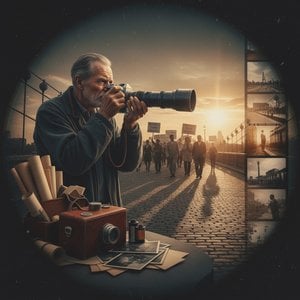
Witnessing History Through Lens & Light: Documentary Photography's Enduring Legacy
Explore the powerful history of documentary photography – from its origins to contemporary masters like Gordon Parks & W. Eugene Smith. Discover how this art form shapes our understanding of society and witness pivotal moments in time.

Raja Ravi Varma: Bridging Tradition & Modernity in 19th-Century Indian Art
Explore the life & art of Raja Ravi Varma, a pioneer who fused European techniques with Indian iconography. Discover his iconic paintings, lasting legacy, and influence on modern Indian art at ArtsDot.

Beyond the Lens: Photography's Enduring Influence on Modern & Contemporary Art
Explore photography's pivotal role in shaping modern & contemporary art. Discover key movements, influential artists like Stieglitz, and expert collecting advice from ArtsDot.