


 Voorvertoning
 Verstuur
 Delen
Delen
 Details bekijken

 Download
 Vergelijkbare items
 Röntgenonderzoek
 Diavoorstelling
 Statistieken
Tattoo 3


 Lees meer
Giclée / Kunstafdrukken
Giclée- of canvasafdruk van museumkwaliteit met een snelle productie en flexibele afwerkingsmogelijkheden. ( Bestel handgeschilderde reproductie Schakel over naar digitale afbeelding)




































Kies uit onze vooraf ingestelde maten die overeenkomen met de originele verhoudingen van het kunstwerk.

U kunt uw eigen afmetingen opgeven om in een specifieke lijst of ruimte te passen. Als de door u gekozen maat niet overeenkomt met de proporties van het originele kunstwerk, zullen wij de afbeelding bijsnijden of uitbreiden met een gespiegelde of effen rand. Een digitaal mockup wordt ter goedkeuring naar u verzonden voordat de productie begint.
Houd er rekening mee dat de preview op het scherm de werkelijke bijsneding of uitbreiding niet weergeeft. Alleen de mockup toont de uiteindelijke compositie nauwkeurig.
Hoewel aangepaste maten beschikbaar zijn, raden wij aan een afmeting uit de vooraf bepaalde lijst te kiezen om de originele proporties te behouden.
Wereldwijde levering () binnen 2 weken in plaats van de standaard 4/5 weken. (9 september)

Gratis wereldwijde expressverzending

Hoogwaardig linnen canvas

Volledige verzendverzekering

Garantie op terugbetaling van invoerrechten

Garantie op exacte kleurweergave

Retourbeleid van 100 dagen (alleen bij defecten)

100% Geld-terug-garantie

Korting bij meerdere afnames
 De optie voor glas is alleen beschikbaar bij een formaat kleiner dan 110 cm.

Tattoo 3
Giclée / Kunstafdrukken
Afmetingen reproductie
-


Eindtotaal
$ 63
Vergelijkbare kunstwerken


Biografie van de kunstenaar
The Tension of Destiny: The Artistic Vision of Qiu Zhijie
In the vast, shifting landscape of contemporary Chinese art, few voices resonate with as much profound introspection and structural complexity as Qiu Zhijie. Born in 1969 in China's Fujian Province, Qiu has emerged as a master of visual storytelling, utilizing the ephemeral mediums of video and photography to navigate the turbulent waters of modern identity. His work is far more than mere documentation; it is a visceral exploration of the human condition, caught perpetually between the crushing weight of predetermined destiny and the fierce, unyielding impulse toward self-assertion. Through his lens, we witness a world grappling with social fragmentation and the haunting transience of existence, reflecting the broader anxieties of a nation undergoing rapid, often jarring, transformation.
Qiu’s artistic journey began in earnest at the Zhejiang Academy of Fine Arts in Hangzhou, where he graduated from the printmaking department in 1992. This foundational training provided him with a meticulous technical discipline that would later manifest in his highly symbolic and graphic compositions. His early breakthrough came almost immediately, as part of the seminal exhibition China's New Art, Post-1989, which positioned him at the forefront of a new generation of artists seeking to redefine Chinese aesthetics in a post-reform era. As his practice evolved, he moved beyond the boundaries of printmaking to embrace installations and cinematic techniques, creating works that allow the viewer to inhabit the very spaces of uncertainty he describes.
Symbolism and the Language of Restriction
The power of Qiu Zhijie’s work lies in his ability to transform simple graphic elements into profound philosophical inquiries. He often employs a stark, deliberate vocabulary of symbols—most notably red tape and prohibition signs—to confront the viewer with themes of control and societal restriction. In his celebrated Tattoo series, such as Tattoo 1 and Tattoo 3, Qiu uses the human body as a canvas to explore how signs and codes in our media-saturated age have begun to overpower actual human beings. By inscribing characters like bu—meaning "no"—across his own skin, he creates a haunting illusion where the body becomes a mere vehicle for externaled authority, illustrating the struggle for autonomy in an increasingly regulated world.
This preoccupation with the boundaries of the self extends into his more large-scale, investigative projects. His work A Suicidology of the Nanjing Yangtze River Bridge serves as a poignant meditation on vulnerability and the weight of history. By researching the construction of this iconic symbol of "New China" and interviewing those touched by its tragedies, Qiu weaves together personal grief and national narrative. The project does not merely observe; it mourns and reflects, using symbolic elements to present a complex triptych of time, memory, and the human condition. In these works, the artist demonstrates an extraordinary ability to harness cinematic and installation-based techniques to elicit deep emotional responses, forcing us to confront difficult truths about life and loss.
A Legacy of Resistance and Reflection
As Qiu Zhijie continues to work from Beijing, his significance within the global art community remains undiminished. His ability to bridge the gap between traditional Chinese elements—such as calligraphy and historical references like the Orchid Pavilion Preface—and contemporary conceptual practices ensures that his work remains both culturally rooted and universally relevant. He has successfully navigated the transition from a local talent to an internationally recognized figure, with exhibitions spanning from the Institute of Contemporary Arts in London to the Victoria and Albert Museum.
Ultimately, the enduring impact of Qiu’s oeuvre lies in its refusal to provide easy answers. Whether he is exploring the translucent labyrinths of his early installations or the stark, photographic portraits of his later years, he remains a steadfast investigator of the forces that shape us. His art stands as a testament to the resilience of the human spirit, documenting the eternal struggle to find meaning and agency within the complex, often fragmented, tapestry of modern existence.

Qiu Zhijie
1969 - , China
Belangrijkste feiten
- Artistic Movement Or Style: Video & Photography
- Date Of Birth: 1969
- Full Name: Qiu Zhijie
- Nationality: Chinese
- Notable Artworks:
- Orchid Pavilion Preface
- A Suicidology of the Nanjing Yangtze River Bridge
- Tattoo 3
- Tattoo 1
- Place Of Birth: Fujian Province, China
Gerelateerde artikelen

Pictorialism: A Search for Artistic Photography's Soul – Aesthetics, Techniques & Legacy
Explore the captivating world of Pictorialism – a pivotal movement that transformed photography into fine art. Discover key artists like Stieglitz & Käsebier, techniques, and collecting tips from experts.
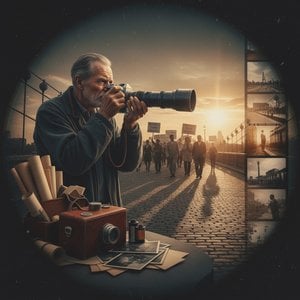
Witnessing History Through Lens & Light: Documentary Photography's Enduring Legacy
Explore the powerful history of documentary photography – from its origins to contemporary masters like Gordon Parks & W. Eugene Smith. Discover how this art form shapes our understanding of society and witness pivotal moments in time.

Beyond the Lens: Photography's Enduring Influence on Modern & Contemporary Art
Explore photography's pivotal role in shaping modern & contemporary art. Discover key movements, influential artists like Stieglitz, and expert collecting advice from ArtsDot.

Monochrome Visions: Exploring the Aesthetic & Historical Significance of Black & White Photography
Explore the rich history & artistic power of black and white photography. From early techniques to iconic masters like Ansel Adams, discover why monochrome continues to captivate art lovers today. Expert insights for collectors.

Crimson Threads of Narrative: Exploring Symbolism & Representation in Artworks Featuring the Red Dress
Explore the rich symbolism of the red dress in art history! From ancient power displays to iconic portraits like Cézanne’s 'Madame Cezanne', discover the cultural and artistic significance behind this captivating color. Expert analysis & insights.