


 Verstuur
 Delen
Delen
 Details bekijken

 Download
 Vergelijkbare items
 Diavoorstelling
Perseus and Andromeda


 Lees meer
Giclée / Kunstafdrukken
Giclée- of canvasafdruk van museumkwaliteit met een snelle productie en flexibele afwerkingsmogelijkheden. ( Bestel handgeschilderde reproductie Koop afbeelding)




































Kies uit onze vooraf ingestelde maten die overeenkomen met de originele verhoudingen van het kunstwerk.

U kunt uw eigen afmetingen opgeven om in een specifieke lijst of ruimte te passen. Als de door u gekozen maat niet overeenkomt met de proporties van het originele kunstwerk, zullen wij de afbeelding bijsnijden of uitbreiden met een gespiegelde of effen rand. Een digitaal mockup wordt ter goedkeuring naar u verzonden voordat de productie begint.
Houd er rekening mee dat de preview op het scherm de werkelijke bijsneding of uitbreiding niet weergeeft. Alleen de mockup toont de uiteindelijke compositie nauwkeurig.
Hoewel aangepaste maten beschikbaar zijn, raden wij aan een afmeting uit de vooraf bepaalde lijst te kiezen om de originele proporties te behouden.
Wereldwijde levering () binnen 2 weken in plaats van de standaard 4/5 weken. (27 augustus)

Gratis wereldwijde expressverzending

Hoogwaardig linnen canvas

Volledige verzendverzekering

Garantie op terugbetaling van invoerrechten

Garantie op exacte kleurweergave

Retourbeleid van 60 dagen (alleen bij defecten)

100% Geld-terug-garantie

Korting bij meerdere afnames
 De optie voor glas is alleen beschikbaar bij een formaat kleiner dan 110 cm.

Perseus and Andromeda
Giclée / Kunstafdrukken
Afmetingen reproductie
-


Eindtotaal
$ 63
A Symphony in Marble: The Dramatic Vision of Pierre Puget
In the hallowed halls of the Louvre Museum, there exists a moment where stone breathes and marble weeps. Pierre Puget’s 1678 masterpiece, Perseus and Andromeda, is not merely a sculpture; it is a theatrical performance frozen in time. As a cornerstone of French Baroque art, this monumental work captures the very essence of an era defined by movement, tension, and profound emotional release. To behold this piece is to witness the intersection of mythic heroism and anatomical perfection, where the cold rigidity of stone is transformed into the fluid grace of a legendary rescue.
The narrative etched into the marble draws from the deep well of Greek mythology, presenting a scene of high stakes and visceral emotion. We find Perseus, the triumphant hero, descending upon a rocky outcrop to save Andromeda from the clutches of Cetus, the monstrous sea serpent. The sculpture captures the precise heartbeat of the drama: the transition from terror to salvation. Andromeda, bound to her stone prison as a sacrifice for her father’s transgressions, reaches out with arms that convey both palpable vulnerability and an unyielding hope. In Perseus, we see the embodiment of strength, his posture commanding the space as he holds aloft the severed head of Medusa, a grim yet necessary trophy of his quest.
The Mastery of Baroque Technique and Form
What distinguishes Puget from the more restrained, academic sculptors of the Louis XIV style is his unbridled passion for pathos. His technique demonstrates an unparalleled command over the medium, utilizing the principle of contrapposto to instill a sense of restless energy into the figures. By manipulating weight distribution, Puget creates a dynamic asymmetry; Perseus’s powerful, active stance contrasts sharply with Andromeda’s more static, yet emotionally charged, presence. This deliberate tension guides the viewer's eye in a sweeping motion across the composition, mirroring the turbulent seas from which the characters emerge.
The sculptor’s ability to manipulate light and shadow—the chiaroscuro of three-dimensional form—is nothing short of miraculous. Every meticulously carved detail, from the intricate folds of Andromeda's flowing drapery to the rugged, textured surfaces of the rocky landscape, serves to catch the light in ways that suggest depth and life. The subtle nuances of muscle fiber and the smooth, polished skin of the figures create a sensory experience that transcends the material. For the discerning collector or interior designer, this level of detail offers a profound sense of luxury and classical sophistication, making it an ideal centerpiece for spaces that demand a narrative of grandeur and timelessness.
A Timeless Legacy for the Modern Collector
Beyond its technical brilliance, Perseus and Andromeda serves as a powerful allegory for the human condition—the eternal struggle between fear and courage, between the monstrous unknown and the light of heroism. This enduring symbolism ensures that the work remains relevant, offering more than just aesthetic beauty; it provides a focal point for contemplation and intellectual engagement. Whether placed in a grand library, a formal salon, or a curated gallery space, a high-quality reproduction of this masterpiece brings with it the prestige of the French Baroque tradition.
For those seeking to infuse their surroundings with the spirit of the masters, this work offers an unparalleled opportunity. It is an invitation to surround oneself with art that does not merely decorate a room but tells a story, evokes an era, and commands the very atmosphere of the home. In the hands of a skilled artisan, the essence of Puget’s vision can be captured in a reproduction that honors the dramatic intensity and breathtaking realism of the original, allowing the legend of Perseus and Andromeda to live on in the modern era.
Vergelijkbare kunstwerken


Biografie van de kunstenaar
Pierre Puget: Een leven in kunst en techniek
- Geboren: Marseille, Frankrijk (1620)
- Overleden: 1694
Vroege jaren en Italiaanse invloeden
- Leerlingwezen: Puget begon zijn carrière op veertienjarige leeftijd, waarbij hij ornamenten sneed voor galjoenen die in Marseille werden gebouwd. Deze vroege blootstelling aan vakmanschap legde de fundering voor zijn latere artistieke ambities.
- Reis naar Italië (1640): Op zoek naar nieuwe mogelijkheden reisde hij naar Italië, eerst naar Livorno en later naar Florence. Hier verfijnde hij zijn vaardigheden als houtsnijder en schilder.
- Rome en Pietro da Cortona: Een cruciaal moment kwam toen hij in Rome onder de vleugels van Pietro da Cortona werd genomen. Puget hielp mee bij het schilderen van de weelderige plafonds in het Palazzo Barberini en het Palazzo Pitti, waarbij hij de dynamiek en grandeur van de Romeinse barok absorbeerde.
- Terugkeer naar Marseille (1643): Na drie jaar in Italië keerde hij terug naar Marseille, met een verfijnd artistiek gevoel dat was gevormd door de Italiaanse meesters.
Belangrijke werken en artistieke ontwikkeling
- Vroege opdrachten: Bij zijn terugkeer ontving Puget opdrachten voor schilderijen en altaarstukken, die een evoluerende stijl toonden onder invloed van Annibale Carracci en Rubens.
- Doorbraken in de beeldhouwkunst: Hij richtte zich steeds meer op de beeldhouwkunst en creëerde werken zoals de medaillons voor de spiegel van Franse oorlogsschepen, waarmee hij een groeiende beheersing van vorm en detail toonde.
- Vaux-le-Vicomte (jaren 1660): Nicolas Fouquet gaf Puget de opdracht om Hercules te beeldhouwen voor zijn kasteel in Vaux-le-Vicomte, wat een belangrijk moment in zijn carrière markeerde en de patronage van machtige figuren illustreerde.
- Genuese periode: Na de ondergang van Fouquet verhuisde Puget naar Genua, waar hij opmerkelijke werken schiep zoals de “Hercule Gaulois” (Louvre) en beelden voor kerken zoals Santa Maria di Carignano.
- Opdrachten voor Versailles: Colbert bracht Puget terug naar Frankrijk, wat leidde tot opdrachten voor Versailles, waaronder de gevierde groepen “Milo van Croton” en “Perseus en Andromeda.” Deze werken worden gekenmerkt door hun dramatische intensiteit en expressief realisme.
Stijl en invloeden
- Barok drama: De stijl van Puget is stevig geworteld in de baroktraditie, met een nadruk op beweging, emotie en theatricaliteit.
- Klassieke inspiratie: Hoewel hij de barokke dynamiek omarmde, onthult zijn werk ook een waardering voor klassieke vormen en idealen.
- Michelangelo en Bernini: Zijn sculpturen tonen invloeden van de krachtige figuren van Michelangelo en de dynamische composities van Bernini.
- Unieke expressie: Ondanks deze invloeden ontwikkelde Puget een eigen, onderscheidende stijl die werd gekenmerkt door rauwe energie en expressieve intensiteit, waardoor hij zich onderscheidde van meer conventionele barokkunstenaars.
Nalatenschap en historische betekenis
- De brug tussen kunst en techniek: Het vermogen van Puget om artistiek talent naadloos te laten versmelten met technische vaardigheden was uniek. Zijn werk aan de scheepsbouw en fortificaties getuigt van een praktische vindingrijkheid naast zijn artistieke prestaties.
- Een gekweld genie: Théophile Gautier beschreef hem beroemd als de "melancholische keizer van de veroordeelden", wat de intensiteit en wellicht de strijd weerspiegelt die inherent waren aan zijn creatieve proces.
- Blijvende impact: De sculpturen van Puget, in het bijzonder “Milo van Croton” en “Perseus en Andromeda,” blijven iconische voorbeelden van de Franse barokke beeldhouwkunst, bewonderd om hun expressieve kracht en technische virtuositeit.
- Erkenning vandaag de dag: Zijn werk wordt wereldwijd gevierd in musea, waaronder het Louvre en het Musée des Beaux-Arts de Marseille, waarmee zijn plaats als een betekenisvol figuur in de kunstgeschiedenis is bezegeld.

Pierre Puget
1620 - 1694 , Frankrijk
Belangrijkste feiten
- Artistic Movement Or Style: Barok
- Artists Who Influenced This Artist:
- Annibale Carracci
- Rubens
- Michelangelo
- Bernini
- Date Of Birth: 1620
- Date Of Death: 1694
- Full Name: Pierre Puget
- Nationality: Frans
- Notable Artworks:
- Hercules in rust
- De Faun terracotta
- Deur van het Hôtel de Ville
- De steniging van Sint-Pieter
- Een fregat op zee
- Place Of Birth: Marseille, Frankrijk
Gerelateerde artikelen

Top 10 Bronzen Beeldhouwwerken die de Kunst Voorgoed Veranderden | ArtsDot
Ontdek de 10 meest legendarische bronzen beeldhouwwerken die kunstgeschiedenis schreven! Van Rodin tot Michelangelo, leer over hun meesterwerken & technieken. Vind museumkwaliteit reproducties en inspiratie voor uw interieur op ArtsDot.com.
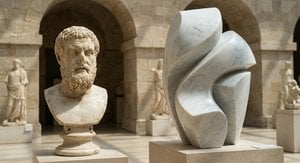
The Enduring Allure of Marble in Art History: From Classical Sculpture to Modern Abstraction
Explore the captivating history of marble sculpture from ancient Greece to modern art. Discover renowned artists like Canova & Michelangelo, carving techniques, and investment insights at ArtsDot.

The Enduring Form: Exploring Themes & Techniques in Sculpture Across Historical Periods
Explore the rich history of sculpture from ancient masterpieces to contemporary innovations. Discover key techniques, influential artists & investment potential for discerning art collectors.

The Enduring Form: Sculpture Across History, Technique & Emotional Resonance
Explore the rich history of sculpture with ArtsDot. Discover key techniques, influential artists & investment potential for discerning collectors. Expert insights into valuing and collecting timeless masterpieces.

Top 10 Legendarische Bronzen Meesterwerken die de Kunst Veranderden | ArtsDot
Ontdek de 10 meest legendarische bronzen meesterwerken die de kunstgeschiedenis veranderden! Van Rodin tot Michelangelo, leer over techniek & betekenis. Museumkwaliteit reproducties voor uw interieur op ArtsDot.com. Exploreer de collectie online!



