

- 251.0 x 167.0 cm


The picture follows your choices: , .
Beschrijving verzamelobject
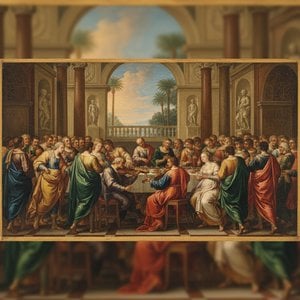
Paolo Veronese’s ‘St Jerome in the Wilderness’ showcases Venetian Renaissance artistry with its opulent color palette and serene depiction of the saint. This monumental 1580 painting, a masterful example of Veronese's vision, invites you to discover this timeless masterpiece.
 Lees meer
Biografie kunstenaar
Paolo Veronese (1528-1588): Een Venetiaanse meester van kleur, drama & weelderige feesten. Ontdek zijn iconische schilderijen en de grandeur van 16e eeuwse Venetië!
Handgemaakte olieverfreproductie
Met de hand geschilderd in olieverf op canvas in uw gewenste maat en lijst, op bestelling gemaakt door onze kunstenaars. ( Schakel over naar print Schakel over naar digitale afbeeldingen)
More about this painting
 Voorvertoning
 Verstuur
 Delen
Delen
 Details bekijken
 Gids
Gids

 Download
 Vergelijkbare items
 Röntgenonderzoek
 Diavoorstelling
 Q&A
Q&A Statistieken
Order your painting in four simple steps
Take your time. You can change any answer; the price in your order card follows each choice.
1 Step one of four
Which size would you like?
These sizes keep the proportions of the original painting. The drawing shows your choice on a wall, above a two-metre sofa.
Or give your own measurements
Kies uit onze vooraf ingestelde maten die overeenkomen met de originele verhoudingen van het kunstwerk.

Voer de breedte en hoogte in die u nodig heeft, passend bij uw lijst of uw muur. Omdat dit handgeschilderd is, kan de kunstenaar bij een afmeting met een andere beeldverhouding iets meer rondom het schilderij schilderen of juist iets meer weglaten — u kiest zelf. Wij sturen u een digitaal mockup ter goedkeuring voordat het schilderwerk begint. De afbeelding die op deze pagina wordt getoond, is niet het uiteindelijke resultaat — alleen de mockup geeft dit weer.
2 Step two of four
How should it be prepared: rolled, stretched or framed?
The prices below are for the size you chose in step one.
Choose the edges of the stretched canvas
Choose your frame

White €1

Blurside €1

Extended €1

P118B €10

P118H €10

P118W €10

P438Z €10

P508JH €12

P508YH €12

P805H €10

P805Z €10

P919BZ €10

P919G €10

P919XJ €10

P959ZH €10

P968JZ €12

W106C €8

W218G €10

W218JH €8

W218Y €10

W307PJ €10

W316G €10

W316PJ €8

W316Y €10

W398PJ €8

W4111J €10

W500HY €15

W500JH €15

W692G €12

W849H €8

W940BG €15

W953PJ €8

H24-GOLD €30

H24-SILVER €30

H36-GOLD €45

H36-SILVER €45
Ingelijst
Moulding: . Overall size with the frame: .
3 Step three of four
Would you like anything changed in the painting?
Most people answer no. Because each painting is made by hand, our artist can also adapt it for you.
After order, ArtsDot.com team will email client for instructions and provide a mockup preview
4 Step four of four
A few finishing options
All of them are optional. The answers already selected cost nothing extra.
Who paints it?
Wereldwijde levering () binnen 3 tot 4 weken in plaats van de standaard 5 weken. (3 november). Zonder concessies aan de kwaliteit.
A nameplate, as in a museum?
Details van de gegraveerde bronzen plaat
This elegant plaque features the artist's name and the title of the artwork, finely engraved for a timeless presentation.
It is made from bronze with a refined, elegant finish. The text is precisely laser-engraved for a sharp and permanent result. Measuring 9x2 cm, the plaque is compact yet easy to read. It's built to be durable and scratch-resistant, offering a professional, museum-quality look. Mounting is simple thanks to the included adhesive backing.
Details transparante acrylplaat
The plaque includes essential engraved details such as the artist's name, the title of the artwork, the date it was created, the type of media used-like oil on canvas or watercolor-a brief description of the piece, and a QR code that links to the complete artwork information.
It is crafted from clear acrylic, offering a sleek, modern appearance. The text is UV-engraved in black to ensure strong visual contrast. With a size of 10x15 cm, it ensures optimal readability. It comes equipped with two metal hooks for secure wall mounting. The plaque is designed to be weather-resistant, making it suitable for various environments, and it includes interactive features that work seamlessly with smartphone scanning.
Details zwarte acrylplaat
This elegant plaque includes engraved information such as the artist's name, the title of the artwork, the date it was created, the type of media used (like oil on canvas or watercolor), a short description of the artwork, and a QR code for quick access to more information.
The plaque itself is made from refined black acrylic with a premium finish. The text is laser-engraved in white for high contrast and readability. Its size is 10x15 cm, designed to be easy to read. It comes with two metal hooks for professional mounting. The design is sleek and fits any interior style. It is also weather-resistant and durable, with built-in digital integration for mobile compatibility.
A protective varnish?
When do you need it?
✓ Check and order
Your painting, as you ordered it

St Jerome
Druktechniek
Afmetingen reproductie
-

Geselecteerde topkunstenaars
Meer detail, verfijning en extra productietijd
-

Lijst voor reproductie
-
-
Voor kunstwerken of reproducties die aan één zijde groter zijn dan 105 cm (ongeveer 41 inch), wordt de lijst als een losse set verzonden. Deze methode garandeert een veilige levering en voorkomt schade tijdens het transport.
Professionele montage vereist - dit is geen doe-het-zelfproduct.
De set moet worden gemonteerd en het canvas moet worden gespannen door een ervaren professionele lijstenmaker, met gebruik van houtlijm (niet inbegrepen), een doekspanter en klemmen om de sponningen recht te houden terwijl de lijm droogt. Onjuiste montage of een ongelijkmatige spanning op het canvas kan het kunstwerk permanent beschadigen en wordt niet gedekt door onze garantie.
 Voor kunstwerken of reproducties die aan één zijde groter zijn dan 105 cm (ongeveer 41 inch), wordt de lijst als een losse set verzonden. Deze methode garandeert een veilige levering en voorkomt schade tijdens het transport.
Alle massief houten onderdelen zijn inbegrepen, nauwkeurig op maat gesneden voor montage.
Te monteren met de meegeleverde schroeven, plus houtlijm voor de hoekverbindingen, die niet wordt meegeleverd en door uw lijstenmaker moet worden aangeschaft.
Professioneel gereedschap is vereist en niet inbegrepen: een spanner voor canvas en klemmen om de latten recht te houden terwijl de lijm droogt.
Belangrijk:
De hoekverbindingen vereisen houtlijm, de latten moeten met lijmklemmen worden vastgehouden tot de lijm volledig is opgedroogd, en het spannen van het canvas op het samengestelde frame vereist een doekspanter. Geen van deze artikelen is inbegrepen in de set. Wij adviseren u om een ervaren professionele lijstenmaker te raadplegen voordat u deze maat bestelt.

Naamplaatje
-
-

Beschermende vernislaag
Glanzende vernis (versterkt de kleuren en biedt bescherming tegen licht en vocht)
-

Mijn kunstwerk aanpassen
Voorbeelden van aanpassingen: vervang het gezicht door een eigen foto; voeg een huisdier toe (bijv. vervang de kat door een hond); verwerk een verborgen boodschap in de achtergrond; wijzig het landschap of andere elementen op de achtergrond.
-

Spoedlevering
Wereldwijde levering () binnen 3 tot 4 weken in plaats van de standaard 5 weken. (3 november). Geen concessies aan de kwaliteit.
-
Spoedlevering
Wereldwijde levering naar binnen 5 weken. (10 november).
Inbegrepen
Eindtotaal
€ 234
De optie voor glas is alleen beschikbaar bij een formaat kleiner dan 110 cm.
Included with every order
- Gratis wereldwijde expressverzending
- Hoogwaardig linnen canvas
- Volledige verzendverzekering
- Garantie op terugbetaling van invoerrechten
- Garantie op exacte kleurweergave
- Retourbeleid van 100 dagen (alleen bij defecten)
- 100% Geld-terug-garantie
- Korting bij meerdere afnames


St Jerome in the Wilderness: A Venetian Visionary's Embrace of Serenity
Paolo Veronese’s “St Jerome in the Wilderness,” completed around 1585–90, stands as a cornerstone of Venetian Renaissance art—a testament to Veronese’s unparalleled ability to capture both spiritual contemplation and visual grandeur. Executed during his prolific workshop years, this monumental painting transcends mere portraiture; it embodies an idealized vision of monastic asceticism bathed in the luminous glow of artistic innovation.
The scene depicts St. Jerome, revered as the patron saint of hermits and translators, seated beneath a sprawling canopy—a deliberate architectural device that harkens back to classical precedents while simultaneously elevating the figure’s solitude to an almost theatrical level. The artist skillfully employs atmospheric perspective, layering shades of ochre and umber to create depth and convey the impression of a vast, sunlit landscape.
- Composition: Veronese’s masterful arrangement prioritizes balance and harmony. Jerome occupies the central axis, flanked by two attentive dogs—a recurring motif in Veronese's oeuvre—who gaze upon him with unwavering devotion. This duality reinforces the saint’s inner peace amidst external challenges.
- Technique: Veronese’s technique is characterized by meticulous glazing – applying thin layers of translucent pigment over underlying colors to achieve remarkable luminosity and vibrancy. The use of sfumato, a subtle blending of tones that softens contours and creates an ethereal haze, contributes significantly to the painting's serene atmosphere.
- Color Palette: Dominating the canvas is a rich tapestry of earthy hues—warm yellows, reds, and browns—harmoniously interwoven with cooler greens and blues. These colors evoke the tranquility of the wilderness and symbolize Jerome’s spiritual purity.
Beyond its aesthetic beauty, “St Jerome in the Wilderness” carries profound symbolic weight. The desert landscape represents isolation and asceticism – a deliberate choice by Jerome to renounce worldly pleasures in pursuit of divine communion. The dogs serve as emblems of loyalty and faithfulness—companionship in solitude—reflecting the saint’s unwavering devotion to God.
The painting's impact extends beyond its immediate visual appeal; it exemplifies Veronese’s commitment to elevating religious subjects through artistic excellence. It remains a captivating masterpiece, inviting viewers to contemplate themes of faith, contemplation, and the enduring power of art to convey spiritual truths—a timeless reflection on serenity and devotion.
Historical Context: Venetian Renaissance Ideals
Created during the High Renaissance in Venice – a period marked by artistic flourishing and humanist intellectualism – “St Jerome” aligns perfectly with prevailing cultural values. The patronage of influential families like Gonzaga fueled ambitious artistic endeavors, prioritizing grandeur and beauty alongside moral instruction. Veronese’s work embodies this ethos, demonstrating how art could inspire piety and elevate the human spirit.
Further Research: Exploring St Jerome's Legacy
For deeper insights into St Jerome’s significance in Christian iconography and artistic tradition, consult resources such as:
Recommended Reproductions: Bringing Veronese's Vision Home
High-quality reproductions of “St Jerome in the Wilderness” are available from reputable art dealers and online platforms, allowing collectors and interior designers alike to experience Veronese’s masterful artistry firsthand.
Veelgestelde vragen
Welke sfeer brengt een reproductie van "St Jerome" door Paolo Veronese in een kamer?
Met zijn Elegant karakter is "St Jerome" een aanrader voor de Living Room.
In welke fase van de carrière van Paolo Veronese valt "St Jerome", gezien de datum?
"St Jerome", vervaardigd in 1580, behoort tot de Mature Period van de carrière van Paolo Veronese.
Wat deelt "St Jerome" met het overige oeuvre van Paolo Veronese?
Binnen het oeuvre van Paolo Veronese past "St Jerome" binnen de Baroque-stijl, samen met de thema's van titian’s color palette, venetian grandeur, biblical narrative, patronage influence, artistic legacy.
Vergelijkbare kunstwerken


Paolo Veronese
1528 - 1588, Italië
Biografie kunstenaar
A Venetian Visionary: The Life and Art of Paolo Veronese
Paolo Caliari, known to the world as Paolo Veronese, emerged from the vibrant artistic landscape of 16th-century Venice as a master of color, composition, and opulent spectacle. Born in Verona in 1528, the son of a stonecutter, his early life was steeped in the visual richness of his surroundings – the classical architecture, sculpted forms, and burgeoning humanist ideals that characterized the region. His initial training under Antonio Badile and Giovanni Francesco Caroto laid a foundation in traditional techniques, but it was his move to Venice in the 1550s that truly ignited his artistic genius. The city itself became his muse, its bustling marketplaces, grand palazzi, and shimmering waterways informing the scale and drama of his work. He quickly absorbed the influences of established Venetian masters like Titian, whose mastery of color profoundly impacted Veronese’s palette, yet he forged a distinct style characterized by an unparalleled sense of theatricality and grandeur.The Painter of Feasts and Grand Narratives
Veronese's reputation rests upon his monumental paintings, particularly those depicting lavish feasts and biblical scenes transformed into dazzling displays of Venetian life. The Wedding at Cana, completed in 1563 for the Benedictine monastery of San Giorgio Maggiore, stands as a testament to his skill. This colossal canvas isn’t merely an illustration of the miracle; it's a vibrant panorama of 16th-century society, teeming with elegantly dressed figures, musicians, and architectural details rendered with breathtaking precision. The painting is not just about what happened at Cana but *how* it would have looked if it had occurred in Venice during Veronese’s time – a deliberate choice that challenged conventional religious depictions. Similarly, The Feast in the House of Levi, originally titled The Last Supper, caused controversy with the Inquisition due to its inclusion of contemporary figures and a seemingly irreverent atmosphere. Veronese defended his artistic license, asserting that painters were entitled to the same creative freedom as poets and jesters – a bold statement reflecting his belief in art’s power to interpret and reimagine sacred narratives. These works weren't simply religious depictions; they were celebrations of life, wealth, and the splendor of Venice itself. He wasn’t interested in austere spirituality but rather in capturing the joy and abundance of existence. His ability to seamlessly blend historical accuracy with imaginative embellishment set him apart from his contemporaries.Influences and Artistic Development
While Titian’s influence on Veronese’s colorism is undeniable, his artistic development was a complex interplay of various influences. The architectural precision he brought to his compositions owes much to the classical tradition prevalent in Verona during his formative years, particularly the work of architects like Michele Sanmicheli. He also absorbed elements from Central Italian masters such as Raphael and Parmigianino, evident in the graceful lines and harmonious arrangements within his paintings. However, Veronese didn’t simply imitate these influences; he synthesized them into a uniquely Venetian style characterized by its dramatic use of light, vibrant color palettes, and meticulous attention to detail. He excelled at creating illusions of space and depth, employing perspective techniques to draw viewers into the heart of his elaborate scenes. His mastery of oil painting allowed him to achieve an unparalleled luminosity and richness of texture. He also ran a large workshop, with contributions from his brother Benedetto and sons Gabriele and Carlo, ensuring that his style continued to flourish even after his death in 1588. The scale of his projects demanded a significant team of assistants, allowing him to focus on the overall design and execution while maintaining a consistent artistic vision.Major Achievements and Notable Works
Veronese’s career produced an astonishing array of masterpieces, each showcasing his distinctive style and technical prowess. Beyond The Wedding at Cana and The Feast in the House of Levi, several works stand out as particularly significant:- Villa Barbaro at Maser (1560-1573): This complex cycle of paintings for the Barbaro family villa is considered one of Veronese’s most ambitious projects. It includes a Sacrifice of Isaac and a Mystical Marriage of Bacchus and Ariadne, both renowned for their opulent settings and dynamic compositions.
- Decorations of San Sebastiano (1556-1570): Veronese’s extensive decorations for the church of San Sebastiano in Venice are a testament to his ability to transform an entire building into a work of art. The ceiling frescoes, in particular, are breathtaking in their scale and detail.
- Portrait of Daniele Barbaro (1556-1567): This portrait exemplifies Veronese’s skill in capturing the likeness and personality of his subjects. It is considered one of his finest works in the genre.
Legacy and Historical Significance
Paolo Veronese’s impact extends far beyond the realm of Renaissance art. His work has resonated through centuries, inspiring artists across various disciplines. His dramatic compositions and vibrant color schemes have been cited as influences on everything from Baroque painting to modern cinema – even finding echoes in the visual aesthetics of Spaghetti Westerns. He was part of the “great trio” of Venetian painters—alongside Titian and Tintoretto—each contributing uniquely to the city’s artistic legacy, yet Veronese often stands apart for his sheer exuberance and celebration of earthly pleasures. His paintings continue to captivate audiences with their grandeur and spectacle, offering a glimpse into the opulent world of 16th-century Venice. Veronese's legacy is a testament to his artistic genius, his ability to capture the essence of an era, and his enduring contribution to the history of art.


Gerelateerde artikelen

Jacopo Tintoretto's Meesterwerken: 25 Schilderijen die de Renaissance Definieerden | ArtsDot
Ontdek de 25 meest indrukwekkende schilderijen van Jacopo Tintoretto, de meester van het Venetiaanse Renaissance. Duik in zijn dramatische stijl, religieuze thema's & techniek. Vind museumkwaliteit reproducties en decoratie-inspiratie op ArtsDot.com.

Oil on Canvas: A Historical & Technical Exploration of a Timeless Artistic Medium
Explore the rich history & enduring techniques of oil painting on canvas. Discover the science behind its longevity, conservation practices, and contemporary relevance. Expert insights for art enthusiasts.
Paolo Veronese: A Renaissance Master of Color, Composition, and Venetian Splendor
Explore the vibrant world of Paolo Veronese, a Renaissance master renowned for his opulent compositions, masterful use of color, and dramatic Venetian scenes. Discover key artworks & legacy.