


Het werk volgt uw keuzes: , .
Beschrijving verzamelobject
Experience Nicolas Tournier's 'Le Concert' (1630), a captivating Baroque genre painting depicting a refined musical gathering. Explore its rich details, warm colors, and masterful composition – a timeless work of art.
 Lees meer
Biografie kunstenaar
Ontdek de barokke schilderijen van Nicolas Tournier! Franse kunstenaar bekend om zijn door Caravaggio beïnvloede realisme en religieuze scènes. Ontdek 'Draag het Kruis' en meer.
Handgemaakte olieverfreproductie
Met de hand geschilderd in olieverf op canvas in uw gewenste maat en lijst, op bestelling gemaakt door onze kunstenaars. ( Schakel over naar print Schakel over naar digitale afbeeldingen)
Meer over dit schilderij
 Voorvertoning
 Verstuur
 Delen
Delen
 Details bekijken
 Gids
Gids

 Download
 Vergelijkbare items
 Röntgenonderzoek
 Diavoorstelling
 Vraag & antwoord
 Statistieken
Bestel uw schilderij in vier eenvoudige stappen
Neem de tijd. U kunt elk antwoord nog wijzigen; de prijs in uw besteloverzicht wordt direct aangepast aan elke keuze.
1 Stap één van de vier
Welke maat wilt u kiezen?
Deze formaten behouden de proporties van het originele schilderij. De tekening laat uw keuze zien op een muur, boven een bank van twee meter.
Of geef uw eigen afmetingen op
Kies uit onze vooraf ingestelde maten die overeenkomen met de originele verhoudingen van het kunstwerk.

Voer de breedte en hoogte in die u nodig heeft, passend bij uw lijst of uw muur. Omdat dit handgeschilderd is, kan de kunstenaar bij een afmeting met een andere beeldverhouding iets meer rondom het schilderij schilderen of juist iets meer weglaten — u kiest zelf. Wij sturen u een digitaal mockup ter goedkeuring voordat het schilderwerk begint. De afbeelding die op deze pagina wordt getoond, is niet het uiteindelijke resultaat — alleen de mockup geeft dit weer.
2 Stap twee van vier
Hoe moet het worden geleverd: gerold, opgespannen of ingelijst?
De onderstaande prijzen zijn voor de maat die u in stap één heeft gekozen.
Kies de randen van het canvas
Kies uw lijst

Wit €1

Vervagende randen €1

Doorlopende rand €1

P118B €10

P118H €10

P118W €10

P438Z €10

P508JH €12

P508YH €12

P805H €10

P805Z €10

P919BZ €10

P919G €10

P919XJ €10

P959ZH €10

P968JZ €12

W106C €8

W218G €10

W218JH €8

W218Y €10

W307PJ €10

W316G €10

W316PJ €8

W316Y €10

W398PJ €8

W4111J €10

W500HY €15

W500JH €15

W692G €12

W849H €8

W940BG €15

W953PJ €8

H24-GOLD €30

H24-SILVER €30

H36-GOLD €45

H36-SILVER €45
Ingelijst
Lijstrand: . Totale afmetingen inclusief lijst: .
3 Stap drie van vier
Wilt u dat er iets aan het schilderij wordt aangepast?
De meeste mensen antwoorden nee. Omdat elk schilderij met de hand wordt gemaakt, kan onze kunstenaar het ook voor u aanpassen.
Na de bestelling zal het team van ArtsDot.com per e-mail contact opnemen met de klant voor instructies en een mockup-voorbeeld verstrekken
4 Stap vier van vier
Enkele afwerkingsopties
Ze zijn allemaal optioneel. De reeds geselecteerde antwoorden brengen geen extra kosten met zich mee.
Wie is de kunstenaar?
Wereldwijde levering () binnen 3 tot 4 weken in plaats van de standaard 5 weken. (10 november). Zonder concessies aan de kwaliteit.
Een naambordje, zoals in een museum?
Details van de gegraveerde bronzen plaat
This elegant plaque features the artist's name and the title of the artwork, finely engraved for a timeless presentation.
It is made from bronze with a refined, elegant finish. The text is precisely laser-engraved for a sharp and permanent result. Measuring 9x2 cm, the plaque is compact yet easy to read. It's built to be durable and scratch-resistant, offering a professional, museum-quality look. Mounting is simple thanks to the included adhesive backing.
Details transparante acrylplaat
The plaque includes essential engraved details such as the artist's name, the title of the artwork, the date it was created, the type of media used-like oil on canvas or watercolor-a brief description of the piece, and a QR code that links to the complete artwork information.
It is crafted from clear acrylic, offering a sleek, modern appearance. The text is UV-engraved in black to ensure strong visual contrast. With a size of 10x15 cm, it ensures optimal readability. It comes equipped with two metal hooks for secure wall mounting. The plaque is designed to be weather-resistant, making it suitable for various environments, and it includes interactive features that work seamlessly with smartphone scanning.
Details zwarte acrylplaat
This elegant plaque includes engraved information such as the artist's name, the title of the artwork, the date it was created, the type of media used (like oil on canvas or watercolor), a short description of the artwork, and a QR code for quick access to more information.
The plaque itself is made from refined black acrylic with a premium finish. The text is laser-engraved in white for high contrast and readability. Its size is 10x15 cm, designed to be easy to read. It comes with two metal hooks for professional mounting. The design is sleek and fits any interior style. It is also weather-resistant and durable, with built-in digital integration for mobile compatibility.
Een beschermende vernis?
Wanneer heeft u het nodig?
✓ Controleren en bestellen
Uw schilderij, zoals u het heeft besteld

LE CONCERT
Druktechniek
Afmetingen reproductie
-

Geselecteerde topkunstenaars
Meer detail, verfijning en extra productietijd
-

Lijst voor reproductie
-
-
Voor kunstwerken of reproducties die aan één zijde groter zijn dan 105 cm (ongeveer 41 inch), wordt de lijst als een losse set verzonden. Deze methode garandeert een veilige levering en voorkomt schade tijdens het transport.
Professionele montage vereist - dit is geen doe-het-zelfproduct.
De set moet worden gemonteerd en het canvas moet worden gespannen door een ervaren professionele lijstenmaker, met gebruik van houtlijm (niet inbegrepen), een doekspanter en klemmen om de sponningen recht te houden terwijl de lijm droogt. Onjuiste montage of een ongelijkmatige spanning op het canvas kan het kunstwerk permanent beschadigen en wordt niet gedekt door onze garantie.
 Voor kunstwerken of reproducties die aan één zijde groter zijn dan 105 cm (ongeveer 41 inch), wordt de lijst als een losse set verzonden. Deze methode garandeert een veilige levering en voorkomt schade tijdens het transport.
Alle massief houten onderdelen zijn inbegrepen, nauwkeurig op maat gesneden voor montage.
Te monteren met de meegeleverde schroeven, plus houtlijm voor de hoekverbindingen, die niet wordt meegeleverd en door uw lijstenmaker moet worden aangeschaft.
Professioneel gereedschap is vereist en niet inbegrepen: een spanner voor canvas en klemmen om de latten recht te houden terwijl de lijm droogt.
Belangrijk:
De hoekverbindingen vereisen houtlijm, de latten moeten met lijmklemmen worden vastgehouden tot de lijm volledig is opgedroogd, en het spannen van het canvas op het samengestelde frame vereist een doekspanter. Geen van deze artikelen is inbegrepen in de set. Wij adviseren u om een ervaren professionele lijstenmaker te raadplegen voordat u deze maat bestelt.

Naamplaatje
-
-

Beschermende vernislaag
Glanzende vernis (versterkt de kleuren en biedt bescherming tegen licht en vocht)
-

Mijn kunstwerk aanpassen
Voorbeelden van aanpassingen: vervang het gezicht door een eigen foto; voeg een huisdier toe (bijv. vervang de kat door een hond); verwerk een verborgen boodschap in de achtergrond; wijzig het landschap of andere elementen op de achtergrond.
-

Spoedlevering
Wereldwijde levering () binnen 3 tot 4 weken in plaats van de standaard 5 weken. (10 november). Geen concessies aan de kwaliteit.
-
Spoedlevering
Wereldwijde levering naar binnen 5 weken. (17 november).
Inbegrepen
Eindtotaal
€ 302
De optie voor glas is alleen beschikbaar bij een formaat kleiner dan 110 cm.
Inbegrepen bij elke bestelling
- Gratis wereldwijde expressverzending
- Hoogwaardig linnen canvas
- Volledige verzendverzekering
- Garantie op terugbetaling van invoerrechten
- Garantie op exacte kleurweergave
- Retourbeleid van 100 dagen (alleen bij defecten)
- 100% Geld-terug-garantie
- Korting bij meerdere afnames


A Moment of Refinement: Nicolas Tournier’s “Le Concert”
Nicolas Tournier's "Le Concert," painted around 1630, offers a captivating glimpse into the refined domestic life of 17th-century France. More than simply a depiction of an evening gathering, it’s a carefully constructed tableau brimming with symbolism and reflecting the burgeoning artistic sensibilities of the Dutch Golden Age. The painting transports us to a warmly lit chamber, dominated by a richly patterned rug that anchors the scene – a testament to the wealth and status enjoyed by its inhabitants. At the heart of this intimate space, four figures are engaged in a lively musical performance, their gestures suggesting both skill and shared enjoyment.
Tournier’s masterful technique is immediately apparent. He employs a moderate perspective, creating a sense of spatial depth that draws the viewer into the room. The artist skillfully utilizes light to sculpt forms, highlighting the textures of clothing – from the smooth skin tones of the musicians to the rougher weave of their garments – and emphasizing the polished surfaces of the instruments themselves. Notice the delicate brushstrokes used to render the details of the harpsichord, the cello, and the flute, each instrument contributing to the overall harmony of the scene. The muted color palette—a blend of reds, browns, golds, and creams—evokes a sense of understated elegance, characteristic of the period’s artistic style.
The Language of Gesture and Symbol
Beyond its technical brilliance, “Le Concert” is rich in symbolic meaning. The musicians themselves represent different facets of aristocratic society – their attire and instruments hinting at their individual roles and social standing. The central table, draped with the elaborate rug, serves as a focal point, symbolizing hospitality and the importance of communal gatherings. The window behind them offers a glimpse of the outside world, subtly reminding us that this scene is contained within a carefully curated space, a refuge from the complexities of life beyond its walls.
Furthermore, the act of music-making itself carries significant weight. In 17th-century France, musical performance was closely associated with intellectual pursuits and social refinement. It represented an opportunity for education, entertainment, and the cultivation of taste – all highly valued qualities within aristocratic circles. The shared smiles and animated gestures of the musicians suggest a genuine connection between them, fostering a sense of camaraderie and mutual appreciation.
Historical Context and Artistic Influences
Tournier’s work is firmly rooted in the artistic traditions of his time, particularly the Dutch Golden Age. Like many Northern European painters of the period, he demonstrated a keen eye for detail, a meticulous approach to rendering textures, and a commitment to realism. However, “Le Concert” also reveals influences from Italian Mannerism, evident in the slightly elongated figures and the dramatic lighting. This blend of styles reflects the cross-cultural exchange that characterized the artistic landscape of 17th-century Europe.
Painted during a period of relative stability and prosperity for France, “Le Concert” offers a window into the lives of the wealthy elite. It’s a scene of leisure and refinement—a celebration of art, music, and social connection. The painting's enduring appeal lies in its ability to evoke a sense of nostalgia for a bygone era, reminding us of the importance of beauty, harmony, and human interaction.
A Legacy of Domesticity
“Le Concert” stands as a prime example of genre painting—a genre that focused on depicting everyday scenes from ordinary life. Yet, Tournier elevates this seemingly simple subject matter through his masterful technique and insightful observation. The painting’s enduring legacy is its ability to capture the essence of a particular moment in time—a moment of shared pleasure, intellectual stimulation, and social connection. It's a testament to the power of art to transport us to another world and to reveal the beauty that can be found in the most ordinary of circumstances.
Veelgestelde vragen
Welke emotie straalt "LE CONCERT" door Nicolas Tournier uit?
"LE CONCERT" door Nicolas Tournier straalt een Tranquil emotionele toon uit.
Voor welke kamer wordt "LE CONCERT" door Nicolas Tournier aanbevolen, gezien de kleuren?
De Earthy kleuren van "LE CONCERT" door Nicolas Tournier passen perfect bij de aanbevolen ruimte: een Living Room.
Wat wordt er afgebeeld in "LE CONCERT" door Nicolas Tournier?
De onderwerpen van "LE CONCERT" zijn music, concert, leisure, domesticity, 17th century, dutch golden age, genre scene.
Vergelijkbare kunstwerken


Nicolas Tournier
1590 - 1639, Frankrijk
Biografie kunstenaar
De Schaduw en het Licht: De Barokke Visie van Nicolas Tournier
In het dramatische landschap van de zeventiende eeuw slaagden weinig kunstenaars erin de diepe spanning tussen goddelijk licht en aardse schaduw zo effectief te vangen als Nicolas Tournier. Geboren in Montbéliard, Frankrijk, rond 1590, kwam Tournier naar voren tijdens een transformerend tijdperk waarin de artistieke hartslag van Europa verschoof naar het intense emotionalisme van de Barok. Zijn werk dient als een aangrijpende brug tussen de klassieke tradities van zijn Franse erfgoed en het revolutionaire, hoog-contrastrijke realisme dat het continent veroverde. Het aanschouwen van een doek van Tournier is het betreden van een wereld waarin elke penseelstreek zwaar weegt van spirituele betekenis en elke schaduw een geheim herbergt dat wacht om onthuld te worden.
De stilistische hartslag van het oeuvre van Tournier is onmiskenbaar verbonden met de diepgaande invloed van Caravaggio. De techniek van deze Italiaanse meester, het tenebrisme—het gebruik van extreme contrasten tussen licht en donker om een gevoel van drama en volume te creëren—werd de hoeksteen van Tourniers visuele taal. Door deze lens schilderde de kunstenaar niet louter scènes; hij beeldhouwde ze uit de duisternis. Zijn beheersing van het licht stelde hem in staat om de texturen van stoffen, de vermoeide lijnen in het gezicht van een heilige en de rauwe realiteit van religieus martelaarschap te verlichten, waardoor de kijker wordt meegezogen in een intieme, bijna tastbare ontmoeting met het heilige.
Een Toewijding aan het Goddelijke en het Menselijke
De thematiek van Tournier was diep geworteld in het religieuze vuur van zijn tijd. Als schilder werkend binnen de Franse Baroktraditie, vond hij zijn grootste inspiratie in de diepzinnige verhalen van de christelijke iconografie. Zijn composities draaiden vaak om thema's als opoffering, boetedoening en goddelijke interventie, wat het meest treffend te zien is in meesterwerken zoals 'Het dragen van het kruis'. In deze werken vermijdt de kunstenaar louter ornamentiek en kiest hij in plaats daarvan voor een rauw, aards realisme dat het menselijk lijden benadrukt dat inherent is aan de goddelijke strijd.
Wat Tournier onderscheidde van zijn tijdgenoten was zijn vermogen om deze intense religieuze ernst te versmelten met een verfijnd gevoel voor compositie, afgeleid van de Romeinse School. Zijn ontwikkeling als kunstenaar leidde hem voorbij de eenvoudige imitatie van Italiaanse meesters naar het creëren van een uniek Franse interpretatie van het Barokke drama. Deze evolutie kenmerkt zich door:
- Emotionele Resonantie: Een focus op de psychologische diepgang van zijn figuren, waardoor het goddelijke toegankelijk en menselijk aanvoelt.
- Meesterschap in Chiaroscuro: Het gebruik van licht niet slechts als middel voor zichtbaarheid, maar als narratief instrument om het oog te leiden naar momenten van spirituele climax.
- Textureel Realisme: Een ongelooflijke aandacht voor detail in de weergave van huid, stof en steen, wat een aura van authenticiteit verleent aan zijn religieuze scènes.
Nalatenschap en Historisch Belang
Het historische belang van Nicolas Tournier ligt in zijn rol als vitale bijdrage aan de Franse Barokbeweging. Hoewel hij vaak werd overschaduwd door de latere, meer decoratieve pracht van de Grand Siècle, bood Tournier een noodzakelijk fundament van realisme en intensiteit. Hij hielp bij het cultiveren van een esthetiek die de rauwe, onverbloemde waarheid van de menselijke conditie waardeerde, waarmee hij de weg vrijmaakte voor toekomstige generaties Franse schilders om de complexiteit van licht en schaduw te verkennen.
Vandaag de dag blijven zijn werken essentiële studies voor iedereen die de overgang van de late Renaissance naar het hoogtepunt van de Barok wil begrijpen. Zijn vermogen om vroomheid op te roepen door middel van duisternis zorgt ervoor dat zijn naam gegrift blijft in de annalen van de kunstgeschiedenis—niet slechts als een volgeling van Caravaggio, maar als een meester die de schaduwen temde om de ziel van zijn tijd te verlichten.

Gerelateerde artikelen

Top 10 Meesterwerken van de Gouden Eeuw: Kunst voor uw interieur | ArtsDot.nl
Ontdek de 10 meesterwerken van de Gouden Eeuw! Leer over Rembrandt, Vermeer & andere Hollandse schilders. Prachtige kunst reproducties voor uw interieur. Museumkwaliteit prints op ArtsDot.com.
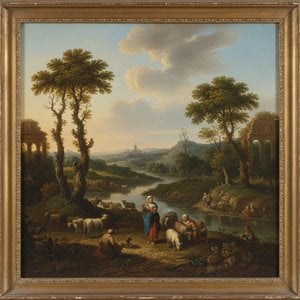
Nicolaes Berchem: Dutch Golden Age Pastoralism & the Evolution of Landscape Painting
Explore the captivating world of Nicolaes Berchem, a leading Dutch Golden Age painter. Discover his idyllic landscapes, masterful technique & lasting influence on art history. Learn more at ArtsDot.

Top 10 Nederlandse Barok Meesterwerken: Kunstgeschiedenis voor uw Interieur
Ontdek de 10 meest iconische meesterwerken van de Nederlandse Barok! Leer over Rembrandt, Vermeer en andere Hollandse meesters. Prachtige reproducties voor uw interieur op ArtsDot.com – museumkwaliteit kunstprints & decoratie.