


 Voorvertoning
 Verstuur
 Delen
Delen
 Details bekijken

 Download
 Vergelijkbare items
 Röntgenonderzoek
 Diavoorstelling
 Statistieken
Isaac blessing jacob

 Lees meer
Handgemaakte olieverfreproductie
Met de hand geschilderd in olieverf op canvas in uw gewenste maat en lijst, op bestelling gemaakt door onze kunstenaars. ( Schakel over naar print Schakel over naar digitale afbeelding)




P118B $10

P118H $10

P118W $10

P438Z $10

P508JH $12

P508YH $12

P805H $10

P805Z $10

P919BZ $10

P919G $10

P919XJ $10

P959ZH $10

P968JZ $12

W106C $8

W218G $10

W218JH $8

W218Y $10

W307PJ $10

W316G $10

W316PJ $8

W316Y $10

W398PJ $8

W4111J $10

W500HY $15

W500JH $15

W692G $12

W849H $8

W940BG $15

W953PJ $8




Kies uit onze vooraf ingestelde maten die overeenkomen met de originele verhoudingen van het kunstwerk.

U kunt uw eigen afmetingen invoeren om in een specifieke lijst of ruimte te passen. Als de door u gekozen maat niet overeenkomt met de verhoudingen van het originele beeld, zullen we het kunstwerk bijsnijden of het schilderij uitbreiden met extra handgeschilderde elementen. Een digitale mockup wordt ter goedkeuring naar u verzonden voordat de productie begint.
Houd er rekening mee dat de preview op het scherm niet de werkelijke uitsnede of uitbreiding weergeeft. Alleen de mockup toont de uiteindelijke compositie nauwkeurig.
Hoewel aangepaste afmetingen mogelijk zijn, raden we aan een maat uit de vooraf gedefinieerde lijst te selecteren om de originele verhoudingen te behouden.
Na de bestelling zal het team van ArtsDot.com per e-mail contact opnemen met de klant voor instructies en een mockup-voorbeeld sturen.
Wereldwijde levering () binnen 3 tot 4 weken in plaats van de standaard 5 weken. (8 september). Zonder concessies aan de kwaliteit.

Gratis wereldwijde expressverzending

Hoogwaardig linnen canvas

Volledige verzendverzekering

Garantie op terugbetaling van invoerrechten

Garantie op exacte kleurweergave

Retourbeleid van 100 dagen (alleen bij defecten)

100% Geld-terug-garantie

Korting bij meerdere afnames
 De optie voor glas is alleen beschikbaar bij een formaat kleiner dan 110 cm.

Isaac blessing jacob
Druktechniek
Afmetingen reproductie
-


Eindtotaal
$ 263
Vergelijkbare kunstwerken


Biografie van de kunstenaar
Nicolas-Guy Brenet: A Pioneer of Troubadour Classicism
Born in Paris in 1728, Nicolas-Guy Brenet’s life and artistic journey represent a fascinating confluence of influences – the formal training of François Boucher, a rejection of Rococo excess, and a profound engagement with the classical ideals championed by Nicolas Poussin. Brenet wasn't merely a painter; he was an architect of style, a pivotal figure in bridging the gap between the ornate elegance of the late 18th century and the burgeoning Romanticism that would soon sweep across Europe. His career unfolded against the backdrop of significant artistic shifts within France, marked by the rise of Neoclassicism and the enduring appeal of historical subjects.
Early in his career, Brenet’s apprenticeship under Boucher exposed him to the lavish techniques and decorative sensibilities characteristic of the Rococo style. However, a critical turning point arrived as he abandoned his master's manner, consciously choosing to emulate the rigorous compositions, balanced forms, and profound moral seriousness of Poussin – an artist whose influence on subsequent generations of painters was immense. This deliberate shift signaled a commitment to a more restrained, intellectual approach to painting, one rooted in classical principles of order and harmony.
The Montmerle Cycle: A Foundation in Religious Painting
Brenet’s early works, particularly his cycle of religious paintings commissioned for the Montmerle Charterhouse near Dijon, established him as a significant voice within French religious art. These canvases weren't characterized by flamboyant ornamentation or dramatic theatricality; instead, they possessed a quiet dignity and spiritual depth that resonated with the prevailing taste for contemplative piety. The compositions were meticulously structured, drawing heavily on Poussin’s influence – clear diagonals, carefully rendered light and shadow, and a focus on narrative clarity. These paintings demonstrated Brenet's ability to translate complex theological themes into visually compelling and emotionally resonant images.
The Montmerle cycle solidified Brenet’s reputation as a skilled painter capable of capturing the essence of religious narratives with both technical precision and artistic sensitivity. It also laid the groundwork for his later, more ambitious projects, particularly his monumental depiction of the Battle of the Greeks and Trojans over the Body of Patroclus.
The Epic Battle: A Revolutionary Composition
Brenet’s “Battle of the Greeks and Trojans over the Body of Patroclus” (circa 1781) stands as a landmark achievement in French art history. This colossal canvas, measuring an impressive 323 x 422 cm, represents a bold departure from traditional battle scenes – a genre typically dominated by dynamic action and heroic figures. Brenet’s interpretation of the episode from Homer's *Iliad* is profoundly different; it’s less about glorifying military prowess and more about exploring themes of loss, mortality, and the tragic consequences of conflict.
The composition itself is a masterpiece of classical design. The figures are arranged in carefully balanced diagonals, creating a sense of dramatic tension and spatial depth. Brenet masterfully employs light and shadow to heighten the emotional impact of the scene, emphasizing the vulnerability of the fallen warrior and the grim determination of the surviving combatants. Notably, he shifted the focus from the traditional heroic depiction of Achilles to that of Ajax, imbuing the scene with a new sense of pathos and human drama. This shift reflects Brenet’s broader interest in exploring the complexities of human experience beyond mere martial glory.
A Troubadour Vision: Foreshadowing Romanticism
Brenet's choice of medieval subjects – particularly his depictions of scenes from the *Iliad* and other classical narratives – was remarkably prescient. He anticipated a trend that would gain prominence in the 19th century, known as “Troubadour painting.” This style, characterized by its intimate portrayal of historical events, its focus on individual emotions, and its often melancholic tone, foreshadowed the Romantic movement’s emphasis on subjective experience and emotional intensity.
Brenet's work demonstrated a remarkable ability to synthesize classical principles with a distinctly modern sensibility. He wasn't simply replicating the styles of the past; he was reinterpreting them through his own artistic vision, creating images that were both timeless in their beauty and profoundly relevant to his contemporary audience. His legacy lies not only in his technical skill but also in his pioneering role as a bridge between tradition and innovation.
Legacy and Influence
Nicolas-Guy Brenet died in Paris in 1792, leaving behind a substantial body of work that continues to be admired for its classical elegance, emotional depth, and historical significance. His son, Nicolas-Guy-Antoine Brenet, followed in his father’s footsteps as a medallist, further extending the family's artistic legacy. Brenet’s influence can be seen in the works of subsequent generations of French painters, particularly those who embraced the Troubadour style. He remains a vital figure in the history of art, a testament to the enduring power of classical ideals and the transformative potential of individual vision.

nicolas guy brenet
1728 - 1792
Belangrijkste feiten
- Artistic Movement Or Style: Academic Classicism, Poussin inspired
- Artists Or Movements Influenced By This Artist: ['Troubadour style']
- Artists Who Influenced This Artist:
- François Boucher
- Nicolas Poussin
- Date Of Birth: 1728-07-01
- Date Of Death: 1792-02-21
- Full Name: Nicolas-Guy Brenet
- Nationality: French
- Notable Artworks:
- The Greeks and Trojans...
- La mort de Du Guesclin
- Place Of Birth: Paris, France
Gerelateerde artikelen

Nicolas Poussin: Classicism, Allegory & Order in 17th-Century French Painting
Explore the life & work of Nicolas Poussin, a master of French Classicism. Discover his allegorical paintings, Roman influences, and enduring impact on art history. Expert analysis & insights.

Top 10 Meesterwerken van het Neoclassicisme: Kunst voor een Verfijnd Interieur
Ontdek de 10 meest iconische meesterwerken van het Neoclassicisme! Van David tot Ingres, leer over kunst, techniek & geschiedenis. Vind museumkwaliteit reproducties en verfijnde decoratie op ArtsDot.com. Exploreer de collectie online!

Timeless Elegance: The Ultimate Buyer's Guide to Choosing Classical Portraits for Sophisticated Interiors
Discover how to select the perfect classical portrait for your home. Our expert guide explores matching art styles to interiors, choosing between hand-painted oils and Giclée prints, and transforming personal photos into timeless masterpieces with professional artistry.

Timeless Resonance: Exploring Classic Vibe in Art – A Historical & Aesthetic Analysis
Explore the rich history & enduring aesthetic of Classicism art! Discover key movements, iconic artists like Raphael & David, and its lasting influence on Western art. Deepen your appreciation today.
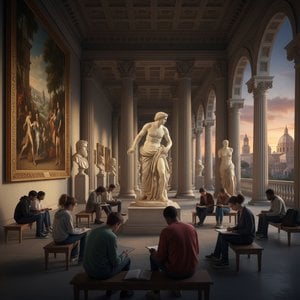
The Enduring Legacy of Classicism: Principles, Evolution & Influence in Western Art
Explore the enduring legacy of Classicism in Western art! Discover its historical context, key principles, iconic masterpieces & lasting influence. Learn about Renaissance and Neoclassical movements with ArtsDot.