

 Voorvertoning
 Verstuur
 Delen
Delen
 Details bekijken
 Gids
Gids

 Download
 Vergelijkbare items
 Röntgenonderzoek
 Diavoorstelling
 Vraag & antwoord
 Statistieken
Path to Kailas


 Lees meer
Giclée / Kunstafdrukken
Giclée- of canvasafdruk van museumkwaliteit met een snelle productie en flexibele afwerkingsmogelijkheden. ( Bestel handgeschilderde reproductie Schakel over naar digitale afbeeldingen)




P118B €10

P118H €10

P118W €10

P438Z €10

P508JH €12

P508YH €12

P805H €10

P805Z €10

P919BZ €10

P919G €10

P919XJ €10

P959ZH €10

P968JZ €12

W106C €8

W218G €10

W218JH €8

W218Y €10

W307PJ €10

W316G €10

W316PJ €8

W316Y €10

W398PJ €8

W4111J €10

W500HY €15

W500JH €15

W692G €12

W849H €8

W940BG €15

W953PJ €8




Kies uit onze vooraf ingestelde maten die overeenkomen met de originele verhoudingen van het kunstwerk.

Voer de gewenste breedte en hoogte in, passend bij uw lijst of muur. Een afdruk kan alleen worden ingekort en nooit groter worden gemaakt dan het origineel; een formaat met andere verhoudingen zal daarom een deel van de afbeelding verliezen. Wij sturen u een digitaal mockup ter goedkeuring voordat we tot drukwerk overgaan. De afbeelding op deze pagina toont niet de werkelijke uitsnede — dit is alleen te zien op het mockup.
Wereldwijde levering () binnen 2 weken in plaats van de standaard 4/5 weken. (5 november)

Gratis wereldwijde expressverzending

Hoogwaardig linnen canvas

Volledige verzendverzekering

Garantie op terugbetaling van invoerrechten

Garantie op exacte kleurweergave

Retourbeleid van 100 dagen (alleen bij defecten)

100% Geld-terug-garantie

Korting bij meerdere afnames
 De optie voor glas is alleen beschikbaar bij een formaat kleiner dan 110 cm.

Path to Kailas
Giclée / Kunstafdrukken
Afmetingen reproductie
-


Eindtotaal
€ 56
A Journey Through the Sublime: The Majesty of Path to Kailas
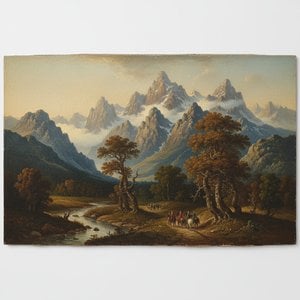
In the vast, silent expanse of Nicholas Roerich’s 1933 masterpiece, Path to Kailas, the viewer is not merely an observer but a pilgrim. This breathtaking composition captures the ethereal grandeur of the Himalayas, where snow-captured peaks pierce the heavens, creating a sense of infinite depth and spiritual weight. The painting presents a landscape that feels both ancient and eternal, characterized by a mountain range that stretches across the horizon like a frozen tidal wave of stone and ice. Roerich, a master of capturing the mystical essence of the natural world, uses the rugged terrain to evoke a profound sense of awe, inviting anyone who gazes upon it to contemplate the sublime power of the earth.
The brilliance of this work lies in its delicate balance between the monumental and the intimate. While the background is dominated by the overwhelming scale of the mountains, Roerich grounds the composition with a poignant human element. In the foreground, two small figures stand upon a verdant hillside, their presence providing a vital sense of scale and connection. These travelers, dwarfed by the surrounding giants, represent the human spirit’s eternal quest for meaning and discovery. Whether they are pausing to admire the view or moving toward a shared destiny, their quiet companionship adds a layer of warmth and narrative tenderness to an otherwise cold and formidable landscape.
Technique, Symbolism, and the Roerich Legacy
Roerich’s technique in Path to Kailas is a testament to his unique ability to blend Symbolism with a profound respect for geological reality. His use of color and light creates a luminous atmosphere, where the interplay of shadow and brilliance on the snow-capped summits suggests a world touched by the divine. The artist employs a harmonious palette that guides the eye through the layers of the landscape, from the textured foreground to the hazy, ethereal distance. This mastery of atmospheric perspective ensures that the painting possesses a rhythmic, almost musical quality, much like the spiritual chants Roerich so deeply admired.
Beyond its visual splendor, the painting serves as a profound symbolic vessel. For Roerich, the mountains were not just geological formations but sacred sites of spiritual enlightenment. The "Path" mentioned in the title is both literal and metaphorical—a journey through the physical world toward a higher state of consciousness. This theme of pilgrimage makes the artwork an exceptional choice for collectors and interior designers seeking to infuse a space with tranquility, strength, and intellectual depth. A high-quality reproduction of this piece brings more than just decoration into a room; it introduces a window into the infinite, offering a permanent sense of peace and a reminder of the enduring beauty found in the most remote corners of our world.
Veelgestelde vragen
Welke kunstenaar en welke stijl staan achter "Path to Kailas"?
"Path to Kailas" werd gecreëerd door Nikolaas Roerich in de Symbolism-stijl. De kunstenaar en de stroming bepalen de traditie van het werk.
Aan welke kunstenaar wordt "Path to Kailas" toegeschreven?
"Path to Kailas" wordt toegeschreven aan Nikolaas Roerich.
Hoe kan ik de afbeelding van "Path to Kailas" door Nikolaas Roerich downloaden?
Er is een download beschikbaar voor "Path to Kailas": de Downloaden pagina van het kunstwerk biedt de mogelijkheid om een digitale afbeelding in hoge resolutie om te downloaden.
Vergelijkbare kunstwerken


Biografie kunstenaar
A Life Immersed in Art and Spirit
Nicholas Roerich, geboren op 9 oktober 1874 in het levendige culturele hart van Sint Petersburg, Rusland, was een figuur wiens leven verder ging dan de grenzen van artistieke expressie. Hij was niet alleen een schilder; hij was een archeoloog, schrijver, filosoof en een vastberaden pleitbezorger voor vrede en cultureel behoud. Zijn opvoeding, doordrenkt van intellectuele ernst – zijn vader was notaris – en artistieke waardering dankzij zijn moeder, legde de basis voor een buitengewoon veelzijdige carrière. Roerich studeerde tegelijkertijd zowel rechten als kunst aan de Universiteit van Sint Petersburg en de Academie voor Kunstnijverheid beginnend in 1893, wat een vroege toewijding aan een brede begrip van de wereld weerspiegelde. Deze dubbele weg was niet contradictorisch voor hem; het spiegelde eerder een overtuiging dat artistieke visie een gronding nodig had in historische context en intellectuele discipline. Hij ontving zijn kunstdiploma in 1897 en voltooide zijn rechtenstudie het daaropvolgende jaar, waardoor de scène werd gezet voor een leven gewijd aan zowel creatieve exploratie als rationele actie.De Verleiding van Symbolisme en Theatraal Innovatie
Roerich’s artistieke ontwikkeling werd diep beïnvloed door de stromingen van het Russische Symbolisme, een beweging die emotionele en spirituele diepten probeerde te roepen door evocatieve beelden en suggestieve vormen. Hij kwam snel in contact met de invloedrijke “Wereld van Kunst” (Mir Iskusstva) van Sergei Diaghilev, en trad uiteindelijk op als president vanaf 1910 tot 1916. Deze associatie bleek cruciaal te zijn, waardoor hij werd blootgesteld aan een netwerk van innovatieve kunstenaars, componisten en denkers die het landschap van de Russische kunst opnieuw vormgaven. Zijn vroege werk toonde een fascinatie met archeologie en toneelontwerp, wat leidde tot baanbrekende samenwerkingen met Diaghilev’s Ballets Russes. Roerich’s ontwerpen voor producties zoals Alexander Borodin's *Prins Igor* (1909) en vooral Igor Stravinsky’s revolutionaire *De Rite van de Lente* (1913), waren niet alleen achtergronden; ze waren integraal onderdeel van de theatrale ervaring. Hij combineerde zorgvuldige historische onderzoek met een gedurfd imaginaire visie, waardoor indrukwekkende visuele omgevingen werden gecreëerd die de emotionele kracht van de muziek en choreografie versterkten. Deze ontwerpen waren niet alleen decoratief; ze probeerden oerkrachten en oude rituelen te oproepen, wat de symbolistische interesse in mythe en spiritualiteit weerspiegelde. Zijn werk werd ook beïnvloed door apocrypha en middeleeuwse sektarische geschriften zoals het Boek van de Dove, waardoor lagen esoterische betekenis werden toegevoegd aan zijn artistieke creaties.Een Reis Naar Spiritualiteit en Himalayaanse Visioenen
Naarmate Roerich’s carrière voortvorderde, ondergingen zijn schilderijen een significante transformatie, waarbij steeds meer spirituele en mystieke thema's werden benadrukt. Deze verschuiving werd gevoed door zijn groeiende interesse in Theosofie en Oosterse religies, filosofieën die de verbondenheid van alles benadrukten en het nastreven van innerlijke wijsheid. Zijn *Architecturale Studies* serie (1904–1905) toonde niet alleen zijn architectonische vaardigheid, maar ook een diepe toewijding aan het behoud van cultureel erfgoed, wat later zijn inspanningen om kunst te beschermen tijdens tijden van conflict voorspelde. Herkenbare motieven begonnen op te duiken in zijn werk: majestueuze landschappen, oude steden gehuld in mysterie en figuren doordrenkt van spirituele betekenis zoals St. Panteleimon en Kuan Yin. Hij maakte uitgebreide reizen door Centraal-Azië, waarbij hij archeologisch onderzoek verrichtte en oude culturen documenteerde, ervaringen die zijn artistische visie diepgaand vormden en zijn overtuiging versterkten dat cultureel begrip essentieel is.Erfgoed van Behoud en Duurzaam Invloed
Nicholas Roerich’s toewijding strekte zich verder uit dan het doek; hij was een toegewijd pleitbezorger voor het beschermen van kunst en architectuur tijdens tijden van oorlog. Erkend de kwetsbaarheid van culturele schatten, heeft hij de oprichting van het Roerich Pact in 1935 voorgelegd – een internationaal verdrag ontworpen om culturele objecten te beschermen tegen vernietiging. Deze initiatief leverde hem meerdere nominaties op voor de Nobelprijs voor de Vrede, wat zijn humanitaire inspanningen onderstreept. Zijn onvermoeibare inspanningen toonden een overtuiging dat het behoud van cultureel erfgoed niet alleen essentieel is voor het begrijpen van het verleden, maar ook voor het bouwen aan een vreedzamere toekomst. Hij liet een oeuvre achter dat niet alleen visueel indrukwekkend is, maar ook diep betekenisvol, en een tijdloze boodschap van vrede, begrip en respect voor alle culturen biedt.Belangrijke Werken & Duurzaam Invloed
- Saint Nicholas: Een gedetailleerde monochrome muurschildering die middeleeuwse kunst en heraldische symboliek toont.
- City: Evocative beelden van oude stedelijke landschappen, die zijn archeologische interesses weerspiegelen.
- Lake of the Nagas: Een tempera schilderij dat symboliek en natuur combineert, een voorbeeld van zijn unieke artistieke visie.

Nikolaas Roerich
1874 - 1947 , Rusland
Belangrijkste feiten
- Artistic Movement Or Style: Symbolisme, Spirituele kunst
- Artists Or Movements Influenced By This Artist: ['Russisch Symbolisme']
- Artists Who Influenced This Artist: ['Diaghilev']
- Date Of Birth: 9 oktober 1874
- Date Of Death: 13 december 1947
- Full Name: Nicholas Konstantinovich Roerich
- Nationality: Russisch
- Notable Artworks:
- Saint Nicholas
- City
- Lake Nagas
- Place Of Birth: Sint-Petersburg, Rusland
Gerelateerde artikelen

Romantische Landschappen: Top 10 Meesterwerken voor een Sfeervol Interieur | ArtsDot.nl
Ontdek de 10 meest iconische meesterwerken van de Romantiek! Reis door de tijd met Caspar David Friedrich, Turner & Delacroix. Laat je inspireren en vind museumkwaliteit kunst reproducties voor een sfeervol interieur op ArtsDot.com.

Evocations of Place: A Historical Journey Through Landscape Art
Explore the rich history of landscape art with ArtsDot. Discover renowned artists, movements like Impressionism & Romanticism, and expert guidance for collecting timeless pieces. Find your perfect serene escape today!

Katsushika Hokusai's 25 Meesterwerken: Japanse Kunst voor uw Interieur | ArtsDot
Ontdek de 25 meesterwerken van Katsushika Hokusai, de Japanse Ukiyo-e kunstenaar! Reis door zijn iconische prints zoals 'The Great Wave' en Mount Fuji. Vind museumkwaliteit reproducties & inspiratie voor uw interieur op ArtsDot.com.

John Constable's Top 25 Meesterwerken: Landschappen die de Ziel Raaken | ArtsDot
Ontdek de 25 mooiste schilderijen van John Constable, meester van de Engelse Romantiek. Van idyllische landschappen tot iconische Hay Wain – bewonder zijn techniek en emotie. Museumkwaliteit reproducties & decoratie op ArtsDot.com.
Majestic Peaks on Canvas: A Historical & Artistic Exploration of Mountains in Fine Art
Explore the history of mountain painting! Discover Romantic masterpieces & key artists like Dahl & Calame. Learn about the Sublime & Picturesque aesthetics and find your perfect artwork at ArtsDot.


