

 Voorvertoning
 Verstuur
 Delen
Delen
 Details bekijken
 Gids
Gids

 Download
 Vergelijkbare items
 Röntgenonderzoek
 Diavoorstelling
 Vraag & antwoord
 Statistieken
Self-Portrait

- 98.0 x 83.0 cm


 Lees meer
Giclée / Kunstafdrukken
Giclée- of canvasafdruk van museumkwaliteit met een snelle productie en flexibele afwerkingsmogelijkheden. ( Bestel handgeschilderde reproductie Schakel over naar digitale afbeeldingen)




P118B €10

P118H €10

P118W €10

P438Z €10

P508JH €12

P508YH €12

P805H €10

P805Z €10

P919BZ €10

P919G €10

P919XJ €10

P959ZH €10

P968JZ €12

W106C €8

W218G €10

W218JH €8

W218Y €10

W307PJ €10

W316G €10

W316PJ €8

W316Y €10

W398PJ €8

W4111J €10

W500HY €15

W500JH €15

W692G €12

W849H €8

W940BG €15

W953PJ €8




Kies uit onze vooraf ingestelde maten die overeenkomen met de originele verhoudingen van het kunstwerk.

Voer de gewenste breedte en hoogte in, passend bij uw lijst of muur. Een afdruk kan alleen worden ingekort en nooit groter worden gemaakt dan het origineel; een formaat met andere verhoudingen zal daarom een deel van de afbeelding verliezen. Wij sturen u een digitaal mockup ter goedkeuring voordat we tot drukwerk overgaan. De afbeelding op deze pagina toont niet de werkelijke uitsnede — dit is alleen te zien op het mockup.
Wereldwijde levering () binnen 2 weken in plaats van de standaard 4/5 weken. (5 november)

Gratis wereldwijde expressverzending

Hoogwaardig linnen canvas

Volledige verzendverzekering

Garantie op terugbetaling van invoerrechten

Garantie op exacte kleurweergave

Retourbeleid van 100 dagen (alleen bij defecten)

100% Geld-terug-garantie

Korting bij meerdere afnames
 De optie voor glas is alleen beschikbaar bij een formaat kleiner dan 110 cm.

Self-Portrait
Giclée / Kunstafdrukken
Afmetingen reproductie
-


Eindtotaal
€ 56
A Visionary Gaze: The Soul of Moritz Daniel Oppenheim’s Self-Portrait
In the quiet intensity of his 1814 Self-Portrait, we encounter more than just the likeness of a young man; we witness the dawn of a profound artistic identity. Moritz Daniel Oppenheim, a figure who would later become a pioneer of Jewish artistic representation in Germany, presents himself here with a striking blend of youthful ambition and classical poise. Holding his palette with a sense of quiet pride, the artist positions himself against the backdrop of a neoclassical statue, a deliberate choice that speaks to his aspirations for professional legitimacy within the rigorous academic traditions of his era. The composition is masterfully layered, featuring secondary figures that breathe life into the scene—one assisting in the portraiture process and another observing from the periphery—creating a narrative depth that hints at the social interconnectedness and the watchful eyes of a society in transition.
The technique employed in this masterpiece is a breathtaking marriage of German Romanticism and Classical restraint. Oppenheim demonstrates an extraordinary command over chiaroscuro, using dramatic contrasts between light and shadow to sculpt the forms of his own face and the cold, smooth surface of the marble statue. His brushwork is meticulous, capturing the subtle textures of fabric and the nuanced tonal shifts that give the skin a lifelike warmth. This technical precision does not merely serve to replicate reality; it serves to elevate the subject. The interplay of light suggests an inner illumination, reflecting the intellectual awakening of an artist finding his voice amidst the shifting cultural tides of nineteenth-century Europe.
Symbolism and the Weight of Heritage
Beyond the surface of the paint lies a rich tapestry of symbolism that resonates with anyone moved by the struggle for identity. The palette held in Oppenheim’s hand is not merely a tool of his trade, but a potent emblem of creative agency and the power of the intellect to document and shape culture. It represents his dedication to capturing the nuances of Jewish life during a period of immense transformation. In stark contrast, the neoclassical statue standing beside him embodies permanence, tradition, and the weight of the classical canon. This juxtaposition creates a beautiful tension between the enduring past and the dynamic, unfolding present—a central theme in Oppenheim’s life as he navigated the complexities of being a Jewish artist in a German society that was both restrictive and evolving.
For the discerning collector or interior designer, this work offers an unparalleled emotional depth. It is a piece that invites contemplation on themes of resilience, ambition, and the courage required to claim one's place in history. Whether placed in a curated gallery setting or as a focal point in a sophisticated study, this reproduction brings with it the spirit of a man who refused to let his heritage be silenced by prejudice. It is an invitation to celebrate the triumph of the human spirit and the enduring power of art to bridge the gap between tradition and modernity.
Veelgestelde vragen
Hoe verhoudt de stijl van "Self-Portrait" zich tot het tijdperk van de maker?
"Self-Portrait" door Moritz Daniel Oppenheim behoort tot de Baroque-stroming, uit de 19e eeuw-periode van de maker.
Waar kan ik een print van "Self-Portrait" door Moritz Daniel Oppenheim kopen?
Een print van "Self-Portrait" door Moritz Daniel Oppenheim kan rechtstreeks worden besteld op de Fine Art Print-pagina: een fine art print op katoenen canvas of archiefwaardig canvaspapier.
Voor welke kamer wordt "Self-Portrait" door Moritz Daniel Oppenheim aanbevolen?
De aanbevolen ruimte voor "Self-Portrait" door Moritz Daniel Oppenheim is een Living Room. Dit advies kan uiteraard worden aangepast aan uw interieur.
Vergelijkbare kunstwerken


Biografie kunstenaar
Een Visionair van de Joodse Identiteit
Moritz Daniel Oppenheim (1800-1882) staat als een unieke figuur in de annalen van de Duitse kunstgeschiedenis, als een diepgaande pionier van de Joodse artistieke representatie. Geboren in Hanau, Duitsland, waren zijn leven en werk diep gewortende in een toewijding aan het documenteren en vieren van de nuances van het Joodse leven en de cultuur tijdens de transformerende negentiende eeuw. Hij werd vaak geprezen als de eerste Joodse schilder die brede erkenning genoot binnen het mainstream artistieke landschap, waarbij hij verder ging dan louter biografische details om een oeuvre te creëren dat een essentieel visueel verslag vormt van een gemeenschap die de complexiteit van modernisering navigeert terwijl zij streeft naar het behoud van haar heilige tradities.
Oppenheims artistieke reis begon met een fundamentele opleiding onder Conrad Westermayr in zijn geboorteplaats, waar hij voor het eerst de principes van de Duitse Romantische schilderkunst absorbeerde. Zijn ware professionele opkomst werd echter gekatalyseerd door zijn inschrijving aan de Münchense Academie voor Schone Kunsten op zeventienjarige leeftijd. Het was binnen deze prestigieuze hallen dat hij zijn technische meesterschap verfijnde naast tijdgenoten zoals Wilhelm Leibl en Johann Baptist Eberhard Krauss. In een zoektocht naar verbreding van zijn horizon begon Oppenheim een transformerende periode van studie in het buitenland, waarbij hij naar Parijs reisde om onder Jean-Baptiste Regnault te studeren en later naar Rome. In Italië, onder begeleiding van grootheden als Bertel Thorwaldsen en de Nazareense schilder Johann Friedrich Overbeck, evolueerde zijn stijl tot een verfijnde versmelting van minutieuze observatie en klassieke invloeden. Deze Romeinse periode was bijzonder cruciaal, omdat het zijn werk voorzag van een gevoel van historische zwaarte dat later zijn weergaven van Joodse rituelen en het dagelijks leven zou bepalen.
De Kunst van Intimiteit en Traditie
De kern van Oppenheims bijdrage aan de kunst ligt in zijn vermogen om de huiselijke sfeer te transformeren tot een podium voor een diepgaand cultureel narratief. Zijn schilderijen richten zich vaak op intieme scènes van het Joodse gezinsleven, waarbij hij de stille waardigheid van rituelen en de warmte van gemeenschappelijke banden vastlegt. Door zijn penseel wordt het alledaagtyse monumentaal. In werken zoals De Afsluiting van de Sabbat (Sabbath-Ausgang), hanteert hij meesterlijk realisme en subtiele symboliek om de aangrijpende overgang van de heilige rust van de Sabbat terug naar de tijdelijke wereld af te beelden, waarmee hij de kijker uitnodigt om getuige te zijn van de heiligheid van het gezinsritueel.
Zijn vermogen om historische context te verweven met persoonlijke emotie is misschien wel het meest evident in zijn genreschilderingen die specifieke culturele mijlpalen documenteren. Bijvoorbeeld:
- De Bruiloft (Die Trauung): Een adembenemend gedetailleerde weergave van een Joodse bruiloft in 1866 binnen de Frankfurtse ghetto, waar Oppenheim de pracht van traditionele klederdracht en de plechtigheid van de huwelijksbaldakijn vastlegt, wat een zeldzaam, bewaard venster biedt op een verdwijnende levenswijze.
- De Terugkeer van de Vrijwilliger: In dit prachtige olieverfschilderij uit 1834 verkent hij de kruising tussen het Joodse erfgoed en de bredere Europese geschiedenis, door een soldaat af te beelden die terugkeert van de Bevrijdingsoorlogen naar een familie die nog steeds leeft volgens oude gebruiken, waarmee hij effectief de spanning illustreert tussen de politieke verschuivingen uit het Napoleontische tijdperk en een blijvende religieuze identiteit.
Erfenis en Historisch Belang
Buiten zijn technische vaardigheid is het werk van Oppenheim onlosmakelijk verbonden met de Wissenschaft des Judentums-beweging—een wetenschappelijke inspanning om de Joodse geschiedenis en cultuur te vestigen als een gerespecteerd academisch veld. Zijn schilderijen fungeerden als visuele wetenschap, waarbij ze een waardige en authentieke representatie boden van een gemeenschap die vaak gemarginaliseerd werd in de bredere Europese kunstcanon. Door Joodse onderwerpen af te beelden met hetzelfde niveau van detail, waardigheid en Romantische grandeur dat gewoonlijk was voorbehouden aan aristocratische of mythologische thema's, daagde hij bestaande vooroordelen uit en bevestigde hij het belang van de Joodse identiteit binnen het Duitse culturele weefsel.
Uiteindelijk is de erfenis van Moritz Daniel Oppenheim er een van veerkracht en zichtbaarheid. Hij schilderde niet louter scènes; hij construeerde een visuele taal voor een tijdperk van transitie. Zijn vermogen om de delicate balans tussen de oude wereld en de nieuwe vast te leggen, zorgt ervoor dat zijn werk een essentieel ijkpunt blijft voor het begrijpen van de Joodse ervaring in de negentiende eeuw, wat hem tot een onmisbare figuur maakt in de geschiedenis van zowel de Duitse Romantiek als het mondiale narratief van de Joodse kunst.

Moritz Daniel Oppenheim
1800 - 1882 , Duitsland
Belangrijkste feiten
- Artistic Movement Or Style: Romantiek
- Artists Who Influenced This Artist:
- Jean-Baptiste Regnault
- Bertel Thorwaldsen
- Barthold Georg Niebuhr
- Johann Friedrich Overbeck
- Date Of Birth: 7 januari 1800
- Date Of Death: 1882
- Full Name: Moritz Daniel Oppenheim
- Nationality: Duits
- Notable Artworks:
- Terugkeer van de vrijwilliger
- Mignon en de harpist
- Italiaanse genrescène
- Vormseling
- Zondagszegening
- Place Of Birth: Hanau, Duitsland
Gerelateerde artikelen

The Enduring Legacy of Formal Portraiture: Power, Identity & Artistic Exploration
Explore the rich history of formal portraiture & its enduring power to capture identity and shape perception. Discover investment-worthy artworks, expert appraisals, and custom reproduction services at ArtsDot.

Romantic Realism's Finest: 10 Masterpieces for Your Home | ArtsDot
Explore 10 defining masterpieces of Romantic Realism! Discover Courbet, Millet & Daumier's powerful paintings—capturing emotion and social realities. Find museum-quality reproductions for your home at ArtsDot.com.

Romantische Landschappen: Top 10 Meesterwerken voor een Sfeervol Interieur | ArtsDot.nl
Ontdek de 10 meest iconische meesterwerken van de Romantiek! Reis door de tijd met Caspar David Friedrich, Turner & Delacroix. Laat je inspireren en vind museumkwaliteit kunst reproducties voor een sfeervol interieur op ArtsDot.com.

Top 10 Expressionistische Meesterwerken: Kunst die de Ziel Raakt | ArtsDot
Ontdek de 10 meest iconische Expressionistische meesterwerken! Duik in de emotionele wereld van Kirchner, Kandinsky & Nolde. Museumkwaliteit kunst reproducties voor uw interieur. Exploreer de collectie op ArtsDot.com.
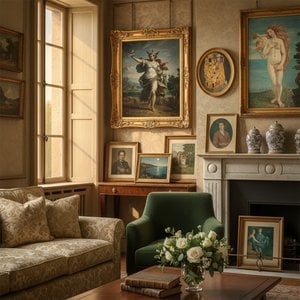
Top 10 Romantische Kunstwerken: Schilderijen & Decoratie voor een Sfeervol Interieur | ArtsDot.nl
Ontdek de 10 meest romantische kunstwerken aller tijden! Van impressionistische liefdesschilderijen tot symboliek & pre-rafaëlitische passie. Laat u inspireren door meesterwerken en vind uw perfecte decoratie op ArtsDot.com.