


 Bekijk op ware grootte
 Verstuur
 Delen
Delen
 Details bekijken
 Gids voor studentenkunstwerken

 Download
 Vergelijkbare items
 Röntgenonderzoek
 Diavoorstelling
 Statistieken
Spring
 Oil On Canvas
- WallArt
- Art Nouveau Symbolism
 1900
1900- 19th Century
 34.0 x 45.0 cm
 The Art Museum RIGA BOURSE
 Lees meer
Handgemaakte olieverfreproductie
Met de hand geschilderd in olieverf op canvas in uw gewenste maat en lijst, op bestelling gemaakt door onze kunstenaars. ( Schakel over naar print Schakel over naar digitale afbeeldingen)




P118B €10

P118H €10

P118W €10

P438Z €10

P508JH €12

P508YH €12

P805H €10

P805Z €10

P919BZ €10

P919G €10

P919XJ €10

P959ZH €10

P968JZ €12

W106C €8

W218G €10

W218JH €8

W218Y €10

W307PJ €10

W316G €10

W316PJ €8

W316Y €10

W398PJ €8

W4111J €10

W500HY €15

W500JH €15

W692G €12

W849H €8

W940BG €15

W953PJ €8




Kies uit onze vooraf ingestelde maten die overeenkomen met de originele verhoudingen van het kunstwerk.

Voer de breedte en de hoogte in die u nodig heeft, passend bij uw lijst of uw muur. Dit is handgeschilderd, dus bij een afmeting met een andere vormverhouding kan de kunstenaar iets meer rondom het schilderij schilderen of juist iets meer weglaten — u kiest zelf. Wij sturen u een digitaal mockup ter goedkeuring voordat het schilderwerk begint. De afbeelding die op deze pagina wordt getoond, is niet het uiteindelijke resultaat — alleen de mockup geeft dit weer.
Na de bestelling zal het team van ArtsDot.com per e-mail contact opnemen met de klant voor instructies en een mockup-voorbeeld sturen.
Wereldwijde levering () binnen 3 tot 4 weken in plaats van de standaard 5 weken. (22 oktober). Zonder concessies aan de kwaliteit.

Gratis wereldwijde expressverzending

Hoogwaardig linnen canvas

Volledige verzendverzekering

Garantie op terugbetaling van invoerrechten

Garantie op exacte kleurweergave

Retourbeleid van 100 dagen (alleen bij defecten)

100% Geld-terug-garantie

Korting bij meerdere afnames
 De optie voor glas is alleen beschikbaar bij een formaat kleiner dan 110 cm.

Spring
Reproductiemethode
Formaat reproductie
-


Totaalprijs
€ 230
Mikhail Vrubel's "Spring": A Study in Melancholy Beauty
This exquisite hand-painted reproduction captures a poignant moment from Mikhail Vrubel’s iconic sculpture, “Spring,” created in 1900. The artwork immediately draws the viewer into a world of quiet contemplation, dominated by a female figure rendered with remarkable sensitivity and technical skill. The image presents a close-up view of a clay statue, meticulously painted in a rich tapestry of colors – blues, greens, and ochres – that evoke the very essence of springtime itself, yet tempered with an undeniable sense of sorrow.
A Symbolist Vision
Vrubel was a pivotal figure within the Russian Symbolist movement, deeply influenced by the burgeoning Art Nouveau style. His work frequently explored themes of spirituality, death, and beauty through highly stylized forms and evocative color palettes. “Spring,” like much of Vrubel’s oeuvre, is not simply a depiction of nature; it's an exploration of its transience – the fleeting joy of renewal juxtaposed with the inevitable decay that follows. The statue’s upward gaze suggests a yearning for something beyond the earthly realm, a common motif within Symbolist art.
Technique and Materiality
The sculpture itself, likely modeled in clay, demonstrates Vrubel's mastery of form and texture. The artist’s meticulous application of paint creates an illusion of depth and volume, highlighting the delicate curves of the figure’s body and the subtle nuances of her expression. The use of saturated colors – a hallmark of Vrubel’s style after his Venetian studies – adds to the work's dramatic intensity. The choice of clay as the primary material further emphasizes the artwork’s connection to the earth, reinforcing its symbolic link to rebirth and growth.
Historical Context and Legacy
Created in 1900, “Spring” reflects a period of significant artistic innovation in Russia. Vrubel's work gained considerable acclaim, particularly after his commission to recreate the mosaics in St. Cyril’s Church of Kyiv, an experience that profoundly shaped his artistic vision. The statue’s melancholic beauty resonates with broader anxieties about mortality and the passage of time – themes prevalent throughout Western European art at the turn of the 20th century. This reproduction offers a tangible connection to this pivotal moment in Russian art history, allowing you to appreciate Vrubel's genius firsthand.
Perfect for Interior Design & Art Collection
This hand-painted reproduction, measuring 34 x 45 cm, is an ideal addition to any interior space. Its evocative imagery and rich color palette will bring a touch of artistic sophistication to your home or office. A stunning piece for art collectors seeking unique Symbolist works, or for interior designers looking to create a contemplative and visually arresting atmosphere.
Vragen & Antwoorden
Kan ik "Spring" door Michail Vrubel onder ander licht bekijken?
De Röntgenanalyse-pagina van "Spring" door Michail Vrubel is een interactieve viewer waarmee u door elf optische lagen van de afbeelding van het kunstwerk kunt glijden, inclusief een weergave in röntgenstijl.
Welke kleur domineert de compositie van "Spring" door Michail Vrubel?
De dominante kleur van "Spring" door Michail Vrubel is Celadon (#bab8b8).
Welke techniek is gebruikt voor "Spring" en wanneer is het gemaakt?
"Spring" werd in 1900 vervaardigd met de Oil On Canvas-techniek. Materiaal en datum beschrijven hoe en wanneer het origineel is gemaakt.
Gerelateerde kunstwerken


Biografie van de kunstenaar
Early Life and Education
Mikhail Aleksandrovich Vrubel, a name now synonymous with the mystical depths of Russian Symbolism, was born on March 17th, 1856, in Omsk, Siberia – a region far removed from the artistic heart of St. Petersburg. His lineage traced back to a noble military family, and his father’s keen eye for talent recognized Vrubel's innate gift early on. Despite initially pursuing a legal education at the University of St. Petersburg, a path dictated by familial expectations, it quickly became apparent that Vrubel’s true calling lay not in law books but within the vibrant world of art. He enrolled in the Imperial Academy of Arts, where he was immediately taken under the wing of Pavel Chistyakov, a master draftsman whose influence would profoundly shape Vrubel's distinctive style – characterized by fragmented compositions and an almost tactile quality to his lines. This early training instilled in him a deep appreciation for form and technique, laying the foundation for his later explorations into symbolism and decorative arts.Artistic Career: A Fusion of Styles
Vrubel’s artistic journey was marked by a remarkable ability to synthesize diverse influences, creating a style that defied easy categorization. He initially found himself drawn to the rich traditions of medieval Christian art, spending time in Venice studying the mosaics and frescoes of the Byzantine era – an experience that profoundly impacted his color palette, imbuing it with the intense, jewel-toned hues reminiscent of precious stones. This fascination with the past fueled his work on the restoration of St. Cyril’s Church in Kiev (1884-1889), a monumental undertaking that allowed him to hone his skills in icon painting and mural design. However, Vrubel's artistic vision extended far beyond mere replication; he sought to imbue these ancient forms with a distinctly modern sensibility. His subsequent move to Moscow in 1890 coincided with a period of intense creative exploration. He became closely associated with Savva Mamontov, a prominent art patron who championed Russian folklore and traditional crafts. Under Mamontov’s patronage, Vrubel produced a series of evocative paintings based on Russian fairy tales and legends – works like *Pan* (1899) and *The Swan Princess* (1900), which captured the ethereal beauty and tragic romance inherent in these narratives. These pieces demonstrated his mastery of color and composition, blending Symbolist aesthetics with elements of Art Nouveau’s flowing lines and decorative motifs. Notably, Vrubel's interest in Persian carpets also influenced his work, particularly his exploration of texture and surface design – evident in paintings like *The Demon Downcast* (1901).Collaborations and Notable Works
Vrubel’s artistic endeavors extended beyond painting into the realm of theatrical design. His collaboration with the celebrated opera singer Nadezhda Zabela was a particularly fruitful partnership, resulting in stunning stage sets and costumes for her performances at Mamontov's private theatre. These productions showcased his ability to translate symbolic ideas into visually arresting forms, further cementing his reputation as a versatile artist. His work on the Hotel Metropol in Moscow, specifically the mosaic panel *Princess of Dream*, stands as a testament to his mastery of applied arts – a shimmering tapestry of color and form that transformed a mundane space into an immersive experience. Among Vrubel’s most celebrated works are *Lilacs* (1900), a poignant meditation on beauty and decay, and *The Demon Seated* (1890), a powerful depiction of the fallen angel – a work that initially shocked critics with its unconventional composition and unsettling imagery. These paintings, along with many others, reveal Vrubel’s deep engagement with themes of spirituality, mortality, and the human condition.Legacy and Final Years
Despite his undeniable talent and critical acclaim, Vrubel's life was tragically marred by mental illness, exacerbated by tertiary syphilis contracted in his youth. In 1906, he suffered a severe nervous breakdown, leading to a period of institutionalization. Though he continued to paint intermittently during this time, his physical and mental health deteriorated steadily until his death on April 14th, 1910. His final years were marked by increasing blindness and profound suffering, yet even in the face of adversity, Vrubel’s artistic spirit remained undimmed. Despite the challenges he faced, Mikhail Vrubel's contributions to Russian Symbolism and Art Nouveau are undeniable. His unique blend of influences, his masterful command of color and form, and his willingness to explore the darker corners of the human psyche have secured his place as one of the most important and enigmatic figures in 20th-century art. His legacy continues to inspire artists and captivate audiences with its haunting beauty and profound emotional depth.
Michail Vrubel
1856 - 1910 , Rusland
Snelle feiten
- Artistic Movement Or Style: Symbolisme & Art Nouveau
- Artists Or Movements Influenced By This Artist: ['Wiener Secession']
- Artists Who Influenced This Artist: ['Pavel Chistyakov']
- Date Of Birth: 17 maart 1856
- Date Of Death: 14 april 1910
- Full Name: Mikhail Aleksandrovich Vrubel
- Nationality: Russisch
- Notable Artworks:
- Demon Seated
- Zwaanprinses
- Lilakken
- Place Of Birth: Omsk, Rusland
Gerelateerde artikelen

Giclée Prints: Archival Quality & Aesthetic Nuances for the Discerning Collector
Explore the world of giclée prints with ArtsDot. Learn about archival quality, aesthetic nuances & investment potential. Expert guidance for discerning art collectors seeking museum-quality reproductions and lasting value.
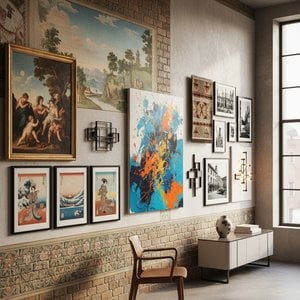
Transforming Spaces: A Comprehensive Exploration of Wall Decor Through Art History & Contemporary Practice
Explore the art of transforming spaces with our comprehensive guide to wall decor. From historical movements to contemporary trends, discover how to curate impactful interiors and commission bespoke artwork for a truly personalized aesthetic.

The Enduring Legacy of Fine Art Prints: Technique, History & Aesthetic Impact
Explore the rich history & techniques of fine art prints. Discover investment potential, assess authenticity, and learn how to preserve your collection with expert guidance. Trusted insights for discerning collectors.

De Terugkeer van de Fresco: Waarom Muurschilderingen de Nieuwe Luxe Uitstraling Zijn
Ontdek de heropleving van fresco's! Leer over technieken, geschiedenis & trends in luxe wanddecoratie. biedt custom muurschilderingen voor een uniek interieur.

Echoes of Time: Exploring the Enduring Appeal & Historical Context of Vintage Art Prints
Explore the captivating world of vintage art prints! Discover their history, collecting tips & enduring appeal. Expert insights on chromolithography and building a legacy collection with ArtsDot.