- Home

- Reproductie van olieverfschilderij
- Max Ernst
- La conversion du feu

 Print kopen Koop afbeelding in hoge resolutie
 Verstuur
 Delen
Delen
 Details bekijken
 Toevoegen aan favorieten

 Download
 Vergelijkbare werken
 Röntgenonderzoek
 Diavoorstelling
La conversion du feu


 Lees meer
Handgemaakte olieverfreproductie
Met de hand geschilderd in olieverf op canvas in uw gewenste maat en lijst, op bestelling gemaakt door onze kunstenaars.




P118B $10

P118H $10

P118W $10

P438Z $10

P508JH $12

P508YH $12

P805H $10

P805Z $10

P919BZ $10

P919G $10

P919XJ $10

P959ZH $10

P968JZ $12

W106C $8

W218G $10

W218JH $8

W218Y $10

W307PJ $10

W316G $10

W316PJ $8

W316Y $10

W398PJ $8

W4111J $10

W500HY $15

W500JH $15

W692G $12

W849H $8

W940BG $15

W953PJ $8




Kies uit onze vooraf ingestelde maten die overeenkomen met de originele verhoudingen van het kunstwerk.

U kunt uw eigen afmetingen invoeren om in een specifieke lijst of ruimte te passen. Als de door u gekozen maat niet overeenkomt met de verhoudingen van het originele beeld, zullen we het kunstwerk bijsnijden of het schilderij uitbreiden met extra handgeschilderde elementen. Een digitale mockup wordt ter goedkeuring naar u verzonden voordat de productie begint.
Houd er rekening mee dat de preview op het scherm niet de werkelijke uitsnede of uitbreiding weergeeft. Alleen de mockup toont de uiteindelijke compositie nauwkeurig.
Hoewel aangepaste afmetingen mogelijk zijn, raden we aan een maat uit de vooraf gedefinieerde lijst te selecteren om de originele verhoudingen te behouden.
Na de bestelling zal het team van ArtsDot.com per e-mail contact opnemen voor instructies en een mockup-voorbeeld sturen.
Wereldwijde levering () binnen 3/4 weken in plaats van de standaard 5 weken. (16 juli). Geen concessies aan de kwaliteit.

Gratis wereldwijde expressverzending

Hoogwaardig linnen canvas

Volledige verzendverzekering

Garantie op terugbetaling van invoerrechten

Garantie op exacte kleurweergave

60 dagen retourbeleid (alleen bij defecten)

100% Geld-terug-garantie

Korting bij meerdere afnames
 De optie voor glas is alleen beschikbaar bij een formaat kleiner dan 110 cm.

La conversion du feu
Techniek reproductie
Afmetingen reproductie
-


Eindtotaal
-
Beschrijving kunstwerk
La conversion du feu: A Surrealist Encounter with Destruction
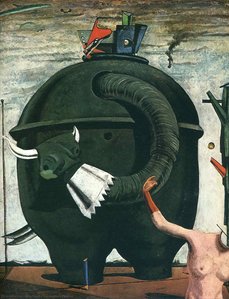
Max Ernst’s “La conversion du feu” (The Fire's Conversion), painted in 1937, stands as a haunting testament to the anxieties of its time – namely, the escalating horrors of the Spanish Civil War. More than just a visually arresting image, it embodies Ernst’s profound engagement with psychological exploration and his masterful manipulation of Surrealist techniques, cementing its place as one of his most significant achievements.
- Subject Matter: The painting depicts a solitary man holding aloft a bird, positioned beside a tree. Scattered figures and birds populate the scene, creating an atmosphere of unsettling juxtaposition and hinting at interconnected narratives. Notably, an umbrella dominates the right side of the composition, adding to the overall sense of disorientation.
- Style & Technique: Ernst employed *grattage*, a technique he had honed throughout the 1930s, characterized by scraping away layers of paint to reveal underlying textures and forms. This method, combined with decalcomania – pressing painted surfaces together – resulted in an expressive surface riddled with cracks and fissures that amplify the painting’s emotional intensity.
- Historical Context: Created amidst the turbulent backdrop of the Spanish Civil War, “La conversion du feu” reflects Ernst's preoccupation with existential dread and his conviction that art should confront uncomfortable truths. The image captures a palpable fear of impending catastrophe—a sentiment echoed in Ernst’s own writings about the looming shadow of Fascism across Europe.
- Symbolism: The central figure represents humanity grappling with overwhelming forces, symbolized by the bird held aloft – perhaps representing hope amidst despair or vulnerability against destructive power. The tree serves as a grounding element, yet its presence is overshadowed by the pervasive darkness and chaos of the surrounding environment. The umbrella signifies protection but also confinement, highlighting the limitations of human agency in confronting existential threats.
- Emotional Impact: “La conversion du feu” evokes a visceral response from the viewer—a feeling of unease and apprehension born from Ernst’s masterful depiction of psychological turmoil. It's a painting that compels contemplation on themes of vulnerability, resistance, and the inescapable confrontation with mortality. The fractured surface contributes to this emotional resonance, mirroring the shattered psyche of the individual facing overwhelming circumstances.
Georges de la Tour: A Parallel Vision
Interestingly, Ernst’s artistic sensibilities align closely with those of Georges de La Tour (1593-1652), a French Baroque master renowned for his dramatic chiaroscuro and tenebrism. Like Ernst, De La Tour sought to convey profound spiritual truths through meticulously crafted compositions that exploit the interplay between light and darkness—a stylistic approach that anticipates Ernst’s own exploration of psychological depth.
The Influence of Surrealist Thought
Ernst's intellectual foundation – encompassing philosophy, art history, literature, psychology, and psychiatry – profoundly shaped his artistic vision. He wasn’t merely interested in replicating visual reality; he was delving into the subconscious mind—a preoccupation that finds its expression in the dreamlike atmosphere of “La conversion du feu” and aligns seamlessly with the core tenets of Surrealist philosophy.
A Legacy of Texture and Emotion
“La conversion du feu” remains a powerful emblem of Ernst’s artistic legacy—a testament to his unwavering commitment to confronting existential anxieties through innovative techniques and evocative imagery. Its fractured surface, born from *grattage*, serves as a conduit for conveying profound emotional resonance—a reminder that art can illuminate the darkest recesses of human experience.
Vergelijkbare kunstwerken


Biografie van de kunstenaar
A Life Immersed in the Surreal
Max Ernst, geboren Maximilian Maria Ernst op 1 april 1891 in Brühl, Duitsland, was een onrustige geest die tot een van de meest invloedrijke figuren van de 20e-eeuwse kunst werd. Zijn reis was geen van conventionele artistieke opleiding; eerder een zelfgeleide verkenning aangedreven door filosofische reflectie, psychologische fascinatie en een diepe teleurstelling met maatschappelijke normen. Ernst’s vader, leraar van de doven en amateur schilder, instilledde hem zowel gevoeligheid voor de wereld als een rebellie tegen gevestigde autoriteit. Deze vroege dualiteit zou een kenmerkende eigenschap worden van zijn artistieke visie.
Ernst’s academische inspanningen aan de Universiteit van Bonn – omvatten filosofie, kunstgeschiedenis, literatuur, psychologie en psychiatrie – waren niet alleen afleidingen maar fundamentele elementen die zijn latere werk diepgaand beïnvloedden. Hij was niet simpelweg geïnteresseerd in *hoe* te schilderen; hij worstelde met *waarom*. Deze intellectuele nieuwsgierigheid leidde hem tot het ontmoeten van baanbrekende werken van Picasso, Van Gogh en Gauguin op de Sonderbund tentoonstelling in Keulen in 1912, een moment dat zijn artistieke traject onherstelbaar veranderde. De zaden van modernisme waren gezaaid.
Dada’s Disruptie en de Geboorte van Surrealistische Visies
De catastrofe van de Eerste Wereldoorlog bleek een keerpunt te zijn voor Ernst. Zijn ervaringen als soldaat aan zowel het Oost- als Westfront lieten hem diepgaand gekwetst achter, wat leidde tot een diepe scepsis ten opzichte van gevestigde orde en een verlangen naar nieuwe vormen van expressie. Deze teleurstelling vond vruchtbare grond in de opkomende Dada beweging, waar hij vol overtuiging aanleunde na zijn terugkeer naar Keulen in 1918. Samen met Hans Arp – een levenslange vriend en collaborateur – werd Ernst een centrale figuur in de Keulse Dada groep, die traditionele artistieke conventies verwerkte en absurditeit, kans en anti-rationaliteit omarmde.
Dada was echter slechts een tussenstap. In het begin van de jaren 1920 migreerde Ernst naar Parijs en voegde hij zich bij de Surrealistische kring, geleid door André Breton. Dit markeerde een verschuiving richting het verkennen van het rijk van dromen, het onbewuste en de irrationele. Invloedrijk waren de psychoanalytische theorieën van Sigmund Freud, waarnaar Ernst op zoek ging om de verborgen dieptes van de menselijke ervaring te ontgrendelen door zijn kunst. Hij was niet geïnteresseerd in het weergeven van de werkelijkheid zoals deze voorkwam, maar eerder in het onthullen van de onderliggende psychologische krachten die deze vormden.
Pioniers Technieken: Frottage, Grattage en Collage
Ernst’s artistieke innovatie strekte zich uit voor de onderwerpkeuze; hij was een meesterlijke experimentator met techniek. Hij nam niet simpelweg bestaande methoden aan—hij verzinsde nieuwe. Misschien zijn meest bekende bijdragen is frottage, een proces van wrijven met potlood of houtskoor over getextureerde oppervlakken om onverwachte en evocatieve beelden te creëren. Deze techniek, geboren uit een moment van verveling terwijl hij naar houtnerf keek, stelde Ernst in staat om in de diepten van het onderbewustzijn te duiken en vormen te genereren die zich verzetten tegen bewuste controle. Dicht gerelateerd was grattage, waarbij verf over een doek wordt geschraapt om onderliggende lagen te onthullen.
Hij gebruikte ook meesterlijk collage, het samenstellen van uiteenlopende elementen – beelden uit tijdschriften, wetenschappelijke illustraties, foto’s – in surrealistische composities die conventionele ideeën over representatie uitdaagden. Deze technieken waren niet simpelweg stijlicheden—ze waren integraal aan zijn verkenning van het onbewuste en zijn wens om traditionele artistieke grenzen te verstoren. Zijn schilderijen bevatten vaak terugkerende symbolische beelden: vogels (vooral zijn alter ego Loplop), desolate landschappen, verontrustende juxtaposities en een doordringende mystiek.
Een Erfgoed van Innovatie en Invloed
De uitbraak van de Tweede Wereldoorlog dwong Ernst tot vlucht uit Europa, waar hij onderdak vond in de Verenigde Staten. Hij bleef schilderen en experimenteren met nieuwe technieken gedurende zijn ballingschap, uiteindelijk terugkeerend naar Frankrijk na de oorlog, waar hij actief bleef tot zijn dood op 1 april 1976, een dag voor zijn 85e verjaardag.
Ernst’s bijdragen aan Dada en Surrealisme waren niets minder dan baanbrekend. Hij daagde artistieke normen uit, duikelde in de diepten van het onbewuste en verzinsde innovatieve technieken die nog steeds kunstenaars inspireren. Hij was niet simpelweg een schilder—hij was een ontdekkingsreiziger, een provocateur en een visionair die de grenzen van de kunst zelf uitbreidde.
- Belangrijke Werken: The Entire City, Euclides, Ofrenda funeraria, The Equivocal Woman, L’Ange du foyer
- Invloeden: Pablo Picasso, Vincent van Gogh, Paul Gauguin, Sigmund Freud, Giorgio de Chirico
- Bewegingen: Dada, Surrealisme

Max Ernst
1891 - 1976 , Duitsland
Belangrijkste feiten
- Artistic Movement Or Style: Dada, Surrealisme
- Artists Or Movements Influenced By This Artist:
- Surrealisme
- Dada
- Artists Who Influenced This Artist:
- Picasso
- Van Gogh
- Gauguin
- Date Of Birth: 1 apr 1891
- Date Of Death: 1 apr 1976
- Full Name: Max Ernst
- Nationality: Duits/Amerikaans, Frans
- Notable Artworks:
- The Entire City
- Euclides
- Place Of Birth: Brühl, Duitsland
Gerelateerde artikelen
Max Ernst's Top 25 Meesterwerken: Surrealisme voor uw Interieur | ArtsDot
Ontdek de top 25 meesterwerken van Max Ernst, pionier van het surrealisme & dadaïsme. Duik in zijn droombeelden en unieke technieken. Museumkwaliteit kunst reproducties voor uw interieur op ArtsDot.com. Exploreer de collectie online!

Top 10 Surrealistische Meesterwerken: Kunst voor uw Interieur | ArtsDot.nl
Ontdek de 10 meest iconische surrealistische meesterwerken van Dalí, Magritte & Miró. Duik in hun droomwereld en symboliek! Museumkwaliteit kunst reproducties voor uw interieur op ArtsDot.com.

Top 10 Surrealistische Meesterwerken: Kunst die de Realiteit Uitdaagt | ArtsDot
Ontdek de 10 meest iconische surrealistische meesterwerken van Dalí, Magritte & Miró. Duik in hun droomwerelden en laat je inspireren door deze baanbrekende kunst. Museumkwaliteit reproducties op ArtsDot.com – Kunst voor elke wand!

Top 10 Surrealistische Meesterwerken: Kunst die de Realiteit Uitdaagt | ArtsDot
Ontdek de 10 meest iconische surrealistische schilderijen van Dalí, Magritte & Miró. Duik in de droomwereld en onbewuste kunst met ArtsDot's collectie hoogwaardige reproducties. Vind jouw perfecte wandkunst! Explore the full collection online.

René Magritte's Top 25 Meesterwerken: Kunst voor uw Interieur | ArtsDot
Ontdek de top 25 meesterwerken van René Magritte! Duik in de surrealistische wereld van iconische schilderijen als 'De Zoon van de Mens' en 'Golconda'. Vind museumkwaliteit kunst reproducties & wooninspiratie op ArtsDot.com.