Voorvertoning
 Verstuur
 Delen
Delen
 Details bekijken

 Download
 Vergelijkbare items
 Röntgenonderzoek
 Diavoorstelling
Foresta


 Lees meer
Giclée / Kunstafdrukken
Giclée- of canvasafdruk van museumkwaliteit met een snelle productie en flexibele afwerkingsmogelijkheden. ( Bestel handgeschilderde reproductie Koop afbeelding)




P118B $10

P118H $10

P118W $10

P438Z $10

P508JH $12

P508YH $12

P805H $10

P805Z $10

P919BZ $10

P919G $10

P919XJ $10

P959ZH $10

P968JZ $12

W106C $8

W218G $10

W218JH $8

W218Y $10

W307PJ $10

W316G $10

W316PJ $8

W316Y $10

W398PJ $8

W4111J $10

W500HY $15

W500JH $15

W692G $12

W849H $8

W940BG $15

W953PJ $8




Kies uit onze vooraf ingestelde maten die overeenkomen met de originele verhoudingen van het kunstwerk.

U kunt uw eigen afmetingen opgeven om in een specifieke lijst of ruimte te passen. Als de door u gekozen maat niet overeenkomt met de proporties van het originele kunstwerk, zullen wij de afbeelding bijsnijden of uitbreiden met een gespiegelde of effen rand. Een digitaal mockup wordt ter goedkeuring naar u verzonden voordat de productie begint.
Houd er rekening mee dat de preview op het scherm de werkelijke bijsneding of uitbreiding niet weergeeft. Alleen de mockup toont de uiteindelijke compositie nauwkeurig.
Hoewel aangepaste maten beschikbaar zijn, raden wij aan een afmeting uit de vooraf bepaalde lijst te kiezen om de originele proporties te behouden.
Wereldwijde levering () binnen 2 weken in plaats van de standaard 4/5 weken. (16 augustus)

Gratis wereldwijde expressverzending

Hoogwaardig linnen canvas

Volledige verzendverzekering

Garantie op terugbetaling van invoerrechten

Garantie op exacte kleurweergave

Retourbeleid van 60 dagen (alleen bij defecten)

100% Geld-terug-garantie

Korting bij meerdere afnames
 De optie voor glas is alleen beschikbaar bij een formaat kleiner dan 110 cm.

Foresta
Giclée / Kunstafdrukken
Afmetingen reproductie
-


Eindtotaal
$ 63
Beschrijving verzamelobject
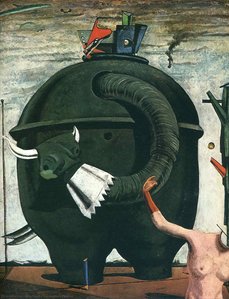
A Surrealist Echo: Unpacking Max Ernst’s “Foresta”
Max Ernst's "Foresta" isn’t merely a depiction of a forest; it’s an immersion into the artist’s subconscious, a haunting meditation on childhood memory and primal anxieties rendered in a strikingly unsettling tableau. Painted around 1927-1936 during his most intensely creative period with the Surrealist movement, this work embodies Ernst's signature techniques – frottage, grattage, and an almost violent scraping of the canvas – to create a world both familiar and profoundly alien. The painting immediately commands attention with its verticality; towering, vaguely humanoid figures dominate the composition, their forms fragmented and distorted, suggesting not individuals but rather archetypal guardians or perhaps even the oppressive weight of memory itself. These aren’t comforting woodland spirits; they possess an unsettling stillness, a sense of watchful presence that permeates the entire scene.Technique and Materiality: Building Layers of Meaning
The power of “Foresta” lies significantly in Ernst's innovative application of technique. He masterfully employed *grattage*, scraping away layers of oil paint to reveal the textures beneath – a process he’d pioneered alongside Joan Miró. This creates an incredibly tactile surface, a landscape of ridges and valleys that mimics the bark of ancient trees or perhaps even the rough skin of forgotten faces. The thick impasto, particularly evident around the central red circle, adds further depth and physicality to the work. Notice how the paint isn’t blended smoothly; instead, it retains visible brushstrokes, emphasizing the artist's deliberate hand and the energy invested in each mark. This raw, almost aggressive application contrasts sharply with the smooth, idealized landscapes of earlier artistic traditions, reflecting a shift towards subjective experience and psychological exploration – hallmarks of the Surrealist movement. The use of muted blues and greys establishes a somber atmosphere, amplifying the sense of mystery and unease.Symbolism and Interpretation: A Journey into the Unconscious
The symbolism within “Foresta” is deliberately ambiguous, inviting multiple interpretations. The towering figures are undoubtedly central to the painting’s impact; their distorted forms suggest a loss of identity or perhaps the struggle against overwhelming forces. The red circle at the heart of the composition – a recurring motif in Ernst's work – has been interpreted as an eye, a point of intense focus, or even a symbol of vital energy. Considering Ernst’s own childhood memories of a dark and imposing forest near his home, it’s reasonable to suggest that these figures represent the lingering power of those early experiences—a blend of fear, fascination, and perhaps a touch of enchantment. The surrounding forest itself can be seen as a metaphor for the unconscious mind – dense, impenetrable, and teeming with hidden meanings. The dove, subtly integrated into the scene, adds another layer of complexity, potentially representing Ernst himself or a yearning for peace amidst the unsettling landscape.Historical Context and Artistic Legacy
“Foresta” emerged during a period of profound artistic and intellectual upheaval—the interwar years following World War I. The Surrealist movement, fueled by the disillusionment of the war and inspired by Freudian psychology, sought to liberate art from rational constraints and tap into the realm of dreams and the unconscious. Ernst’s work exemplifies this shift, rejecting traditional notions of representation in favor of subjective experience and emotional expression. His exploration of memory, anxiety, and the power of the subconscious profoundly influenced subsequent generations of artists, including Yves Tanguy and Urs Fischer. Reproductions like those offered by ArtsDot.com allow viewers to engage with Ernst’s visionary world, experiencing firsthand the intensity and complexity of his artistic vision—a testament to a life deeply immersed in the surreal.Vergelijkbare kunstwerken


Biografie van de kunstenaar
A Life Immersed in the Surreal
Max Ernst, geboren Maximilian Maria Ernst op 1 april 1891 in Brühl, Duitsland, was een onrustige geest die tot een van de meest invloedrijke figuren van de 20e-eeuwse kunst werd. Zijn reis was geen van conventionele artistieke opleiding; eerder een zelfgeleide verkenning aangedreven door filosofische reflectie, psychologische fascinatie en een diepe teleurstelling met maatschappelijke normen. Ernst’s vader, leraar van de doven en amateur schilder, instilledde hem zowel gevoeligheid voor de wereld als een rebellie tegen gevestigde autoriteit. Deze vroege dualiteit zou een kenmerkende eigenschap worden van zijn artistieke visie.
Ernst’s academische inspanningen aan de Universiteit van Bonn – omvatten filosofie, kunstgeschiedenis, literatuur, psychologie en psychiatrie – waren niet alleen afleidingen maar fundamentele elementen die zijn latere werk diepgaand beïnvloedden. Hij was niet simpelweg geïnteresseerd in *hoe* te schilderen; hij worstelde met *waarom*. Deze intellectuele nieuwsgierigheid leidde hem tot het ontmoeten van baanbrekende werken van Picasso, Van Gogh en Gauguin op de Sonderbund tentoonstelling in Keulen in 1912, een moment dat zijn artistieke traject onherstelbaar veranderde. De zaden van modernisme waren gezaaid.
Dada’s Disruptie en de Geboorte van Surrealistische Visies
De catastrofe van de Eerste Wereldoorlog bleek een keerpunt te zijn voor Ernst. Zijn ervaringen als soldaat aan zowel het Oost- als Westfront lieten hem diepgaand gekwetst achter, wat leidde tot een diepe scepsis ten opzichte van gevestigde orde en een verlangen naar nieuwe vormen van expressie. Deze teleurstelling vond vruchtbare grond in de opkomende Dada beweging, waar hij vol overtuiging aanleunde na zijn terugkeer naar Keulen in 1918. Samen met Hans Arp – een levenslange vriend en collaborateur – werd Ernst een centrale figuur in de Keulse Dada groep, die traditionele artistieke conventies verwerkte en absurditeit, kans en anti-rationaliteit omarmde.
Dada was echter slechts een tussenstap. In het begin van de jaren 1920 migreerde Ernst naar Parijs en voegde hij zich bij de Surrealistische kring, geleid door André Breton. Dit markeerde een verschuiving richting het verkennen van het rijk van dromen, het onbewuste en de irrationele. Invloedrijk waren de psychoanalytische theorieën van Sigmund Freud, waarnaar Ernst op zoek ging om de verborgen dieptes van de menselijke ervaring te ontgrendelen door zijn kunst. Hij was niet geïnteresseerd in het weergeven van de werkelijkheid zoals deze voorkwam, maar eerder in het onthullen van de onderliggende psychologische krachten die deze vormden.
Pioniers Technieken: Frottage, Grattage en Collage
Ernst’s artistieke innovatie strekte zich uit voor de onderwerpkeuze; hij was een meesterlijke experimentator met techniek. Hij nam niet simpelweg bestaande methoden aan—hij verzinsde nieuwe. Misschien zijn meest bekende bijdragen is frottage, een proces van wrijven met potlood of houtskoor over getextureerde oppervlakken om onverwachte en evocatieve beelden te creëren. Deze techniek, geboren uit een moment van verveling terwijl hij naar houtnerf keek, stelde Ernst in staat om in de diepten van het onderbewustzijn te duiken en vormen te genereren die zich verzetten tegen bewuste controle. Dicht gerelateerd was grattage, waarbij verf over een doek wordt geschraapt om onderliggende lagen te onthullen.
Hij gebruikte ook meesterlijk collage, het samenstellen van uiteenlopende elementen – beelden uit tijdschriften, wetenschappelijke illustraties, foto’s – in surrealistische composities die conventionele ideeën over representatie uitdaagden. Deze technieken waren niet simpelweg stijlicheden—ze waren integraal aan zijn verkenning van het onbewuste en zijn wens om traditionele artistieke grenzen te verstoren. Zijn schilderijen bevatten vaak terugkerende symbolische beelden: vogels (vooral zijn alter ego Loplop), desolate landschappen, verontrustende juxtaposities en een doordringende mystiek.
Een Erfgoed van Innovatie en Invloed
De uitbraak van de Tweede Wereldoorlog dwong Ernst tot vlucht uit Europa, waar hij onderdak vond in de Verenigde Staten. Hij bleef schilderen en experimenteren met nieuwe technieken gedurende zijn ballingschap, uiteindelijk terugkeerend naar Frankrijk na de oorlog, waar hij actief bleef tot zijn dood op 1 april 1976, een dag voor zijn 85e verjaardag.
Ernst’s bijdragen aan Dada en Surrealisme waren niets minder dan baanbrekend. Hij daagde artistieke normen uit, duikelde in de diepten van het onbewuste en verzinsde innovatieve technieken die nog steeds kunstenaars inspireren. Hij was niet simpelweg een schilder—hij was een ontdekkingsreiziger, een provocateur en een visionair die de grenzen van de kunst zelf uitbreidde.
- Belangrijke Werken: The Entire City, Euclides, Ofrenda funeraria, The Equivocal Woman, L’Ange du foyer
- Invloeden: Pablo Picasso, Vincent van Gogh, Paul Gauguin, Sigmund Freud, Giorgio de Chirico
- Bewegingen: Dada, Surrealisme

Max Ernst
1891 - 1976 , Duitsland
Belangrijkste feiten
- Artistic Movement Or Style: Dada, Surrealisme
- Artists Or Movements Influenced By This Artist:
- Surrealisme
- Dada
- Artists Who Influenced This Artist:
- Picasso
- Van Gogh
- Gauguin
- Date Of Birth: 1 apr 1891
- Date Of Death: 1 apr 1976
- Full Name: Max Ernst
- Nationality: Duits/Amerikaans, Frans
- Notable Artworks:
- The Entire City
- Euclides
- Place Of Birth: Brühl, Duitsland
Gerelateerde artikelen
Max Ernst's Top 25 Meesterwerken: Surrealisme voor uw Interieur | ArtsDot
Ontdek de top 25 meesterwerken van Max Ernst, pionier van het surrealisme & dadaïsme. Duik in zijn droombeelden en unieke technieken. Museumkwaliteit kunst reproducties voor uw interieur op ArtsDot.com. Exploreer de collectie online!

Top 10 Abstract Expressionisme Meesterwerken: Kunst voor uw Interieur | ArtsDot.com
Ontdek de 10 meest invloedrijke werken van Abstract Expressionisme! Leer over Jackson Pollock, Mark Rothko & meer. Museumkwaliteit kunst reproducties voor uw interieur. Bekijk de collectie op ArtsDot.com.

Top 10 Surrealistische Meesterwerken: Kunst die de Verbeelding Definieert | ArtsDot
Ontdek de 10 meest iconische surrealistische meesterwerken van Dalí, Magritte & meer. Duik in hun dromerige wereld en laat je inspireren voor unieke interieurdecoratie. Museumkwaliteit kunstprints op ArtsDot.com!

Kandinsky's Meesterwerken: 25 Abstracte Kunstparels voor uw Interieur | ArtsDot
Ontdek de 25 meest iconische werken van Wassily Kandinsky! Duik in zijn abstracte wereld vol kleur, expressionisme & spirituele diepgang. Vind museumkwaliteit reproducties en interieurinspiratie op ArtsDot.com.
Top 10 Cubistische Expressionistische Meesterwerken: Kunst voor uw Interieur
Ontdek de 10 baanbrekende meesterwerken van het Cubisme & Expressionisme! Leer over Picasso, Braque en Kandinsky. Vind museumkwaliteit kunst reproducties voor uw interieur op ArtsDot.com.