


 Voorvertoning
 Verstuur
 Delen
Delen
 Details bekijken

 Download
 Vergelijkbare items
 Röntgenonderzoek
 Diavoorstelling
Quappi and Indian


 Lees meer
Giclée / Kunstafdrukken
Giclée- of canvasafdruk van museumkwaliteit met een snelle productie en flexibele afwerkingsmogelijkheden. ( Bestel handgeschilderde reproductie Koop afbeelding)




P118B $10

P118H $10

P118W $10

P438Z $10

P508JH $12

P508YH $12

P805H $10

P805Z $10

P919BZ $10

P919G $10

P919XJ $10

P959ZH $10

P968JZ $12

W106C $8

W218G $10

W218JH $8

W218Y $10

W307PJ $10

W316G $10

W316PJ $8

W316Y $10

W398PJ $8

W4111J $10

W500HY $15

W500JH $15

W692G $12

W849H $8

W940BG $15

W953PJ $8




Kies uit onze vooraf ingestelde maten die overeenkomen met de originele verhoudingen van het kunstwerk.

U kunt uw eigen afmetingen opgeven om in een specifieke lijst of ruimte te passen. Als de door u gekozen maat niet overeenkomt met de proporties van het originele kunstwerk, zullen wij de afbeelding bijsnijden of uitbreiden met een gespiegelde of effen rand. Een digitaal mockup wordt ter goedkeuring naar u verzonden voordat de productie begint.
Houd er rekening mee dat de preview op het scherm de werkelijke bijsneding of uitbreiding niet weergeeft. Alleen de mockup toont de uiteindelijke compositie nauwkeurig.
Hoewel aangepaste maten beschikbaar zijn, raden wij aan een afmeting uit de vooraf bepaalde lijst te kiezen om de originele proporties te behouden.
Wereldwijde levering () binnen 2 weken in plaats van de standaard 4/5 weken. (24 augustus)

Gratis wereldwijde expressverzending

Hoogwaardig linnen canvas

Volledige verzendverzekering

Garantie op terugbetaling van invoerrechten

Garantie op exacte kleurweergave

Retourbeleid van 60 dagen (alleen bij defecten)

100% Geld-terug-garantie

Korting bij meerdere afnames
 De optie voor glas is alleen beschikbaar bij een formaat kleiner dan 110 cm.

Quappi and Indian
Giclée / Kunstafdrukken
Afmetingen reproductie
-


Eindtotaal
$ 63
Beschrijving verzamelobject
A Portrait of Reflection: Exploring Max Beckmann’s “Quappi and Indian”
“Quappi and Indian,” painted by German Expressionist maestro Max Beckmann in 1928, stands as a haunting testament to the psychological landscape of its time – a canvas steeped in trauma and imbued with profound symbolic resonance. This striking portrait captures two figures seated side-by-side against a stark crimson backdrop, an arresting composition that immediately draws the viewer into a contemplation of human vulnerability and unspoken emotion.- Subject Matter: The painting depicts a woman – identified as Quappi – and a man, seemingly Indian in appearance (though Beckmann himself disputed this interpretation), engaged in a quiet moment of interaction. Their postures convey a palpable tension beneath the surface calm, hinting at hidden anxieties and unresolved conflicts.
- Style & Technique: Beckmann’s signature style is characterized by deliberate distortion – figures are rendered with angular lines and flattened planes, rejecting traditional realism in favor of conveying inner turmoil. The use of tempera paint on canvas contributes to the painting's textural richness and enhances its expressive power. Beckmann meticulously layered colors, creating a luminous surface that contrasts sharply with the oppressive darkness suggested by the shadowed recesses of the composition.
- Symbolism: The crimson background serves as more than just color; it symbolizes passion, violence, and impending doom, mirroring the pervasive anxieties of the era. The woman’s closed eyes suggest introspection and perhaps repression, while the man's gaze directs outward, hinting at a desire for connection amidst despair.
- Emotional Impact: “Quappi and Indian” compels viewers to confront uncomfortable truths about human experience—fear, vulnerability, and the struggle for meaning in a fractured world. Beckmann’s masterful manipulation of form and color achieves an extraordinary feat: capturing not merely what is seen but what is felt – a visceral reaction rooted in the painting's unsettling beauty.
Vergelijkbare kunstwerken


Biografie van de kunstenaar
early life and artistic development
Max Beckmann, a renowned german painter, draftsman, printmaker, sculptor, and writer, was born on february 12, 1884, in leipzig, saxony. his artistic journey began with academically correct depictions, which later transformed into distorted figures and spaces, reflecting his altered vision of humanity after serving as a medical orderly in world war i.
His formative years were marked by an initial adherence to traditional academic styles—a deliberate rejection of the expressive fervor championed by artists like Vincent van Gogh and Edvard Munch. However, this early inclination swiftly yielded to a profound shift in artistic sensibility, fueled by the harrowing realities of the Great War. Witnessing firsthand the devastation and suffering inflicted upon soldiers instilled within him a visceral understanding of human vulnerability and trauma—a perspective that would irrevocably reshape his oeuvre.
artistic style and influences
Beckmann’s distinctive aesthetic emerged from a confluence of artistic inspirations, notably Cézanne's geometric explorations and Rembrandt’s masterful use of chiaroscuro. He absorbed the brooding atmosphere of Blake’s visionary poetry and embraced the expressive dynamism of Rubens’ monumental canvases.
Furthermore, Beckmann drew heavily upon the iconography of medieval stained glass—a visual language characterized by vibrant colors and stylized forms—demonstrating a fascination with symbolism and spiritual contemplation. His artistic vision was profoundly shaped by artists of the late middle ages and early renaissance, including Bosch, Bruegel, and Matthias Grünewald, whose unsettling imagery conveyed moral judgments and explored themes of human folly.
notable works and exhibitions
Among Beckmann’s most celebrated creations is “The Bark,” acquired by the National Gallery in Berlin—a monumental canvas depicting a desolate landscape imbued with melancholic grandeur. Equally impactful is “Self-Portrait in Tuxedo,” purchased in 1928, which captures Beckmann's introspective gaze against a backdrop of muted hues.
His artistic reputation soared during the Weimar Republic, culminating in retrospectives at the Städelschule Mannheim (1928) and Basel & Zurich (1930), cementing his position as one of Germany’s foremost artists of the era. These exhibitions showcased the breadth and depth of his stylistic evolution—from early landscapes to psychologically charged portraits.
later life and exile
Beckmann's fortunes took a dramatic turn with the ascent of Adolf Hitler to power, triggering his expulsion from the art school in Frankfurt and resulting in the confiscation of over 500 of his artworks. Forced into self-imposed exile in Amsterdam for ten years, he struggled unsuccessfully to secure a visa for the United States—a poignant symbol of artistic freedom curtailed by political repression.
legacy
Despite facing considerable adversity, Beckmann continued to produce groundbreaking art during his exile—primarily in Amsterdam—where he created approximately 280 paintings—a third of his total output. His work stands as a testament to resilience and unwavering commitment to artistic integrity.
Beckmann’s influence extended beyond the confines of his own lifetime, shaping subsequent generations of artists who embraced Expressionism's uncompromising exploration of emotion and psychological complexity. He was honored with a professorship at Washington University in St. Louis and the Brooklyn Museum, and his retrospective in 1948 at Saint Louis cemented his enduring legacy as a pivotal figure in modern German art.

Max Beckmann
1884 - 1950 , Duitsland
Belangrijkste feiten
- Artistic Movement Or Style: Expressionisme
- Artists Or Movements Influenced By This Artist: ['Rembrandt']
- Artists Who Influenced This Artist:
- Georges Seurat
- Vincent van Gogh
- Date Of Birth: Februari 12, 1884
- Date Of Death: December 27, 1950
- Full Name: Max Carl Friedrich Beckmann
- Nationality: Duits
- Notable Artworks:
- De Bark
- Zelfportret in Tuxedo
- Place Of Birth: Leipzig, Duitsland
Gerelateerde artikelen
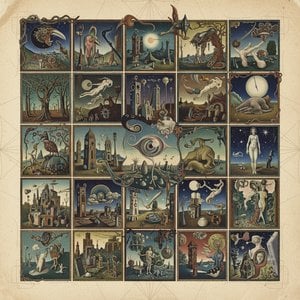
Max Ernst's Top 25 Meesterwerken: Surrealisme voor uw Interieur | ArtsDot
Ontdek de top 25 meesterwerken van Max Ernst, pionier van het surrealisme & dadaïsme. Duik in zijn droombeelden en unieke technieken. Museumkwaliteit kunst reproducties voor uw interieur op ArtsDot.com. Exploreer de collectie online!

Max Beckmann: Navigating Trauma & Modernity Through a Distorted Lens
Explore the powerful world of Max Beckmann's art – a journey through trauma, modernity & distortion. Discover his key works, influences, and lasting legacy with expert analysis.

Raja Ravi Varma: Bridging Tradition & Modernity in 19th-Century Indian Art
Explore the life & art of Raja Ravi Varma, a pioneer who fused European techniques with Indian iconography. Discover his iconic paintings, lasting legacy, and influence on modern Indian art at ArtsDot.

Top 10 Post-Impressionistische Meesterwerken: Kunst die de Geschiedenis Schreef | ArtsDot.nl
Ontdek de 10 meest iconische meesterwerken van het Post-Impressionisme! Van Gogh, Monet, Cézanne en meer. Leer over hun technieken & emoties achter deze tijdloze kunst. Museumkwaliteit reproducties op ArtsDot.com – Kunst voor uw interieur.

Top 10 Expressionistische Meesterwerken: Kunst voor uw Interieur | ArtsDot
Ontdek de 10 meest invloedrijke expressionistische meesterwerken! Van Munch's 'De Schreeuw' tot Kandinsky's abstractie. Leer over kunst, emotie & kleur. Museumkwaliteit reproducties op ArtsDot.com – uw bron voor unieke wanddecoratie.



