


 Bekijk op ware grootte
 Verstuur
 Delen
Delen
 Details bekijken
 Gids voor studentenkunstwerken

 Download
 Vergelijkbare items
 Röntgenonderzoek
 Diavoorstelling
 Statistieken
Crucifixion
 Acrylic On Canvas
- WallArt
- Northern Renaissance
 1502
1502 531.0 x 320.0 cm
 Staatliche Kunsthalle Karlsruhe
 Lees meer
Giclée / Kunstafdrukken
Giclée- of canvasafdruk van museumkwaliteit met een snelle productie en flexibele afwerkingsmogelijkheden. ( Koop handgeschilderd kunstwerk Schakel over naar digitale afbeeldingen)




P118B $10

P118H $10

P118W $10

P438Z $10

P508JH $12

P508YH $12

P805H $10

P805Z $10

P919BZ $10

P919G $10

P919XJ $10

P959ZH $10

P968JZ $12

W106C $8

W218G $10

W218JH $8

W218Y $10

W307PJ $10

W316G $10

W316PJ $8

W316Y $10

W398PJ $8

W4111J $10

W500HY $15

W500JH $15

W692G $12

W849H $8

W940BG $15

W953PJ $8




Kies uit onze vooraf ingestelde maten die overeenkomen met de originele verhoudingen van het kunstwerk.

U kunt uw eigen afmetingen opgeven om in een specifieke lijst of ruimte te passen. Als de door u gekozen maat niet overeenkomt met de proporties van het originele kunstwerk, zullen wij de afbeelding bijsnijden of uitbreiden met een gespiegelde of effen rand. Een digitaal mockup wordt ter goedkeuring naar u verzonden voordat de productie begint.
Houd er rekening mee dat de preview op het scherm de werkelijke bijsneding of uitbreiding niet weergeeft. Alleen de mockup toont de uiteindelijke compositie nauwkeurig.
Hoewel aangepaste maten beschikbaar zijn, raden wij aan een afmeting uit de vooraf bepaalde lijst te kiezen om de originele proporties te behouden.
Wereldwijde levering () binnen 2 weken in plaats van de standaard 4/5 weken. (26 september)

Gratis wereldwijde expressverzending

Hoogwaardig linnen canvas

Volledige verzendverzekering

Garantie op terugbetaling van invoerrechten

Garantie op exacte kleurweergave

Retourbeleid van 100 dagen (alleen bij defecten)

100% Geld-terug-garantie

Korting bij meerdere afnames
 De optie voor glas is alleen beschikbaar bij een formaat kleiner dan 110 cm.

Crucifixion
Giclée / Kunstafdrukken
Formaat reproductie
-


Totaalprijs
$ 63
A Glimpse into the Soul of a Master: The Crucifixion by Matthias Grünewald
Matthias Grünewald’s “Crucifixion,” painted around 1501, isn't merely a depiction of a pivotal moment in Christian history; it’s an immersive experience—a visceral plunge into the depths of human suffering and profound spiritual contemplation. Born in Würzburg around 1470, Grünewald stood as a bridge between the vibrant hues and dynamic compositions of the late medieval period and the burgeoning realism of the early Renaissance. Unlike his Italian contemporaries who embraced classical ideals, Grünewald remained firmly rooted in the traditions of Northern Europe, imbuing his work with an intensely emotional quality that continues to resonate centuries later. This particular “Crucifixion” – a panel from the Isenheim Altarpiece – is a testament to this devotion, a stark and unforgettable image born not of idealized beauty but of raw, unvarnished truth.
The painting immediately commands attention with its deliberate monochrome palette. Shades of grey—ranging from near-white highlights on Christ’s body to deep, impenetrable blacks in the shadows—create an atmosphere of profound solemnity and dramatic intensity. This restricted color scheme isn't a limitation; it’s a strategic choice that amplifies the emotional impact, stripping away any distractions and forcing the viewer to confront the brutal reality of the scene. The composition itself is powerfully vertical, emphasizing the height of the cross—a symbol of both Christ’s sacrifice and humanity’s fall. Christ's torso and limbs are centrally positioned, drawing the eye directly to his suffering, while the truncated base of the cross subtly suggests a sense of confinement and vulnerability.
The Language of Line and Texture: Technique and Craftsmanship
Grünewald’s mastery lies not just in his understanding of color and composition but also in his meticulous technique. The painting is executed primarily through hatching and cross-hatching—a method of creating tonal variations by layering lines of differing densities. This painstaking process generates a remarkable sense of texture, allowing the artist to convincingly simulate the rough grain of the wooden cross, the folds of Christ’s loincloth, and even the thorny crown piercing his head. The musculature of Christ's body is rendered with astonishing anatomical accuracy, reflecting Grünewald’s deep observation of human form—a hallmark of Northern Renaissance art. The strong, defined lines delineate every contour, creating a sense of both vulnerability and immense strength.
Furthermore, the artist employs subtle shifts in value to create depth and volume. The highlights on Christ's body draw attention to his wounds, while the shadows accentuate the contours of his form, lending him an almost sculptural quality. The overall effect is one of intense realism—a deliberate departure from the idealized representations common in Italian Renaissance art. This commitment to portraying suffering with unflinching honesty speaks volumes about Grünewald’s artistic vision and his profound engagement with the subject matter.
Symbolism, Suffering, and Spiritual Resonance
Beyond its technical brilliance, “The Crucifixion” is rich in symbolic meaning. The starkness of the image—the absence of color, the brutal depiction of Christ’s suffering—serves to heighten the emotional impact and underscore the profound spiritual weight of the scene. Christ's emaciated body, riddled with wounds and pierced by nails, embodies the ultimate sacrifice for humanity’s sins. The surrounding figures – Saint Sebastian, Saint Anthony, Mary Magdalene, and John the Baptist – each contribute to the narrative, representing themes of martyrdom, compassion, repentance, and divine grace. The inclusion of John the Baptist pointing towards Christ is a clear reference to the Gospel accounts, emphasizing the significance of his sacrifice as the fulfillment of prophecy.
The painting’s origins within the Isenheim Altarpiece—a work designed for a hospital dedicated to treating plague sufferers—add another layer of meaning. Grünewald's choice of monochrome and his unflinching portrayal of suffering were intended to provide comfort and solace to those afflicted with illness, reminding them that Christ shared in their pain and offered hope amidst despair. “The Crucifixion” is therefore not simply a historical depiction but a powerful meditation on faith, suffering, and redemption—a timeless masterpiece that continues to move viewers centuries after its creation.
Further Research: For more detailed information, consider visiting the National Gallery of Art’s website for a high-resolution image and accompanying text. You can also explore Wikipedia’s entry on Matthias Grünewald for biographical details and historical context, or delve into articles like “Crucifixion, by Matthias Grünewald” on Christian Century.
Gerelateerde kunstwerken


Biografie van de kunstenaar
Matthias Grünewald: Leven en Nalatenschap
Vroege Leven en Artistieke Beginsels
Matthias Grünewald, geboren als Mathis Gothart Neithardt rond 1470-1475 in Würzburg, Duitsland, was een spilfiguur van de Duitse Renaissance. Ondanks het feit dat hij leefde in een tijdperk dat steeds meer werd beïnvloed door de idealen van de Italiaanse Renaissance, bleef Grünewald diep geworteld in de artistieke tradities van het laatmiddeleeuwse Centraal-Europa. Hoewel details over zijn vroege jaren schaars zijn, is bekend dat hij een opleiding als kunstenaar genoot, waarschijnlijk binnen lokale ateliers.
Artistieke Ontwikkeling en Invloeden
De artistieke ontwikkeling van Grünewald werd gevormd door de heersende Noord-Europese tradities van realisme, emotionele intensiteit en gedetailleerde observatie. Zijn werk vertoont invloeden van kunstenaars zoals Albrecht Dürer en Martin Schongauer, maar hij smeedde een uniek pad dat werd gekenmerkt door dramatische expressie en levendige kleuren. Hij was niet direct betrokken bij de humanistische kringen die in Italië floreerden; in plaats daarvan diende zijn kunst voornamelijk religieuze doeleinden, waarbij hij de spirituele angsten van zijn tijd weerspiegelde.
Belangrijke Werken en Artistieke Stijl
- Het Isenheimer Altaarstuk (1512-1516): Dit meesterwerk, ondergebracht in het Musée d'Unterlinden in Colmar, wordt beschouwd als het magnum opus van Grünewald. Het toont scènes uit het leven van Christus met een aangrijpend realisme, waarbij de focus met name ligt op lijden en verlossing.
- Mozes (1511): Een tekening die Grünewalds vaardigheid in het vastleggen van expressieve figuren en dramatische poses benadrukt.
De stijl van Grünewald onderscheidt zich door:
- Dramatische Compositie: Hij maakte gebruik van dynamische arrangementen om de emotionele impact te vergroten.
- Levendig Kleurenpalet: Zijn gebruik van intense, vaak contrasterende kleuren creëerde een krachtige visuele ervaring.
- Realistische Weergave van het Lijden: Grünewald schuwde het niet om de fysieke en emotionele pijn die verbonden is aan religieuze verhalen uit te beelden.
- Expressieve Figuren: Zijn figuren zijn doordrenkt met sterke emoties en psychologische diepgang.
Historische Betekenis en Nalatenschap
Het werk van Grünewald staat als een testament voor de blijvende kracht van middeleeuwse artistieke tradities in Duitsland tijdens de Renaissance. Hij overbrugde de kloof tussen de laatgotische stijl en de opkomende Renaissance, waarmee hij een unieke visuele taal creëerde die resoneerde met zijn tijdgenoten. Zijn invloed is terug te zien in latere Duitse kunstenaars die thema's van religieuze vurigheid en emotionele intensiteit bleven verkennen. Hoewel hij na zijn dood in 1528 eeuwenlang grotendeels vergeten was, beleefde Grünewald een heropleving in de 19e eeuw, en tegenwoordig wordt hij erkend als een van de belangrijkste schilders van de Duitse Renaissance. Zijn kunst blijft kijkers fascineren met zijn rauwe emotie, technische briljantie en diepe spirituele gelaagdheid.
Verdere Verkenning
Ontdek meer over het leven en de werken van Matthias Grünewald op: ArtsDot

Matthias Grünewald
1480 - 1528 , Duitsland
Snelle feiten
- Artistic Movement Or Style: Laatgotische schildertraditie
- Artists Or Movements Influenced By This Artist: ['Albrecht Dürer']
- Artists Who Influenced This Artist:
- Albrecht Dürer
- Martin Schongauer
- Date Of Birth: ca. 1475/80
- Date Of Death: 1528
- Full Name: Matthias Grünewald
- Nationality: Duits
- Notable Artworks:
- Het Isenheim Altarpiece
- De Kruisiging
- Place Of Birth: Würzburg, Duitsland
Gerelateerde artikelen

Romantic Realism's Finest: 10 Masterpieces for Your Home | ArtsDot
Explore 10 defining masterpieces of Romantic Realism! Discover Courbet, Millet & Daumier's powerful paintings—capturing emotion and social realities. Find museum-quality reproductions for your home at ArtsDot.com.
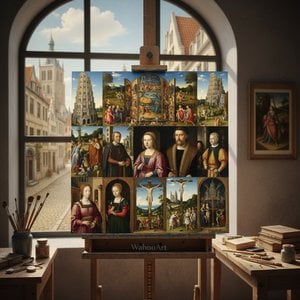
Top 10 Meesterwerken van de Noordelijke Renaissance | Kunst & Decoratie
Ontdek de 10 meest invloedrijke meesterwerken van de Noordelijke Renaissance! Van Jan van Eyck tot Pieter Bruegel, leer over hun technieken & betekenis. Vind museumkwaliteit reproducties en inspiratie voor uw interieur op ArtsDot.com.

Echoes of Society: Exploring Social Realism's Enduring Legacy in Art
Explore the powerful world of Social Realism art! Discover key artists, masterpieces & its profound social commentary. Expert insights into this influential movement's history and enduring legacy.

Matthias Grünewald: Devotion, Distortion & Spiritual Turmoil in Renaissance Art
Explore the profound religious art of Matthias Grünewald, master of the Isenheim Altarpiece. Discover his unique expressionism, symbolism & lasting impact on Renaissance painting. A guide for collectors and enthusiasts.

The Northern Renaissance: A Flourishing of Realism, Religious Reform & Artistic Innovation
Explore the Northern Renaissance! Discover Jan van Eyck's innovations, religious shifts, & key artists of this influential period. Expert analysis and insights into Early Netherlandish painting at ArtsDot.


