


 Bekijk op ware grootte
 Verstuur
 Delen
Delen
 Details bekijken
 Gids voor studentenkunstwerken

 Download
 Vergelijkbare items
 Röntgenonderzoek
 Diavoorstelling
 Statistieken
Canticle

 Lees meer
De kunstwerken die op deze pagina worden weergegeven, zijn beschermd door de auteursrechtwetgeving, wat betekent dat het ons wettelijk niet is toegestaan om identieke reproducties te maken of te verkopen. Deze bescherming wordt gehandhaafd onder internationale overeenkomsten zoals de Conventie van Bern en door nationale wetgeving, waaronder de bepalingen van de Amerikaanse auteurswet - Titel 17. Alle rechten voorbehouden. Reproduceren of distribueren van afbeeldingen is niet toegestaan zonder uitdrukkelijke schriftelijke toestemming van WahooArt.com en de rechthebbenden.
Deze methode voldoet volledig aan de auteursrechtwetgeving, omdat het niet gaat om het kopiëren of dupliceren van het beschermde kunstwerk. In plaats daarvan is er sprake van een creatieve herinterpretatie — een nieuw schilderij dat door het origineel wordt geïnspireerd, maar er niet identiek aan is.
Giclée / Kunstafdrukken
Giclée- of canvasafdruk van museumkwaliteit met een snelle productie en flexibele afwerkingsmogelijkheden. ( Koop handgeschilderd kunstwerk Schakel over naar digitale afbeeldingen)




P118B €10

P118H €10

P118W €10

P438Z €10

P508JH €12

P508YH €12

P805H €10

P805Z €10

P919BZ €10

P919G €10

P919XJ €10

P959ZH €10

P968JZ €12

W106C €8

W218G €10

W218JH €8

W218Y €10

W307PJ €10

W316G €10

W316PJ €8

W316Y €10

W398PJ €8

W4111J €10

W500HY €15

W500JH €15

W692G €12

W849H €8

W940BG €15

W953PJ €8




Kies uit onze vooraf ingestelde maten die overeenkomen met de originele verhoudingen van het kunstwerk.

Voer de breedte en de hoogte in die u nodig heeft, passend bij uw lijst of uw muur. Een afdruk kan alleen worden ingekort, nooit groter worden gemaakt dan het origineel, waardoor een formaat met een andere verhouding een deel van de afbeelding verliest. Wij sturen u een digitaal mockup ter goedkeuring voordat we iets drukken. De afbeelding op deze pagina toont niet de werkelijke uitsnede — dit is alleen te zien op het mockup.
Wereldwijde levering () binnen 2 weken in plaats van de standaard 4/5 weken. (20 oktober)

Gratis wereldwijde expressverzending

Hoogwaardig linnen canvas

Volledige verzendverzekering

Garantie op terugbetaling van invoerrechten

Garantie op exacte kleurweergave

Retourbeleid van 100 dagen (alleen bij defecten)

100% Geld-terug-garantie

Korting bij meerdere afnames
 De optie voor glas is alleen beschikbaar bij een formaat kleiner dan 110 cm.

Canticle
Giclée / Kunstafdrukken
Formaat reproductie
-


Totaalprijs
€ 55
Gerelateerde kunstwerken


Biografie van de kunstenaar
A Life Woven in Light and Calligraphy
Mark George Tobey, born in Centerville, Wisconsin, in 1890, was more than just a painter; he was a spiritual seeker whose artistic journey mirrored his lifelong exploration of faith, philosophy, and the delicate balance between Eastern and Western aesthetics. His early life, steeped in the Congregationalist traditions of his parents – George Tobey, a carpenter with a penchant for carving animal figures, and Emma Cleveland Tobey – instilled within him an appreciation for craftsmanship and observation. The family’s move to Chicago in 1893 exposed young Mark to a burgeoning urban landscape and, crucially, to the Art Institute of Chicago, where he received his initial formal training. However, it was a path largely self-directed that truly shaped his artistic vision. Tobey's formative years were marked by a restless spirit, leading him to New York City in 1911 where he honed his skills as a fashion illustrator for McCall’s – a practical pursuit that nonetheless provided a foundation in draftsmanship and composition. His first solo exhibition at Knoedler & Company in 1917 signaled the emergence of an artist poised to break from convention, but it was a pivotal encounter in 1918 with Juliet Thompson, a portrait artist and devoted follower of the Baháʼí Faith, that irrevocably altered his trajectory.The Embrace of Eastern Thought and Artistic Transformation
Thompson introduced Tobey to the tenets of the Baháʼí Faith, a religion emphasizing the unity of all religions and humanity’s spiritual evolution. This newfound belief system profoundly impacted his artistic philosophy, shifting his focus from mere representation to an exploration of the spiritual essence underlying reality. He began delving into Arabian literature and the profound wisdom of East Asian philosophies, seeking ways to translate these abstract concepts onto canvas. A move to Seattle in 1921, prompted by personal circumstances, proved serendipitous. There, he encountered Teng Kuei, a Chinese painter who initiated him into the art of Eastern penmanship – a revelation that would become central to his artistic identity. Tobey’s travels became increasingly frequent and purposeful, taking him across Europe, Palestine, Turkey, Lebanon, China, and Japan. Each journey was not merely geographical but an immersion into different cultures and spiritual traditions, enriching his understanding of form, space, and the expressive power of line. He founded the art department at the Cornish School in Seattle, nurturing a new generation of artists while continuing to refine his own unique style.The Northwest School and the Birth of “White Writing”
Tobey’s influence extended far beyond his students; he became a leading figure in the Northwest School, alongside Guy Anderson, Kenneth Callahan, Morris Graves, and William Cumming. This group, united by their shared interest in philosophy, Eastern religions, and a rejection of traditional artistic norms, forged a distinctly American style of abstract art. While influenced by Abstract Expressionism, Tobey’s work differed fundamentally in its intent. Where Pollock sought to express raw emotion through gestural action, Tobey aimed for a more contemplative and spiritual resonance. This led to the development of his signature “white writing” technique – delicate, interwoven lines of white paint applied over dark backgrounds, evoking the calligraphic brushstrokes of East Asian art. These compositions weren’t intended as depictions of anything specific but rather as visual meditations, inviting viewers to lose themselves in the intricate patterns and experience a sense of transcendence. His work from this period is characterized by an all-over composition, lacking a central focal point, encouraging the eye to wander and discover new nuances within the complex network of lines.International Recognition and Lasting Legacy
By the 1950s, Tobey had achieved international acclaim. His work was exhibited widely in Europe and the United States, earning him numerous awards and accolades. He represented the United States at the Venice Biennale in 1958, further solidifying his position as a major figure in the art world. In the early 1960s, Tobey relocated to Basel, Switzerland, with his companion Pehr Hallsten, continuing to paint and explore new artistic avenues until his death in 1976. The question of whether Tobey’s work directly influenced Jackson Pollock's drip paintings remains a subject of debate, but there is no denying the profound impact he had on the development of abstract art. Tobey’s legacy lies not only in his distinctive visual style, but also in his unwavering commitment to spiritual exploration and his ability to synthesize Eastern and Western artistic traditions into a uniquely American voice. He demonstrated that abstraction could be more than just an aesthetic exercise; it could be a pathway to deeper understanding, contemplation, and connection with the divine. His paintings continue to resonate today as testaments to the power of art to transcend boundaries and illuminate the human spirit. ## Key Characteristics & Influences- Asian Calligraphy: A foundational influence, evident in his use of line, space, and composition. He studied Chinese and Japanese calligraphy extensively.
- Baháʼí Faith: Provided a spiritual framework for his art, emphasizing unity, harmony, and the search for truth.
- Abstract Expressionism: While distinct from Pollock’s action painting, Tobey shared an interest in non-representational forms and expressive gesture.
- Northwest School Aesthetic: A regional style characterized by a focus on nature, spirituality, and experimentation with materials.
- Travel & Cultural Immersion: His extensive travels throughout Asia and Europe broadened his artistic horizons and informed his unique visual language.

Mark Tobey
1890 - 1976 , Verenigde Staten van Amerika
Snelle feiten
- Artistic Movement Or Style: Abstract Expressionism
- Artists Who Influenced This Artist:
- Jackson Pollock
- Kenneth Callahan
- Date Of Birth: December 11, 1890
- Date Of Death: April 24, 1976
- Full Name: Mark George Tobey
- Nationality: American
- Notable Artworks:
- Toward the West
- Winter Leaves
- White Journey
- Place Of Birth: Centerville, USA
Gerelateerde artikelen

The Enduring Legacy of Oil on Canvas: Technique, History & Aesthetic Impact
Explore the rich history & techniques of oil painting – from Renaissance masters to Impressionism. Discover pigments, layering methods, and why this timeless medium endures. Expert insights for artists & art enthusiasts.

Kandinsky's Meesterwerken: 25 Abstracte Kunstparels voor uw Interieur | ArtsDot
Ontdek de 25 meest iconische werken van Wassily Kandinsky! Duik in zijn abstracte wereld vol kleur, expressionisme & spirituele diepgang. Vind museumkwaliteit reproducties en interieurinspiratie op ArtsDot.com.

Top 10 Abstract Expressionisme Meesterwerken: Kunst voor uw Interieur | ArtsDot.com
Ontdek de 10 meest invloedrijke werken van Abstract Expressionisme! Leer over Jackson Pollock, Mark Rothko & meer. Museumkwaliteit kunst reproducties voor uw interieur. Bekijk de collectie op ArtsDot.com.
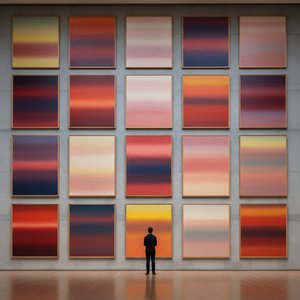
Mark Rothko's Top 25 Meesterwerken: Kleur, Emotie & Abstracte Kunst voor uw Interieur
Ontdek de top 25 meesterwerken van Mark Rothko! Duik diep in zijn emotionele kleurveldschilderijen en abstract expressionisme. Vind museumkwaliteit Rothko reproducties & interieurinspiratie op ArtsDot.com.

Top 10 Meesterwerken van de Geometrische Abstractie | ArtsDot.nl
Ontdek de 10 meest invloedrijke meesterwerken van de geometrische abstractie! Van Mondriaan tot Malevich, leer over kunstenaars, technieken & kleuren. Museumkwaliteit reproducties op ArtsDot.com – voor een unieke interieurstijl.
