

 Bekijk op ware grootte
 Verstuur
 Delen
Delen
 Details bekijken

 Download
 Vergelijkbare werken
 Röntgenonderzoek
 Diavoorstelling
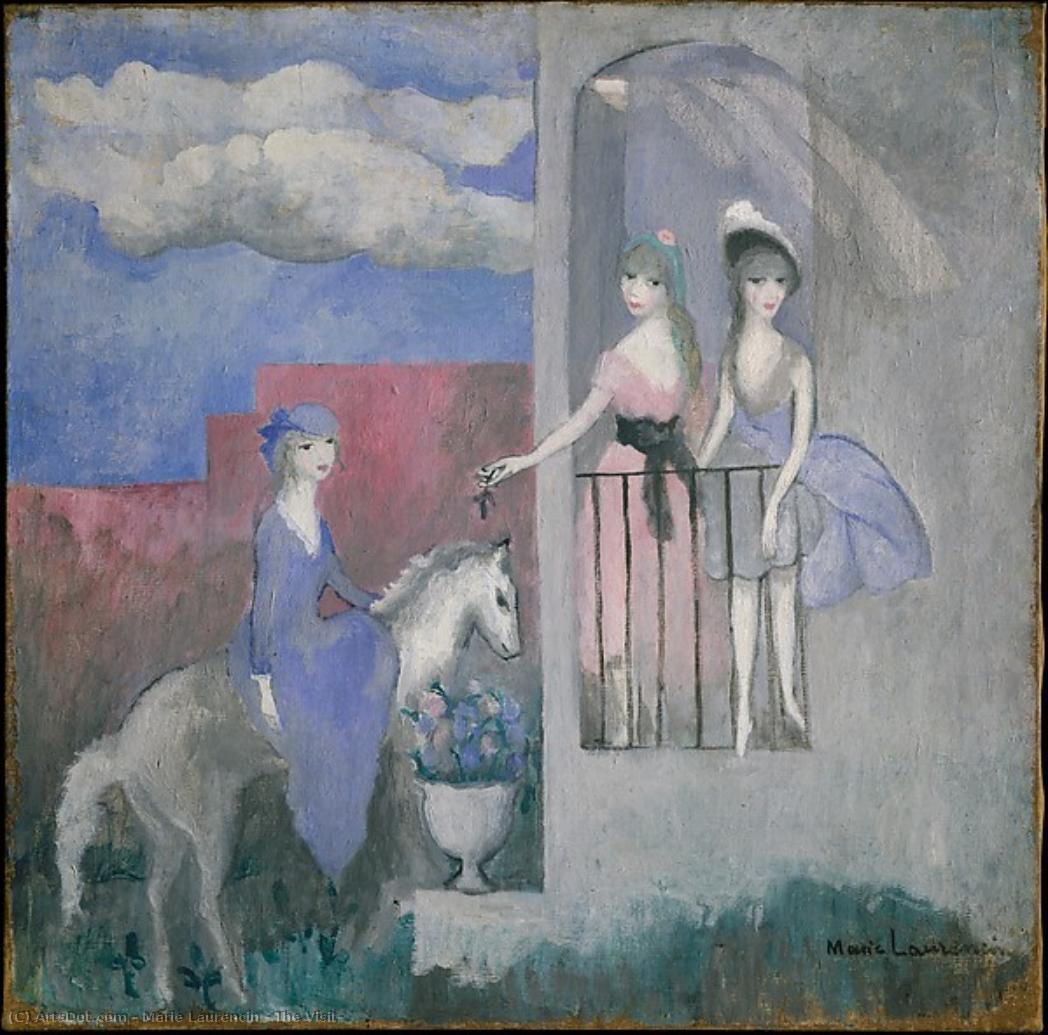
The Visit
 1916
1916 76.0 x 76.0 cm
 Lees meer
Handgemaakte olieverfreproductie
Met de hand geschilderd in olieverf op canvas in uw gewenste maat en lijst, op bestelling gemaakt door onze kunstenaars. ( Print kopen Afbeelding kopen)




































Kies uit onze vooraf ingestelde maten die overeenkomen met de originele verhoudingen van het kunstwerk.

U kunt uw eigen afmetingen invoeren om in een specifieke lijst of ruimte te passen. Als de door u gekozen maat niet overeenkomt met de verhoudingen van het originele beeld, zullen we het kunstwerk bijsnijden of het schilderij uitbreiden met extra handgeschilderde elementen. Een digitale mockup wordt ter goedkeuring naar u verzonden voordat de productie begint.
Houd er rekening mee dat de preview op het scherm niet de werkelijke uitsnede of uitbreiding weergeeft. Alleen de mockup toont de uiteindelijke compositie nauwkeurig.
Hoewel aangepaste afmetingen mogelijk zijn, raden we aan een maat uit de vooraf gedefinieerde lijst te selecteren om de originele verhoudingen te behouden.
Na de bestelling zal het team van ArtsDot.com per e-mail contact opnemen met de klant voor instructies en een mockup-voorbeeld sturen.
Wereldwijde levering () binnen 3 tot 4 weken in plaats van de standaard 5 weken. (12 augustus). Zonder concessies aan de kwaliteit.

Gratis wereldwijde expressverzending

Hoogwaardig linnen canvas

Volledige verzendverzekering

Garantie op terugbetaling van invoerrechten

Garantie op exacte kleurweergave

60 dagen retourbeleid (alleen bij defecten)

100% Geld-terug-garantie

Korting bij meerdere afnames
 De optie voor glas is alleen beschikbaar bij een formaat kleiner dan 110 cm.

The Visit
Medium reproductie
Formaat reproductie
-


Totaalprijs
$ 338
Gerelateerde kunstwerken


Biografie van de kunstenaar
Early Life and Artistic Foundations
Marie Laurencin was born in Paris on October 31, 1883, into a family marked by social constraints typical of the Belle Époque. Her father, Alfred Toulet, a fiscal administrator, was absent for much of her childhood, leaving her mother, Pauline Mélanie Laurencin—a domestic servant—to shoulder the responsibility of raising her daughter alone. Despite these circumstances, Pauline instilled in Marie a profound appreciation for French culture and art, fostering an environment conducive to intellectual curiosity and artistic exploration. At the age of 18, Laurencin pursued formal training in porcelain painting at Sèvres, renowned for its exquisite ceramics production—a tradition that would profoundly shape her aesthetic sensibilities. This experience honed her technical skills and introduced her to the meticulous craftsmanship demanded by classical art forms. Simultaneously, she enrolled at Académie Humbert in Montmartre, where she studied oil painting alongside fellow artists who would become pivotal figures in the burgeoning avant-garde movement. It was here that Laurencin began to immerse herself in the revolutionary ideas circulating among painters like Picasso and Apollinaire—ideas that would irrevocably alter the course of modern art.Embracing Cubism and Artistic Collaboration
Laurencin swiftly gravitated toward the groundbreaking principles championed by Pablo Picasso and Guillaume Apollinaire, becoming an integral part of the *Section d'Or*, a collective dedicated to exploring the transformative potential of Cubism. This movement—characterized by fragmented forms, geometric abstraction, and multiple perspectives—represented a radical departure from traditional artistic conventions. Exhibiting at the Salon des Indépendents and the Salon d’Automne between 1910 and 1912, Laurencin demonstrated her unwavering commitment to embracing these innovative ideas. Her early canvases bear witness to the influence of Cubist painters like Picasso and Braque—artists who meticulously dissected objects into geometric planes, presenting them simultaneously from various viewpoints. However, even within these initial experiments, hints of Laurencin’s distinctive artistic vision began to emerge. Notably, she forged a close relationship with Apollinaire—a celebrated poet and playwright—who served as both her muse and ardent champion. Their collaboration extended beyond artistic inspiration; Apollinaire recognized Laurencin's talent and actively promoted her work within the intellectual circles of Paris. This connection fostered an environment of mutual encouragement and fueled Laurencin’s creative endeavors, solidifying her position at the forefront of Parisian avant-garde culture.A Feminine Aesthetic: Style and Recurring Themes
Laurencin distinguished herself from many of her contemporaries by prioritizing a feminine aesthetic—a conscious rejection of the masculine dominance prevalent in artistic circles during that era. Her style eschewed the harsh angles and stark geometries favored by Picasso and Braque, opting instead for curvilinear forms and delicate pastel palettes. Laurencin’s canvases are populated primarily by women—often depicted in solitary portraits or grouped together—radiating an aura of grace, serenity, and quiet contemplation. Unlike many Cubist artists who focused on industrial subjects or abstract concepts, Laurencin centered her art around themes of beauty, tenderness, and the female experience—a deliberate assertion of a female gaze within a predominantly male-dominated artistic landscape. Her meticulous attention to detail—particularly in capturing subtle expressions and gestures—revealed an extraordinary sensitivity to human emotion. Laurencin’s stylistic choices drew inspiration from Rococo painting—specifically its ornate decorations and idealized figures—as well as Impressionism—which championed the depiction of fleeting moments of light and color. Recurring motifs included music, historic icons, animals (particularly deer), and young women immersed in idyllic settings—elements that imbued her paintings with a dreamlike quality and conveyed profound symbolic meanings.Later Years and Legacy
The outbreak of World War I disrupted Laurencin’s life and career, forcing her to seek refuge in Spain alongside her husband, Otto de Waetjen—a decision driven by his pacifist convictions. As a result of their marriage, Laurencin lost her French citizenship—a circumstance that underscored the societal limitations imposed upon women during that period. Following their divorce in 1920, Laurencin returned to Paris and enjoyed considerable success throughout the 1920s and 30s—primarily through her work as a decorative artist for ballet productions. Her collaborations with Sergei Diaghilev’s Ballet Russes—particularly her designs for *Les Biches*—established her reputation as a visionary storyteller who seamlessly blended visual artistry with theatrical performance. Laurencin continued to explore new artistic avenues, experimenting with various mediums and styles—including printmaking and sculpture—demonstrating her versatility and unwavering dedication to creative expression. Despite facing hardships during the Great Depression, Laurencin persevered in her artistic pursuits, maintaining her passion for painting until her death in 1956. Today, Marie Laurencin is recognized as one of the most important female Cubist painters—a pioneer who challenged gender norms and expanded the boundaries of modernism. Her enduring legacy resides not only in her stunning artworks but also in her courageous assertion of artistic freedom—a testament to her unwavering belief in the transformative power of art.
Marie Laurencin
1883 - 1956 , Frankrijk
Snelle feiten
- Artistic Movement Or Style: Cubisme en stijl van een nimf
- Artists Or Movements Influenced By This Artist: ['Fauvisme']
- Artists Who Influenced This Artist:
- Pablo Picasso
- Guillaume Apollinaire
- Date Of Birth: 31 oktober 1883
- Date Of Death: 8 juni 1956
- Full Name: Marie Laurencin
- Nationality: Franse kunstenaar
- Notable Artworks:
- Les Biches
- De tuinfeest
- Place Of Birth: Parijs, Frankrijk

