


 Voorvertoning
 Verstuur
 Delen
Delen
 Details bekijken

 Download
 Vergelijkbare items
 Röntgenonderzoek
 Diavoorstelling
 Statistieken
Mary Howitt
 Neoclassical
 5.0 x 58.0 cm
 Chrysler Museum of Art
 Lees meer
Giclée / Kunstafdrukken
Giclée- of canvasafdruk van museumkwaliteit met een snelle productie en flexibele afwerkingsmogelijkheden. ( Bestel handgeschilderde reproductie Schakel over naar digitale afbeelding)




































Kies uit onze vooraf ingestelde maten die overeenkomen met de originele verhoudingen van het kunstwerk.

U kunt uw eigen afmetingen opgeven om in een specifieke lijst of ruimte te passen. Als de door u gekozen maat niet overeenkomt met de proporties van het originele kunstwerk, zullen wij de afbeelding bijsnijden of uitbreiden met een gespiegelde of effen rand. Een digitaal mockup wordt ter goedkeuring naar u verzonden voordat de productie begint.
Houd er rekening mee dat de preview op het scherm de werkelijke bijsneding of uitbreiding niet weergeeft. Alleen de mockup toont de uiteindelijke compositie nauwkeurig.
Hoewel aangepaste maten beschikbaar zijn, raden wij aan een afmeting uit de vooraf bepaalde lijst te kiezen om de originele proporties te behouden.
Wereldwijde levering () binnen 2 weken in plaats van de standaard 4/5 weken. (8 september)

Gratis wereldwijde expressverzending

Hoogwaardig linnen canvas

Volledige verzendverzekering

Garantie op terugbetaling van invoerrechten

Garantie op exacte kleurweergave

Retourbeleid van 100 dagen (alleen bij defecten)

100% Geld-terug-garantie

Korting bij meerdere afnames
 De optie voor glas is alleen beschikbaar bij een formaat kleiner dan 110 cm.

Mary Howitt
Giclée / Kunstafdrukken
Afmetingen reproductie
-


Eindtotaal
$ 63
Vergelijkbare kunstwerken


Biografie van de kunstenaar
Early Life and Artistic Beginnings
Margaret E. Foley, born in the rural landscapes of northern Vermont around 1827, embarked on a remarkable artistic journey that led her from humble beginnings to the heart of the neoclassical sculpture world in Rome. Her story is one of self-determination and quiet perseverance, particularly striking for a woman artist navigating the constraints of 19th-century society. From an early age, Foley displayed a natural aptitude for carving, whittling figures from whatever materials she could find. This innate talent blossomed despite limited formal training; her initial education came through dedicated self-study and practical experience. The daughter of a farmhand, necessity led her to work as a maid to fund her schooling, demonstrating an early commitment to pursuing knowledge and artistic development.
At the age of fourteen, Foley ventured to Lowell, Massachusetts, seeking employment in the bustling Merrimack Corporation textile mill. While working amidst the machinery, she began to explore cameo carving, recognizing its potential as a viable path for a professional artist. This period proved pivotal; Foley enrolled at Ednah Dow Cheney’s School of Design for Women, an institution founded with the express purpose of providing occupational training for women in the domestic arts. Cameo carving was considered a suitable pursuit for women due to its decorative nature and association with sentimentality—a perception that allowed Foley to hone her skills while navigating societal expectations.
The Roman Circle and Neoclassical Style
A Flourishing Career in Italy
In 1860, a Vermont politician recognizing her talent assisted Foley’s emigration to Rome. This move marked a turning point in her career, immersing her in the epicenter of neoclassical sculpture. She arrived with Charlotte Cushman and Emma Stebbins, becoming part of an extraordinary community of American women sculptors—a “sisterhood,” as Henry James famously described it—that included Harriet Hosmer, Anne Whitney, Edmonia Lewis, and Louisa Lander. This group provided a vital network of support, collaboration, and encouragement in a city that offered both opportunity and challenge.
Foley’s style was firmly rooted in the neoclassical tradition, characterized by its emphasis on idealized forms, classical mythology, and historical subjects. She quickly established herself as a skilled portraitist, creating medallion portraits for prominent sitters—a lucrative market fueled by American tourists undertaking the Grand Tour. Unlike some of her contemporaries who relied on studio assistants, Foley often carved her own marbles, maintaining complete artistic control over every aspect of her work. This dedication to craftsmanship and direct carving speaks to her commitment to quality and personal expression.
Subjects and Techniques
Portraits, Medallions, and Biblical Scenes
Foley’s oeuvre encompassed a diverse range of subjects, reflecting both the demands of the art market and her own artistic interests. She excelled in creating marble medallion portraits, capturing the likenesses of notable figures such as William Cullen Bryant. Her portrait busts, like that of Transcendentalist minister Theodore Parker created in 1877, demonstrate her ability to convey character and intellectual depth. However, she also explored biblical and historical themes, sculpting scenes from the lives of Jeremiah and Cleopatra.
One particularly compelling work is her 1866 medallion depicting Pascuccia, a Neapolitan model celebrated for her beauty. The sculpture’s inclusion of a Christian cross and Semitic features speaks to the cosmopolitan nature of 19th-century Rome—a city where diverse cultures intersected and influenced artistic expression. Foley's ability to capture both physical likeness and symbolic meaning in her work earned her recognition among fellow artists and patrons.
Legacy and Historical Significance
A Quiet Pioneer
Margaret E. Foley’s career was tragically cut short by her untimely death in Meran, Austria-Hungary, in 1877 at the age of fifty. Despite her early passing, she left behind a significant body of work that reflects her dedication to neoclassical sculpture and her commitment to artistic independence. While not as widely celebrated as some of her contemporaries, Foley played an important role in paving the way for future generations of women artists.
Her story underscores the challenges faced by female sculptors in the 19th century—the need to navigate societal expectations, secure financial stability, and establish a professional reputation in a male-dominated field. Her choice to work directly with marble, her dedication to craftsmanship, and her ability to create compelling portraits and symbolic sculptures demonstrate her artistic talent and unwavering commitment to her craft. Today, Margaret E. Foley is remembered as a quiet pioneer—a sculptor who overcame obstacles to achieve success on her own terms and contribute to the rich tapestry of American art.

margaret e. foley
1827 - 1877 , United States of America
Belangrijkste feiten
- Artistic Movement Or Style: Neoclassical Sculpture
- Date Of Birth: 1827
- Date Of Death: 1877
- Full Name: Margaret E. Foley
- Nationality: American
- Notable Artworks:
- Cleopatra
- Mary Howitt
- Jenny Lind
- Pascuccia
- Place Of Birth: Northern Vermont, USA
Gerelateerde artikelen

The Enduring Form: Exploring Themes & Techniques in Sculpture Across Historical Periods
Explore the rich history of sculpture from ancient masterpieces to contemporary innovations. Discover key techniques, influential artists & investment potential for discerning art collectors.

Top 10 Bronzen Beeldhouwwerken die de Kunst Voorgoed Veranderden | ArtsDot
Ontdek de 10 meest legendarische bronzen beeldhouwwerken die kunstgeschiedenis schreven! Van Rodin tot Michelangelo, leer over hun meesterwerken & technieken. Vind museumkwaliteit reproducties en inspiratie voor uw interieur op ArtsDot.com.
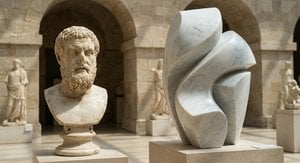
The Enduring Allure of Marble in Art History: From Classical Sculpture to Modern Abstraction
Explore the captivating history of marble sculpture from ancient Greece to modern art. Discover renowned artists like Canova & Michelangelo, carving techniques, and investment insights at ArtsDot.

The Enduring Form: Sculpture Across History, Technique & Emotional Resonance
Explore the rich history of sculpture with ArtsDot. Discover key techniques, influential artists & investment potential for discerning collectors. Expert insights into valuing and collecting timeless masterpieces.

Antonio Canova: Neoclassical Sculpture & the Pursuit of Emotional Perfection
Explore the life & art of Antonio Canova, the greatest Neoclassical sculptor. Discover his masterpieces, innovative techniques, and lasting influence on fine art collecting. Expert insights for discerning investors.