


 Voorvertoning
 Verstuur
 Delen
Delen
 Details bekijken

 Download
 Vergelijkbare items
 Röntgenonderzoek
 Diavoorstelling
 Statistieken
Renya del inframundo
 Surrealism
 2011
2011- Contemporary
 22.0 x 30.0 cm
 USC Fisher Museum of Art
 Lees meer
Giclée / Kunstafdrukken
Giclée- of canvasafdruk van museumkwaliteit met een snelle productie en flexibele afwerkingsmogelijkheden. ( Bestel handgeschilderde reproductie Schakel over naar digitale afbeelding)




P118B $10

P118H $10

P118W $10

P438Z $10

P508JH $12

P508YH $12

P805H $10

P805Z $10

P919BZ $10

P919G $10

P919XJ $10

P959ZH $10

P968JZ $12

W106C $8

W218G $10

W218JH $8

W218Y $10

W307PJ $10

W316G $10

W316PJ $8

W316Y $10

W398PJ $8

W4111J $10

W500HY $15

W500JH $15

W692G $12

W849H $8

W940BG $15

W953PJ $8




Kies uit onze vooraf ingestelde maten die overeenkomen met de originele verhoudingen van het kunstwerk.

U kunt uw eigen afmetingen opgeven om in een specifieke lijst of ruimte te passen. Als de door u gekozen maat niet overeenkomt met de proporties van het originele kunstwerk, zullen wij de afbeelding bijsnijden of uitbreiden met een gespiegelde of effen rand. Een digitaal mockup wordt ter goedkeuring naar u verzonden voordat de productie begint.
Houd er rekening mee dat de preview op het scherm de werkelijke bijsneding of uitbreiding niet weergeeft. Alleen de mockup toont de uiteindelijke compositie nauwkeurig.
Hoewel aangepaste maten beschikbaar zijn, raden wij aan een afmeting uit de vooraf bepaalde lijst te kiezen om de originele proporties te behouden.
Wereldwijde levering () binnen 2 weken in plaats van de standaard 4/5 weken. (10 september)

Gratis wereldwijde expressverzending

Hoogwaardig linnen canvas

Volledige verzendverzekering

Garantie op terugbetaling van invoerrechten

Garantie op exacte kleurweergave

Retourbeleid van 100 dagen (alleen bij defecten)

100% Geld-terug-garantie

Korting bij meerdere afnames
 De optie voor glas is alleen beschikbaar bij een formaat kleiner dan 110 cm.

Renya del inframundo
Giclée / Kunstafdrukken
Afmetingen reproductie
-


Eindtotaal
$ 63
A Descent into the Surreal: The Visceral World of Marcos Castro
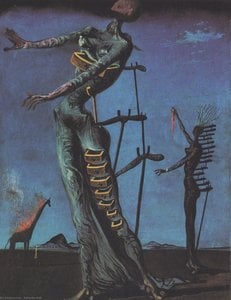
In the evocative piece Renya del inframundo, Mexican contemporary artist Marcos Castro invites the viewer into a realm where the boundaries between reality and nightmare dissolve. Created in 2011, this striking work serves as a profound exploration of the human condition, utilizing a surrealist vocabulary to navigate the depths of the subconscious. The painting presents a scene of startling intensity, where the vulnerability of the human form meets the sudden, violent intrusion of modern symbols. Through his masterful command of composition, Castro crafts a narrative that feels both ancient and urgently contemporary, pulling the observer into a landscape of mythic proportions.
The subject matter of Renya del inframundo is a complex tapestry of tension and raw emotion. In the foreground, figures appear in states of naked vulnerability, positioned against the cold, unyielding texture of a brick wall. This juxtaposition between the softness of human flesh and the industrial rigidity of the masonry creates an immediate sense of exposure. The presence of a firearm in the background introduces a jarring note of danger, disrupting the stillness of the scene with the threat of sudden violence. As flames flicker in the distance, the atmosphere thickens with heat and drama, suggesting a world caught in the midst of a transformative—or perhaps destructive—ordeal.
Technically, Castro’s work is deeply rooted in a symbolic language that echoes the psychological depth of masters like Frida Kahlo. His style blends elements of mythology with the natural world to evoke a sense of profound reflection. In this specific piece, the use of light and shadow plays a crucial role in defining the surrealist atmosphere; the glow of the fire illuminates the scene with an unpredictable, flickering energy that breathes life into the shadows. For collectors and interior designers, this artwork offers more than mere decoration; it provides a focal point of intellectual and emotional gravity. A high-quality reproduction of this piece brings a sophisticated, avant-garde edge to any space, inviting conversation through its enigmatic imagery and its ability to evoke the beautiful, terrifying complexity of the underworld.
Vergelijkbare kunstwerken




Biografie van de kunstenaar
Jean-Michel Basquiat: A Life Forged in the Crucible of New York
Jean-Michel Basquiat, a name synonymous with raw energy and uncompromising vision, emerged from the vibrant, chaotic streets of 1980s New York City to become one of the most influential artists of his generation. Born in Brooklyn in 1960, his life was tragically cut short at the age of 27, but during his brief career, he left an indelible mark on the art world, challenging conventions and forcing a critical examination of race, power, and identity. His work wasn’t simply about aesthetics; it was a direct response to the social and political realities surrounding him – a potent blend of street art, graffiti, personal experience, and intellectual critique.
Basquiat's early life was marked by a complex family dynamic and a struggle with racial identity. Raised primarily by his Haitian immigrant father, he navigated the challenges of being a Black child in a predominantly white environment. This experience profoundly shaped his artistic perspective, informing his exploration of themes like social injustice, poverty, and cultural appropriation. He began experimenting with art as a teenager, initially engaging in graffiti – a rebellious act that quickly became intertwined with his burgeoning artistic voice. His early collaborations with Al Diaz under the pseudonym SAMO were particularly significant, producing enigmatic epigrams scrawled across subway cars and building walls, establishing Basquiat’s presence within the burgeoning street art scene.
The Rise of Neo-Expressionism and a Unique Voice
By the early 1980s, Basquiat's work began to shift beyond simple graffiti tags. He transitioned into painting, developing a distinctive style characterized by bold lines, fragmented figures, and a potent mix of text and imagery. This marked his entry into the burgeoning neo-expressionist movement, alongside artists like Anselm Kiefer and Georg Baselitz. However, Basquiat’s work quickly distinguished itself from its contemporaries. Unlike many neo-expressionists who embraced a romanticized or historical approach, Basquiat confronted contemporary issues with unflinching honesty. His paintings frequently incorporated elements of personal history, cultural references – including African art and jazz music – alongside critiques of capitalism, racism, and the commodification of art.
His artistic process was intensely personal and often chaotic. He typically worked quickly, layering paint onto large canvases in a frenzied manner, incorporating found objects, newspaper clippings, and text directly into his compositions. This approach reflected his desire to capture fleeting moments of experience and to disrupt traditional notions of authorship and control. He famously stated that he didn’t “create” art; rather, he “uncovered” it – revealing pre-existing ideas and narratives through his work.
Key Works and Influences
Several works stand out as particularly significant in understanding Basquiat's artistic trajectory. *Irony of Negro Policeman* (1981), a powerful image of a Black police officer, immediately established his willingness to confront uncomfortable social realities. *Skull of Doom* (1982) is perhaps his most iconic piece, a haunting depiction of a human skull overlaid with symbols and text that allude to death, violence, and the fragility of life. His series *Hollywood Africans* (1983), featuring portraits of African-American figures in Hollywood glamour, explored themes of identity, representation, and the complexities of race relations within the entertainment industry.
Basquiat’s work was deeply influenced by a diverse range of sources. He drew inspiration from street art, comic books, jazz music, literature (particularly writers like William Burroughs and James Baldwin), and African art. His fascination with history, particularly the legacy of slavery and colonialism, informed his exploration of power dynamics and social injustice. The writings of Malcolm X and other Black intellectuals served as a crucial intellectual foundation for his artistic vision.
Legacy and Historical Significance
Despite his tragically short life, Jean-Michel Basquiat’s impact on the art world is undeniable. He challenged the established hierarchies of the art market and helped to democratize access to contemporary art. His work continues to resonate with audiences today, prompting critical reflection on issues of race, identity, and social justice. His willingness to confront difficult subjects head-on, combined with his innovative artistic style, cemented his place as a pivotal figure in late 20th-century art history.
In 1992, the Whitney Museum of American Art held a comprehensive retrospective of Basquiat’s work, solidifying his legacy and demonstrating the enduring significance of his contributions. His paintings now command staggering prices at auction, reflecting both their artistic merit and their cultural importance. Jean-Michel Basquiat's art remains a powerful testament to the transformative potential of creativity and a vital reminder of the urgent need for social change.

marcos castro (mexican, b. 1981)
1981 - , Mexico
Belangrijkste feiten
- Artistic Movement Or Style: Neo-expressionism
- Artists Or Movements Influenced By This Artist:
- Graffiti art
- Hip-hop culture
- Artists Who Influenced This Artist:
- Andy Warhol
- Piero Manzoni
- Jean-Michel Bernier
- Date Of Birth: December 22, 1960
- Date Of Death: August 12, 1988
- Full Name: Jean-Michel Basquiat
- Nationality: American
- Notable Artworks:
- Irony of Negro Policeman
- Skull of Doom
- Untitled (1982)
- Boy and Dog in a Johnnypump
- Defacement (1983)
- Hollywood Africans
- Place Of Birth: New York City, USA
Gerelateerde artikelen

Top 10 Dramatische Kunstwerken: Meesterwerken voor een Impactvol Interieur | ArtsDot.nl
Ontdek 10 dramatische kunstwerken die emotie en intensiteit uitstralen. Van Barok tot Expressionisme, leer de verhalen achter meesterwerken van beroemde schilders. Vind museumkwaliteit reproducties & interieurinspiratie op ArtsDot.com.

Jacopo Tintoretto's Meesterwerken: 25 Schilderijen die de Renaissance Definieerden | ArtsDot
Ontdek de 25 meest indrukwekkende schilderijen van Jacopo Tintoretto, de meester van het Venetiaanse Renaissance. Duik in zijn dramatische stijl, religieuze thema's & techniek. Vind museumkwaliteit reproducties en decoratie-inspiratie op ArtsDot.com.

Top 10 Kunstwerken die Intense Emoties Losmaken | ArtsDot.nl
Ontdek 10 kunstwerken die intense emoties oproepen! Van Van Gogh tot Munch, leer over de verhalen achter deze iconische schilderijen. Vind museumkwaliteit reproducties & interieurinspiratie op ArtsDot.com.

The Visceral Stage: Exploring Dramatic Narratives & Emotional Intensity in Baroque Art
Explore the dramatic world of Baroque art! Discover iconic masters like Caravaggio & Rembrandt, their techniques, and the movement's lasting impact. Expert insights for collectors & enthusiasts at ArtsDot.

The Allure of Dramatic Art: Exploring Emotional Intensity & Visual Storytelling
Explore the captivating world of dramatic art! Discover chiaroscuro techniques, Baroque masters like Caravaggio & Velázquez, and unlock the emotional power within iconic paintings. Enhance your collection with ArtsDot.