


 Bekijk op ware grootte
 Verstuur
 Delen
Delen
 Details bekijken
 Gids voor studentenkunstwerken

 Download
 Vergelijkbare items
 Röntgenonderzoek
 Diavoorstelling
 Statistieken
A la manera de Delvaux


 Lees meer
De kunstwerken die op deze pagina worden weergegeven, zijn beschermd door de auteursrechtwetgeving, wat betekent dat het ons wettelijk niet is toegestaan om identieke reproducties te maken of te verkopen. Deze bescherming wordt gehandhaafd onder internationale overeenkomsten zoals de Conventie van Bern en door nationale wetgeving, waaronder de bepalingen van de Amerikaanse auteurswet - Titel 17. Alle rechten voorbehouden. Reproduceren of distribueren van afbeeldingen is niet toegestaan zonder uitdrukkelijke schriftelijke toestemming van WahooArt.com en de rechthebbenden.
Deze methode voldoet volledig aan de auteursrechtwetgeving, omdat het niet gaat om het kopiëren of dupliceren van het beschermde kunstwerk. In plaats daarvan is er sprake van een creatieve herinterpretatie — een nieuw schilderij dat door het origineel wordt geïnspireerd, maar er niet identiek aan is.
Giclée / Kunstafdrukken
Giclée- of canvasafdruk van museumkwaliteit met een snelle productie en flexibele afwerkingsmogelijkheden. ( Koop handgeschilderd kunstwerk Schakel over naar digitale afbeeldingen)




P118B €10

P118H €10

P118W €10

P438Z €10

P508JH €12

P508YH €12

P805H €10

P805Z €10

P919BZ €10

P919G €10

P919XJ €10

P959ZH €10

P968JZ €12

W106C €8

W218G €10

W218JH €8

W218Y €10

W307PJ €10

W316G €10

W316PJ €8

W316Y €10

W398PJ €8

W4111J €10

W500HY €15

W500JH €15

W692G €12

W849H €8

W940BG €15

W953PJ €8




Kies uit onze vooraf ingestelde maten die overeenkomen met de originele verhoudingen van het kunstwerk.

Voer de breedte en de hoogte in die u nodig heeft, passend bij uw lijst of uw muur. Een afdruk kan alleen worden ingekort, nooit groter worden gemaakt dan het origineel, waardoor een formaat met een andere verhouding een deel van de afbeelding verliest. Wij sturen u een digitaal mockup ter goedkeuring voordat we iets drukken. De afbeelding op deze pagina toont niet de werkelijke uitsnede — dit is alleen te zien op het mockup.
Wereldwijde levering () binnen 2 weken in plaats van de standaard 4/5 weken. (23 oktober)

Gratis wereldwijde expressverzending

Hoogwaardig linnen canvas

Volledige verzendverzekering

Garantie op terugbetaling van invoerrechten

Garantie op exacte kleurweergave

Retourbeleid van 100 dagen (alleen bij defecten)

100% Geld-terug-garantie

Korting bij meerdere afnames
 De optie voor glas is alleen beschikbaar bij een formaat kleiner dan 110 cm.

A la manera de Delvaux
Giclée / Kunstafdrukken
Formaat reproductie
-


Totaalprijs
€ 55
A Whisper of Delvaux: Duchamp’s Enigmatic Reverie
Marcel Duchamp's *A la manera de Delvaux* (In the Manner of Delvaux) is not a painting in the traditional sense, but rather a meticulously constructed collage that operates as a fascinating echo of Surrealist painter Paul Delvaux. Created in 1942, this work exists as a subtle yet potent exploration of desire, memory, and the unsettling beauty found within the subconscious. It’s a piece born from exile and artistic questioning, reflecting Duchamp's evolving stance towards representation and the very definition of art itself.
The image centers around a poignant scene: a baby, seemingly nursing from a bottle held by a maternal figure. This intimate act is framed within a larger composition populated by shadowy figures, hinting at a narrative that remains tantalizingly out of reach. The sepia tone imbues the work with a nostalgic quality, evoking faded photographs and half-remembered dreams. Duchamp doesn’t attempt to replicate Delvaux's style directly; instead, he *interprets* it, distilling its essence into a fragmented visual poem. He achieves this through the skillful juxtaposition of found imagery – likely cut from magazines or other printed sources – creating a dreamlike atmosphere that is both alluring and disquieting.
The Shadow of Surrealism and Duchamp’s Conceptual Shift
To understand *A la manera de Delvaux*, one must consider the artistic climate of the time. Duchamp had already shaken the foundations of the art world with his “readymades” – ordinary manufactured objects elevated to the status of art through sheer force of conceptual intent, most famously exemplified by *Fountain* (1917). By 1942, he was living in New York, having fled Europe during World War II. He found himself amidst a burgeoning Surrealist movement, and while not fully embracing its tenets, he engaged with its ideas about the unconscious mind and the power of irrationality. Delvaux’s paintings, with their eerie depictions of classical architecture populated by nude figures and trains, provided a particularly resonant visual language for Duchamp to explore.
However, *A la manera de Delvaux* isn't merely an homage; it’s a subtle critique. Duchamp wasn’t interested in simply mimicking another artist’s style. He was probing the nature of representation itself. By creating a work “in the manner of” Delvaux, he highlights the act of imitation and questions originality. The collage format further emphasizes this deconstruction, breaking down images into their constituent parts and reassembling them to create something new – or rather, something that *comments* on what already exists. It’s a precursor to his later, more ambitious conceptual works, like *Étant donnés*, where the viewer is confronted with a hidden world revealed through a peephole.
Emotional Resonance and Interior Spaces
The emotional impact of *A la manera de Delvaux* is subtle but profound. The image evokes feelings of longing, vulnerability, and perhaps even a touch of melancholy. The nursing baby, a universal symbol of innocence and dependence, is rendered with a delicate ambiguity. Is it a scene of comfort or one of quiet desperation? The shadowy figures surrounding the central subject add to this sense of unease, suggesting hidden anxieties and unspoken desires.
For collectors and interior designers, a reproduction of *A la manera de Delvaux* offers a unique opportunity to introduce a touch of intellectual sophistication into any space. Its muted tones and enigmatic imagery lend themselves well to a variety of settings, from modern lofts to classic libraries. The work’s conceptual depth invites contemplation, making it a conversation starter and a testament to the power of art to challenge our perceptions. It is not simply a decorative piece; it's an invitation to delve into the complexities of the human psyche and the ever-evolving nature of artistic expression.
Vragen & Antwoorden
Is er een diavoorstelling beschikbaar voor "A la manera de Delvaux" door Marcel Duchamp?
"A la manera de Delvaux" door Marcel Duchamp kan worden bekeken als een diavoorstelling op de Diavoorstelling pagina van het kunstwerk.
Welke techniek en stijl kenmerken "A la manera de Delvaux" door Marcel Duchamp?
"A la manera de Delvaux" door Marcel Duchamp combineert de Acrylic On Canvas-techniek met de Surrealist Collage-stijl. Techniek en stroming beschrijven de vervaardiging en de stijl van het werk.
Wie heeft "A la manera de Delvaux" gemaakt en in welke stijl is het uitgevoerd?
"A la manera de Delvaux" werd gecreëerd door Marcel Duchamp in de Surrealist Collage-stijl. De kunstenaar en de stroming bepalen de traditie van het werk.
Gerelateerde kunstwerken


![Genre Allegory [george Washington] — Marcel Duchamp, Surrealism](/media/artworks/images-thumb/90/d9/90d9ce324280fe5002abd42626b6c52f.jpg)


Biografie van de kunstenaar
Een Revolutionaire Geest: Het Leven en de Kunst van Marcel Duchamp
Marcel Duchamp, geboren als Henri-Robert-Marcel Duchamp in 1887 in Blainville-Crevon, Normandië, was meer dan een kunstenaar; hij was een filosofische provocateur die de koers van de moderne kunst fundamenteel heeft veranderd. Zijn vroege leven, hoewel schijnbaar conventioneel – gevormd binnen een familie die artistieke expressie waardeerde en waarin beide broers succesvolle carrières als kunstenaar nastreefden – hintte al naar het iconoclasme dat nog zou komen. Duchamp volgde aanvankelijk een formele opleiding, waarbij hij traditionele technieken meester werd en experimenteerde met postimpressionistische stijlen. Deze academische basis diende echter niet als een doel op zich, maar als een springplank om de essentie van kunst, haar doel en haar definitie ter discussie te stellen. Hij was niet tevreden met het louter afbeelden van de wereld; hij zocht naar manieren om onze perceptie ervan uit te dagen en te bevragen wat werkelijke artistieke waarde vormt. Deze rusteloze intellectuele nieuwsgierigheid zou het kenmerkende aspect worden van zijn vruchtbare carrière.Van Cubisme naar Dada: Een Afwijzing van Conventie
Duchamps artistieke reis werd gekenmerkt door een constante evolutie, een doelbewuste ontmanteling van gevestigde normen. Zijn vroege betrokkenheid bij het Cubisme, duidelijk zichtbaar in werken zoals Portrait of Chess Players (1911), toonde een interesse in gefragmenteerde vormen en meervoudige perspectieven – een breuk met de traditionele representatie. Toch bewoog hij zich snel voorbij louter esthetische overwegingen, omdat hij besefte dat het simpelweg herordenen van visuele elementen niet volstond om de diepere vragen te beantwoorden die in hem opborrelden. De gruwelen van de Eerste Wereldoorlog voedden dit onbehagen, wat ertoe leidde dat Duchamp het Dadaïsme omarmde, een beweging die voortkwam uit desillusie en een verwerping van logica, rede en traditionele artistieke waarden. Het was binnen het Dadaïstische kader dat Duchamp werkelijk begon de conventionele opvattingen over kunst af te breken. Hij was niet geïnteresseerd in het creëren van mooie objecten; hij wilde gedachten prikkelen, aannames uitdagen en de willekeur van esthetisch oordeel blootleggen. Deze periode zag de geboorte van zijn meest radicale innovatie: de ‘readymade’.De Readymades en de Subversie van de Kunst
De introductie van readymades – alledaagse, industrieel vervaardigde objecten die geselecteerd en gepresenteerd werden als kunst – vormde Duchamps meest significante bijdrage aan de 20e eeuw. Dit waren niet simpelweg gevonden voorwerpen; het waren bewuste daden van artistieke subversie. Door een alledaags item, zoals een urinoir (Fountain, 1917), te voorzien van de handtekening “R. Mutt” en dit in te dienen voor een kunstexpositie, daagde Duchamp de definitie van artistiek vakmanschap en auteurschap uit. Was het de hand van de kunstenaar die het werk creëerde, of was het het idee van de kunstenaar? Deze vraag werd centraal in zijn oeuvre en legde de basis voor de conceptuele kunst. Andere opmerkelijke readymades, zoals L.H.O.O.Q. (1919) – een ansichtkaartreproductie van de Mona Lisa, bewerkt met een snor en een sikje – waren speelse maar scherpe kritieken op de kunstgeschiedenis en gevestigde culturele iconen. Deze werken waren niet bedoeld om bewonderd te worden om hun esthetische kwaliteiten; ze waren bedoeld om debat uit te lokken en toeschouwers te dwingen hun vooroordelen over wat kunst is, te heroverwegen. Duchamp geloofde dat kunst in de geest moet verblijven, en niet enkel in het oog.Nalatenschap en Blijvende Invloed
De impact van Marcel Duchamp op opeenvolgende generaties kunstenaars is onmeetbaar. Hij veranderde ons begrip van kunst fundamenteel en plaveide de weg voor bewegingen zoals de conceptuele kunst, het minimalisme, de popart en talloze anderen. Zijn nadruk op het idee van de kunstenaar – het concept achter het werk – boven de esthetische eigenschappen, blijft kunstenaars tot op de dag van vandaag inspireren.- Cubisme: Vroege verkenning van gefragmenteerde vormen en ruimtelijke representatie.
- Dadaïsme: Verwerping van logica, rede en traditionele artistieke waarden als reactie op de Eerste Wereldoorlog.
- Conceptuele Kunst: De nadruk op het idee achter het kunstwerk in plaats van de esthetische kwaliteiten.

Marcel Duchamp
1887 - 1968 , Frankrijk
Snelle feiten
- Artistic Movement Or Style:
- Cubisme
- Dadaïsme
- Conceptuele kunst
- Artists Or Movements Influenced By This Artist:
- Cubisme
- Surrealisme
- Conceptuele kunst
- Date Of Birth: 28 juli 1887
- Date Of Death: 2 oktober 1968
- Full Name: Marcel Duchamp
- Nationality: Frans-Amerikaans
- Notable Artworks:
- Fontein
- L.H.O.O.Q.
- Het grote glas
- Boîte-en-valise
- Place Of Birth: Blainville, Frankrijk
Gerelateerde artikelen

Dada: A Revolution of Anti-Art & the Rejection of Reason in Early 20th Century Aesthetics
Explore the revolutionary Dada art movement! Discover its origins, key artists like Duchamp & Arp, and lasting impact on modern art. A deep dive into anti-art & challenging conventions.

Dadaism: A Rebellion Against Reason – Exploring the Origins, Characteristics, and Enduring Legacy of an Anti-Art Movement
Explore the revolutionary Dada art movement! Discover its origins in WWI, key artists like Duchamp & Höch, core principles, and lasting impact on modern and contemporary art. A comprehensive guide for enthusiasts.

Echoes of Time: Nostalgia, Technique & Cultural Significance in Vintage Paintings
Explore the captivating world of vintage paintings! Discover key styles, cultural significance & collecting tips from art experts at ArtsDot. Find authentic reproductions and elevate your home décor.

The Enigmatic Realm of Paul Delvaux: Surrealism, Memory & the Poetics of Disquiet
Explore the haunting dreamscapes of Paul Delvaux, a master of Surrealism. Discover his iconic motifs, classical influences & enduring legacy with ArtsDot.com.
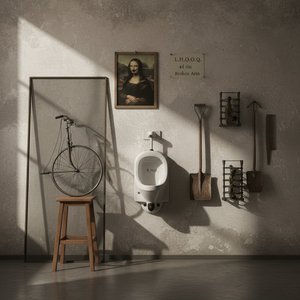
Marcel Duchamp: Challenging Conventions & Redefining Art in the 20th Century
Explore the revolutionary art of Marcel Duchamp! Discover how his Dadaist readymades challenged artistic conventions & redefined modern art. A deep dive into 'Fountain', conceptual shifts, and his lasting impact.


