

 Voorvertoning
 Verstuur
 Delen
Delen
 Details bekijken
 Gids
Gids

 Download
 Vergelijkbare items
 Röntgenonderzoek
 Diavoorstelling
 Vraag & antwoord
 Statistieken
Biblical subject


 Lees meer
Ontvang een bestand dat klaar is voor drukwerk en de kwaliteit van het online voorbeeld ver overstijgt. Elke digitale afbeelding die wij verkopen, is afkomstig van een high-resolution master uit onze database — meestal tussen de 5.000 en 15.000 pixels breed — zodat u met vertrouwen groot kunt afdrukken, nauwkeurig kunt bijsnijden of fijne details kunt reproduceren.
Geen enkel bestand verlaat ons atelier onbewerkt. Een digitaal expert controleert de kleuren aan de hand van het originele schilderij en corrigeert deze indien nodig, om vervolgens de helderheid en details te verbeteren met professionele retoucheertechnieken — waarbij de penseelstreek en stijl van de kunstenaar altijd strikt worden gerespecteerd. Het resultaat is een afbeelding die oogt als het schilderij zelf, en niet als een gescande foto met een filter.
U keurt de afbeelding goed voordat de bestelling wordt afgerond: onze expert stuurt u binnen 72 uur een e-mail ter beoordeling. Niet tevreden? Vraag om aanpassingen of correcties, of vraag een terugbetaling aan als de kwaliteit niet aan de verwachtingen voldoet.
Dit is de kwaliteit waarop uitgevers, designstudio's, galeries en drukkerijen vertrouwen.
Digitale afbeeldingen
Download een bestand met hoge resolutie voor persoonlijke weergave, afdrukken en creatieve projecten. ( Schakel over naar print Bestel handgeschilderde reproductie)
Inbegrepen bij elke bestelling van een digitale afbeelding
Professionele digitale levering, gegarandeerd
Wanneer u kiest voor ArtsDot.com, ontvangt u niet alleen een afbeelding – u krijgt een professioneel verbeterd digitaal kunstwerk, met precisie vervaardigd en voorzien van een tevredenheidsgarantie. Dit is alles wat automatisch bij uw bestelling is inbegrepen:

Snelle levering per e-mail
Uw hoogwaardige digitale afbeeldingsbestand wordt binnen 72 uur na bestelling naar u gemaild – klaar voor direct gebruik.

AI-verbeterd digitaal bestand
Uw kunstwerk wordt professioneel geoptimaliseerd met behulp van geavanceerde AI-tools en handmatige bewerkingen, waardoor maximale details, helderheid en kleurnauwkeurigheid worden gegarandeerd.

Gratis levenslange herlevering van digitale bestanden
Je bestand per ongeluk verwijderd of kwijtgeraakt? Geen zorgen – we sturen het u op elk gewenst moment gratis opnieuw toe.

Geen invoerkosten – nooit
Geniet direct van uw kunstwerk zonder invoerrechten, belastingen of verzendkosten – digitale downloads zijn altijd belastingvrij.

Garantie op kleurgetrouwheid
Met behulp van professionele hulpmiddelen en kleurbeheer zorgen wij ervoor dat uw digitale afbeelding de originele kleuren zo nauwkeurig mogelijk weergeeft.

100 dagen tevredenheidsgarantie
Mocht u niet tevreden zijn met uw digitale afbeelding, dan passen wij deze aan of storten wij 100% terug binnen 100 dagen – zonder vragen te stellen.

100% Geld-terug-garantie
Niet tevreden? Ontvang een volledige terugbetaling binnen 100 dagen na ontvangst van uw digitale bestand – zonder vragen te stellen.

Korting bij grote bestellingen
Koop 3 afbeeldingen, bespaar 10% - Koop 5, bespaar 15% - Koop 10+, bespaar 20%. Ideaal voor creatieve projecten, galerieën en bureaus.
A Dreamscape in Motion: The Lyrical Vision of Marc Chagall
To encounter Marc Chagall’s "Biblical Subject" is to step through a portal into a realm where the boundaries between memory, faith, and fantasy dissolve. Created in 1984, during the twilight of the artist's long and illustrious life, this work serves as a profound visual pilgrimage. It is not merely a depiction of a narrative, but an immersive experience that captures the essence of Chagall’s soul. The piece vibrates with the energy of a man looking backward through the lens of a lifetime, weaving together the vibrant folklore of his Belarusian childhood and the spiritual weight of biblical tradition. In this lithograph, we find a world where gravity is optional, and the heavy textures of history are lightened by the whimsical touch of a dreamer.
The composition presents a striking, surrealist tableau that defies conventional logic to achieve a higher emotional truth. At the heart of the scene, a man rides atop a horse, a powerful symbol of journey and masculine vitality, yet he holds aloft a beer mug—a sudden, playful juxtaposition that grounds the celestial atmosphere in the earthly joys of communal life. Around him, figures drift through a landscape that feels both intimately familiar and otherworldly. The presence of an insect hovering above adds a delicate, almost microscopic layer of detail to the atmosphere, reminding the viewer of the interconnectedness of all living things. This is the hallmark of Chagall’s genius: his ability to marry the monumental with the mundane, creating a symphony of color and movement that feels as spontaneous as a passing thought.
Technique and the Alchemy of Light
Executed as a lithograph, this artwork benefits from a technique that allows for an extraordinary range of tonal nuances. Lithography, which relies on the chemical properties of ink and stone, provides Chagall with the perfect medium to capture what he often called "the fleeting light." The print preserves the subtle gradations of shadow and the luminous glow that seems to emanebate from within the paper itself. For collectors and interior designers, this technical mastery translates into a piece that possesses incredible depth; the colors do not merely sit upon the surface but appear to float within layers of atmosphere. Whether viewed in the soft light of a morning study or under the focused glow of a gallery spotlight, the lithograph maintains its ability to surprise the eye with new details and shifting intensities.
The historical resonance of the work is deeply intertwined with the artist's personal displacement and resilience. Having witnessed the upheaval of the Soviet occupation of his beloved Vitebsk, Chagall used his art to reconstruct a lost world. In "Biblical Subject," we see the echoes of those golden domes and bustling marketplaces, reimagined through a surrealist lens. The piece acts as a bridge between the earthly struggles of the 20th century and the eternal truths of spiritual narrative. For those seeking to adorn a space with art that offers both intellectual depth and aesthetic beauty, this work provides a focal point of profound character—a masterpiece of memory that invites endless contemplation and brings a sense of poetic wonder to any environment.
Veelgestelde vragen
Hoe bekend is "Biblical subject" van Marc Chagall?
"Biblical subject" door Marc Chagall heeft een populariteitsniveau van Iconic. Deze classificatie weerspiegelt hoe breed het werk wordt erkend.
Hoe harmonieus zijn de kleuren van "Biblical subject" door Marc Chagall?
De kleurharmonie van "Biblical subject" wordt beschreven als Strong Color Unity.
Welke techniek is gebruikt voor "Biblical subject" en wanneer is het gemaakt?
"Biblical subject" werd in 1984 vervaardigd met de Lithography-techniek. Materiaal en datum beschrijven hoe en wanneer het origineel is gemaakt.
Vergelijkbare kunstwerken


Kunstenaarsbiografie
Het Vroege Leven, Familie en Opleiding
Marc Chagall kwam op 7 juli 1887 ter wereld in Vitebsk, in het Russische Rijk, geboren als Moishe Segal. Als eerste van negen kinderen in een bescheiden Joods gezin werd zijn leven gevormd door de ritmes van arbeid en kleinschalige handel. Zijn vader, Khatskel Segal, werkte als haringenpijper in een pakhuis, terwijl zijn moeder, Feïga-Ita Tchernina, een kleine kruidenierij runde. Deze vroege jaren zijn diep geworteld in de specifieke texturen van een provinciestad, waar de grenzen van zijn wereld werden bepaald door de behoeften van een groot huishouden en de rijke tradities van zijn gemeenschap.
Zijn educatieve reis begon binnen de muren van de heder, een traditionele Joodse basisschool. Hier lag de focus primair op religieuze instructie en de fundamentele teksten van zijn opvoeding. Pas op dertienjarige leeftijd verschoof de reikwijdte van zijn leerproces naar het seculiere. Hij trad in dienst bij de officiële middelbare school van Vitebsk om een Russische opleiding te volgen, een stap die een breuk betekende met de strikt religieuze sfeer van zijn kindertijd. Dit dubbelzinnige bestaan — balancerend tussen de heilige tradities van de heder en de seculiere eisen van de staatsschool — creëerde een innerlijke spanning die zijn vroege ontwikkeling zou gaan definiëren.
De artistieke impuls vond haar eerste formele uitlaatklep in Vitebsk. Chagall kreeg zijn eerste opleiding aan een lokale kunstschool onder leiding van Iouri Pen. Het is hier dat het rauwe instinct voor visuele expressie begint te versmelten tot een gedisciplineerde praktijk. Hij bewoog zich weg van de gestructureerde lessen in het klaslokaal naar een dieper engagement met de handeling van het kijken, waarmee hij het toneel bereidde voor een leven dat gewijd zou worden aan het vertalen van herinnering naar vorm.
De vormende jaren in Sint-Petersburg
De overgang van de provinciale stilte van Vitebsk naar de keizerlijke grootsheid van Sint-Petersburg wordt gekenmerkt door strijd. Tussen 1907 en 1909 biedt de hoofdstad weinig comfort. Armoede is een constante metgezel; er zijn momenten van honger die zo ernstig zijn dat fysieke uitputting een bittere realiteit wordt. Om te overleven trekt hij de straat op, waar hij een karig bestaan verdient door winkelborden te ontwerpen. Deze commerciële klusjes leveren de noodzakelijke roebels op om in de stad te kunnen blijven, terwijl hij navigeert door de complexiteit van het leven als Joodse student in een uitgestrekt, wankelend rijk.
Zijn academische zoektocht is meedogenloos. Hij schrijft zich in bij verschillende academies, op zoek naar een formele structuur voor zijn ontluikende visuele taal. De sfeer in de hoofdstad is zwaar doordrenkt van de invloed van de avant-garde, een spanning die hem wegtrekt van de klassieke opleiding. Hij vindt zichzelf terug in het atelier van Léon Bakst, een ontwerper voor de Ballets Russes, waar de theatricaliteit van het decorontwerp begint door te sijpelen in zijn perceptie van ruimte en vorm. Deze periode is een botsing tussen noodzaak en ambitie; een tijd van schetsen voor het overleven, terwijl hij tegelijkertijd de radicale verschuivingen in de Russische kunstwereld in zich opneemt.
De Parijse Jaren en de Invloed van de Avant-Garde
Parijs manifesteert zich in 1910 of 1911, een plotselinge verschuiving weg van de provinciale beperkingen van het Russische Rijk. De stad biedt een zintuiglijke schok; in de straten van Montparnasse vindt hij licht, kleur en vrijheid. Dit is niet langer de wereld van de haringhandelaar of de traditionele heder-school; het is een landschap van radicale mogelijkheden. Hij vestigt zich in La Ruche, de beroemde kunstenaarsresidentie, waar de lucht dik is van de aanwezigheid van de nieuwe avant-garde. Hij deelt deze ruimte met Amedeo Modigliani en Fernand Léger, figuren die de grenzen van de moderne expressie herdefiniëren. De invloed van dit tijdperk is onontkoombaar, maar hij blijft een buitenstaander die de ontdekkingen van het fauvisme en het kubisme absorbeert zonder zijn eigen innerlijke logica op te geven.
Het werk dat in deze periode wordt geproduceerd, begint een breuk te tonen met de letterlijke representatie. Hij beweegt zich naar een stijl die emotionele en poëtische associaties prioriteert boven de strikte regels van de picturale logica. De kleuren worden helderder, gevoed door de blootstelling aan de Parijse scène. Hij navigeert door de spanning tussen de formele training uit zijn verleden en de experimentele vrijheid van het heden. Deze periode van intense creatieve wrijving houdt aan tot de politieke omwentelingen van de oorlog hem weer naar het Oosten trekken. Pas in 1923 keert hij met zijn gezin terug naar Parijs, waarmee hij zijn aanwezigheid herstelt in de stad die zijn visuele taal voor het eerst had ontsloten.
- The Betrothed and Eiffel Tower (1913)
- Hommage à Apollinaire (1912-1913)
De Russische Jaren en de Revolutie
De revolutie trekt Marc Chagall terug naar Vitebsk. Hij is niet slechts een toeschouwer van de omwentelingen; hij probeert het culturele landschap actief vorm te geven. Hij aanvaardt de rol van commissaris voor schone kunsten in Vitebsk en neemt het voorzitterschap op zich van een lokale kunstacademie. Zijn visie is er een van gemeenschap en educatie, maar het politieke klimaat verschuift voortdurend onder zijn voeten. De opkomst van het Suprematisme zorgt voor een diepe breuk. Figuren als Malevitsj en Lissitzky dringen aan op een radicale, niet-objectieve abstractie die lijnrecht tegenover de meer lyrische, figuratieve benadering van Marc Chagall staat. De spanning wordt onhoudbaar. Hij wordt uit zijn posities verdreven, terwijl zijn droom van een lokale artistieke renaissance botst met de rigide eisen van het nieuwe regime.
Tegen 1920 verschuift de focus naar Moskou. Hij werkt aan de decoratie van het Joodse theater, een project dat de kruisbestuiving tussen zijn persoonlijke identiteit en het publieke podium prachtig vastlegt. Zijn lijnen zijn zelfverzekerd, zijn kleuren krachtig maar ook bleek, zelfs terwijl de wereld om hem heen uiteenvalt. Hij navigeert door een periode van intense creatieve bloei en diepe materiële strijd, bewegend tussen de herinnering aan de shtetl en de eisen van een veranderende staat. Deze tijdperk wordt gedefinieerd door deze wrijving: de poging om een cultureel thuis te bouwen terwijl de fundamenten van zijn eigen wereld fundamenteel worden herschreven.
- Over de Stad (1914–1918)
- Apparition (circa 1917-18)
Het leven in de Verenigde Staten
De uitbraak van de Tweede Wereldoorlog dwingt tot een plotselinge geografische verschuiving. In 1941 zoeken Marc Chagall en zijn gezin hun toevlucht in de Verenigde Staten, op de vlucht voor de instabiliteit van het bezette Frankrijk. Hij vestigt zich in en rond New York City, een verblijfperiode die tot 1948 zal duren. De stad vormt het decor voor een diepgaande emotionele omwenteling. Te midden van de angsten van de oorlogsjaren legt zijn penseel de spanning vast van een wereld in beweging. Zijn werk weerspiegelt de onzekerheid van die tijd en vertaalt persoonlijke en wereldwijde onrust naar een visuele taal van lijden en hoop.
Gedurende deze zeven jaar vindt de kunstenaar een manier om zich te verbinden met grootschalige institutionele projecten. Hij aanvaardt belangrijke opdrachten voor het hoofdkwartier van de Verenigde Naties, waarbij hij zijn poëtische visie vertaalt naar het architecturale weefsel van een wereldwijde instelling. Deze periode in Amerika markeert een belangrijk hoofdstuk van experiment en overleving, waarin hij zijn Europese wortels verbindt met een nieuwe, intense realiteit. Hij blijft een man tussen werelden, wiens hart hem nog steeds naar Frankrijk trekt, zelfs terwijl hij de complexiteit van zijn Amerikaanse ballingschap navigeert.
- White Crucifixion (1938)
Techniek en Artistieke Stijl
De logica wijkt voor de emotie. Marc Chagall verwerpt de rigide regels van de picturale logica en kiest er in plaats van daarvoor voor om beelden samen te stellen via poëtische associaties. Zijn doeken werken volgens de mechanica van een droom. Figuren zweven door de lucht, de zwaartekracht tartend, terwijl kleuren pulseren met een onnatuurlijke intensiteit. Deze benadering stelt hem in staat om de essentie van het gevoel te vangen, in plaats van het letterlijke uiterlijk van de wereld. Hij gaat verder dan louter imitatie en gebruikt een gedurfd palet om herinnering te vertalen naar een visuele taal.
Zijn esthetiek is een botsing van invloeden. Hij absorbeert de gefragmenteerde structuren van het kubisme en de intense kleur van het fauvisme, maar hij filtert deze avant-gardistische stromingen door een diep persoonlijke lens. Het resultaat is een stijl die het expressionisme en de abstractie overbrugt. Hij weeft het heilige met het alledaagse samen en vult zijn scènes met symbolische en surrealistische beelden. Joodse volksverhalen en de verstilde, geleefde details van het leven in de shtetl worden de bouwstenen van een private mythologie. Het vertrouwde wordt fantastisch.
De beeldtaal concentreert zich vaak rond terugkerende motieven: vliegende geliefden, violisten en enorme boeketten. Deze elementen zijn geen loutere decoratie, maar symbolen van een spiritueel en emotioneel landschap. In werken zoals The Lovers (1929) creëren het gevoel van gewichtloosheid en het gebruik van intense kleur een ruimte waar de natuurkundige wetten van de wereld niet langer gelden. Zijn werk blijft een voortdurende onderhandeling tussen de tastbare realiteit van zijn opvoeding en de grenzeloze mogelijkheden van de verbeelding.
- I and the Village (1911)
- The Green Violinist (1924)
- White Crucifixion (1938)
Mecenassen, Atelier en Opdrachten
Halverwege de jaren twintig bevindt Marc Chagall zich in Parijs, waar hij navigeert door de invloedrijke kringen van de kunstmarkt. Hij komt in de orbit van Ambroise Vollard, een kunsthandelaar wiens invloed de koers van vele avant-garde kunstenaars heeft bepaald. Vollard geeft Chagall de opdracht voor een serie gravures, waarbij hij hem vraagt de werken van Nikolay Gogol te illustreren, in het bijzonder Dode Zielen. Deze periode markeert een verschuiving naar de precisie van de grafische kunst, een beweging weg van de vloeiende spontaniteit van zijn eerdere doeken.
In 1931 verschuift de focus naar het Midden-Oosten. De burgemeester van Tel Aviv richt een uitnodiging tot Chagall om naar Palestina te reizen. Het doel is ambitieus: de oprichting van een Joods Kunstmuseum. Deze periode verdiept zijn betrokkenheid bij religieuze en culturele symboliek, een thema dat zou blijven voortbestaan in zijn latere, grootschalige architecturale werken. Zijn vermogen om persoonlijke en gemeenschappelijke herinneringen te vertalen naar de fysieke ruimte wordt een bepalend aspect van zijn professionele oeuvre.
Naarmate zijn reputatie groeit, breidt de schaal van zijn werk zich uit van de intieme pagina naar het monumentale. Hij beweegt zich naar het domein van het licht en de architectuur, waarbij hij glas-in-loodramen ontwerpt voor de kathedraal van Metz en het gebouw van de Verenigde Naten in New York. Deze werken vereisen een meesterschap in de manier waarop kleur interageert met het zonlicht. In 1964 bereikt hij een hoogtepunt van publieke erkenning met een opdracht voor het plafond van de Opéra Garnier in Parijs, een kolossaal project dat zijn droomachtige beeldtaal brengt naar een van de belangrijkste culturele podia van Europa.
Waar u zijn werken vandaag de dag kunt bewonderen
De erfenis van zijn visie blijft verankerd in verschillende vooraanstaande instellingen over de hele wereld. In Nice, Frankrijk, herbergt het Musée National Marc Chagall een uitgebreide collectie van zijn werken, die de kern van zijn creatieve oeuvre bewaard houden. Dit museum biedt een geconcentreerde blik op de beeldtaal die zijn lange carrière heeft gedefinieerd. Ondertussen behoudt het Staats-Russisch Museum in Sint-Petersburg, Rusland, een significante aanwezigheid van zijn kunst, met werken die teruggaan naar zijn vroege jaren en zijn tijd in het Russische Rijk.
De reikwijdte van zijn werk strekt zich uit over de Atlantische Oceaan naar de Verenigde Staten. Het Museum of Modern Art in New York City bezit werken die zijn complexe relatie met de stad tijdens zijn jaren van ballingschap weerspiegelen. In het Amerikaanse Midwesten toont het Art Institute of Chicago zijn kunst, wat zijn aanwezigheid in grote internationale collecties waarborgt. Deze locaties vormen de belangrijkste fysieke ontmoetingsplaatsen voor wie zijn specifieke gebruik van kleur en vorm wil ervaren.
- I and the Village (1911)
- The Wedding (1944)
- White Crucifixion (1938)
- The Lovers (1929)
- The Circus (1964)
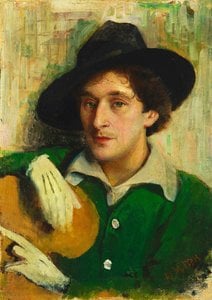
Marc Chagall
1887 - 1985 , Wit-Rusland
Belangrijkste feiten
- Artistic Movement Or Style: Expressionisme, Cubisme, Fauvisme, Surrealisme
- Artists Or Movements Influenced By This Artist: ['Surrealisten']
- Artists Who Influenced This Artist: ['Léon Bakst']
- Date Of Birth: 1887
- Date Of Death: 1985
- Full Name: Moishe Shagal
- Nationality: Russisch-Frans
- Notable Artworks:
- I and the Village
- The Birthday
- The Wedding
- White Crucifixion
- Over Vitebsk
- Place Of Birth: Liovana, Wit-Rusland