


 Bekijk op ware grootte
 Verstuur
 Delen
Delen
 Details bekijken
 Gids voor studentenkunstwerken

 Download
 Vergelijkbare items
 Röntgenonderzoek
 Diavoorstelling
 Statistieken
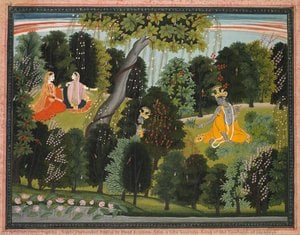
Untitled (D2XACE)
 Traditional Indian Painting
 1725
1725 57.0 x 79.0 cm
 Lees meer
Koop een digitale afbeelding in hoge resolutie met verbeterde kwaliteit, die veel superieur is aan de online voorvertoning.
Elk bestand wordt met uiterste precisie voorbereid door onze interne specialisten, met behulp van geavanceerde tools en deskundige handmatige retouche. Wij garanderen dat elke afbeelding een uitzonderlijke helderheid, nauwkeurige kleurweergave en verfijnde details bezit.
Het uiteindelijke bestand wordt binnen 72 uur per e-mail geleverd, geoptimaliseerd voor direct gebruik in professionele, redactionele en printomgevingen. Dit is dezelfde kwaliteit waarop vooraanstaande designstudio's, uitgevers en galerieën vertrouwen.
Digitale afbeeldingen
Download een bestand met hoge resolutie voor persoonlijke weergave, afdrukken en creatieve projecten. ( Schakel over naar print Koop handgeschilderd kunstwerk)
Inbegrepen bij elke bestelling van een digitale afbeelding
Professionele digitale levering, gegarandeerd
Wanneer u kiest voor ArtsDot.com, ontvangt u niet alleen een afbeelding – u krijgt een professioneel verbeterd digitaal kunstwerk, met precisie vervaardigd en voorzien van een tevredenheidsgarantie. Dit is alles wat automatisch bij uw bestelling is inbegrepen:

Directe levering per e-mail
Uw hoogwaardige digitale afbeeldingsbestand wordt binnen 72 uur na bestelling naar u gemaild – klaar voor direct gebruik.

AI-geoptimaliseerd digitaal bestand
Uw kunstwerk wordt professioneel geoptimaliseerd met behulp van geavanceerde AI-tools en handmatige bewerkingen, waardoor maximale details, helderheid en kleurnauwkeurigheid worden gegarandeerd.

Gratis levenslange herlevering
Je bestand per ongeluk verwijderd of kwijtgeraakt? Geen zorgen – we sturen het u op elk gewenst moment gratis opnieuw toe.

Geen invoerkosten – nooit
Geniet direct van uw kunstwerk zonder invoerrechten, belastingen of verzendkosten – digitale downloads zijn altijd belastingvrij.

Garantie op kleurgetrouwheid
Met behulp van professionele hulpmiddelen en kleurbeheer zorgen wij ervoor dat uw digitale afbeelding de originele kleuren zo nauwkeurig mogelijk weergeeft.

100 dagen tevredenheidsgarantie
Als u niet tevreden bent met uw digitale afbeelding, passen wij deze aan of storten wij 100% terug binnen 100 dagen - zonder vragen te stellen.

100% Geld-terug-garantie
Niet tevreden? Ontvang een volledige terugbetaling binnen 100 dagen na ontvangst van uw digitale bestand – zonder vragen te stellen.

Korting bij grote bestellingen
Koop 3 afbeeldingen, bespaar 10% - Koop 5, bespaar 15% - Koop 10+, bespaar 20%. Ideaal voor creatieve projecten, galerieën en bureaus.
A Moment of Divine Intervention: ‘Manaku Releases the Demon Spies’
This captivating miniature painting, *Untitled (D2XACE)*, transports us to a pivotal scene from the epic Hindu tale of the Ramayana – specifically, the siege of Lanka. Created in 1725 by Manaku, a master artist from the Guler school of Pahari painting, this work isn’t merely an illustration; it's a meticulously crafted narrative frozen in time. Measuring 57 x 79 cm, the composition bursts with detail, depicting the moment Manaku releases the demon spies Shuka and Sarana, dispatched by Ravana to infiltrate Rama’s army. The foreground is dominated by a throng of demons, their forms varying in definition – a stylistic choice that emphasizes the sheer scale of Ravana's forces while focusing our attention on key figures within the scene. A formidable stone wall, complete with towers and gateways, anchors the composition, creating a sense of enclosure and impending conflict. Above, a balcony scene adds another layer to the narrative, hinting at courtly observation or divine intervention.The Art of Pahari Miniature Painting
Manaku’s style is deeply rooted in the Pahari tradition – a school renowned for its delicate brushwork, vibrant yet nuanced color palettes, and intimate scale. Influenced by the declining Mughal Empire, Manaku skillfully blends Persian artistic conventions with indigenous Indian aesthetics. Notice the flattened perspective, characteristic of miniature painting; depth is achieved not through realistic spatial recession but through careful layering and overlapping forms. The artist employs precise lines to define details, while geometric shapes – squares, rectangles, and rounded figures – structure the composition. The technique itself is a testament to patience and skill, involving the application of thin washes of pigment (likely egg tempera) onto a prepared surface, building up form and luminosity gradually. The earthy tones punctuated by reds and golds create a warm, inviting atmosphere despite the scene’s inherent drama.Symbolism & Historical Context
Beyond its aesthetic beauty, *Untitled (D2XACE)* is rich in symbolism. The depiction of demons and divine figures embodies the eternal struggle between good and evil – a central theme in Hindu mythology. Manaku's work provides valuable insight into the cultural and religious beliefs of 18th-century India. He lived during a period of political fragmentation, yet artistic innovation flourished within the independent hill states like Guler. Manaku’s rediscovery, largely thanks to scholars like B.N. Goswamy, highlights the importance of recognizing artists previously overshadowed by more famous contemporaries – in this case, his younger brother Nainsukh. This painting is not just a work of art; it's a historical document reflecting a specific time and place, offering a glimpse into the artistic landscape of Pahari painting.Emotional Resonance & Collecting Considerations
The emotional tone of *Untitled (D2XACE)* is one of epic conflict tempered by spiritual significance. While depicting a moment of strategic release – the demons are being sent back to report on Rama’s forces – there's an underlying sense of anticipation and impending battle. The painting evokes a feeling of immersion within this ancient narrative, inviting contemplation on themes of duty, deception, and divine will. For collectors and interior designers, a high-quality reproduction of this work offers a unique opportunity to introduce a touch of refined elegance and cultural richness into any space. Its intricate details and harmonious color palette make it a versatile piece that complements both traditional and contemporary settings.Gerelateerde kunstwerken




Biografie van de kunstenaar
Manaku: A Rediscovered Master of Pahari Painting
Life and Obscurity
- Born around 1700 in Guler, a small hill state in present-day Himachal Pradesh, India.
- Died in 1760. His life remains largely shrouded in obscurity, overshadowed by the fame of his younger brother, Nainsukh.
- Rediscovery: For centuries, Manaku’s contributions were almost entirely forgotten until art historians like B.N. Goswamy brought his work to light and recognized his significant role in Pahari painting.
Artistic Style and Influences
- Pahari Painting: Manaku is now celebrated as a key exponent of the Pahari style, characterized by its delicate brushwork, vibrant colors, and focus on themes from Hindu mythology and courtly life.
- Mughal Influence: The art of Guler, and thus Manaku’s work, was significantly influenced by the waning Mughal Empire. Artists migrating from the Mughal courts brought with them techniques and aesthetics that blended with local traditions.
- His father, Seu, a prominent artist himself, served as an early mentor, instilling in him foundational skills and artistic principles.
Major Works and Themes
- Rama Releases the Demon Spies: (folio from the Siege of Lanka series) – A powerful depiction of a pivotal moment from the Ramayana, showcasing Manaku’s skill in narrative storytelling.
- South Wind Cools in the Himalayas: (folio from the Second Guler Gita Govinda series) – Demonstrates his mastery in portraying scenes from the Gita Govinda, a celebrated work of Sanskrit poetry focused on the love between Krishna and Radha.
- Hiranyakashipu Commands His Demon Warriors: (preparatory drawing from the ‘Small Bhagavata Purana’ series) – Exemplifies his ability to convey complex narratives with dynamic composition and expressive figures.
- His works often feature themes of devotion, heroism, love, and the eternal struggle between good and evil.
Artistic Development & Achievements
- Only four extant works bear Manaku’s signature, making each piece exceptionally valuable and insightful into his artistic practice.
- Unique Vision: While influenced by Mughal aesthetics, Manaku developed a distinct style characterized by a refined sense of color, delicate detailing, and an ability to capture emotional depth in his figures.
- He contributed significantly to the development of Pahari painting, establishing a foundation for future generations of artists in the region.
Historical Significance & Legacy
- Manaku’s rediscovery has enriched our understanding of 18th-century Indian art and the vibrant artistic traditions of the Pahari region.
- Family Atelier: He was part of a prolific family of artists – the Seu-Manaku-Nainsukh lineage – that played a crucial role in shaping the course of Pahari painting for over 150 years.
- His work continues to inspire art enthusiasts and scholars, offering a glimpse into a rich cultural heritage and the artistic brilliance of a previously overlooked master.

Manaku
1760 , India
Kerngegevens
- Name: Manaku
- Movement: Pahari Painting
- Birth_Date: c. 1700
- Death_Date: 1760
- Influenced: Nainsukh
- Birth_Place: Guler, India
- Nationality: Indian
- Date Of Death: 1760
- Influenced_By: Mughal painting (through Seu)
- Notable_Works:
- Rama releases the demon spies Shuka and Sarana
- South Wind cools in the Himalayas
- Hiranyakashipu commands his demon warriors to threaten and injure Prahlada
- Place Of Birth: Guler, India