


 Bekijk op ware grootte
 Verstuur
 Delen
Delen
 Details bekijken
 Gids
Gids

 Download
 Vergelijkbare items
 Röntgenonderzoek
 Diavoorstelling
 Statistieken
The Fruit and Vegetable Costermonger
 Oil On Canvas
- WallArt
- Baroque Still Life
 1631
1631 48.0 x 65.0 cm
 Louvre
 Lees meer
Giclée / Kunstafdrukken
Giclée- of canvasafdruk van museumkwaliteit met een snelle productie en flexibele afwerkingsmogelijkheden. ( Koop handgeschilderd kunstwerk Schakel over naar digitale afbeeldingen)




P118B $10

P118H $10

P118W $10

P438Z $10

P508JH $12

P508YH $12

P805H $10

P805Z $10

P919BZ $10

P919G $10

P919XJ $10

P959ZH $10

P968JZ $12

W106C $8

W218G $10

W218JH $8

W218Y $10

W307PJ $10

W316G $10

W316PJ $8

W316Y $10

W398PJ $8

W4111J $10

W500HY $15

W500JH $15

W692G $12

W849H $8

W940BG $15

W953PJ $8




Kies uit onze vooraf ingestelde maten die overeenkomen met de originele verhoudingen van het kunstwerk.

U kunt uw eigen afmetingen opgeven om in een specifieke lijst of ruimte te passen. Als de door u gekozen maat niet overeenkomt met de proporties van het originele kunstwerk, zullen wij de afbeelding bijsnijden of uitbreiden met een gespiegelde of effen rand. Een digitaal mockup wordt ter goedkeuring naar u verzonden voordat de productie begint.
Houd er rekening mee dat de preview op het scherm de werkelijke bijsneding of uitbreiding niet weergeeft. Alleen de mockup toont de uiteindelijke compositie nauwkeurig.
Hoewel aangepaste maten beschikbaar zijn, raden wij aan een afmeting uit de vooraf bepaalde lijst te kiezen om de originele proporties te behouden.
Wereldwijde levering () binnen 2 weken in plaats van de standaard 4/5 weken. (24 september)

Gratis wereldwijde expressverzending

Hoogwaardig linnen canvas

Volledige verzendverzekering

Garantie op terugbetaling van invoerrechten

Garantie op exacte kleurweergave

Retourbeleid van 100 dagen (alleen bij defecten)

100% Geld-terug-garantie

Korting bij meerdere afnames
 De optie voor glas is alleen beschikbaar bij een formaat kleiner dan 110 cm.

The Fruit and Vegetable Costermonger
Giclée / Kunstafdrukken
Formaat reproductie
-


Totaalprijs
$ 63
The Fruit and Vegetable Costermonger: A Window into 17th-Century Parisian Life
Louise Moillon’s “The Fruit and Vegetable Costermonger,” painted in 1631, is more than just a still life; it's a vibrant snapshot of daily life in 17th-century Paris. This remarkable work, now housed within the Louvre Museum, offers a captivating glimpse into the bustling markets and social dynamics of a city undergoing significant transformation. Moillon’s masterful technique and keen observation elevate this seemingly simple scene to a level of profound artistic merit, revealing layers of symbolism and historical context that continue to intrigue art historians today.
Born into a family steeped in artistic tradition – her father, Nicolas Moillon, was himself a respected painter – Louise Moillon benefited from an early exposure to the principles of observation and representation. Raised within the Huguenot community of Saint-Germain-des-Prés, she inherited a sensibility that valued naturalism and detail, qualities deeply rooted in the artistic heritage of the Netherlands, where many of her family members had sought refuge. This background profoundly shaped her style, imbuing her paintings with an understated elegance and a meticulous attention to the textures and colors of everyday objects.
A Symphony of Color and Light
Moillon’s skill lies not just in her ability to depict fruit and vegetables realistically, but in her masterful manipulation of light and shadow – a technique known as *chiaroscuro*. The painting is dominated by a warm, diffused light that seems to emanate from an unseen source, bathing the table and its contents in a golden glow. This careful use of light not only enhances the visual appeal of the scene but also creates a sense of depth and volume, drawing the viewer into the heart of the market stall. Notice how she uses highlights to emphasize the smooth skin of the peaches, the glossy sheen of the oranges, and the delicate veins in the leaves – each detail rendered with exquisite precision.
The composition itself is carefully balanced, creating a sense of harmony and order amidst the apparent chaos of the market scene. The arrangement of the fruits and vegetables—the abundance of apples, the vibrant hues of the oranges, the contrasting textures of the broccoli—is deliberately asymmetrical, adding to the painting’s dynamism and visual interest. The inclusion of the two women, seemingly engaged in a transaction, subtly introduces an element of human interaction into this otherwise still-life tableau, grounding the scene in the realities of daily life.
Symbolism and Social Commentary
Beyond its aesthetic qualities, “The Fruit and Vegetable Costermonger” is rich in symbolic meaning. The presence of the costermonger – a street vendor selling fruits and vegetables—reflects the growing commercial activity in Paris during the 17th century. The painting can be interpreted as a commentary on the social hierarchy of the time, with the wealthy women observing the proceedings from their elevated position while the costermonger provides sustenance for the masses. The abundance of fruit and vegetables also carries symbolic weight, representing prosperity, fertility, and the bounty of nature – themes that were particularly resonant during a period marked by both religious upheaval and economic growth.
Furthermore, Moillon’s decision to depict these fruits and vegetables at their peak ripeness—without any signs of decay or spoilage—is noteworthy. This deliberate choice challenges the traditional *memento mori* (remember you must die) motif prevalent in Dutch still-life paintings of the era, which often featured decaying fruit as a reminder of mortality. Instead, Moillon celebrates the beauty and vitality of life, capturing a fleeting moment of abundance and pleasure.
A Timeless Masterpiece
“The Fruit and Vegetable Costermonger” stands as a testament to Louise Moillon’s artistic genius and her ability to capture the essence of a particular time and place. Her meticulous attention to detail, masterful use of light and shadow, and subtle symbolic meanings combine to create a work that is both visually stunning and intellectually stimulating. Today, this painting continues to captivate viewers with its vibrant colors, dynamic composition, and profound insights into the social and cultural landscape of 17th-century Paris – a timeless masterpiece that offers a unique window into the past.
Gerelateerde kunstwerken


Biografie van de kunstenaar
De Stille Briljantie van Louise Moillon
In de grootschalige, meeslepende verhalen van het baroktijdperk, waarin drama en beweging vaak het canvas domineren, biedt het werk van Louise Moillon een diepzinnig en meditatief alternatief. Geboren in Parijs in 1610, kwam Moillon voort uit een wereld die gevormd werd door de intense religieuze en culturele verschuwtings in het 17e-eeuwse Frankrijk. Haar afkomst vertelt op zichzelf al een verhaal van veerkracht en artistiek erfgoed; als nakomeling van Hugenoten-vluchtelingen uit Holland, was zij ondergedompeld in een traditie die de minutieuze observatie van de natuurlijke wereld koesterde. Deze achtergrond bood meer dan alleen een familiegeschiedenis—het bood een stilistische woordenschat die geworteld was in de Nederlandse meesterschap van licht, textuur en symbolisch realisme.
Moillons vroege leven werd gekenmerkt door zowel verlies als diepgaand artistiek mentorschap. De dood van haar vader, de landschapsschilder en kunsthandelaar Nicolas Moillon, toen zij pas tien jaar oud was, had haar pad kunnen veranderen, maar haar opvoeding bleef diep geworteld in de kunsten. Onder de begeleiding van haar stiefvader, François Garnier, een bekwame kunstenaar en handelaar, verfijnde zij een techniek die haar handelsmerk zou worden. Haar opleiding ging niet enkel over het aanbrengen van pigment op canvas, maar was een onderdompeling in de humanistische waarden van haar tijd; ze leerde het goddelijke te zien in de kleinste details van een rijpende vrucht of de delicate curve van een bloemblad.
Een Meesterschap van Textuur en Licht
Het ware genie van Moillon ligt in haar vermogen om het alledaagse te transformeren tot het buitengewone. Haar composities worden gekenmerende door een serene stilte, een rust die de kijker uitnodigt om te vertragen en te observeren. Zij bezat een bijna bovennatuurlijk vermogen om de tastbare kwaliteiten van haar onderwerpen vast te leggen—de wasachtige schil van een citroen, het zachte dons van een perzik, of het doorschijnende sap van een geplette bes. In werken zoals Stilleven met citroenen en Curaçao-sinaasappels in een witte polylobbed schaal, kan men de koele vochtigheid van het fruit voelen tegen het harde, geglazuurde oppervlak van het porselein, wat een zintuiglijke ervaring creëert die het tweedimensionale vlak overstijgt.
Haar techniek was diep beïnvloed door de naturalistische tradities van de protestantse kringen waarin zij zich bewoog. Deze benadering gaf de voorkeur aan helderheid en precisie boven de theatrale schaduwen van de meer flamboyante barokmeesters. In plaats daarvan gebruikte Moillon licht om haar onderwerpen vorm te geven, waarbij ze subtiele gradaties in toon gebruikte om volume en diepte te creëren. Haar palet, hoewel vaak gericht op de levendige kleuren van de natuur, werd met een dergelijke terughoudendheid gebruikt dat elke kleur lumineus aanvoelde, alsof deze van binnenuit verlicht werd. Dit meesterschap stelde haar in staat om de kloof te overbruggen tussen louter botanische illustratie en hoge kunst, waardoor elk werk werd doordrenkt met een gevoel van leven en vitaliteit.
Nalatenschap en Historisch Belang
Gedurende haar lange leven, dat bijna negen decennia besloeg, bereikte Moillon een mate van bekendheid die zeldzaam was voor vrouwelijke kunstenaars uit haar tijd. Haar vermogen om opdrachten te verkrijgen van prestigieuze opdrachtgevers, waaronder leden van het koninklijk hof, getuigt van de onmiskenbare kwaliteit en verfijning van haar oeuvre. Hoewel haar werk zich vaak richtte op de intieme schaal van het stilleven, was de impact ervan expansief en droeg het significant bij aan de ontwikkeling van de Franse stilleventraditie.
De historische betekenis van Louise Moillon reikt verder dan haar technische vaardigheid; zij vormt een vitale schakel tussen de Nederlandse naturalistische traditie en de opkomende Franse esthetiek van de 17e eeuw. Haar schilderijen dienen als vensters naar een verloren wereld van Parijse markten en privétuinen, waarbij ze een gevoel van overvloed en vergankelijke schoonheid vastleggen. Vandaag de dag blijven haar werken gekoesterde schatten in instellingen zoals het Louvre, als blijvende getuigenissen van een leven dat gewijd was aan het vinden van het buitengewone in het gewone. Haar nalatenschap is terug te vinden in elke penseelstreek die de stille, adembenemende pracht van de natuurlijke wereld viert.

Louise Moillon
1610 - 1696 , Frankrijk
Snelle feiten
- Artistic Movement Or Style: Barok Stilleven
- Artists Or Movements Influenced By This Artist:
- Michelangelo
- Rafaël
- Titiaan
- Artists Who Influenced This Artist:
- Isaac Moillon
- François Garnier
- Date Of Birth: Parijs, Frankrijk (1610)
- Date Of Death: 1696
- Full Name: Louise Moillon
- Nationality: Frans
- Notable Artworks:
- Mand met abrikozen
- SCHAAL MET KERSEN, PRUNEN EN MELOEN
- Mand met perziken, kweeperen en pruimen
- Place Of Birth: Parijs
Gerelateerde artikelen

Silent Narratives: Exploring the Enduring Appeal of Still Life Painting Across Centuries
Explore the rich history of still life painting with ArtsDot. Discover Dutch Masters, decode vanitas symbolism & learn about collecting timeless art. Expert insights and museum-quality reproductions.

Severin Roesen: Evoking National Identity Through American Still Life Painting
Explore the captivating world of Severin Roesen, a major American still life painter influenced by Dutch masters. Discover his lush compositions and the symbolism within his art – a window into 19th-century America.
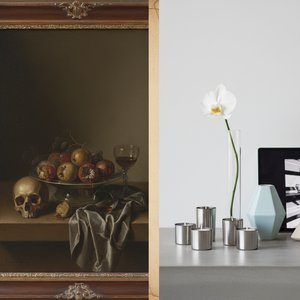
The Enduring Appeal of Still Life: A Historical & Contemporary Exploration
Explore the rich history & symbolism of still life painting with ArtsDot. Discover masterpieces from the Dutch Golden Age, learn about vanitas art, and find expert guidance for collecting timeless artworks.

Abraham Hendricksz van Beyeren: Pioneering Dutch Still Life & the Banquet Tradition
Explore the captivating world of Dutch Golden Age still life with Abraham van Beyeren. Discover his innovative techniques, symbolic banquet scenes & lasting influence on art history. Learn about collecting these masterpieces.

The Bountiful Still Life: Symbolism & Artistic Representation of Fruit Across Art History
Explore the rich history of still life painting & the symbolism of fruit across art movements. Discover masterpieces from Caravaggio to Cézanne with ArtsDot – expert guidance & museum-quality reproductions.