

 Bekijk op ware grootte
 Verstuur
 Delen
Delen
 Details bekijken

 Download
 Vergelijkbare werken
 Röntgenonderzoek
 Diavoorstelling
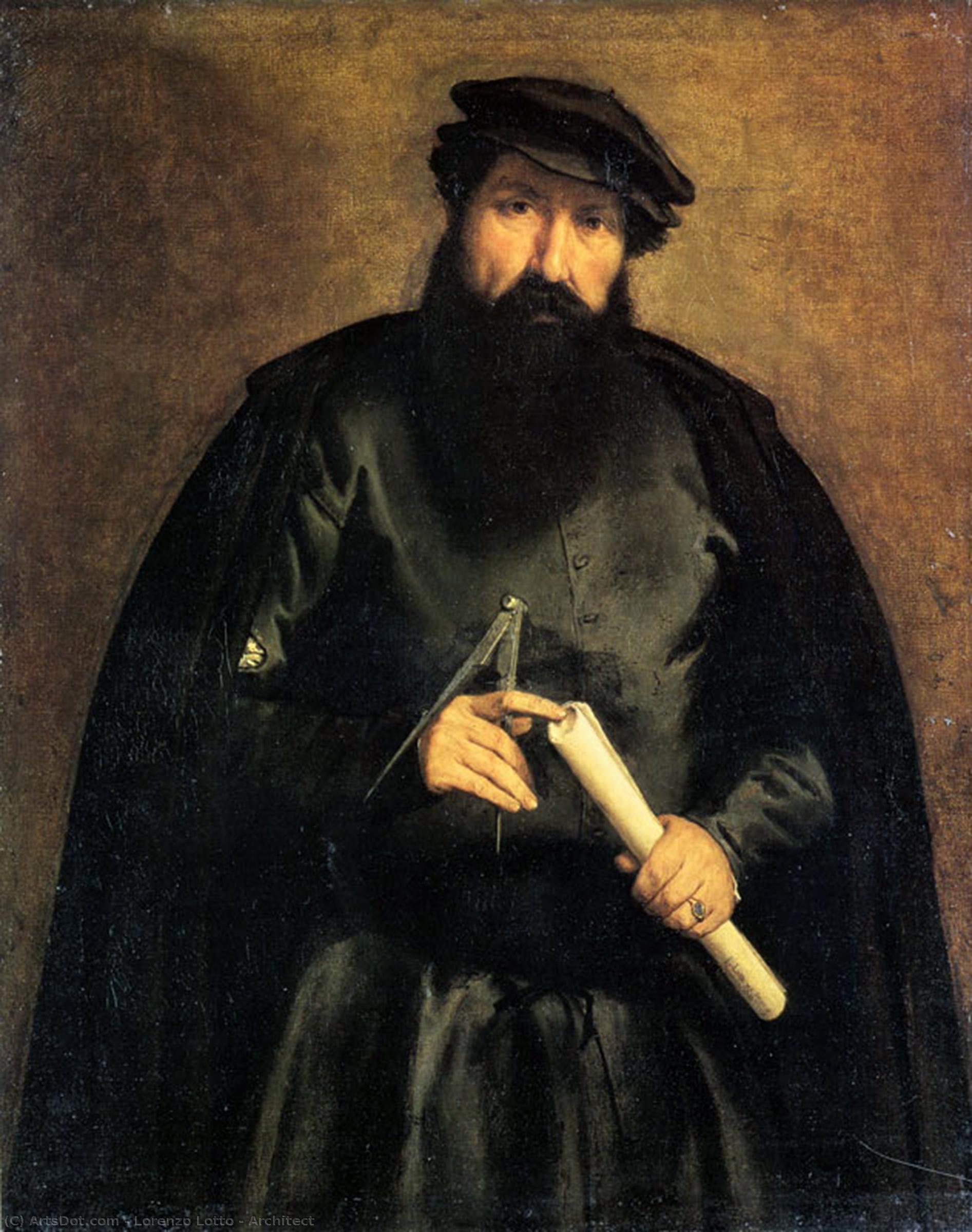
Architect
 Acryl op canvas
- Wanddecoratie
- High Renaissance
 1535
1535 105.0 x 82.0 cm
 Staatliche Museen zu Berlin
 Lees meer
Giclée / Kunstafdrukken
Giclée- of canvasafdruk van museumkwaliteit met een snelle productie en flexibele afwerkingsmogelijkheden. ( Bestel een handgeschilderde reproductie van dit verzamelobject Naar afbeelding wisselen)




P118B $10

P118H $10

P118W $10

P438Z $10

P508JH $12

P508YH $12

P805H $10

P805Z $10

P919BZ $10

P919G $10

P919XJ $10

P959ZH $10

P968JZ $12

W106C $8

W218G $10

W218JH $8

W218Y $10

W307PJ $10

W316G $10

W316PJ $8

W316Y $10

W398PJ $8

W4111J $10

W500HY $15

W500JH $15

W692G $12

W849H $8

W940BG $15

W953PJ $8




Kies uit onze vooraf ingestelde maten die overeenkomen met de originele verhoudingen van het kunstwerk.

U kunt uw eigen afmetingen opgeven om in een specifieke lijst of ruimte te passen. Als de door u gekozen maat niet overeenkomt met de proporties van het originele kunstwerk, zullen wij de afbeelding bijsnijden of uitbreiden met een gespiegelde of effen rand. Een digitaal mockup wordt ter goedkeuring naar u verzonden voordat de productie begint.
Houd er rekening mee dat de preview op het scherm de werkelijke bijsneding of uitbreiding niet weergeeft. Alleen de mockup toont de uiteindelijke compositie nauwkeurig.
Hoewel aangepaste maten beschikbaar zijn, raden wij aan een afmeting uit de vooraf bepaalde lijst te kiezen om de originele proporties te behouden.
Wereldwijde levering () binnen 2 weken in plaats van de standaard 4/5 weken. (9 augustus)

Gratis wereldwijde expressverzending

Hoogwaardig linnen canvas

Volledige verzendverzekering

Garantie op terugbetaling van invoerrechten

Garantie op exacte kleurweergave

60 dagen retourbeleid (alleen bij defecten)

100% Geld-terug-garantie

Korting bij meerdere afnames
 De optie voor glas is alleen beschikbaar bij een formaat kleiner dan 110 cm.

Architect
Giclée / Kunstafdrukken
Formaat reproductie
-


Totaalprijs
$ 63
Beschrijving verzamelobject
Lorenzo Lotto’s Architect: A Portrait of Quiet Dignity
Lorenzo Lotto’s “Architect,” painted around 1535, stands as a testament to the Venetian Renaissance's fascination with humanist ideals and its subtle embrace of Mannerist aesthetics. More than just a depiction of a man—likely Sansovino, Lotto’s esteemed friend during their formative years—the painting embodies a profound contemplation of intellectuality and spiritual reflection, qualities prized within the intellectual circles of his time.
- Subject Matter: The portrait focuses on a dignified gentleman dressed in black robes, holding a book with unwavering attention. This deliberate choice underscores the importance of scholarship and philosophical inquiry – central themes prevalent throughout Renaissance Europe.
- Style & Technique: Lotto’s distinctive style blends High Renaissance precision with Mannerist expressive distortion. Notice how the folds of his robe are rendered with meticulous detail, yet subtly exaggerated to convey a sense of movement and depth. The artist skillfully employs chiaroscuro – dramatic contrasts between light and shadow – to sculpt the figure's form and imbue it with an aura of solemnity.
- Historical Context: Created during Lotto’s itinerant period, “Architect” reflects the broader cultural landscape of Venice in the mid-16th century. The Venetian Republic was a beacon of artistic innovation, fostering patronage from wealthy families like Gonzaga and Foschini who championed artists like Lotto. This commission speaks to the Renaissance preoccupation with portraying individuals as embodiments of virtue and reason.
- Symbolism: The book held by the sitter is laden with symbolic significance. It represents knowledge, wisdom, and contemplation – ideals considered crucial for achieving moral excellence. Furthermore, the pose itself—direct gaze, upright posture—communicates confidence and intellectual seriousness.
The painting’s emotional impact transcends mere visual representation; it invites viewers to consider questions of character and purpose. Lotto's masterful execution captures not only the physical appearance of Sansovino but also his inner state – a man absorbed in thought, striving for understanding amidst the complexities of human existence. “Architect” remains an enduring symbol of Renaissance humanist values and continues to inspire admiration for its understated beauty and intellectual depth.
- Further Exploration: Interested in delving deeper into Lotto’s artistic legacy? Explore his other celebrated works, including "A Lady in Masque Costume" and “The Holy Family with a Lamb,” available as stunning reproductions on ArtsDot.com.
Gerelateerde kunstwerken


Biografie van de kunstenaar
A Venetian Wanderer: The Life and Art of Lorenzo Lotto
Born in the vibrant heart of Venice around 1480, Lorenzo Lotto emerged as a distinctive voice within the Italian Renaissance, though his artistic journey would lead him far beyond the lagoon city’s celebrated studios. Unlike many of his contemporaries who firmly established themselves within specific schools or courts, Lotto embarked on a peripatetic career, traversing cities like Treviso, Rome, Bergamo, and Ancona before ultimately finding solace as a lay brother in Loreto. This itinerant existence profoundly shaped his artistic vision, exposing him to diverse influences while fostering an independent spirit that set him apart. While early training remains somewhat shrouded in mystery, it’s believed he absorbed the lessons of Giovanni Bellini, a leading figure of the Venetian school, yet Lotto quickly transcended simple imitation, forging a style uniquely his own—a blend of High Renaissance grace and nascent Mannerist sensibilities. His life was marked by a certain restlessness, a desire to experience the world beyond the confines of Venice, which undoubtedly fueled his artistic explorations.Blending Traditions: Style and Influences
Lotto’s artistic signature lies in his remarkable ability to synthesize diverse influences into a cohesive and deeply personal aesthetic. His early works reveal the impact of Giorgione's poetic naturalism, particularly evident in the subtle atmospheric effects and lyrical compositions—a characteristic seen prominently in paintings like *The Assumption of the Virgin*, where light filters through a hazy landscape, creating an ethereal mood. However, a sojourn in Rome brought him into contact with the art of Raphael, imbuing his work with a newfound clarity of form and compositional balance. The influence of Raphael is particularly noticeable in Lotto’s later portraits, which demonstrate a greater emphasis on linear perspective and anatomical accuracy. Later, during his extended stay in Bergamo, he absorbed elements of Lombard realism, adding a grounded physicality to his figures—a shift evident in works like *The Deposition*, where the human forms possess a remarkable sense of weight and volume. This eclectic approach is not merely additive; Lotto masterfully integrated these influences, creating paintings that are both technically refined and emotionally resonant. He wasn’t afraid to experiment with perspective, often employing unusual vantage points to heighten the sense of drama or intimacy. His palette, while rooted in Venetian colorism—the rich reds, blues, and greens characteristic of Venetian painting—evolved over time, becoming increasingly vibrant and expressive, reflecting his exposure to diverse artistic traditions.Portraits of the Soul: Lotto’s Masterpieces
While Lotto excelled in religious painting, it is perhaps through his portraits that he truly distinguished himself. He possessed an extraordinary gift for capturing not just the physical likeness but also the inner life of his sitters. His portraits are rarely idealized; instead, they present individuals with all their complexities and vulnerabilities. Man with a Golden Paw, painted in 1527, is a prime example—a captivating study of a gentleman holding a small golden statuette, its symbolism open to interpretation but undeniably intriguing. The sitter’s gaze is direct and engaging, conveying a sense of intelligence and quiet contemplation. Similarly, Portrait of a 37-year-old Man, showcases Lotto's ability to convey personality through subtle details—the man’s clothing, his posture, the expression in his eyes all contribute to a compelling psychological portrait. These are not merely representations of individuals; they are windows into their souls. His portraits often depict ordinary people – merchants, artisans, and members of the local community - offering a rare glimpse into Venetian life during the Renaissance.Religious Visions: Altarpieces and Mysticism
Lotto’s religious paintings are equally compelling, characterized by a profound sense of spirituality and emotional intensity. His altarpieces, such as *The Annunciation* (c. 1527) at Pinacoteca Civica in Recanati, are particularly noteworthy for their innovative compositions and dramatic use of light and color. The scene is rendered with an almost theatrical quality, drawing the viewer into the heart of the narrative. He frequently depicted scenes from the lives of saints and biblical figures, imbuing them with a sense of immediacy and human emotion. His *Deposition* (c. 1513) at Jesi demonstrates his mastery of anatomy and drapery, while simultaneously conveying a profound sense of grief and sorrow. Lotto’s mystical paintings are characterized by their dreamlike quality and symbolic imagery—a reflection of his own deeply personal faith.A Rediscovered Legacy: Historical Significance
Despite achieving considerable recognition during his lifetime, Lotto's reputation waned after his death in 1556 or 1557. His works, often dispersed throughout provincial churches and private collections, were largely overlooked for centuries. It wasn’t until the late 19th century, with Bernard Berenson’s groundbreaking scholarship, that Lotto experienced a significant revival of interest. Berenson's work highlighted the unique qualities of Lotto’s style and demonstrated his importance as an artist. Today, he is recognized as one of the most original and compelling artists of the Italian Renaissance. His unique blend of stylistic influences, his psychological depth, and his technical mastery continue to captivate audiences and inspire art historians. He stands as a testament to the power of artistic independence—a wanderer who forged his own path and left an indelible mark on the world of art. The rediscovery of Lotto’s oeuvre has enriched our understanding of the Renaissance, revealing a complex and multifaceted artist whose work deserves continued exploration and appreciation.
Lorenzo Lotto
1480 - 1556 , Italië
Snelle feiten
- Artistic Movement Or Style: Renaissance, Mannerisme
- Artists Or Movements Influenced By This Artist: ['Palma the Elder']
- Artists Who Influenced This Artist:
- Giovanni Bellini
- Giorgione
- Correggio
- Date Of Birth: c. 1480
- Date Of Death: 1556/57
- Full Name: Lorenzo Lotto
- Nationality: Italiaans
- Notable Artworks:
- Madonna en Kind
- Allegorie van de Zonde en de Rechtschaptheid
- St. Jeremia in de woestijn
- Place Of Birth: Venetië, Italië
Gerelateerde artikelen

Top 10 Bronzen Beeldhouwwerken die de Kunst Voorgoed Veranderden | ArtsDot
Ontdek de 10 meest legendarische bronzen beeldhouwwerken die kunstgeschiedenis schreven! Van Rodin tot Michelangelo, leer over hun meesterwerken & technieken. Vind museumkwaliteit reproducties en inspiratie voor uw interieur op ArtsDot.com.

The Enduring Form: Exploring Themes & Techniques in Sculpture Across Historical Periods
Explore the rich history of sculpture from ancient masterpieces to contemporary innovations. Discover key techniques, influential artists & investment potential for discerning art collectors.

Top 10 Legendarische Bronzen Meesterwerken die de Kunst Veranderden | ArtsDot
Ontdek de 10 meest legendarische bronzen meesterwerken die de kunstgeschiedenis veranderden! Van Rodin tot Michelangelo, leer over techniek & betekenis. Museumkwaliteit reproducties voor uw interieur op ArtsDot.com. Exploreer de collectie online!

The Enduring Form: Sculpture Across History, Technique & Emotional Resonance
Explore the rich history of sculpture with ArtsDot. Discover key techniques, influential artists & investment potential for discerning collectors. Expert insights into valuing and collecting timeless masterpieces.

Lorenzo Lotto: Unveiling the Enigma of a Venetian Master's Portraits
Explore the captivating world of Lorenzo Lotto, a Venetian Renaissance master renowned for his psychologically insightful portraits & enigmatic symbolism. Discover his life, style, and rediscovered legacy with ArtsDot.



