
- Home

- Reproductie van olieverfschilderij
- lesser ury
- Eiffel Tower

 Print kopen Koop afbeelding in hoge resolutie
 Verstuur
 Delen
Delen
 Details bekijken
 Toevoegen aan favorieten

 Download
 Vergelijkbare werken
 Röntgenonderzoek
 Diavoorstelling
Eiffel Tower


 Lees meer
Handgemaakte olieverfreproductie
Met de hand geschilderd in olieverf op canvas in uw gewenste maat en lijst, op bestelling gemaakt door onze kunstenaars.




P118B $10

P118H $10

P118W $10

P438Z $10

P508JH $12

P508YH $12

P805H $10

P805Z $10

P919BZ $10

P919G $10

P919XJ $10

P959ZH $10

P968JZ $12

W106C $8

W218G $10

W218JH $8

W218Y $10

W307PJ $10

W316G $10

W316PJ $8

W316Y $10

W398PJ $8

W4111J $10

W500HY $15

W500JH $15

W692G $12

W849H $8

W940BG $15

W953PJ $8




Kies uit onze vooraf ingestelde maten die overeenkomen met de originele verhoudingen van het kunstwerk.

U kunt uw eigen afmetingen invoeren om in een specifieke lijst of ruimte te passen. Als de door u gekozen maat niet overeenkomt met de verhoudingen van het originele beeld, zullen we het kunstwerk bijsnijden of het schilderij uitbreiden met extra handgeschilderde elementen. Een digitale mockup wordt ter goedkeuring naar u verzonden voordat de productie begint.
Houd er rekening mee dat de preview op het scherm niet de werkelijke uitsnede of uitbreiding weergeeft. Alleen de mockup toont de uiteindelijke compositie nauwkeurig.
Hoewel aangepaste afmetingen mogelijk zijn, raden we aan een maat uit de vooraf gedefinieerde lijst te selecteren om de originele verhoudingen te behouden.
Na de bestelling zal het team van ArtsDot.com per e-mail contact opnemen voor instructies en een mockup-voorbeeld sturen.
Wereldwijde levering () binnen 3/4 weken in plaats van de standaard 5 weken. (15 juli). Geen concessies aan de kwaliteit.

Gratis wereldwijde expressverzending

Hoogwaardig linnen canvas

Volledige verzendverzekering

Garantie op terugbetaling van invoerrechten

Garantie op exacte kleurweergave

60 dagen retourbeleid (alleen bij defecten)

100% Geld-terug-garantie

Korting bij meerdere afnames
 De optie voor glas is alleen beschikbaar bij een formaat kleiner dan 110 cm.

Eiffel Tower
Techniek reproductie
Afmetingen reproductie
-


Eindtotaal
-
Vergelijkbare kunstwerken


Biografie van de kunstenaar
A Life Painted in Light: The World of Leo Lesser Ury
Leo Lesser Ury, a name perhaps less instantly recognizable than some of his Impressionist contemporaries, nevertheless occupies a vital and evocative space within the narrative of German painting. Born on November 7, 1861, in Birnbaum, Prussia – now Międzychód, Poland – Ury’s journey was one marked by both artistic triumph and personal hardship. His early life was shadowed by loss; the death of his father, a baker, in 1872 forced a relocation to Berlin with his mother. This displacement instilled within him, perhaps, a lifelong sensitivity to urban landscapes and the transient nature of modern existence. Initially apprenticed to a tradesman, Ury’s artistic calling proved too strong to ignore, leading him to the Kunstakademie Düsseldorf in 1879. It was the beginning of an extended period of European exploration – Brussels, Paris, Munich, Stuttgart, Karlsruhe – each city contributing to the evolving palette and perspective that would define his unique style. These travels weren’t merely geographical; they were immersive studies in light, atmosphere, and the burgeoning energy of modern life.Embracing Impressionism and Capturing a City's Soul
Ury’s artistic development was deeply intertwined with the currents of late 19th-century art. While initially met with resistance – his first exhibition in 1889 eliciting a hostile response – he found a champion in the esteemed Adolph Menzel, whose support opened doors within the Berlin Academy. This recognition proved pivotal, allowing Ury to further refine his technique and vision. His embrace of Impressionism wasn’t merely stylistic; it was a means of capturing the fleeting moments of modern urban life. He joined the Munich Secession in 1893, aligning himself with a group of artists who challenged academic conventions and sought new modes of expression. Ury's canvases began to shimmer with lively brushstrokes, impasto application creating texture and depth, and an acute sensitivity to light’s transformative power. His primary subjects crystallized around this time: landscapes imbued with atmosphere, intimate interior settings, but most notably, the vibrant, often nocturnal scenes of city life. He wasn’t simply *depicting* Berlin; he was capturing its very essence – the glow of gas lamps on rain-slicked streets, the bustling energy of cafes, the quiet solitude of shadowed corners. He meticulously observed these details, using postcards and photographs—particularly those sent to him from Paris—as visual aids to enhance his understanding of urban textures and nuances.A Distinctive Style: Pastel and Nocturne
Ury’s artistic signature is immediately recognizable through his masterful use of pastel. He possessed a remarkable ability to capture the subtle shifts in light and color, particularly during twilight hours and under artificial illumination. His nocturnes—paintings depicting city scenes at night—are perhaps his most celebrated works. These canvases are characterized by a delicate balance between darkness and luminosity, with muted blues, purples, and greys punctuated by vibrant highlights of yellow, orange, and red. The effect is both hauntingly beautiful and intensely evocative, transporting the viewer to the heart of Berlin’s nocturnal world. Beyond pastel, Ury also excelled in oil painting, creating landscapes that reflected his travels and personal experiences. These works often featured rolling hills, serene lakes, and picturesque villages—but always imbued with a sense of melancholy and introspection. His compositions were typically framed by atmospheric perspective, emphasizing the distance and depth of the scenes.Recognition and a Complex Legacy
The early years of the 20th century saw Ury return to Berlin, where he quickly became a prominent figure in the city’s art scene. His participation in exhibitions with the Berlin Secession from 1915 onwards steadily increased his recognition. A landmark exhibition in 1922, showcasing 150 of his paintings and pastels, cemented his reputation; the mayor of Berlin hailed him as “the artistic glorifier of the capital.” This period marked a high point in Ury’s career, fueled by both critical acclaim and commercial success. He became particularly renowned for his mastery of pastel, utilizing the medium to create works of exceptional delicacy and atmospheric depth. However, this success was shadowed by a complex aspect of his practice. To meet growing demand, Ury began repeating compositions, producing numerous copies – some of lesser quality – that unfortunately diluted his artistic standing in the eyes of some critics. This pragmatic approach, while financially beneficial, ultimately contributed to a somewhat ambivalent assessment of his oeuvre.A Lasting Impression: Historical Significance and Enduring Appeal
Leo Lesser Ury’s historical significance extends beyond his technical skill and aesthetic sensibilities. He is remembered as a keen observer and evocative portrayer of modern urban life, particularly the nocturnal landscapes of Berlin that resonated with audiences seeking to understand their rapidly changing world. His work offers a glimpse into a specific time and place – a city on the cusp of modernity, grappling with industrialization, social change, and the anxieties of a new era. Furthermore, as a Jewish artist navigating German society, Ury’s life and work reflect aspects of Jewish cultural identity and experience within a complex socio-political landscape. His paintings, while not overtly political, subtly convey a sense of belonging and alienation, offering a unique perspective on the challenges faced by Jewish communities in Germany during this period. Though he died in Berlin on October 18, 1931, and is buried in the Jewish Cemetery in Berlin-Weissensee, his influence continues to be felt today. His distinctive style paved the way for subsequent generations of artists, and his evocative depictions of urban life continue to captivate viewers with their beauty, atmosphere, and poignant sense of time and place. Ury’s legacy is a testament to the power of art to capture not just what we see, but how it feels to be alive in a particular moment.
lesser ury
1861 - 1931 , Polen
Belangrijkste feiten
- Artistic Movement Or Style: Impressionisme
- Artists Or Movements Influenced By This Artist: ['Secession']
- Artists Who Influenced This Artist: ['Menzel']
- Date Of Birth: 7 nov 1861
- Date Of Death: 18 okt 1931
- Full Name: Leo Lesser Ury
- Nationality: Duits
- Notable Artworks:
- Stadsgezichten
- Caféscènes
- Place Of Birth (City And Country): Birnbaum, Polen
Gerelateerde artikelen

Urban Visions: A Historical & Artistic Exploration of the Cityscape in Painting
Explore the evolution of cityscape painting from historical maps to Impressionist masterpieces. Discover artists like Caillebotte, Utrillo & Matsumoto Shunsuke. Find museum-quality reproductions at ArtsDot.

Capturing Fleeting Light: A Comprehensive Exploration of Impressionistic Landscape Painting
Explore the captivating world of Impressionistic landscape painting! Discover techniques, key artists like Monet & Renoir, and its lasting influence on art history. A comprehensive guide for enthusiasts.

Henri Moret: Capturing the Essence of Brittany's Light – A Study in Post-Impressionist Landscape Painting
Explore the captivating landscapes of Henri Moret, a master of Post-Impressionism. Discover his unique style, key works, and legacy in our expert guide. Learn about collecting Moret's art & its investment potential.
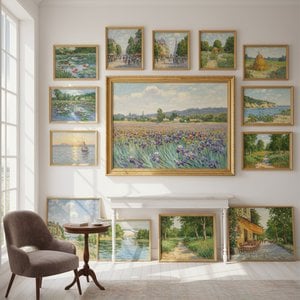
Top 10 Impressionistische Landschappen: Meesterwerken voor uw Interieur
Ontdek de 10 meest iconische impressionistische landschappen! Leer over Monet, Renoir & andere meesters. Prachtige schilderijen voor uw interieur. Museumkwaliteit reproducties op ArtsDot.com.

Alexei Harlamoff: A Study in Russian Romantic Landscape Painting & Imperial Patronage
Explore the captivating world of Alexei Harlamoff, a master of Russian Romantic painting. Discover his life, Imperial patronage, signature style & enduring legacy with ArtsDot.

