


 Voorvertoning
 Verstuur
 Delen
Delen
 Details bekijken

 Download
 Vergelijkbare items
 Röntgenonderzoek
 Diavoorstelling
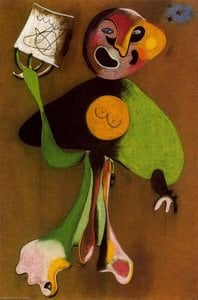
scheherezade odalisque


 Lees meer
Koop een digitale afbeelding in hoge resolutie met verbeterde kwaliteit, die veel superieur is aan de online voorvertoning.
Elk bestand wordt met uiterste precisie voorbereid door onze interne specialisten, met behulp van geavanceerde tools en deskundige handmatige retouche. Wij garanderen dat elke afbeelding een uitzonderlijke helderheid, nauwkeurige kleurweergave en verfijnde details bezit.
Het uiteindelijke bestand wordt binnen 72 uur per e-mail geleverd, geoptimaliseerd voor direct gebruik in professionele, redactionele en printomgevingen. Dit is dezelfde kwaliteit waarop vooraanstaande designstudio's, uitgevers en galerieën vertrouwen.
Digitale afbeeldingen
Download een bestand met hoge resolutie voor persoonlijke weergave, afdrukken en creatieve projecten. ( Bestel print Bestel handgeschilderde reproductie)
Inbegrepen bij elke bestelling van een digitale afbeelding
Professionele digitale levering, gegarandeerd
Wanneer u kiest voor ArtsDot.com, ontvangt u niet alleen een afbeelding – u krijgt een professioneel verbeterd digitaal kunstwerk, met precisie vervaardigd en voorzien van een tevredenheidsgarantie. Dit is alles wat automatisch bij uw bestelling is inbegrepen:

Snelle levering per e-mail
Uw hoogwaardige digitale afbeeldingsbestand wordt binnen 72 uur na bestelling naar u gemaild – klaar voor direct gebruik.

AI-verbeterd digitaal bestand
Uw kunstwerk wordt professioneel geoptimaliseerd met behulp van geavanceerde AI-tools en handmatige bewerkingen, waardoor maximale details, helderheid en kleurnauwkeurigheid worden gegarandeerd.

Gratis levenslange herlevering van digitale afbeeldingen
Je bestand per ongeluk verwijderd of kwijtgeraakt? Geen zorgen – we sturen het u op elk gewenst moment gratis opnieuw toe.

Geen invoerkosten – nooit
Geniet direct van uw kunstwerk zonder invoerrechten, belastingen of verzendkosten – digitale downloads zijn altijd belastingvrij.

Garantie op kleurgetrouwheid
Met behulp van professionele hulpmiddelen en kleurbeheer zorgen wij ervoor dat uw digitale afbeelding de originele kleuren zo nauwkeurig mogelijk weergeeft.

100 dagen tevredenheidsgarantie
Als u niet tevreden bent met uw digitale afbeelding, passen wij deze aan of storten wij 100% terug binnen 100 dagen – zonder vragen gesteld.

100% Geld-terug-garantie
Niet tevreden? Ontvang binnen 100 dagen na ontvangst van uw digitale bestand uw volledige aankoopbedrag terug – zonder vragen te stellen.

Korting bij grote bestellingen
Koop 3 afbeeldingen, bespaar 10% - Koop 5, bespaar 15% - Koop 10+, bespaar 20%. Ideaal voor creatieve projecten, galerieën en bureaus.
Vergelijkbare kunstwerken


Kunstenaarsbiografie
Early Life and the Seeds of Artistic Rebellion
Léon Bakst, a name synonymous with the dazzling spectacle of Sergei Diaghilev’s Ballets Russes, began his life far from the glittering world of Parisian stages. Born Leyb-Khaim Izrailevich Rosenberg in 1866 within the confines of Grodno—a city then part of the Russian Empire and now located in modern-day Belarus—his early years were shaped by the constraints of Jewish identity and the societal prejudices prevalent at the time. His family, though comfortably middle class and possessing connections to the imperial court through his grandfather’s role as a celebrated tailor, nonetheless faced the realities of living within the “pale of settlement,” a designated area for Jews in Russia. This environment instilled in young Leyb a keen awareness of cultural nuances alongside an early, undeniable passion for drawing—a talent so evident that he won a contest at just twelve years old. However, this burgeoning artistic inclination initially encountered resistance from his parents, who were hesitant to embrace such an unconventional path, preferring instead a more traditional future. Despite their reservations, Bakst persevered, demonstrating remarkable determination and ultimately securing admission to the prestigious St. Petersburg Academy of Arts as a non-credit student while simultaneously supplementing his education by working as a book illustrator—a practical necessity that honed his skills and provided much-needed financial independence. It was in 1889 that he adopted the name “Bakst,” a pragmatic decision reportedly motivated by concerns that his birth name might hinder career advancement within a society often prejudiced against Jewish individuals, revealing the subtle yet pervasive challenges faced by artists from marginalized communities during that era. This deliberate shift reflected not only a desire for professional success but also a strategic maneuver in navigating a world riddled with social barriers.The World of Art and Embracing Modernity
Bakst’s artistic development truly blossomed within the vibrant context of the “World of Art” movement, or *Mir Iskusstva* as it was known in Russian. He quickly became an integral figure alongside luminaries such as Sergei Diaghilev and Alexandre Benois, contributing significantly to the group's eponymous periodical through his striking graphics and innovative designs. This association brought him widespread recognition and firmly established him as a rising star within Russia’s burgeoning artistic circles—a world characterized by experimentation, intellectual discourse, and a rejection of traditional academic constraints. The *Mir Iskusstva* movement sought to elevate art beyond mere decoration, aiming instead to engage with broader cultural themes and challenge conventional notions of beauty. Bakst's early works reflected this ethos, encompassing compelling portraits of prominent figures such as Filipp Malyavin, Vasily Rozanov, Andrei Bely, and Zinaida Gippius—each portrait capturing not only the physical likeness of the subject but also their intellectual and emotional essence. His style during this period was a fascinating synthesis of Russian artistic traditions with burgeoning European influences—particularly Orientalism and early Modernism. He embraced vibrant colors, exotic motifs, and stylized forms, foreshadowing the revolutionary aesthetic he would later bring to the stage. This willingness to experiment and synthesize diverse influences marked him as an artist attuned to the rapidly changing currents of his time – a period of intense social and artistic transformation.Revolutionizing Ballet with the Ballets Russes
The pivotal moment in Bakst’s career arrived in 1908 when he began collaborating with Sergei Diaghilev's newly formed Ballets Russes—a company that would irrevocably alter the landscape of theatrical design and dance. This partnership proved transformative, propelling both artists to international fame and establishing a new standard for artistic innovation. Bakst’s designs were groundbreaking; they moved decisively away from realistic depictions, embracing stylized forms, bold colors, and a sense of opulent fantasy—a departure from the traditional ballet aesthetic that emphasized narrative clarity and precise representation. Productions like *Cleopatra* (1909), *Scheherazade* (1910)—arguably his most iconic work—*Carnaval* (1910), *Narcissus* (1911), and particularly *L’Après-midi d’un Faune* (1912) became legendary for their visual splendor, captivating audiences with their sheer extravagance and imaginative power. *L’Après-midi d’un Faune*, in particular, stands as a seminal work—a ballet that profoundly influenced the development of stage design, establishing a new aesthetic language characterized by dreamlike imagery, fluid movement, and an exploration of primal emotions. Bakst didn't merely create backdrops; he constructed immersive worlds that heightened the emotional impact of the choreography and music, transforming the theater into a realm of pure sensation. The costumes were equally innovative, often incorporating exotic fabrics, shimmering embellishments, and daring silhouettes—challenging conventional notions of theatrical attire and reflecting the spirit of modernity. His designs weren’t simply decorative; they actively contributed to the narrative and emotional core of each production.Legacy and Enduring Influence
Léon Bakst's legacy extends far beyond his contributions to ballet. He is rightfully considered one of the most important figures in the history of theatrical design, profoundly influencing both set and costume creation for generations to come. His designs also played a significant role in shaping the development of Art Deco aesthetics—characterized by stylized forms, rich colors, and exotic motifs—a testament to his far-reaching influence on visual culture. Despite facing some criticism during his lifetime for perceived extravagance, Bakst’s work was widely celebrated, and his funeral in 1924 was attended by a remarkable gathering of prominent artists, poets, musicians, dancers, and critics—a poignant demonstration of the esteem in which he was held. Today, his artwork can be found in museums worldwide, ensuring that his innovative spirit and artistic vision endure for audiences around the globe. Bakst’s ability to synthesize diverse influences, embrace experimentation, and create visually stunning worlds cemented his place as a true visionary of the 20th century—a testament to the power of art to transcend boundaries and inspire generations.- A master of color and composition.
- Pioneered new approaches to theatrical design.
- Influenced Art Deco aesthetics.

Léon Bakst
1866 - 1924 , Wit-Rusland
Belangrijkste feiten
- Artistic Movement Or Style: Art Nouveau, Orientalisme
- Artists Or Movements Influenced By This Artist: ['Ballets Russes']
- Date Of Birth: 1866
- Date Of Death: 1924
- Full Name: Léon Bakst
- Nationality: Russisch
- Notable Artworks:
- Scheherazade
- Après-midi Faune
- Cleopatra
- Place Of Birth: Grodno, Belarus